Overview
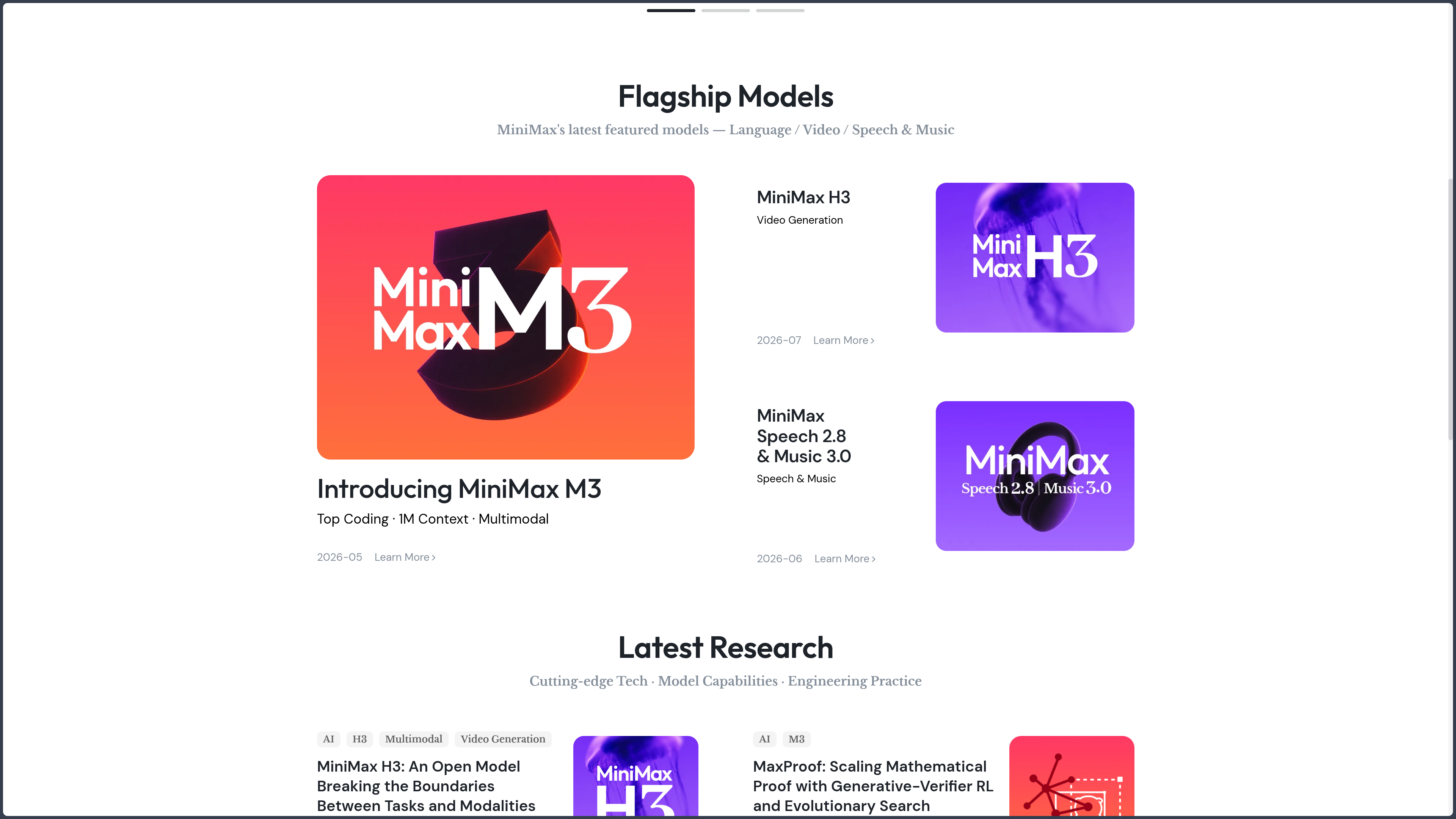
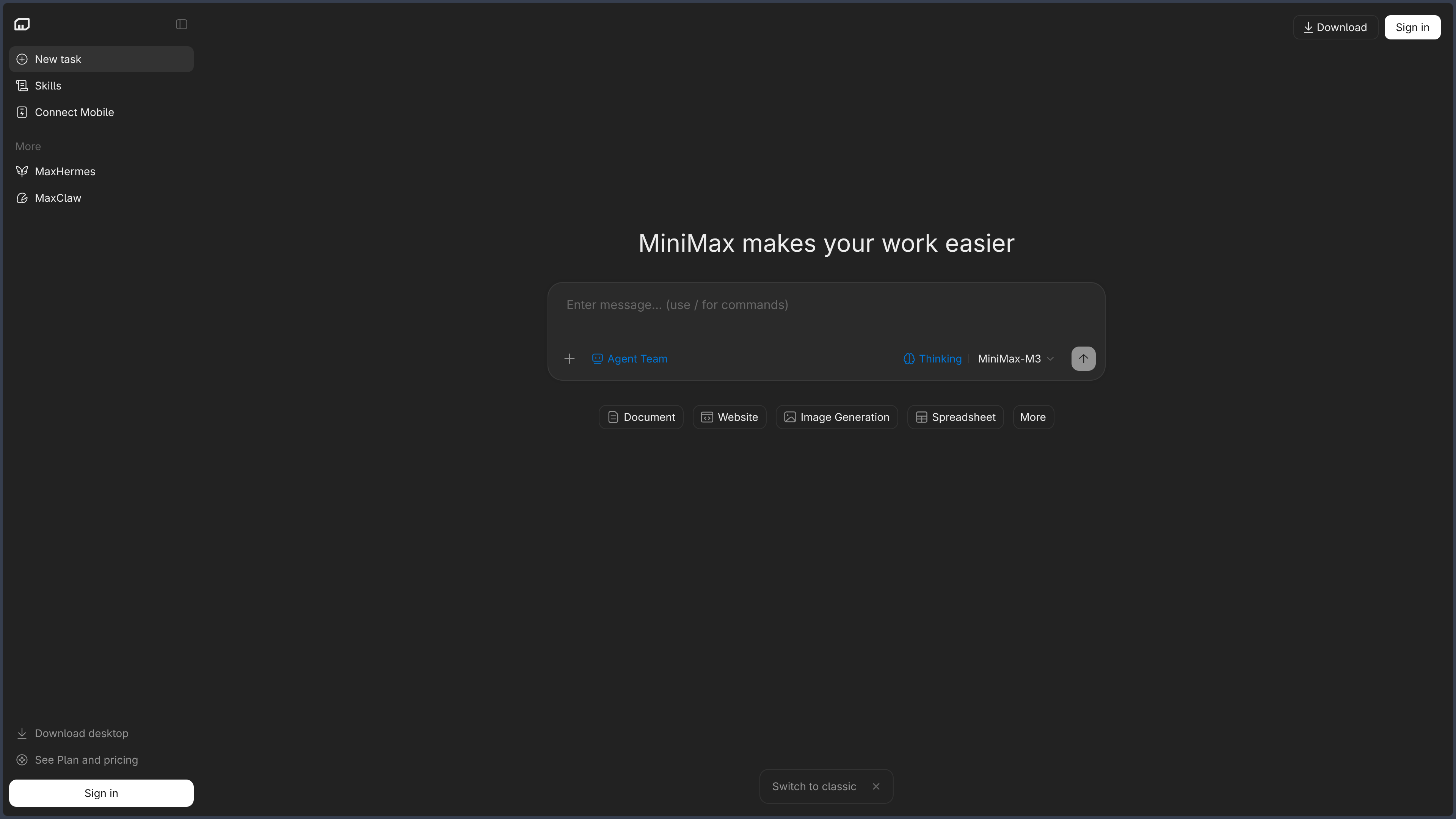
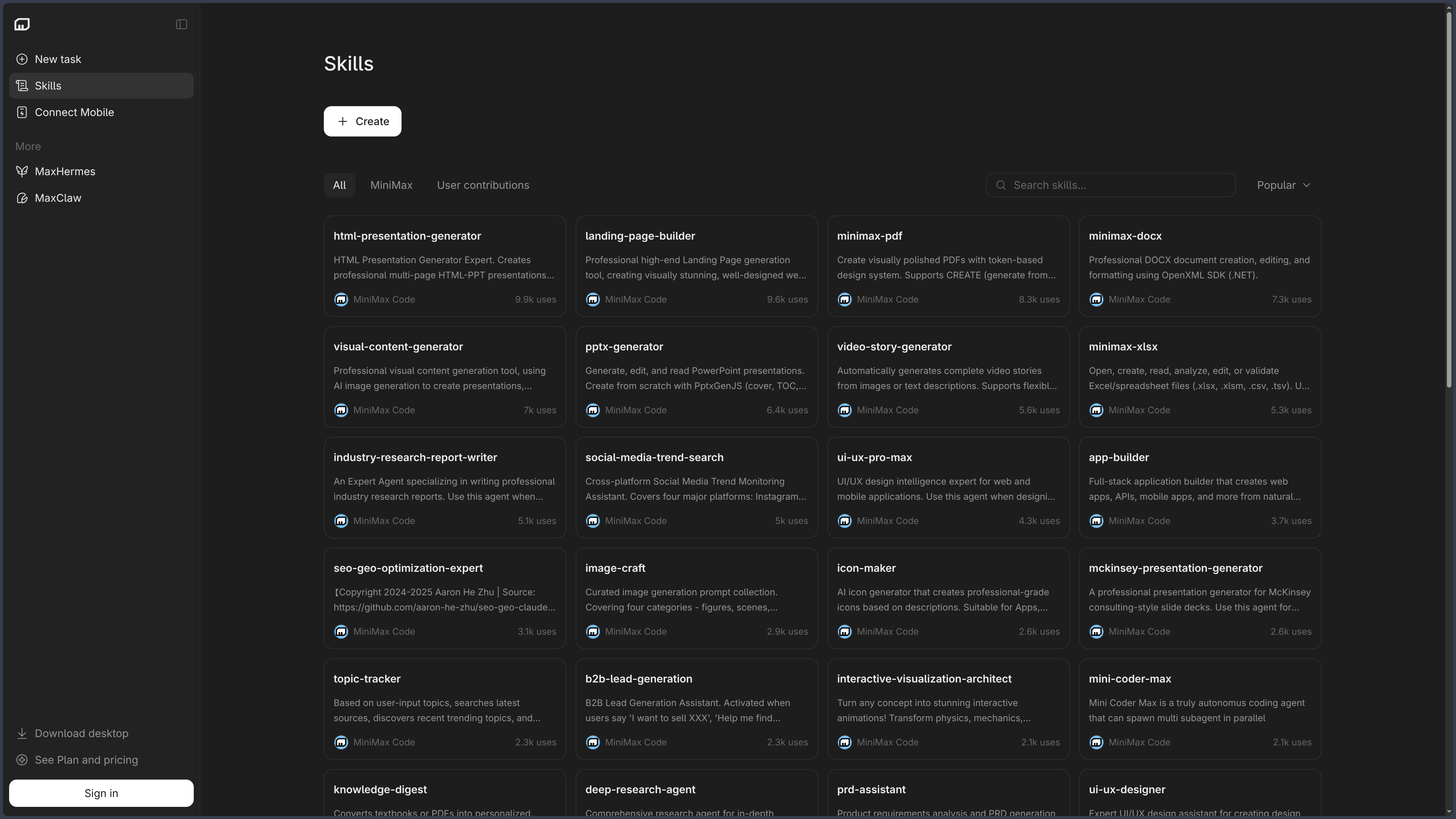
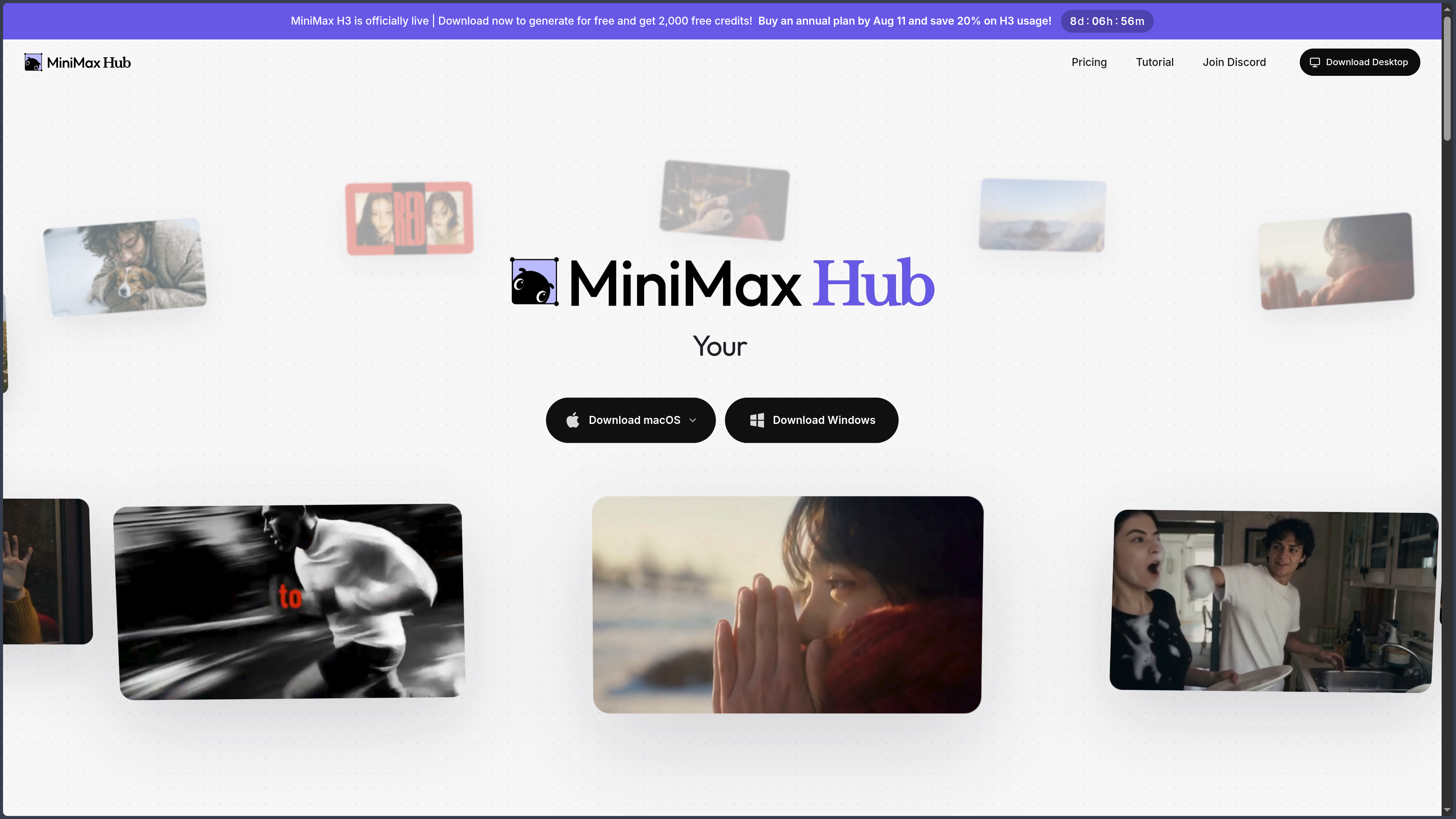
MiniMax does not refer to a single chatbot or a single model.
The name covers a company, several model families, an API platform, and various specialized products for text, code, voice, image, video, music, and agents.
This multiplicity makes MiniMax hard to summarize.
It is also its main interest.
In many AI stacks, each modality comes with its own provider:
- one model for text;
- another for voice;
- a third for video;
- a fourth for music.
MiniMax instead seeks to reduce this dispersion.
MiniMax is above all a multimodal platform aimed at reducing fragmentation between several types of generation.
A developer can use the same provider to produce text, generate a voice, create an image, animate that image, and then add music.
This continuity does not mean MiniMax is the best specialist in every modality.
Above all, it reduces the number of providers, documentations, and integrations needed to build a multimedia application.
That is where its proposition becomes interesting.
An application solely dedicated to voice may prefer a specialized provider.
A product that combines text, code, image, voice, and video can, on the contrary, place strong value on the coherence of a single ecosystem.
The MiniMax Open Platform is the technical core aimed at developers.
Around it sit several specialized families and products, notably for language, code, video, voice, or music.
These layers must remain separate.
A downloadable MiniMax model, the official API, Hailuo, MiniMax Code, or Talkie are not the same product even if they share a brand or some technology.
This hierarchy is essential.
The availability of a local model does not make the cloud service local.
A consumer-facing application does not necessarily give access to the same quotas, licenses, or models as the Open Platform.
MiniMax publishes some downloadable or open-weight resources.
This openness must not be abusively extended to the whole hosted platform.
The ecosystem stays hybrid, with proprietary cloud services and several modalities whose licenses, costs, and conditions vary.
Features
Text, reasoning, and agents
MiniMax language models can be used for conversation, analysis, reasoning, code, and tool use.
They can be integrated into assistants or agents via the API.
A long context window can accommodate documentation, history, or large text sets.
This capability does not remove the need to carefully select the context.
Sending more data does not guarantee that every piece of information will be used with the same precision.
Agentic capabilities add function calls and tools.
Power then depends as much on the model as on the environment that frames its action.
A useful agent needs permissions, traces, limits, and validation mechanisms.
Code and development
MiniMax also has a development-oriented layer.
The models can explain a codebase, generate modifications, produce tests, or use tools.
Products and interfaces like MiniMax Code or the CLI extend this logic.
The lasting value does not lie in any particular benchmark.
It lies in being able to integrate the models into an existing development environment.
Formats compatible with common API conventions can ease some prototypes.
This compatibility does not guarantee perfect interchangeability.
Parameters, tools, errors, and behaviors can differ between providers.
A serious application therefore benefits from keeping an abstraction layer rather than assuming a simple URL change is enough to fully replace a model.
Voice and audio synthesis
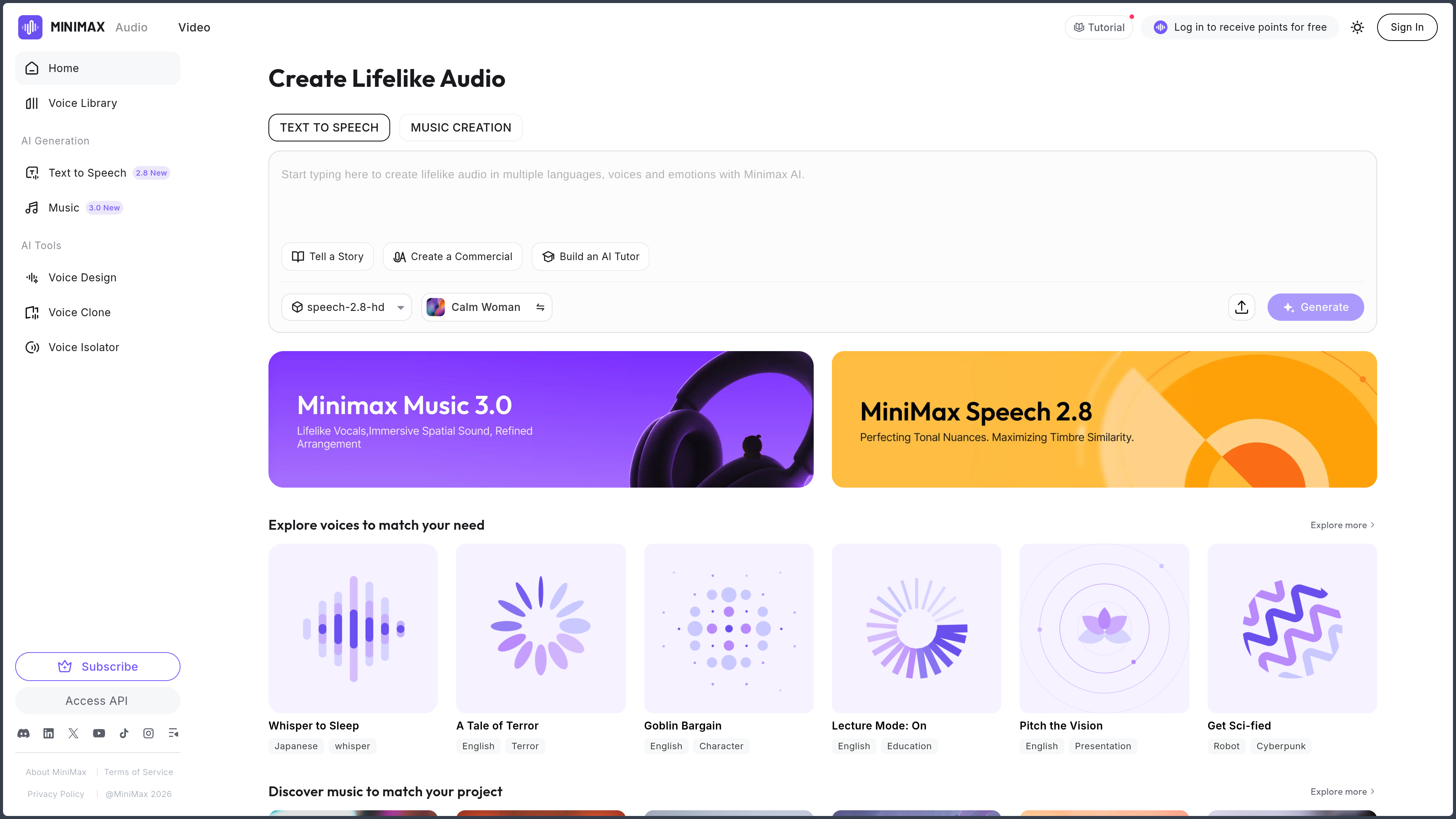
Voice is one of the most structured components of the MiniMax ecosystem.
The platform covers speech synthesis, streaming, long-form content, and different forms of voice personalization.
Streaming becomes especially useful for conversational assistants.
Speech can start before the entire audio file is produced.
Long-form content follows more of an asynchronous logic.
Narration, reports, or audiobooks can require longer processing, section-by-section organization, and result tracking.
This depth shows why "generating voice" covers several different problems:
- latency;
- quality;
- coherence;
- length;
- pronunciation;
- multilingual.
Cloning and voice design.
Voice cloning aims to reproduce the identity of an existing voice.
This capability can serve narration, dubbing, assistants, or characters.
It requires explicit consent.
A voice is an identifiable element.
The technical ability to reproduce it gives no automatic right to use it.
Voice design follows a different logic.
The user instead describes a synthetic identity: apparent age, energy, texture, or tone.
This approach is particularly interesting for fictional characters.
It makes it possible to create a voice without directly reproducing a real person.
Image
MiniMax offers image generation and transformation features.
These tools can produce concepts, illustrations, posters, thumbnails, or variants.
Their interest grows when they slot into a wider chain.
An image can serve as a concept.
Then become the reference for a video.
Then receive a voice or musical mood within the same ecosystem.
This continuity is the main advantage compared to a specialized generator.
It does not guarantee that quality or control is higher in every case.
Video and animation
Video capabilities cover text-to-video, image-to-video, and workflows using multiple references depending on the available models.
This layer makes it possible to animate an image or build a shot from several signals.
Text, image, motion, or other references can participate in the generation.
The more references there are, the more their coherence matters.
Contradictory indications can dilute the intent.
Video quality must be evaluated beyond resolution.
Subject stability, motion, anatomy, scenery, continuity, and respect for references matter more than a simple pixel count.
Music generation
MiniMax can also generate music.
This modality mainly makes sense when it joins a wider chain.
A script can become voice.
An image can become video.
Music can complete the whole.
The result can serve as a prototype or material to rework in a specialized tool.
A final music production can always require arrangement, editing, mixing, or mastering.
MiniMax reduces the friction of the first draft.
It does not necessarily replace the finishing crafts.
API and multimodal orchestration
The Open Platform makes it possible to integrate several modalities into an application.
This continuity is probably the most important capability of the whole ecosystem.
A product can chain:
text → voice → image → video → music
without building a new full integration for each provider.
This reduction in fragmentation greatly simplifies prototypes.
It can also simplify production when infrastructure coherence matters more than absolute optimization of each building block.
Synchronous and asynchronous tasks.
Not all modalities behave the same way.
A textual response can arrive quickly.
A video or a long audio treatment may require an asynchronous task.
The application then has to manage:
- launch;
- waiting;
- progress;
- failure;
- result retrieval.
This difference matters for developers.
A common multimodal platform does not erase the technical realities of each medium.
It gathers them behind the same provider.
CLI, MCP, and integrations.
CLI tools and MCP-compatible components make it possible to call certain capabilities from a terminal or an agent.
This approach is particularly useful for prototyping.
An agent can use MiniMax as a set of multimedia tools rather than as a simple conversational model.
The power of this integration demands limits.
An automatically launched video generation carries a cost and an impact far greater than a small text request.
Permissions and budgets must therefore be tailored to each modality.
Downloadable models and private deployment
Some MiniMax models can be downloaded or served on controlled infrastructure when their license and format allow it.
This option brings more control over data, availability, or cost at scale.
It requires suitable skills and hardware.
Large models can demand several GPUs or infrastructure that is anything but "lightweight local."
The availability of weights does not automatically mean:
- open-source license;
- unlimited commercial use;
- access to training data;
- reproduction of the cloud service.
Openness must be evaluated model by model.
Use Cases
Building a multimodal assistant
An application can bring language, voice, and tools together in a single experience.
Giving a voice to a product or character
Speech synthesis can power assistants, narration, or conversational interfaces.
Prototyping an audiovisual chain
A script can receive a voice, a visual identity, motion, and a sound atmosphere before choosing the final tools.
Integrating a development agent
Language models and tools can be used in code-oriented environments.
Automating media generation
The API can trigger several treatments in a software pipeline.
Producing long-form audio content
Deferred treatments can serve narration, reports, or other significant content.
Deploying some building blocks privately
Compatible models can be served on controlled infrastructure when the cloud is not desired.
Building a hybrid architecture
An application can keep some tasks local and use the cloud for the heaviest or most specialized generations.
PANACHES Review
Multimodal continuity is the real product
The list of models changes quickly.
MiniMax's more lasting value comes from the ability to chain several modalities with the same provider.
This is especially interesting for prototypes and multimedia applications.
Breadth does not guarantee the best specialization
Bringing several modalities together reduces integration friction.
A dedicated tool can offer more control in its domain.
The decision therefore depends on the value placed on workflow continuity compared to the depth of each building block.
The offering must be read by layers
Models, the API, consumer products, and developer tools do not always follow the same conditions.
The single brand can hide different technical and commercial realities.
This is probably the most important point to avoid a confusing sheet.
Voice is a particularly structured layer.
Streaming, long-form voice, cloning, and voice design answer genuinely different uses.
This depth makes MiniMax particularly interesting when audio is not just a side effect but an important part of the product.
Openness remains partial
Some models or components may be available locally.
The hosted platform and several services remain proprietary.
It is therefore necessary to reason modality by modality rather than presenting all of MiniMax as open or local.
Billing can become hard to predict
Text, voice, image, and video do not necessarily use the same cost unit.
This diversity is technically logical.
It complicates the estimation of an application that combines several modalities.
A multimodal workflow must therefore track its cost at each step.
Points of Attention
- MiniMax refers to several distinct products, models, and services.
- The full platform is not open source even if some resources are downloadable.
- Licenses must be checked separately for each model or service.
- Costs may be calculated with different units depending on the modality.
- Long video and audio generations may follow asynchronous workflows.
- Cloned voices or vocal identities require explicit consent.
- Generated content must be verified before publication or commercial use.
- Local models require suitable infrastructure and maintenance.
- API compatibility with another provider does not guarantee full interchangeability.
- Data sent to cloud services must be evaluated according to its sensitivity.
- MCP tools or agents must receive permissions and budgets proportionate to their actions.
- A single multimodal provider simplifies integration but also increases dependency on that ecosystem.