Origins
Folk music has its roots in popular musical traditions passed down from generation to generation. Long before the arrival of records and the music industry, rural and urban communities possessed their own repertoires of songs, ballads, and dances associated with everyday life, celebrations, work, and collective events.
These musical traditions were transmitted primarily through listening, imitation, and performance. The same song could exist in numerous variations depending on the region, family, or performer. Melodies evolved, lyrics changed, and instruments varied, making it difficult to identify a single original composer.
The English term folk music, literally meaning "music of the people," eventually came to describe this collection of traditions. However, its meaning varies across historical periods and cultures. It does not refer to a universal genre with a single geographical origin: traditional music exists on every continent, with its own histories and distinctive characteristics.
Modern folk, as it developed during the 20th century, took shape primarily from European and North American repertoires. It maintained particularly close connections with British and Irish ballads, Appalachian traditions, African American songs, and rural music from the United States.
In the Appalachian Mountains, melodies brought by European immigrant populations encountered African American musical traditions. The fiddle, guitar, and banjo became important instruments in these repertoires. The banjo, in particular, has a history deeply connected to African and African American cultures.
Songs told stories of travel, migration, human relationships, conflicts, disasters, and working life. Some accompanied dancing, while others preserved stories or passed down memories of historical events.
From the 19th century onward, researchers began collecting and publishing these repertoires. Francis James Child assembled numerous traditional English and Scottish ballads, while Cecil Sharp contributed to the collection of British and Appalachian folk songs during the early 20th century.
These efforts helped preserve musical traditions but also reflected the choices and limitations of the collectors. Certain repertoires, particularly those of African American musicians, were long underrepresented in early accounts of folklore.
At the beginning of the 20th century, sound recording opened a new chapter. Musical practices previously transmitted mainly through oral tradition could now be preserved and shared on a much larger scale.
Modern folk would emerge precisely from this encounter between traditional transmission, the documentation of older repertoires, and the desire of new generations of musicians to reinterpret them.
Emergence and Early Musical Scenes
1900–1930 — Rediscovering Traditional Music
In the United States, the first decades of the 20th century witnessed growing interest in rural music and traditional repertoires.
Researchers, cultural institutions, and record companies began recording singers and instrumentalists who had previously remained largely unknown outside their communities.
John Lomax played an important role in collecting American songs. His son Alan Lomax would continue this research, recording numerous artists across different regions of the country.
These recordings helped document traditions associated with agricultural workers, African American communities, Appalachian music, and immigrant populations.
The collections also brought attention to performers such as Lead Belly, a singer and multi-instrumentalist whose repertoire included blues, traditional ballads, work songs, and popular music.
The boundaries between folk, blues, and early forms of country music were particularly fluid at the time. These classifications would gradually become more clearly defined with the development of the recording industry.
The 1930s–1940s — Folk Becomes a Social Voice
The Great Depression profoundly transformed American society. Unemployment, poverty, and population displacement inspired new songs devoted to social realities.
Woody Guthrie became one of the leading figures of this development. Originally from Oklahoma, he traveled through different regions of the United States and wrote songs describing the lives of workers, migrants, and communities affected by economic hardship.
His album Dust Bowl Ballads, released in 1940, drew particular inspiration from the dust storms and migrations that had affected the American Great Plains during the 1930s.
His song "This Land Is Your Land," written in 1940, would become one of the most emblematic pieces in American folk music.
Pete Seeger shared this vision of accessible music capable of bringing audiences together around common experiences and concerns.
In the early 1940s, Guthrie and Seeger participated in The Almanac Singers, a musical collective closely connected to labor movements and social struggles.
Political campaigns, workers' gatherings, and popular concerts became important spaces for this new generation.
Alan Lomax's work also helped introduce rural traditions to urban audiences through recordings, radio broadcasts, and concerts.
This period marked an essential transformation: folk was no longer simply music inherited from the past, but also a means of commenting on the present.
The 1950s — The Folk Revival
After the Second World War, the United States experienced a major resurgence of interest in traditional music, generally known as the folk revival.
The Weavers, a group formed in part by Pete Seeger, helped popularize songs from the traditional repertoire. Their interpretation of "Goodnight, Irene" achieved major success in 1950.
However, the movement developed in a tense political climate. Accusations of communist sympathies and anti-communist campaigns led to professional restrictions for several artists, including Pete Seeger.
Meanwhile, Moses Asch, founder of Folkways Records, played a fundamental role in preserving and distributing traditional music.
In 1952, collector Harry Smith assembled American recordings from the 1920s and 1930s into Anthology of American Folk Music. This compilation became a major source of inspiration for musicians associated with the folk revival.
By the late 1950s, The Kingston Trio achieved enormous commercial success with "Tom Dooley," helping introduce folk music to mainstream audiences.
Festivals and clubs also experienced significant growth. The Newport Folk Festival, founded in 1959, gradually became one of the movement's most important gatherings.
In New York City, Greenwich Village established itself as a particularly dynamic creative center. Its cafés, small clubs, and meeting places welcomed a generation of singers who would profoundly transform American music.
The Golden Age
The 1960s — Protest Songs and Cultural Revolution
At the beginning of the 1960s, folk became one of the major expressions of American youth culture, particularly among students and social movements.
Joan Baez established herself through the clarity of her voice, her interpretations of traditional ballads, and her commitment to civil rights.
Odetta, whose career drew upon spirituals, blues, and traditional songs, also exerted considerable influence on this generation.
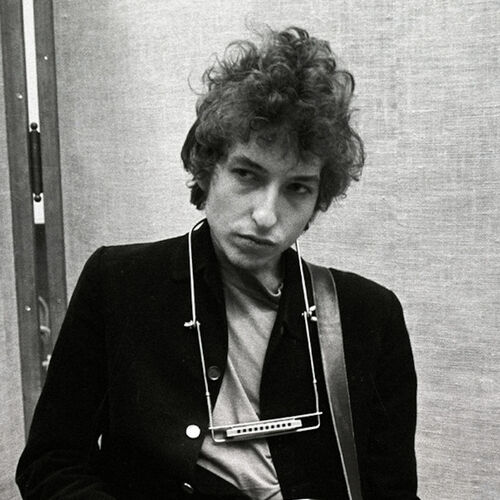
In Greenwich Village, a young musician from Minnesota began attracting attention: Bob Dylan.
Influenced by Woody Guthrie and American musical traditions, Dylan quickly developed a personal songwriting style combining folk ballads, poetry, and social commentary.
His songs "Blowin' in the Wind" and "The Times They Are A-Changin'" became emblematic of the aspirations and tensions of the 1960s.
The album The Times They Are A-Changin’, released in 1964, illustrates a period when folk songs accompanied civil rights campaigns and political debates.
Other artists contributed to this creative environment. Phil Ochs developed an openly political songwriting style, while Peter, Paul and Mary helped bring the movement's songs to a wide audience.
Judy Collins and Dave Van Ronk were also important personalities within the New York folk scene.
In 1963, several folk artists participated in the March on Washington for Jobs and Freedom. Music became a means of collective expression within the Civil Rights Movement.
Yet this period was not limited to protest songs. Folk also embraced intimate narratives, personal reflections, and increasingly ambitious poetic explorations.
1965–1970 — The Encounter with Rock
In the mid-1960s, folk underwent a decisive transformation.
Bob Dylan began incorporating electric instruments into his compositions. In July 1965, his performance with an amplified band at the Newport Folk Festival provoked mixed reactions and became one of the most widely discussed events in the movement's history.
This evolution revealed tensions between the desire to preserve acoustic traditions and the ambition to explore new musical forms.
The Byrds also helped popularize folk rock through their electric interpretation of "Mr. Tambourine Man" in 1965.
Simon & Garfunkel, meanwhile, developed an aesthetic based on vocal harmonies and compositions combining folk sensitivity with pop arrangements.
Folk rock gradually became a major movement in popular music, opening new possibilities for songwriting and production.
Dylan continued his musical explorations while occasionally returning to more acoustic instrumentation, notably with John Wesley Harding, released in 1967.
By the end of the decade, folk had become a meeting point for rock, country, blues, and singer-songwriter traditions.
The 1970s — The Rise of Singer-Songwriters
During the 1970s, folk continued to evolve through its encounters with rock and introspective songwriting.
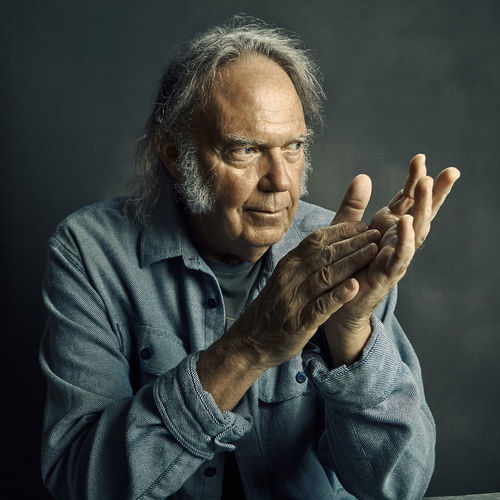
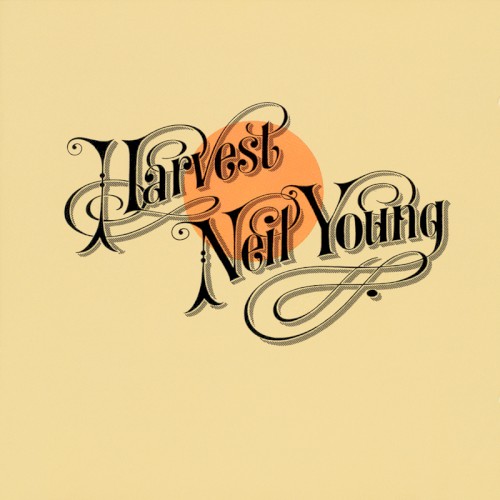
Neil Young developed a personal body of work alternating between acoustic compositions and electric experimentation. His album Harvest, released in 1972, became an important reference in folk rock and country rock.
Joni Mitchell established herself as one of the great figures of personal songwriting. Her album Blue, released in 1971, explored human relationships and introspection through compositions of remarkable sensitivity.
Leonard Cohen developed a poetic approach characterized by his deep voice, literary writing, and often understated arrangements.
In the United Kingdom, Nick Drake composed intimate music whose recognition would grow considerably after his death. His album Pink Moon, released in 1972, would become an important reference for several generations of independent musicians.
Folk had now established itself as an open space for artistic expression, where traditional heritage could coexist with deeply personal compositions.
The British and European Revival
The United Kingdom also experienced an important folk revival during the 1950s and 1960s.
Ewan MacColl, A. L. Lloyd, and Shirley Collins contributed to the rediscovery of British ballads and musical traditions.
During the 1960s, Bert Jansch and Pentangle combined folk, blues, and jazz influences with sophisticated instrumental techniques.
Fairport Convention developed an approach combining traditional British melodies with electric rock instrumentation. Their album Liege & Lief, released in 1969, became one of the foundational recordings of British folk rock.
Sandy Denny and Richard Thompson actively participated in this renewal, while Steeleye Span continued exploring the connections between traditional repertoire and rock.
In France, the movement acquired a particularly strong regional dimension. Alan Stivell helped popularize Breton and Celtic music, especially following his concert at the Olympia in Paris in 1972.
The group Malicorne developed an original approach to traditional French songs, combining historical instruments, vocal polyphony, and modern arrangements.
These European movements were not simply reproductions of American folk. They drew upon their own traditions and contributed to their reinterpretation.
Movements and Subgenres
Traditional Folk
Traditional folk encompasses popular repertoires transmitted primarily through performance and collective memory.
Ballads, work songs, dances, and narrative songs represent important forms of expression within these traditions.
Instruments vary according to cultures and regions: guitar, fiddle, banjo, accordion, harp, flutes, and percussion may accompany performers.
This category includes highly diverse traditions that should not be considered a single, uniform musical genre.
Folk Revival and Contemporary Folk
The folk revival refers to movements dedicated to rediscovering and reinterpreting older forms of traditional music.
In the United States, it developed particularly between the 1940s and 1960s, with artists such as Woody Guthrie, Pete Seeger, Joan Baez, and Bob Dylan.
Contemporary folk extends this tradition by placing considerable importance on original compositions, social concerns, and personal expression.
It is defined less by any mandatory instrumentation than by its particular relationship with storytelling, songwriting, and popular musical heritage.
Protest Folk and Political Songwriting
Protest folk combines traditional music with a desire to comment on or transform society.
Its songs address civil rights, working conditions, conflicts, inequality, and individual freedoms.
Woody Guthrie, Pete Seeger, and Phil Ochs are among its major American representatives.
This tradition also developed in other parts of the world. In Latin America, Violeta Parra, Víctor Jara, and Mercedes Sosa contributed, through different approaches, to movements devoted to reviving popular and politically engaged songs.
These movements, particularly Nueva Canción, possess their own histories and should not be regarded simply as offshoots of North American folk.
Folk Rock
Emerging in the mid-1960s, folk rock combines the melodic and narrative traditions of folk with the amplification and arrangements of rock.
Bob Dylan, The Byrds, and Neil Young contributed to its development, while Fairport Convention created a British branch based on traditional repertoires.
Folk rock became a particularly influential movement, encouraging exchanges with country, psychedelic rock, and regional European musical traditions.
Indie Folk
Beginning in the 1990s, and particularly during the 2000s, a new generation of artists brought folk traditions closer to the independent music scene.
Elliott Smith contributed to this evolution through his intimate songwriting and acoustic arrangements.
Iron & Wine, Sufjan Stevens, and Bon Iver subsequently developed very different aesthetics, combining acoustic guitar, vocal harmonies, sonic experimentation, and independent production.
The album For Emma, Forever Ago, released by Bon Iver in 2007, became one of the defining recordings of this new sensibility.
Fleet Foxes also gained recognition through elaborate vocal harmonies and songwriting inspired by several folk and pop traditions.
In Australia, Angus & Julia Stone developed an acoustic and melodic aesthetic, illustrated notably by A Book Like This, released in 2007.
The movement is characterized by considerable stylistic diversity, ranging from stripped-down compositions to more orchestral arrangements.
Folk Punk and Other Crossovers
Folk punk combines the energy of punk with the instrumentation and narrative traditions of folk.
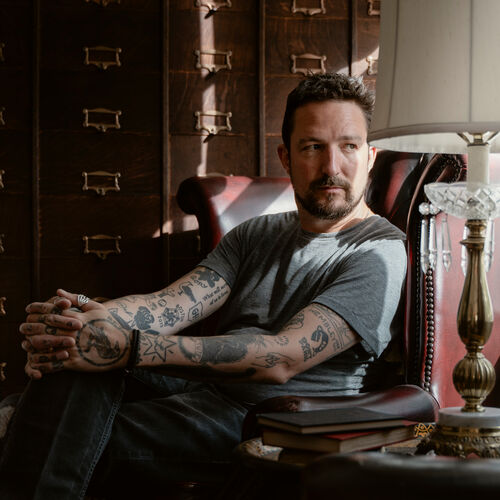
Frank Turner helped popularize an approach blending acoustic guitar, punk heritage, and personal songwriting.
Other artists brought folk closer to electronic music, experimental rock, and independent pop.
These crossovers did not eliminate the genre's more traditional forms. Instead, they demonstrate its ability to accommodate new musical sensibilities.
Legacy and Influence Today
Folk occupies a distinctive place in the history of popular music. It represents both a collection of ancient traditions and a modern language of composition, transmission, and personal expression.
Its influence on singer-songwriter traditions has been considerable. The importance placed on lyrics, storytelling, and individual performance helped transform songwriting throughout the 20th century.
Within rock, folk encouraged the emergence of more narrative and introspective compositions. It also contributed to the development of folk rock, country rock, and numerous forms of independent music.
Its social heritage remains essential. Songs originating from the American folk revival continue to be performed during gatherings, commemorations, and collective movements.
From the 1980s onward, new generations extended this tradition. Tracy Chapman achieved international success with her debut album Tracy Chapman, released in 1988. Songs such as "Fast Car" and "Talkin' 'bout a Revolution" combined intimate songwriting with particular attention to social realities.
Bruce Springsteen also explored American songwriting traditions, notably through his acoustic album Nebraska, released in 1982, and later by revisiting the repertoire associated with Pete Seeger on We Shall Overcome: The Seeger Sessions in 2006.
Folk also maintains close relationships with Caribbean music. Beginning in the 1950s, Harry Belafonte helped introduce several traditional Caribbean repertoires, particularly calypso, to international audiences. His work demonstrates the importance of the circulation of traditional songs without confusing these musical traditions with American folk.
In the 21st century, artists such as Laura Marling, First Aid Kit, and numerous independent groups continued exploring the relationships between acoustic instruments, poetry, and contemporary arrangements.
Musician Rhiannon Giddens has also contributed to rediscovering the multicultural history of American instrumental traditions, particularly the connections between the banjo and African American communities.
Historical research and sound archives continue to reshape our understanding of folk music. They allow forgotten performers to be rediscovered, document exchanges between communities, and challenge certain musical classifications inherited from the recording industry.
Festivals, clubs, traditional gatherings, and digital platforms now support the circulation of widely different repertoires, from ancient ballads to independent contemporary compositions.
Folk thus retains a distinctive identity: that of music capable of preserving collective memory while giving an essential place to each artist's personal voice.
Its history demonstrates that traditions are never completely fixed. They evolve through their performers, their audiences, and the societies that keep them alive.
From ancient songs to new generations of singer-songwriters, folk continues to tell human stories, reflect social transformations, and connect generations. Its legacy rests equally on preserving musical repertoires and on the freedom to reinvent them.