






Overview
Marvel Studios is an American film and television production company specializing in adaptations of characters originating from Marvel Comics. Its history dates back to 1993, with the creation of Marvel Films under the leadership of Avi Arad, before the Marvel Studios name was adopted in 1996.
During its early years, the company mainly acted as an intermediary between Marvel and Hollywood studios that licensed the film rights to many of its characters. This strategy notably accompanied the arrival in cinemas of Blade, X-Men, Spider-Man, Daredevil, Hulk and Fantastic Four, but left much of the creative and financial control to partner studios.
In the mid-2000s, Marvel fundamentally changed its model. The company secured financing that allowed it to produce a series of feature films itself and retain greater control over its characters.
This strategy led in 2008 to Iron Man, directed by Jon Favreau and starring Robert Downey Jr. The film became the starting point of the Marvel Cinematic Universe, a shared universe in which characters, events and storylines could continue from one film to another.
Under the leadership of Kevin Feige, Marvel Studios then developed franchises including Iron Man, Thor, Captain America, Avengers, Guardians of the Galaxy, Black Panther, Doctor Strange, Captain Marvel and Ant-Man, while gradually introducing new characters.
Since The Walt Disney Company acquired Marvel Entertainment in 2009, Marvel Studios has been part of the Walt Disney Studios ecosystem. Its activities have also expanded into streaming series and animation, making the studio an audiovisual production structure that now extends far beyond cinema alone.
History
1993-1996 — From Marvel Films to Marvel Studios
In the early 1990s, Marvel sought to make better use of its vast catalog of characters in film and television.
In 1993, Avi Arad took charge of a new structure dedicated to screen adaptations: Marvel Films.
The objective at the time was very different from that of the future MCU. Marvel did not yet have the resources required to finance major Hollywood productions on its own and mainly sought to negotiate its intellectual properties with studios capable of producing and distributing the films.
Agreements were gradually reached around several characters and teams.
In 1996, Marvel Films became Marvel Studios, more clearly expressing Marvel’s ambition to control the development of its adaptations.
The 1990s-2000s — A strategy built around licensing
The first period of Marvel Studios was largely shaped by the fragmentation of film rights.
Several major characters were handled by different studios: the X-Men and Fantastic Four were notably developed with 20th Century Fox, Spider-Man with Sony Pictures and Blade with New Line Cinema.
Marvel Studios participated in the development of these adaptations but did not yet have the level of control it would later gain.
The success of Blade in 1998, X-Men in 2000 and Spider-Man in 2002 nevertheless demonstrated the considerable commercial potential of Marvel characters in cinemas.
These films also helped convince Marvel that greater control over its productions could be far more valuable than simply licensing characters to other companies.
2000-2007 — Kevin Feige arrives
Kevin Feige joined Marvel in 2000 after working on the first X-Men film.
His knowledge of the Marvel Universe and its characters allowed him to participate in numerous adaptations produced by different studios.
He worked on several projects connected to the X-Men, Spider-Man, Hulk and Fantastic Four, gaining direct experience of how comic-book adaptations operated within Hollywood.
In 2007, as Marvel prepared its new self-production strategy, Feige was appointed President of Production at Marvel Studios.
He became one of the central figures behind the creative model that would lead to the Marvel Cinematic Universe.
2005 — Marvel decides to produce its own films
The year 2005 marked one of the most important changes in the studio’s history.
Marvel secured a $525 million financing facility intended to produce up to ten feature films based on characters whose film rights the company still controlled.
Paramount Pictures was initially set to distribute much of this new slate.
This structure gave Marvel something its previous strategy had not allowed: greater control over scripts, director selection, casting, release schedules and the revenues generated by the films.
Several characters were considered, including Captain America, Avengers, Black Panther, Doctor Strange, Ant-Man and Shang-Chi.
In 2006, Iron Man and The Incredible Hulk also joined this financing program.
2008 — Iron Man and the birth of the MCU
On May 2, 2008, Marvel Studios released Iron Man, directed by Jon Favreau.
Casting Robert Downey Jr. as Tony Stark became one of the most consequential decisions in the studio’s history.
The film was a major critical and commercial success, but its true significance became apparent even in its post-credits scene: Nick Fury, played by Samuel L. Jackson, mentioned the “Avengers Initiative.”
A few weeks later, The Incredible Hulk was released.
Marvel was no longer simply developing several independent adaptations. The studio had begun constructing a shared universe in which characters could meet and individual films could contribute to a common story.
Following the success of Iron Man, Kevin Feige became President of Marvel Studios and took a central role in supervising this new continuity.
2008-2012 — Building the Avengers one film at a time
Marvel Studios methodically continued constructing its universe.
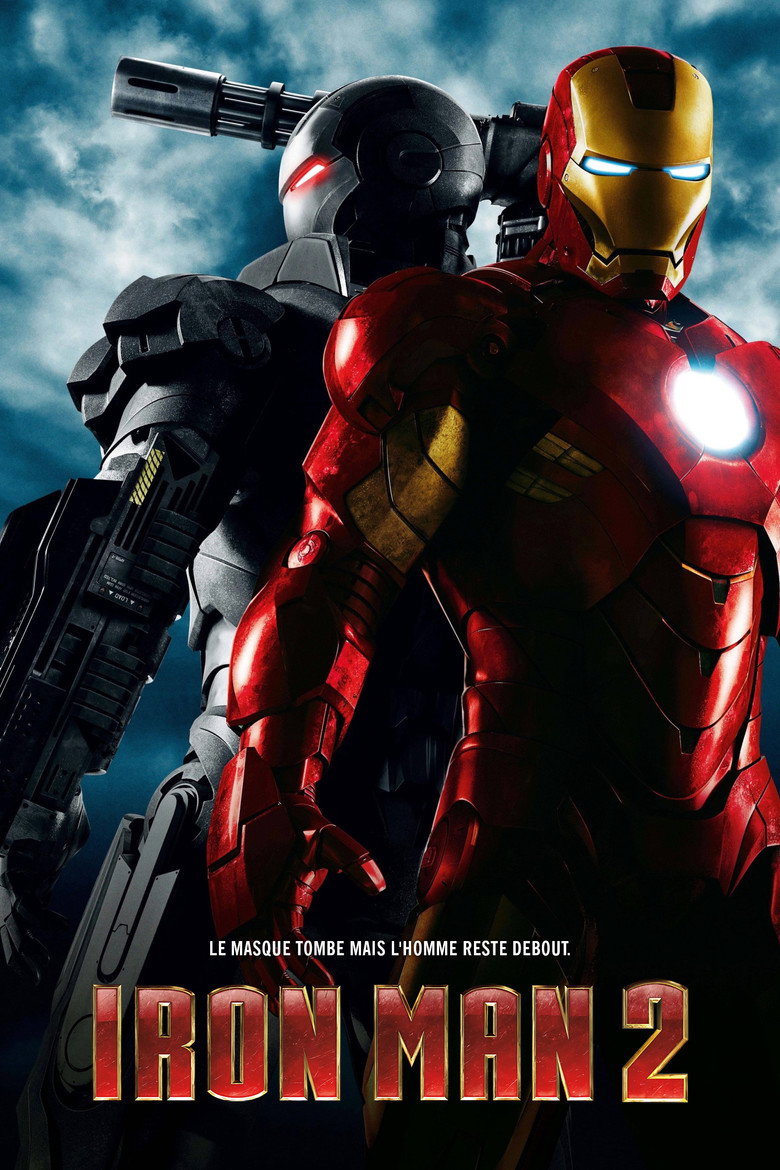
Iron Man 2 expanded the role of S.H.I.E.L.D. and introduced Black Widow. Thor opened the MCU to mythology and extraterrestrial worlds. Captain America: The First Avenger explored Steve Rogers’ historical origins.
These films were not designed solely as separate franchises.
Supporting characters, objects, organizations and post-credits scenes were gradually used to build connections between the different productions.
This first stage reached its goal in 2012 with The Avengers, directed by Joss Whedon.
Iron Man, Captain America, Thor, Hulk, Black Widow and Hawkeye were brought together in a single film. Its success demonstrated on a massive scale the viability of the model developed by Marvel Studios.
2009 — Marvel joins Disney
Even as the MCU was beginning to take shape, The Walt Disney Company announced the acquisition of Marvel Entertainment in 2009.
The transaction, valued at approximately $4 billion, was completed on December 31, 2009.
Marvel Studios gradually joined Disney’s film ecosystem while retaining a distinct creative identity.
Disney also progressively took over distribution of MCU films previously handled by Paramount.
This integration gave Marvel access to a global infrastructure capable of supporting the rapid expansion of its franchises.
The Phases and the construction of a continuous universe
Marvel Studios gradually organized the MCU into Phases.
After the Avengers were assembled, Phase Two expanded existing characters and introduced new worlds through Guardians of the Galaxy and Ant-Man.
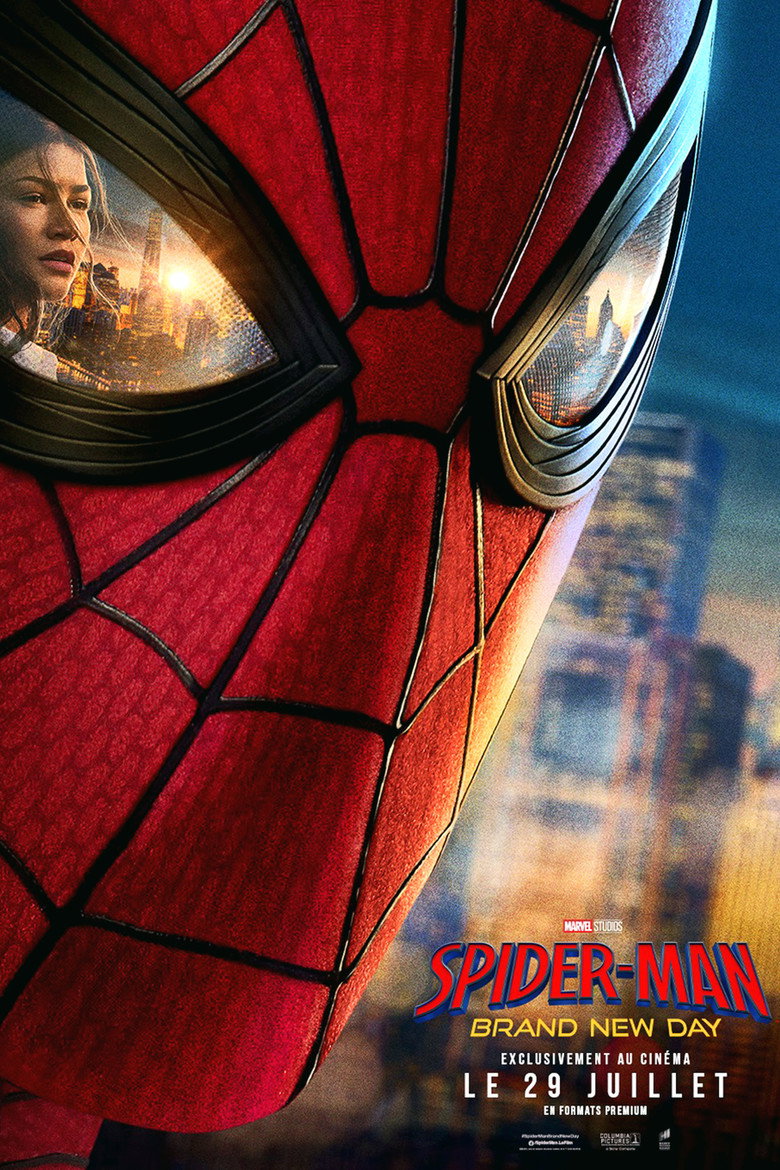
Phase Three pushed this approach further with Doctor Strange, Black Panther, Captain Marvel and Spider-Man: Homecoming, produced with Sony Pictures.
The storylines ultimately converged in Avengers: Infinity War in 2018 and Avengers: Endgame in 2019.
This construction spanning more than a decade became known as the Infinity Saga.
Across 23 films from Iron Man to Spider-Man: Far From Home, Marvel Studios demonstrated that a shared cinematic universe could function across dozens of interconnected productions.
2015 — A more direct integration into Walt Disney Studios
In 2015, Marvel Studios was reorganized within the Disney group.
Kevin Feige and the studio began reporting more directly to the leadership of Walt Disney Studios, strengthening the film division’s autonomy from the other branches of Marvel Entertainment.
This structure brought Marvel Studios closer to companies such as Pixar and Lucasfilm, which also maintain strong creative identities within Disney.
Kevin Feige gradually consolidated his position and also became Chief Creative Officer of Marvel, extending his creative influence beyond feature films.
2019 — Avengers: Endgame concludes the Infinity Saga
Avengers: Endgame represented the culmination of the MCU’s first major era.
The film brought together characters and storylines developed since 2008 and concluded several major arcs, particularly those of Tony Stark and Steve Rogers.
Its commercial scale reflected the transformation Marvel Studios had achieved in just eleven years.
The company had gone from taking a major financial risk on Iron Man to becoming one of the leading forces in global cinema.
The Infinity Saga also established a model that many studios would later attempt to reproduce through their own shared universes.
2021 — The MCU expands directly into television
With the development of Disney+, Marvel Studios began directly producing series designed as components of the MCU.
WandaVision, launched in 2021, opened this new phase, quickly followed by The Falcon and the Winter Soldier, Loki, Hawkeye, Moon Knight, Ms. Marvel and other productions.
Unlike several earlier Marvel series produced by other structures, these programs were developed directly under Marvel Studios’ supervision and maintained much closer ties with the films.
The studio could now develop certain characters over several hours and alternate between cinema and television within the same continuity.
Animation and diversification of formats
Marvel Studios also expanded its activity into animation.
What If...?, launched in 2021, became the first animated series produced directly by Marvel Studios and explored alternate versions of MCU events.
Other productions followed, including X-Men ’97, Your Friendly Neighborhood Spider-Man and Marvel Zombies.
The studio also developed shorter formats, Special Presentations and series designed to explore tones different from traditional theatrical films.
This diversification led to a clearer distinction between Marvel Studios, Marvel Television and Marvel Animation, while maintaining a shared creative direction.
The 2020s — A new period of expansion and reorganization
After Endgame, Marvel Studios opened a new period centered on the Multiverse, while gradually integrating characters whose film rights had long belonged to other studios.
Disney’s acquisition of 21st Century Fox notably brought the X-Men, Fantastic Four and Deadpool under the same corporate umbrella as most of Marvel’s catalog.
Deadpool & Wolverine marked a particularly visible stage of this convergence in 2024.
The Fantastic Four: First Steps then introduced a new version of Marvel’s First Family directly into the universe developed by Marvel Studios.
At the same time, the studio continued the stories of Captain America, Spider-Man, Daredevil, the Avengers and many characters introduced throughout the previous phases.
In 2026 — A studio still centered on the shared universe
In 2026, Marvel Studios remains led by Kevin Feige and continues operating within Walt Disney Studios.
The founding principle of the MCU remains the same: films, series and animated productions can belong to a shared narrative universe while still developing their own characters and tones.
The studio also continues revisiting its catalog through new generations of heroes, the return of historic characters and the integration of franchises once separated by licensing agreements.
More than three decades after the creation of Marvel Films and nearly twenty years after Iron Man, Marvel Studios has become one of the most significant examples of long-term audiovisual franchise building.
What sets it apart
A shared universe built on an unprecedented scale
The defining characteristic of Marvel Studios remains the Marvel Cinematic Universe.
Connections between separate works obviously existed before the MCU, but Marvel Studios systematized the concept on an unprecedented cinematic scale.
A character can be introduced in a solo film, later appear in another hero’s production and eventually join a team in a crossover event several years later.
This structure turns continuity itself into a central part of the audience experience.
A strategy built around long-term planning
Marvel Studios organizes its productions across several years of development.
The Phases provide structure while still allowing individual films to belong to different genres.
Captain America: The Winter Soldier can draw from political thrillers, Guardians of the Galaxy from space opera, Doctor Strange from fantasy and Black Panther from Afrofuturist science fiction while remaining part of the same universe.
This combination of genre diversity and overall coherence is one of the foundations of the Marvel Studios model.
Turning lesser-known characters into major franchises
When Marvel began producing its own films, several of its most famous characters were not freely available to the studio.
Spider-Man, the X-Men and the Fantastic Four were already subject to agreements with other companies.
Marvel Studios therefore built its first universe around characters such as Iron Man, Thor, Captain America and the Avengers, whose mainstream recognition was then lower than Spider-Man’s.
The success of this strategy gradually transformed these heroes into global franchises and greatly increased the value of Marvel’s wider catalog.
Centralized creative leadership
Marvel Studios has an unusual organization for a company managing so many franchises.
Kevin Feige provides overarching supervision of the universe, while producers, writers, directors and development teams coordinate continuity across different productions.
This centralization makes crossovers and long-term planning easier.
It does not, however, prevent individual directors and creative teams from bringing distinct identities to different projects.
From cinema to a complete audiovisual studio
Marvel Studios is no longer simply a producer of feature films.
The arrival of Disney+ allowed it to integrate live-action series, animation and special formats directly into its activity.
This evolution has gradually transformed Marvel Studios into a complete audiovisual production structure capable of developing its properties across several formats.
It also gives more room to characters who might not necessarily have carried a feature film on their own.
A distinctive position within Disney
Marvel Studios belongs to Disney but retains an immediately recognizable identity.
Within Walt Disney Studios, it operates alongside major structures such as Pixar, Lucasfilm, Walt Disney Animation Studios, 20th Century Studios and Searchlight Pictures.
This organization gives it access to Disney’s global distribution, marketing and streaming resources while maintaining a creative direction specialized in the Marvel Universe.
Good to know
- Marvel Films was created in 1993 under the leadership of Avi Arad.
- The structure adopted the name Marvel Studios in 1996.
- During its early years, Marvel operated mainly through licensing and co-productions with other studios.
- Kevin Feige joined Marvel in 2000 after working on the first X-Men film.
- In 2005, Marvel secured $525 million in financing to produce its own slate of films.
- Paramount Pictures was initially responsible for distributing much of this new production slate.
- In 2007, Kevin Feige became President of Production at Marvel Studios.
- Iron Man, released in 2008, became the first film in the Marvel Cinematic Universe.
- The Avengers, released in 2012, brought together for the first time the main heroes introduced separately in earlier films.
- The Walt Disney Company acquired Marvel Entertainment in 2009 in a transaction valued at approximately $4 billion.
- Marvel Studios was integrated more directly into Walt Disney Studios in 2015.
- Avengers: Infinity War and Avengers: Endgame concluded the central storyline of the Infinity Saga.
- From 2021, Marvel Studios began directly developing series for Disney+, starting notably with WandaVision.
- What If...? became the first animated series produced directly by Marvel Studios.
- Disney’s acquisition of 21st Century Fox allowed the X-Men, Fantastic Four and Deadpool to move progressively closer to the rest of the Marvel universe controlled by the group.
- In 2026, Kevin Feige remains President of Marvel Studios and the studio continues producing films, television series and animation.