






















Overview
Lionsgate is a film and television studio founded in 1997 in Vancouver by Canadian financier Frank Giustra.
Unlike Hollywood’s historic majors, which emerged in the early twentieth century, Lionsgate belongs to a much more recent generation. The company grew by combining acquisitions of existing businesses, the creation of a substantial library and the production or distribution of films that were often bolder than those pursued by traditional major studios.
Its early successes in independent and genre cinema were gradually followed by worldwide franchises.
Lionsgate is now associated with Saw, The Hunger Games, The Twilight Saga, John Wick, Now You See Me and several other major properties. Its catalog also includes films such as American Psycho, Monster’s Ball, Fahrenheit 9/11, Crash, Precious, La La Land, Wonder and Knives Out, depending on the different production and distribution structures brought together throughout its history.
The company is not limited to film. It also has major television production operations and a catalog associated with series such as Mad Men, Weeds, Orange Is the New Black, Nurse Jackie, The Rookie and the Power universe.
After owning Starz for several years, Lionsgate fully separated its studio operations from the platform in 2025.
The current Lionsgate, legally organized as Lionsgate Studios Corp., brings together film and television production, distribution, talent management and a library of more than 20,000 titles.
History
1997 — Founded in Vancouver
Frank Giustra founded Lions Gate Entertainment in 1997 in Vancouver, British Columbia.
A former executive at investment bank Yorkton Securities, Giustra sought to take advantage of the growth of the Canadian audiovisual industry by creating a company capable of competing with American players in selected parts of the market.
The company became publicly traded through a transaction involving Beringer Gold Corporation, whose mining activities were subsequently divested.
The Lions Gate name refers to Vancouver’s Lions Gate Bridge, directly reflecting the company’s Canadian origins.
The first acquisitions
Lionsgate quickly chose to expand through acquisitions.
The company notably acquired Cinépix Film Properties, a Quebec-based production and distribution company that gradually became the foundation of Lions Gate Films.
It also acquired Vancouver’s North Shore Studios and several additional catalogs and businesses.
This strategy allowed the young company to quickly gain infrastructure, distribution rights and a film library without having to build everything from scratch.
The late 1990s — Bolder cinema
Lionsgate began building its identity around independent films, genre productions and projects that major studios were sometimes reluctant to distribute.
Works such as Affliction, Gods and Monsters and Dogma contributed to that reputation.
The studio positioned itself between traditional independent cinema and a company capable of delivering wider distribution.
This ability to exploit unusual projects would remain one of Lionsgate’s defining characteristics.
2000 — Jon Feltheimer and Michael Burns
In 2000, Jon Feltheimer joined Lionsgate and became head of the company.
The former Sony Pictures Television executive led a major phase of growth alongside Michael Burns, who became vice chairman of the group.
That same year, Lionsgate acquired Trimark Holdings, a company notably known for producing and distributing genre films.
The acquisition significantly strengthened the studio’s library and its presence in the United States.
American Psycho and an independent identity
Released in 2000, American Psycho became one of the defining films of Lionsgate’s early period.
Adapted from Bret Easton Ellis’s novel and directed by Mary Harron, the film had faced considerable hesitation because of its subject matter and violence.
Its success helped establish Lionsgate as a distributor capable of supporting more provocative projects that were difficult to position within the traditional major studio system.
The company would repeat this strategy with many projects over the following years.
2003 — Acquisition of Artisan Entertainment
In 2003, Lionsgate acquired Artisan Entertainment.
The transaction represented a major step in the company’s expansion.
Artisan brought its catalog, distribution operations and several significant properties from its history.
The acquisition greatly increased Lionsgate’s size and confirmed its strategy of gradually assembling an independent studio capable of competing with far older groups.
2004 — Saw becomes a major franchise
In 2004, Lionsgate distributed Saw, directed by James Wan from a screenplay written with Leigh Whannell.
Produced with relatively limited resources, the film became a spectacular success.
It launched a long-running franchise expanding the world of Jigsaw across numerous sequels.
Saw became one of the clearest examples of the Lionsgate model: turning a relatively modest genre production into a global property through clear positioning and controlled costs.
Horror subsequently became a particularly important area for the studio.
Fahrenheit 9/11 and projects rejected elsewhere
That same year, Lionsgate participated with IFC Films in the U.S. distribution of Michael Moore’s Fahrenheit 9/11 after Disney withdrew from distributing the documentary.
The film became a major commercial success.
The event reinforced Lionsgate’s reputation as a company willing to support controversial projects or films that were difficult to fit into the strategies of major studios.
This flexibility became an essential part of its identity.
2005-2006 — Crash and Academy Award recognition
Crash, directed by Paul Haggis, was distributed by Lionsgate in 2005.
The film received several major awards and won the Academy Award for Best Picture in 2006.
For a still relatively young studio, the victory carried strong symbolic importance.
Lionsgate demonstrated that it could develop genre franchises while also supporting films receiving major critical recognition.
Weeds and the growth of television
Lionsgate expanded its television operations at the same time.
Weeds, launched in 2005, became one of its first signature series.
The studio then significantly increased its presence in premium television with productions such as Mad Men and Nurse Jackie.
This diversification meant Lionsgate no longer depended solely on the performance of theatrical releases.
Television gradually became one of the group’s principal pillars.
2007 — Mandate Pictures and further acquisitions
In 2007, Lionsgate notably acquired Mandate Pictures.
The production company added further development capabilities and relationships with independent producers and filmmakers.
The group increasingly operated as a network of complementary labels, production companies and catalogs rather than as a single studio following the traditional Hollywood model.
This flexible organization contributed to the modern identity of Lionsgate.
2012 — Acquisition of Summit Entertainment
A major transformation came in 2012 with the acquisition of Summit Entertainment.
Summit notably brought Lionsgate the worldwide franchise The Twilight Saga, which was then approaching the end of its main theatrical cycle.
The studio also contributed its expertise in production, financing and international distribution.
Summit continued to exist as a label within Lionsgate.
For PANACHES, it therefore makes sense to preserve Summit Entertainment as a separate entity, even after its acquisition by Lionsgate.
2012 — The Hunger Games changes the studio’s scale
That same year, The Hunger Games was released, adapting Suzanne Collins’s novel with Jennifer Lawrence as Katniss Everdeen.
The success was enormous.
Sequels Catching Fire, Mockingjay – Part 1 and Mockingjay – Part 2 transformed the series into one of the defining young adult franchises of its era.
The Hunger Games took Lionsgate to another level.
The studio had now demonstrated that it could launch and manage a global franchise capable of competing directly with those of the major studios.
The universe later returned with The Ballad of Songbirds & Snakes and continued to expand with Sunrise on the Reaping.
2014 — John Wick
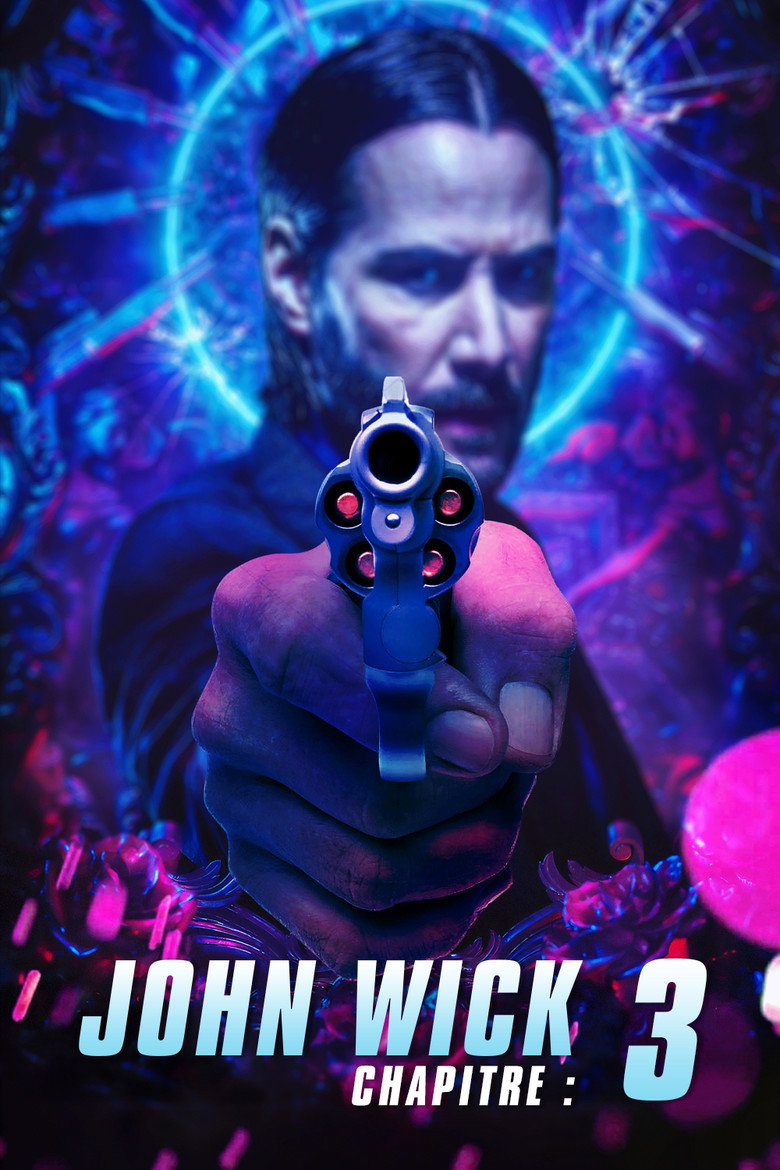
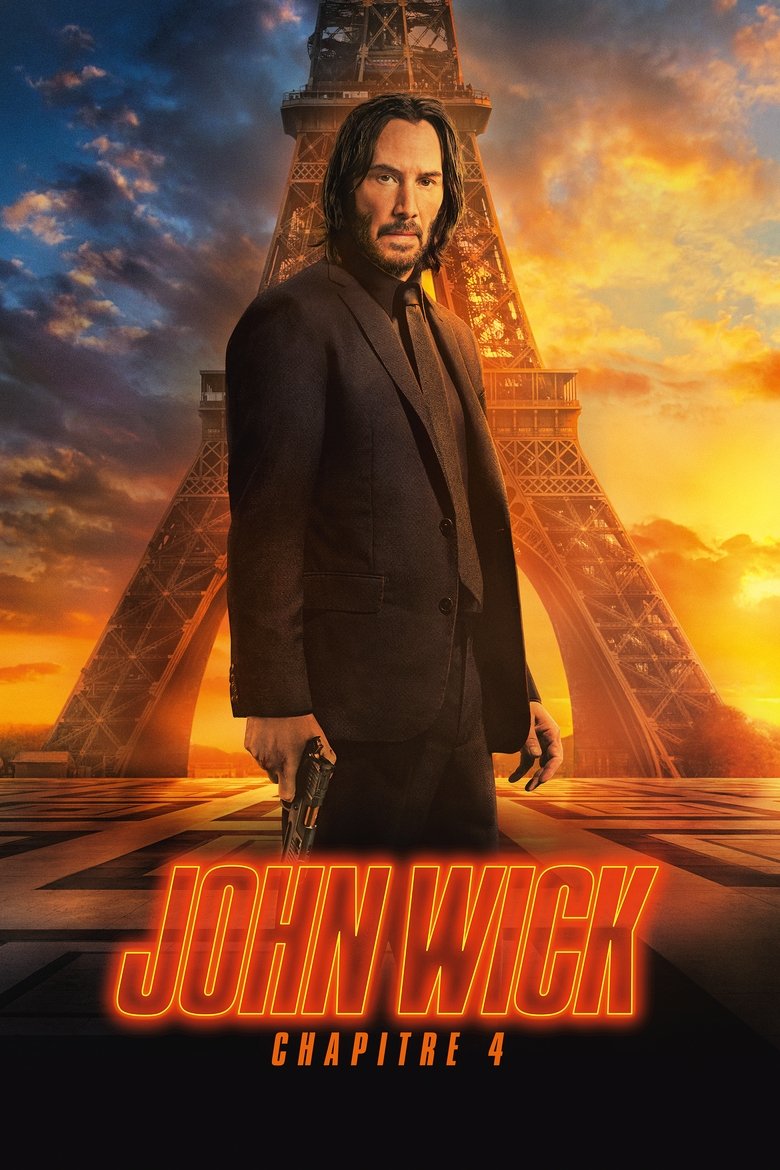
In 2014, John Wick introduced a former assassin played by Keanu Reeves.
The first film, directed by Chad Stahelski with David Leitch, was initially much smaller in scale than Hollywood’s largest franchises.
Its visual style, action choreography and criminal underworld nevertheless attracted a steadily growing audience.
The sequels progressively expanded the mythology of the High Table and transformed John Wick into one of Lionsgate’s most important properties.
The franchise later expanded through different spin-off projects.
Now You See Me and the diversification of franchises
Lionsgate simultaneously developed other popular film series.
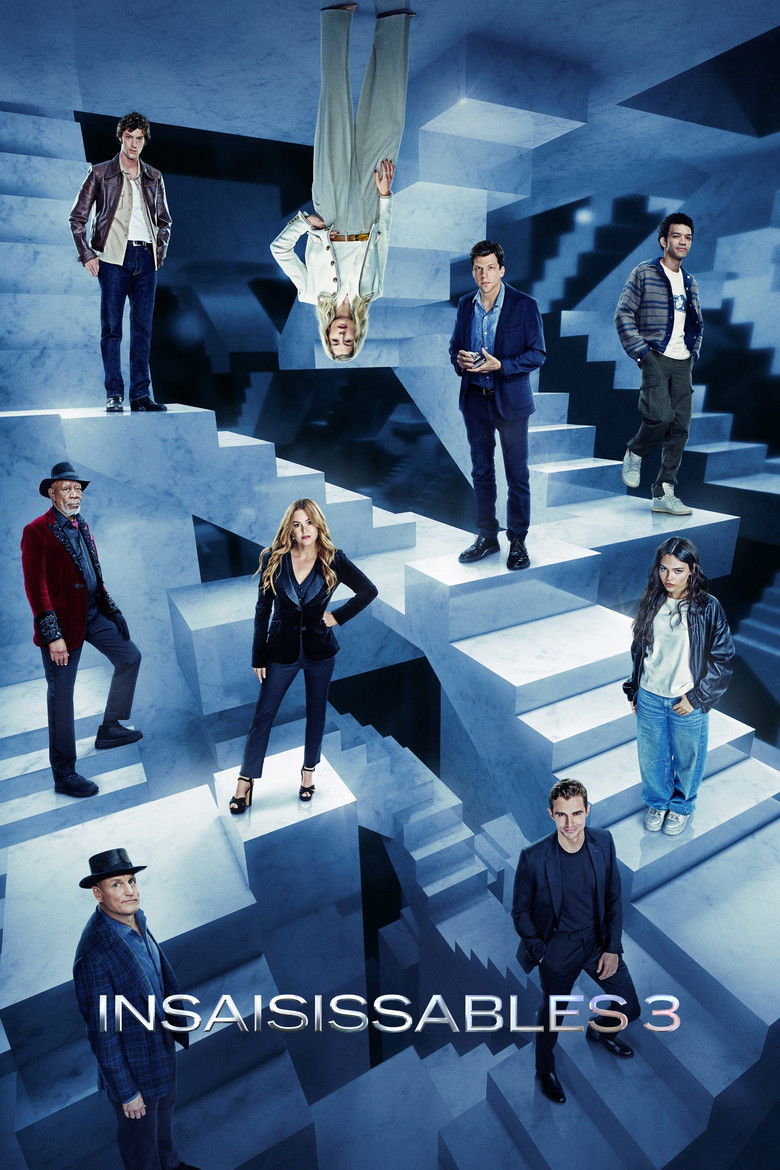
Now You See Me, launched in 2013, mixes heist cinema, illusionism and thriller around a group of magicians.
The property gradually established itself as another recognizable Lionsgate franchise.
The studio thus confirmed its ability to build a catalog from universes of very different sizes instead of depending on a single dominant series.
2016 — Acquisition of Starz
In 2016, Lionsgate completed one of the largest transactions in its history with the acquisition of Starz.
The premium platform operated its own channels, streaming services and original series.
The deal was intended to combine content production with direct access to a subscription distribution network.
For several years, Lionsgate and Starz therefore formed the two major pillars of the same group.
This integration would eventually be reconsidered so that both businesses could operate separately.
2018 — 3 Arts Entertainment
In 2018, Lionsgate acquired a majority stake in 3 Arts Entertainment, a management and production company representing numerous artists and creators.
The transaction further broadened Lionsgate’s business model.
The group was no longer limited to producing and distributing works: it also established a significant presence in talent management and project creation at an earlier stage.
3 Arts remains an important part of the current Lionsgate structure.
From independent films to major awards
Lionsgate and its different labels continued at the same time to distribute or support films receiving significant critical recognition.
Precious, La La Land, Wonder and Knives Out illustrate different aspects of this catalog.
The case of La La Land, distributed by Summit Entertainment, nevertheless highlights the importance of distinguishing the group’s different labels.
Lionsgate is the parent organization, but its subsidiaries and brands can retain their own production or distribution identities.
2023 — Acquisition of eOne
In December 2023, Lionsgate acquired a large part of Entertainment One, generally known as eOne, from Hasbro.
The transaction brought additional content, production capabilities and international operations.
It particularly strengthened the group’s television production business.
Lionsgate therefore continued a strategy it had followed since its foundation: expanding its library and capabilities through targeted acquisitions rather than attempting to replicate the exact structure of traditional majors.
2024 — Lionsgate Studios becomes a publicly traded company
In May 2024, a new structure called Lionsgate Studios began trading separately.
It primarily brought together the group’s film and television production and distribution operations, along with its library.
At that stage, the former Lions Gate Entertainment still retained a majority interest in the company and continued to own Starz.
The transaction was mainly the first step toward a much clearer separation between the studio and the premium streaming business.
2025 — Complete separation from Starz
In May 2025, Lionsgate completed the separation of its businesses from Starz.
Two independent companies emerged.
The studio became Lionsgate Studios Corp., while the former parent company was renamed Starz Entertainment Corp. and retained the Starz business.
The restructuring may appear legally complex, but it does not represent the creation of a new studio for the PANACHES catalog.
The current Lionsgate is treated as the continuation of the historic film and television operations developed since 1997.
It therefore makes more sense to preserve a single Lionsgate entity founded in 1997, rather than create a new profile beginning in 2024 or 2025.
Lionsgate today
Since its separation from Starz, Lionsgate has operated as an independent company primarily focused on the creation and exploitation of content.
It brings together the Motion Picture Group, television production operations, different labels and companies such as Summit Entertainment, eOne and 3 Arts Entertainment, along with a library of more than 20,000 titles.
Its franchise portfolio notably includes The Hunger Games, John Wick, The Twilight Saga, Saw and Now You See Me.
This structure makes Lionsgate a distinctive player: far larger than a small independent producer, but still separate from historic majors such as Disney, Warner Bros., Universal, Paramount or Sony Pictures.
What sets it apart
An independent studio that became a global player
Lionsgate is far more recent than Hollywood’s traditional majors.
Founded in 1997, it nevertheless managed within a few decades to build a catalog and distribution capacity large enough to compete directly in the global market.
Its growth relies less on a century-old legacy than on a succession of acquisitions, franchises and editorial bets.
This trajectory is one of its defining characteristics.
A strong culture of genre filmmaking
Horror, thriller and action occupy an important place in the studio’s history.
Saw is the clearest example, but this culture can also be found across various productions from labels acquired over time.
Lionsgate has often accepted projects with controlled budgets but strong enough identities to reach clearly defined audiences.
This approach allows the company to limit certain risks while leaving room for a success to grow into a franchise.
Franchises built at different scales
Lionsgate owns several major global properties, but they did not all emerge in the same way.
The Hunger Games was conceived from the beginning as a major literary adaptation.
John Wick, by contrast, grew from a relatively contained action film into a much broader universe.
Saw transformed a modest horror production into a long-running franchise.
This variety illustrates the studio’s ability to recognize a project’s potential after release rather than automatically imposing a blockbuster strategy from the first film.
Growth built largely through acquisitions
A major part of modern Lionsgate comes from companies acquired over time.
Trimark, Artisan Entertainment, Mandate Pictures, Summit Entertainment, 3 Arts Entertainment and eOne each contributed different catalogs, capabilities or franchises.
Lionsgate therefore functions as a collection of complementary structures.
This explains why several labels should remain separate in PANACHES even when they belong to the same group.
A major presence in both film and television
Unlike a studio focused exclusively on theatrical releases, Lionsgate has substantial television operations.
Mad Men, Weeds, Nurse Jackie, Orange Is the New Black, The Rookie and the Power universe illustrate this diversification.
This presence across different formats allows the studio to work with streaming platforms, traditional networks and premium services without depending on a single distribution channel.
Renewed independence after Starz
The acquisition of Starz in 2016 transformed Lionsgate into a group combining a studio with a premium platform.
The 2025 separation reversed that strategy.
Lionsgate once again became a company primarily focused on content production, distribution and exploitation, while Starz continued separately.
This evolution brings Lionsgate closer once more to its historic identity as an agile independent studio.
Good to know
- Lionsgate was founded in 1997 in Vancouver by Frank Giustra.
- Its name refers to Vancouver’s Lions Gate Bridge.
- The company expanded rapidly through acquisitions, including Cinépix Film Properties.
- Jon Feltheimer and Michael Burns joined Lionsgate in 2000 and played central roles in its expansion.
- Trimark Holdings was acquired in 2000.
- American Psycho became one of the defining films of Lionsgate’s early period.
- Artisan Entertainment was acquired in 2003, significantly increasing the group’s size.
- Saw became a major franchise beginning in 2004.
- Lionsgate participated in the U.S. distribution of Fahrenheit 9/11 in 2004.
- Crash won the Academy Award for Best Picture in 2006.
- Its television operations expanded notably with Weeds and later Mad Men.
- Mandate Pictures joined Lionsgate in 2007.
- Summit Entertainment was acquired in 2012 and continues to operate as a distinct label.
- The Hunger Games became one of the studio’s major franchises that same year.
- John Wick launched in 2014 before growing into a major Lionsgate universe.
- Starz was acquired in 2016.
- Lionsgate acquired a majority stake in 3 Arts Entertainment in 2018.
- The film and television operations of eOne were acquired in December 2023.
- A publicly traded structure called Lionsgate Studios launched in May 2024 as the first step toward separation from Starz.
- The complete separation of Lionsgate and Starz was completed in May 2025.
- The current Lionsgate is legally named Lionsgate Studios Corp. and trades on the NYSE under the symbol LION.
- The company remains incorporated in British Columbia, Canada, with principal offices in Vancouver and Santa Monica.
- Lionsgate currently owns a library of more than 20,000 films and television programs.
- Its major franchises include The Hunger Games, John Wick, The Twilight Saga, Saw and Now You See Me.
- For PANACHES, Lionsgate should remain a single historical entity founded in 1997: the 2024-2025 restructuring reflects a legal reorganization and the separation of Starz, not the disappearance and recreation of the studio.