
Overview
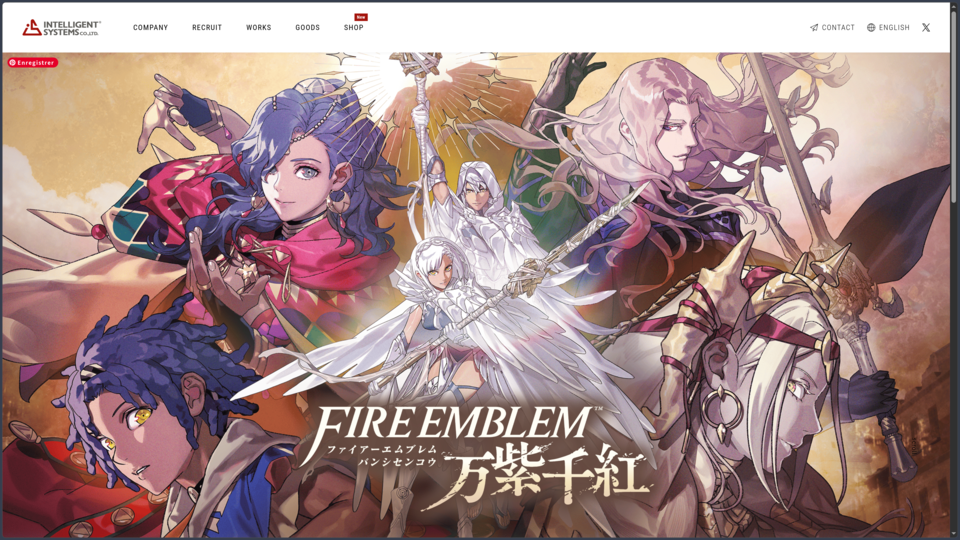
Intelligent Systems is a Japanese video game development studio founded in December 1986 in Kyoto. Its history is closely tied to Nintendo, with its founders already working for the company several years before Intelligent Systems was formally established.
This relationship goes far beyond simple outsourcing.
Since the 1980s, Intelligent Systems has contributed to Nintendo games as well as to the creation of development tools for the company’s hardware. This dual expertise — making games and understanding the machines they run on at a deep level — is one of the studio’s most enduring characteristics.
Its name is now primarily associated with Fire Emblem.
The first installment, Fire Emblem: Shadow Dragon and the Blade of Light, was released in Japan in 1990 for the Famicom. It combined grid-based tactical movement, character progression and RPG storytelling in a formula that would give rise to one of Japan’s major tactical RPG series.
Intelligent Systems has continued to develop Fire Emblem for more than three decades, evolving its systems without abandoning its core principle: units are not merely tactical pieces, but characters with identities, relationships and a place in the story.
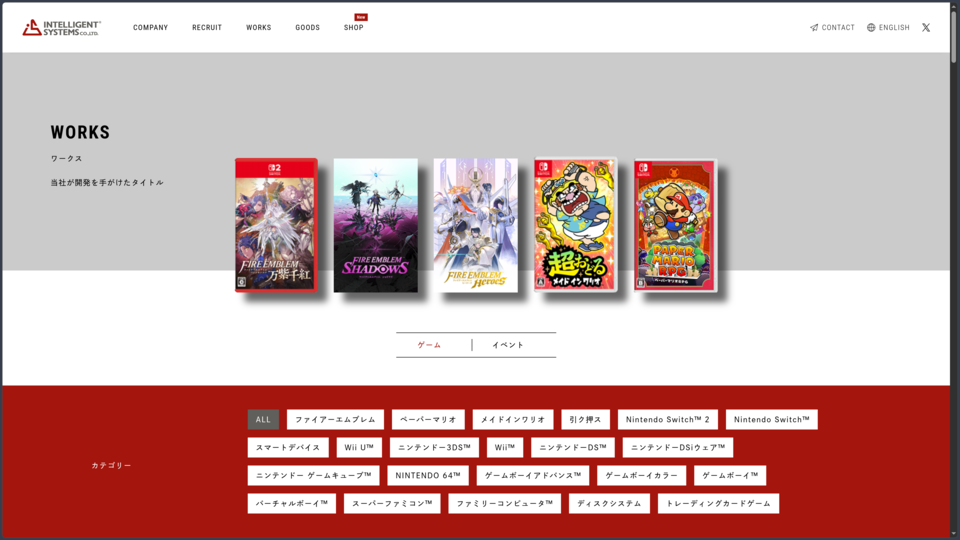
Installments such as Genealogy of the Holy War, The Binding Blade, The Blazing Blade, Path of Radiance, Awakening, Fates, Three Houses, Engage and later Fire Emblem: Fortune's Weave illustrate different stages of this evolution.
The studio is not limited to Fire Emblem, however.
Intelligent Systems also developed Famicom Wars, the strategy series later known internationally as Advance Wars. More direct and abstract than Fire Emblem, it represents another approach to turn-based strategy: units primarily represent military functions, while terrain and positioning take precedence over individual character progression.
With Paper Mario, the studio instead explores RPGs, humor and visual experimentation.
The first Paper Mario was released for Nintendo 64 in 2000 and built a world where flat characters, three-dimensional environments and paper-inspired conventions gradually became a genuine visual language. Paper Mario: The Thousand-Year Door, Super Paper Mario, Sticker Star, Color Splash and The Origami King later transformed the series’ mechanics regularly rather than repeating the same system.
WarioWare represents yet another side of the studio.
The series is based on extremely short, often absurd microgames that make use of the specific features of Nintendo hardware. Touchscreens, movement, buttons or accessories can become the core of an idea lasting only a few seconds.
This ability to move from a dense tactical RPG to an experimental comedy game or a Mario RPG demonstrates the true range of Intelligent Systems.
The studio also has a particularly long-standing technical culture. From its earliest years, its teams developed game development support tools for Nintendo hardware, from the Game Boy through several later console generations.
This activity is less visible than Fire Emblem or Paper Mario, but it partly explains the unusual relationship between the two companies.
Intelligent Systems is not simply brought in occasionally to make a game. The studio has evolved for decades in close proximity to Nintendo teams and regularly takes part in co-developed productions where responsibilities are shared between the two companies.
This proximity does not mean the two structures are interchangeable.
Nintendo is generally the publisher and owner of many of the franchises involved, while Intelligent Systems acts as developer, creative partner and, depending on the project, co-owner of certain elements particularly connected to Fire Emblem.
The exact composition of development teams can also vary.
Fire Emblem: Three Houses, for example, involved substantial work from Koei Tecmo Games alongside Nintendo and Intelligent Systems, while Fortune's Weave relies on a new development structure between Nintendo and Intelligent Systems.
In 2026, Intelligent Systems has just over 220 employees in Kyoto and remains led by Toshiyuki Nakamura.
Forty years after its founding, the studio therefore retains a rather singular position: relatively discreet as a consumer-facing brand, but responsible or jointly responsible for several series that have become essential to Nintendo’s history.
History
1983-1986 — Tools and games for Nintendo before the studio even existed
The history of Intelligent Systems begins before the company formally existed.
As early as 1983, several of its future founders worked within a division of Iwasaki Giken Kogyo on development commissions for Nintendo.
They contributed to different Famicom-era games, including Mario Bros., Duck Hunt, Donkey Kong 3, Devil World, Soccer, Wrecking Crew and the original Metroid.
The work did not concern commercial software alone.
The teams also developed tools intended to make programming on Nintendo hardware easier. This technical expertise became important enough to gradually form an independent activity.
In December 1986, the division officially became Intelligent Systems Co., Ltd.
The studio began with thirteen people divided between two small development laboratories.
1988-1999 — Famicom Wars and the birth of Fire Emblem
In 1988, Intelligent Systems contributed to Famicom Wars.
The game established the foundations of a turn-based strategy series that would later continue on Game Boy and then under the Advance Wars name internationally.
Two years later came an even more decisive title.
Fire Emblem: Shadow Dragon and the Blade of Light was released in 1990 for the Famicom.
The project combined tactical strategy and RPG systems by giving each controllable unit its own identity. Losing a character could have lasting consequences, creating a particular relationship between tactical decision-making and narrative attachment.
Intelligent Systems then developed several new installments for the Famicom and Super Famicom, including Fire Emblem Gaiden, Mystery of the Emblem, Genealogy of the Holy War and Thracia 776.
During this period, the studio simultaneously worked on other Nintendo games and continued its technical activities.
This diversity already prevented Intelligent Systems from becoming a studio devoted to a single franchise.
2000-2009 — Paper Mario, Advance Wars and Fire Emblem’s international expansion
In 2000, Intelligent Systems developed Paper Mario for Nintendo 64.
The game extended the idea of a Mario RPG while building a visual identity based on two-dimensional characters moving through three-dimensional environments.
This aesthetic gradually became the starting point for much broader experimentation around paper itself.
In parallel, the Wars series reached a turning point with Advance Wars on Game Boy Advance.
Its clear approach to strategy, commanders with distinct powers and colorful visual style helped introduce the series outside Japan.
Fire Emblem also reached an essential milestone.
Fire Emblem: The Blazing Blade, released on Game Boy Advance, became the first main installment officially commercialized in the West in 2003.
The series then continued on GameCube, Wii and Nintendo DS with titles including The Sacred Stones, Path of Radiance and Radiant Dawn.
During the same decade, Intelligent Systems also contributed to the rise of WarioWare, whose microgames regularly made use of the specific hardware features of Nintendo consoles.
The studio now had several very different identities: tactical RPG, strategy, Mario RPG and gameplay experimentation.
2010-2017 — Fire Emblem changes scale
The beginning of the 2010s was a delicate period for Fire Emblem.
The series had a long history, but its commercial performance had become uncertain enough for its future to be questioned.
Fire Emblem Awakening, released on Nintendo 3DS, radically changed that situation.
The game retained turn-based strategy while strengthening character relationships, customization and accessibility. Its success gave the series much greater international visibility.
Fire Emblem Fates then continued this momentum with several versions offering different campaigns.
In 2017, Intelligent Systems and Nintendo adapted the franchise to mobile devices with Fire Emblem Heroes.
The format reshaped maps, teams and battles for shorter sessions while bringing together characters from several generations of Fire Emblem.
The series had now become one of the major modern pillars of Nintendo’s catalogue.
2019-2024 — Three Houses, Engage and the continuity of Paper Mario
In 2019, Fire Emblem: Three Houses marked another major transformation.
The project was developed with substantial participation from Koei Tecmo Games, alongside Nintendo and Intelligent Systems.
The game greatly expanded the social and narrative aspects of the series around the Officers Academy, then a conflict told from several perspectives.
In 2020, Intelligent Systems simultaneously continued its work on Paper Mario: The Origami King, once again using the physical idea of paper through origami and a circular battle system.
Fire Emblem Engage followed in 2023.
The installment moved back toward a stronger tactical emphasis by building its systems around Emblems, heroes from earlier games who could bond with current characters.
In 2024, Intelligent Systems also took part in the return of Paper Mario: The Thousand-Year Door on Nintendo Switch, bringing one of the series’ most appreciated installments back into circulation.
This period clearly shows how the studio treats its heritage: some series are deeply transformed, while older games can return through new editions.
2025-2026 — Forty years of development and a new stage for Fire Emblem
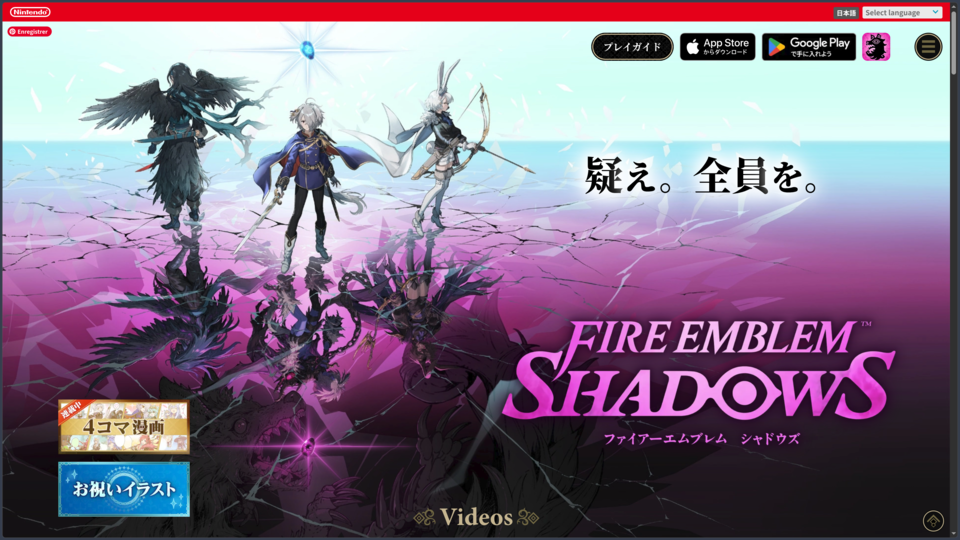
In 2025, Intelligent Systems continued its activities across several platforms, notably with Fire Emblem Shadows on mobile devices.
The year 2026 marks the company’s fortieth anniversary.
The studio remains involved in different Nintendo productions and notably contributes to certain graphical elements of Rhythm Heaven Groove, while continuing its own projects.
On September 17, 2026, Fire Emblem: Fortune's Weave was released for Nintendo Switch 2.
The game shares its world with Fire Emblem: Three Houses but notably explores the region of Dagda, already referenced in the 2019 installment.
For this project, Nintendo and Intelligent Systems established a development structure different from that of Three Houses, where Koei Tecmo had played a major role.
Four decades after its founding, Intelligent Systems therefore returns to one of its most consistent characteristics: evolving long-running series without simply reproducing the previous installment.
What sets it apart
A relationship with Nintendo that predates the studio itself
Few developers have such a long-standing relationship with a hardware manufacturer.
The future founders of Intelligent Systems were already working on Nintendo productions in 1983, three years before the company was formally established.
That proximity then continued through every generation of Nintendo hardware.
The studio therefore does not function as an occasional external partner: a significant part of its history developed in parallel with Nintendo’s hardware and franchises.
Combining game creation with technical expertise
Intelligent Systems has never been only a game design studio.
The company also has a long history of creating development tools.
This technical culture gives it an unusually deep understanding of Nintendo platforms and contributes to an approach to game design built around the specific capabilities of each machine.
WarioWare is an obvious example, but this logic can also be found throughout many other productions.
Developing series that have almost nothing in common
Fire Emblem, Paper Mario, WarioWare and Advance Wars share the same studio but very few gameplay rules.
Fire Emblem builds tactical battles around characters and stories.
Advance Wars favors more abstract and immediately readable strategy.
Paper Mario combines RPG systems, adventure, humor and visual experimentation.
WarioWare sometimes reduces a gameplay idea to only a few seconds.
This diversity prevents Intelligent Systems from being reduced to a single specialty.
Evolving series through transformation rather than simple accumulation
The studio’s series regularly change structure.
Fire Emblem may strengthen social relationships, then return toward a more tactical approach or significantly alter its central system.
Paper Mario moves from traditional RPG systems to action, stickers, paint and then origami.
WarioWare rebuilds its microgames around the specific features of each console.
Intelligent Systems therefore seems more attached to the central idea of a series than to reproducing its previous mechanics exactly.
Good to know
- Intelligent Systems was founded in December 1986 in Kyoto, with an initial team of thirteen people.
- Its founders were already working from 1983 on games and development tools for Nintendo.
- The studio created Fire Emblem in 1990 with Shadow Dragon and the Blade of Light on Famicom.
- Intelligent Systems is also closely associated with the Paper Mario, WarioWare and Famicom Wars / Advance Wars series.
- For several generations, the company developed development support tools for Nintendo consoles alongside its games.
- Nintendo and Intelligent Systems are two separate companies: their relationship is based on an exceptionally close historical collaboration.
- As of April 2026, Intelligent Systems has 223 employees and its president is Toshiyuki Nakamura.
- Fire Emblem: Fortune's Weave, developed as part of a new direct collaboration between Nintendo and Intelligent Systems, was released on September 17, 2026 for Nintendo Switch 2.