



Overview
DreamWorks Animation is an American studio specializing in animated films and television series whose history began in 1994 with the creation of DreamWorks SKG by Steven Spielberg, Jeffrey Katzenberg and David Geffen.
Animation was one of the new studio’s core activities from the beginning.
Under the leadership of Jeffrey Katzenberg, a former Disney executive, DreamWorks sought to build an ambitious alternative to the historic leaders of American animation.
Its first animated feature films arrived in 1998 with Antz and The Prince of Egypt.
DreamWorks initially developed several approaches in parallel: traditional animation, computer-generated imagery, collaborations with other studios and projects aimed at both younger audiences and adults.
The decisive turning point came in 2001 with Shrek.
The comedy subverted fairy-tale conventions, introduced a more irreverent form of humor and became a worldwide phenomenon. It also won the first-ever Academy Award for Best Animated Feature.
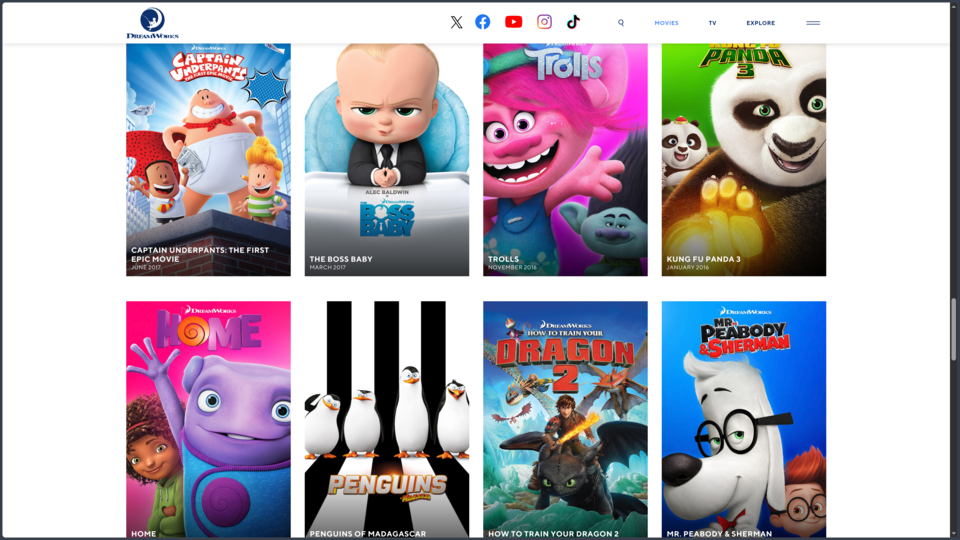
DreamWorks subsequently turned several of its creations into major franchises: Shrek, Madagascar, Kung Fu Panda, How to Train Your Dragon, Trolls, The Croods, The Boss Baby and The Bad Guys.
In 2004, the animation business was separated from the rest of DreamWorks and became DreamWorks Animation SKG, an independent publicly traded company.
Another major transformation came in 2016, when NBCUniversal, a Comcast subsidiary, acquired DreamWorks Animation.
The studio joined Universal Filmed Entertainment Group and progressively expanded its characters across film, television, theme parks, merchandise and various digital experiences.
DreamWorks Animation remains one of the world’s leading animation studios today.
History
1994 — The birth of DreamWorks
In October 1994, Steven Spielberg, Jeffrey Katzenberg and David Geffen founded DreamWorks SKG.
The initials SKG come from the surnames of the three founders.
The ambition was considerable: to create a new major studio capable of producing film, television, music and animation.
The creation of DreamWorks was a rare event in an industry that had long been dominated by the same major studios.
Jeffrey Katzenberg, who had recently left Disney after playing an important role in the studio’s animation renaissance during the early 1990s, naturally became a central figure in developing the animation business.
DreamWorks began building its own teams while also looking for technology partners capable of accelerating its development.
PDI and computer animation
DreamWorks quickly developed a close relationship with Pacific Data Images, generally known as PDI.
Founded in 1980, PDI already had significant experience in computer-generated imagery and digital effects.
DreamWorks initially acquired a stake in the company before progressively taking full control.
The partnership became fundamental to the studio’s strategy.
As Pixar demonstrated the potential of fully computer-animated feature films with Toy Story, DreamWorks also decided to invest heavily in this new form of animation.
1998 — Antz
The first DreamWorks animated feature released theatrically was Antz, in 1998.
Created with computer animation, the film follows Z, a worker ant who refuses the role assigned to him by the colony.
Featuring the voices of Woody Allen, Sharon Stone and Gene Hackman in its original version, Antz stood out for humor and themes also aimed at adult audiences.
The film arrived only weeks before Pixar’s A Bug’s Life, creating one of the first major rivalries between the new generation of computer-animation studios.
1998 — The Prince of Egypt
A few months after Antz, DreamWorks released The Prince of Egypt.
The film tells the story of Moses in an especially ambitious traditionally animated production.
DreamWorks pursued a tone very different from that of its competitors, with spectacular staging, dramatic themes and a strong musical dimension.
The song When You Believe, notably performed by Whitney Houston and Mariah Carey in its commercial version, won the Academy Award for Best Original Song.
The Prince of Egypt became one of the defining works of DreamWorks Animation’s early years.
Animation in multiple styles
During its early years, DreamWorks did not immediately choose between traditional animation and computer-generated imagery.
The studio produced The Road to El Dorado in 2D animation while continuing its digital experiments.
This diversity allowed the company to search for its own identity.
DreamWorks also developed a partnership with British studio Aardman Animations, a specialist in stop-motion animation.
The first major result of this collaboration was Chicken Run, released in 2000.
The film became a major success and strengthened DreamWorks’ ability to offer visually very different universes.
2001 — Shrek changes everything
In 2001, DreamWorks released Shrek.
Loosely adapted from William Steig’s book, the film follows a solitary ogre forced to rescue Princess Fiona with the help of an especially talkative donkey.
But Shrek stood out above all for the way it subverted traditional fairy tales.
The film played with the clichés of princesses, Prince Charmings and fantasy creatures while incorporating numerous contemporary references.
Its humor appealed to several generations.
The success was enormous.
Shrek quickly became the defining character of DreamWorks.
The first Academy Award for Best Animated Feature
The following year, Shrek won the first-ever Academy Award for Best Animated Feature.
The category had just been created by the Academy.
The victory had strong symbolic significance.
DreamWorks Animation had existed for only a few years but had already managed to establish itself against the most powerful players in the sector.
The success encouraged the studio to invest further in computer animation and in franchises capable of returning regularly to theaters.
Spirit and the final major 2D productions
DreamWorks continued producing films strongly based on traditional animation for a few more years.
Spirit: Stallion of the Cimarron, released in 2002, follows a wild mustang in the American West.
The film emphasizes movement, music and expression rather than fully anthropomorphizing its protagonist.
Sinbad: Legend of the Seven Seas, released in 2003, was another of the studio’s final major 2D productions.
As the market evolved, DreamWorks progressively concentrated its theatrical activity on computer-generated animation.
2004 — Shrek 2
Shrek 2 was released in 2004.
The film expanded the world of Far Far Away and notably introduced Puss in Boots, voiced by Antonio Banderas in the original version.
Its success surpassed that of the first film.
Shrek became a full global franchise, giving the studio a property that could expand into sequels, spin-offs, television, games, stage productions and attractions.
Puss in Boots would later receive his own film series.
2004 — DreamWorks Animation becomes independent
The year 2004 also marked a major industrial turning point.
Until then, DreamWorks Animation had operated as a division of DreamWorks Studios.
On October 27, 2004, the animation business was officially separated from the rest of the company.
The following day, shares of DreamWorks Animation SKG began trading publicly.
The studio therefore became an autonomous company focused almost entirely on animation and family entertainment properties.
Jeffrey Katzenberg remained at the center of the new organization.
This independence allowed DreamWorks Animation to concentrate its resources on a regular slate of feature films.
2005 — Madagascar
In 2005, DreamWorks launched another major franchise with Madagascar.
Alex the lion, Marty the zebra, Melman the giraffe and Gloria the hippopotamus accidentally leave New York’s Central Park Zoo and find themselves in the wild.
The film adopts a highly stylized visual identity and fast-paced comedy.
Its success led to several sequels and spin-offs.
The Madagascar penguins became popular enough to receive their own television series and later their own feature film.
Wallace & Gromit and Aardman
The partnership between DreamWorks and Aardman continued with Wallace & Gromit: The Curse of the Were-Rabbit, released in 2005.
The film brought Nick Park’s famous characters to feature length.
It won the Academy Award for Best Animated Feature.
Flushed Away, released in 2006, became another major collaboration between the two companies, this time using computer animation designed to resemble the visual language of clay animation.
The partnership between DreamWorks and Aardman later ended, with both studios continuing independently.
2008 — Kung Fu Panda
In 2008, DreamWorks introduced Kung Fu Panda.
The film follows Po, a kung-fu-obsessed panda unexpectedly chosen as the Dragon Warrior.
The character’s humor is combined with genuine respect for martial-arts cinema and especially dynamic animation.
Its success led to several sequels and television series.
Po quickly joined Shrek among the studio’s most recognizable characters.
2010 — How to Train Your Dragon
In 2010, DreamWorks adapted Cressida Cowell’s books with How to Train Your Dragon.
The film follows the relationship between young Viking Hiccup and the dragon Toothless.
The production stands out for its flight sequences, Nordic setting and especially the emotional bond between its two protagonists.
The film became a major critical and commercial success.
Two sequels later expanded the story while allowing the characters to genuinely age.
The trilogy became one of the most acclaimed parts of the DreamWorks catalog.
A growing number of franchises
During the 2010s, DreamWorks developed an increasingly broad portfolio.
The Croods follows a prehistoric family facing a changing world.
Trolls transforms the famous dolls into an extremely colorful musical universe.
The Boss Baby plays with the contrast between family life and a parody of corporate culture.
The studio also developed Megamind, Rise of the Guardians, Turbo, Home and Mr. Peabody & Sherman.
Not all became franchises of equal scale, but they demonstrated the studio’s willingness to regularly test new concepts.
2013 — DreamWorks expands into television
In 2013, DreamWorks Animation significantly accelerated its television activity through a major agreement with Netflix.
The studio began developing hundreds of hours of programming for children and families.
Several series extended film universes, including All Hail King Julien, The Adventures of Puss in Boots and The Boss Baby: Back in Business.
Others revisited familiar properties such as Voltron Legendary Defender and She-Ra and the Princesses of Power.
DreamWorks also worked with Guillermo del Toro on Trollhunters and the broader Tales of Arcadia universe.
Television progressively became an important part of the studio’s activity.
2016 — NBCUniversal acquires DreamWorks Animation
In 2016, NBCUniversal announced the acquisition of DreamWorks Animation for approximately $3.8 billion.
The transaction was completed on August 22, 2016.
DreamWorks Animation then joined Universal Filmed Entertainment Group.
The company ceased to operate as an independent publicly traded business and became part of NBCUniversal, itself controlled by Comcast.
The acquisition gave NBCUniversal an enormous portfolio of family characters and franchises.
For DreamWorks, it opened access to Universal’s distribution, television, streaming, merchandise and theme-park ecosystem.
DreamWorks and Universal Pictures
Following the acquisition, Universal Pictures became the principal distributor of new DreamWorks Animation feature films.
The two brands nevertheless remained clearly identifiable.
DreamWorks kept its creative identity, logo and teams, while Universal notably provided worldwide distribution infrastructure.
This organization placed DreamWorks alongside Illumination, another major animation studio connected to Universal, while allowing both companies to maintain distinct styles and catalogs.
2019 — The end of the Dragon trilogy
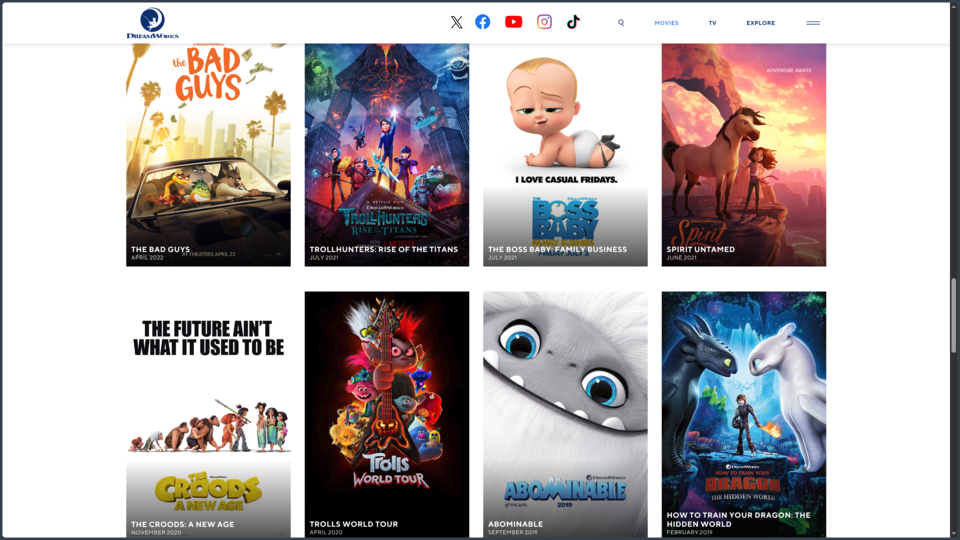
How to Train Your Dragon: The Hidden World, released in 2019, concluded the trilogy centered on Hiccup and Toothless.
The film offered a genuine ending to the journey that had begun nine years earlier.
This ability to let its characters grow and accept a conclusion particularly distinguishes the series within the DreamWorks catalog.
The universe nevertheless continued through other productions and adaptations.
2020 — Trolls World Tour and the pandemic
In 2020, Trolls World Tour found itself at the center of a major shift in the film industry.
The Covid-19 pandemic caused widespread theater closures.
Universal chose to make the film quickly available through premium video on demand while maintaining limited theatrical exhibition where possible.
The decision triggered major debates with theater owners.
It became one of the symbolic events in the accelerated transformation of release windows during the pandemic.
2022 — The Bad Guys
In 2022, DreamWorks launched The Bad Guys, adapted from Aaron Blabey’s books.
The film adopted a more graphic art direction than many of the studio’s previous productions.
Its characters and environments combine 3D animation with influences from illustration and traditional 2D animation.
This visual evolution reflected a broader transformation in American animation after decades dominated by relatively realistic 3D rendering.
The film’s success led to a sequel released in 2025.
Puss in Boots: The Last Wish
Still within the Shrek universe, DreamWorks released Puss in Boots: The Last Wish in 2022.
More than a decade after the character’s first solo film, the new adventure also adopted a much more stylized visual identity.
The story confronts Puss with the realization that he has already used eight of his nine lives.
The film combines comedy, adventure and reflections on mortality.
Its critical reception helped renew interest in the Shrek universe ahead of its future return.
2024 — The Wild Robot
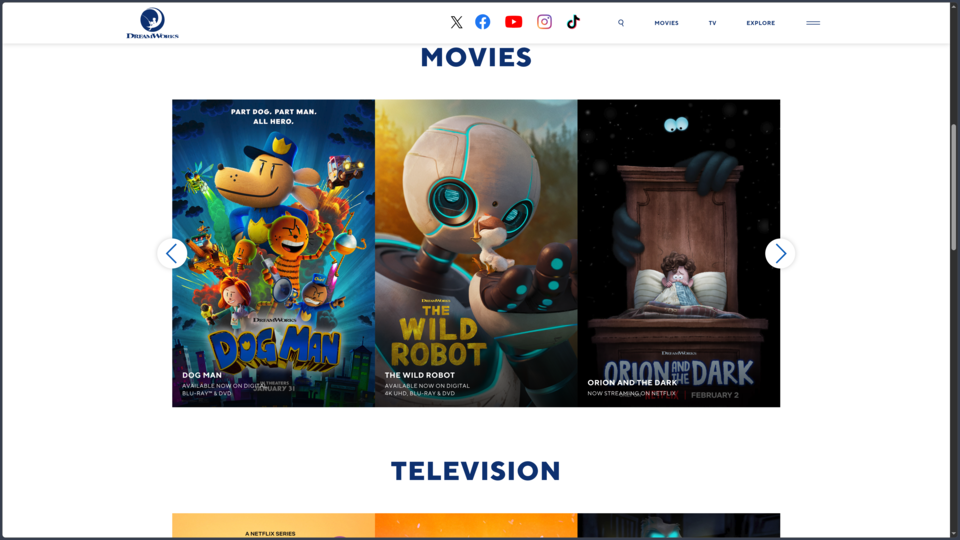
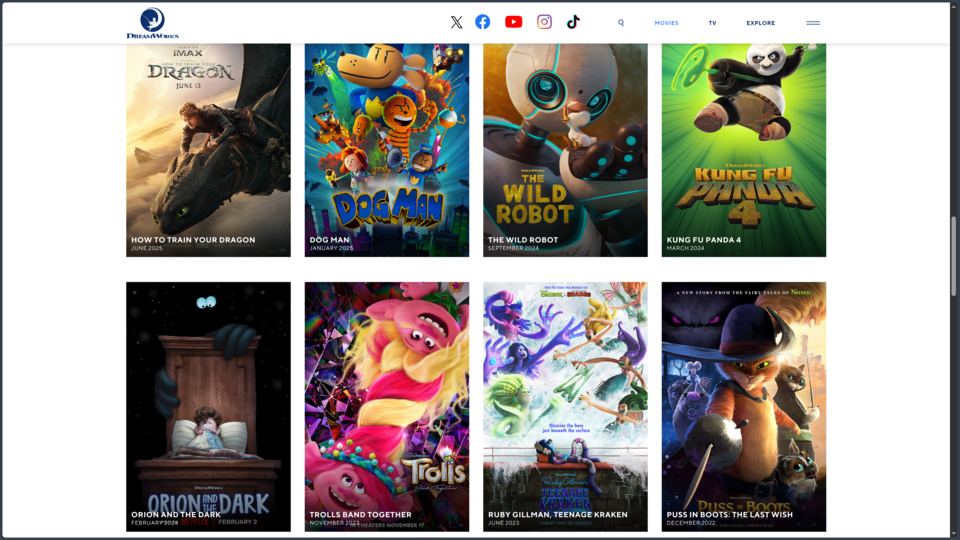
In 2024, DreamWorks released The Wild Robot, adapted from Peter Brown’s novel.
The film follows Roz, a robot stranded on a wild island who gradually learns to communicate with animals and care for a young gosling.
Directed by Chris Sanders, the film adopts a painterly aesthetic that moves away from traditional digital rendering.
It achieved major critical and commercial success.
The Wild Robot illustrates an important evolution at DreamWorks toward more varied art directions and animation that allows texture and visible graphic expression to remain part of the image.
A new visual generation
This evolution is not limited to a single film.
The Bad Guys and Puss in Boots: The Last Wish also experiment with more graphic imagery, deliberately stylized movement and influences from comics and traditional animation.
DreamWorks therefore demonstrates that a studio created during the rise of computer animation can continue evolving its visual language.
This experimentation also allows individual productions to develop more distinct identities.
2025 — A particularly active year
DreamWorks continued its activity in 2025 with several significant productions.
Dog Man, adapted from Dav Pilkey’s books, joined the studio’s catalog.
The Bad Guys 2 continued the adventures of the criminal gang turned heroic.
Gabby’s Dollhouse: The Movie brought one of DreamWorks’ popular television properties to the big screen.
The studio’s official catalog also includes the live-action adaptation of How to Train Your Dragon, developed from the universe established by the animated trilogy.
DreamWorks now operates as a brand capable of moving its properties across film, television, merchandise and physical experiences.
2026 — More than thirty years of animation
In 2026, DreamWorks Animation continues operating within NBCUniversal.
Its Glendale campus hosts more than a thousand employees involved in feature-film production, including artists, animators, engineers and specialists in digital technologies.
The studio now has more than thirty years of history.
Its catalog brings together both original creations and major international franchises.
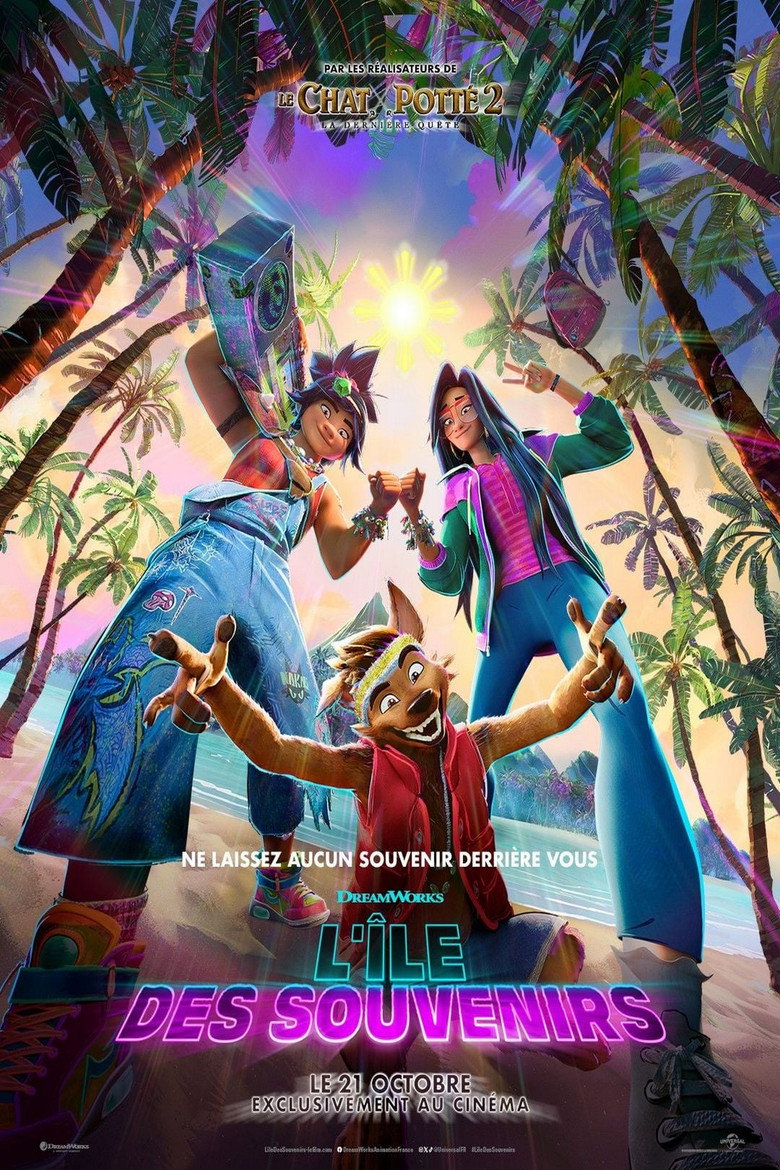
The original film Forgotten Island also joins its output in 2026.
At the same time, DreamWorks is preparing the return of its most iconic character with Shrek 5, announced for 2027.
The studio therefore continues alternating new creations with returns to its historic universes.
What sets it apart
An immediately recognizable tone
DreamWorks quickly distinguished itself through its humor.
Beginning with Antz and especially Shrek, the studio developed films capable of appealing simultaneously to children and adults.
Cultural references, parody and imperfect characters often play important roles.
This approach allowed DreamWorks to offer an alternative to more traditional animated fairy-tale models.
Heroes far from traditional ideals
DreamWorks protagonists are rarely perfect heroes.
Shrek is an ogre who simply wants to be left alone.
Po is a clumsy panda obsessed with kung fu.
Hiccup does not fit the expectations of his Viking community.
The characters in The Bad Guys begin as criminals.
Roz, in The Wild Robot, is a machine forced to gradually learn what it means to care for others.
This affection for unexpected heroes is one of the studio’s recurring themes.
An exceptional franchise portfolio
DreamWorks owns several of contemporary animation’s most important franchises.
Shrek, Madagascar, Kung Fu Panda, How to Train Your Dragon, Trolls, The Boss Baby, The Croods and The Bad Guys can all expand across multiple films and formats.
This range allows the studio to alternate between new creations and returns to universes already familiar to audiences.
An important place in computer-animation history
DreamWorks has accompanied nearly the entire evolution of computer-animated feature films.
Antz belongs to the first generation of fully 3D animated movies.
Shrek pushed character and environmental animation further.
Later productions progressively improved hair, fabrics, lighting, crowds, water and landscapes.
More recently, the studio has challenged digital realism with works featuring much more pronounced graphic styles.
Technology serving artists
DreamWorks has historically maintained a strong technological culture.
The integration of PDI played a fundamental role in its early development.
The studio later built its own tools and infrastructure for digital-image production.
This relationship between engineering and creation remains essential: new technologies are not pursued simply for technical achievement, but as a way to give directors and artists greater visual possibilities.
From cinema to a broader entertainment universe
Since joining NBCUniversal, DreamWorks has expanded far beyond feature films.
Its characters appear in series, games, merchandise, stage productions and attractions.
Universes such as Shrek, How to Train Your Dragon, Kung Fu Panda and Trolls therefore maintain a presence beyond the films themselves.
This expansion allows DreamWorks to reach new generations without relying solely on regular theatrical sequels.
Good to know
- DreamWorks Animation traces its history back to 1994, the year DreamWorks SKG was created.
- DreamWorks SKG was founded by Steven Spielberg, Jeffrey Katzenberg and David Geffen.
- Jeffrey Katzenberg played a central role in creating and developing the animation business.
- DreamWorks developed an important early relationship with Pacific Data Images (PDI).
- Antz, released in 1998, was the first DreamWorks animated feature released theatrically.
- The Prince of Egypt was also released in 1998 and became one of the major films of the studio’s early years.
- DreamWorks collaborated with Aardman Animations on films such as Chicken Run and Wallace & Gromit: The Curse of the Were-Rabbit.
- Shrek, released in 2001, profoundly transformed the studio’s history.
- Shrek won the first Academy Award for Best Animated Feature.
- Spirit: Stallion of the Cimarron was released in 2002.
- Shrek 2 became a major success in 2004.
- On October 27, 2004, DreamWorks Animation was separated from DreamWorks Studios.
- Its shares began trading publicly on October 28, 2004.
- Madagascar launched another major franchise in 2005.
- Kung Fu Panda began in 2008.
- How to Train Your Dragon began in 2010.
- The Croods was released in 2013.
- DreamWorks significantly expanded its television production from 2013, notably through a major agreement with Netflix.
- Trolls was released in 2016.
- NBCUniversal acquired DreamWorks Animation in August 2016.
- The transaction valued DreamWorks Animation at approximately $3.8 billion.
- DreamWorks Animation then became part of Universal Filmed Entertainment Group.
- Universal Pictures distributes the studio’s new theatrical productions.
- How to Train Your Dragon: The Hidden World concluded the main trilogy in 2019.
- Trolls World Tour played an important role in debates surrounding digital distribution during the 2020 pandemic.
- The Bad Guys was released in 2022 with a more stylized art direction.
- Puss in Boots: The Last Wish continued the Shrek universe that same year with a new visual approach.
- The Wild Robot, directed by Chris Sanders, was released in 2024.
- DreamWorks develops feature films as well as numerous animated television series for different platforms.
- The studio created franchises including Shrek, Madagascar, Kung Fu Panda, How to Train Your Dragon, Trolls, The Boss Baby, The Croods and The Bad Guys.
- In 2024, NBCUniversal stated that DreamWorks Animation films had surpassed $17 billion in cumulative worldwide box-office revenue.
- Dog Man and The Bad Guys 2 joined the catalog in 2025.
- Forgotten Island was released in 2026.
- Shrek 5 is scheduled for 2027.
- In 2026, DreamWorks Animation remains part of NBCUniversal, within the broader Universal ecosystem.