






Overview
Bandai is a Japanese company founded in 1950, historically known for toys, model kits, figures and merchandise based on popular characters.
Its role in anime history, however, extends far beyond that of a simple licensed-merchandise manufacturer.
From the beginning of the 1980s, Bandai directly developed activities devoted to the planning, financing, production and commercialization of audiovisual content.
This period coincided with the emergence of new forms of production in Japan, especially OVAs, animated works designed specifically for the home-video market.
Bandai consequently became involved in projects that would become important in the history of Japanese animation.
In 1983, the company notably launched Dallos, generally regarded as the first commercial OVA in the Japanese industry.
Bandai later financed Royal Space Force: The Wings of Honnêamise, Gainax’s first feature film, released in 1987.
The company also participated in productions such as Gunbuster and Patlabor.
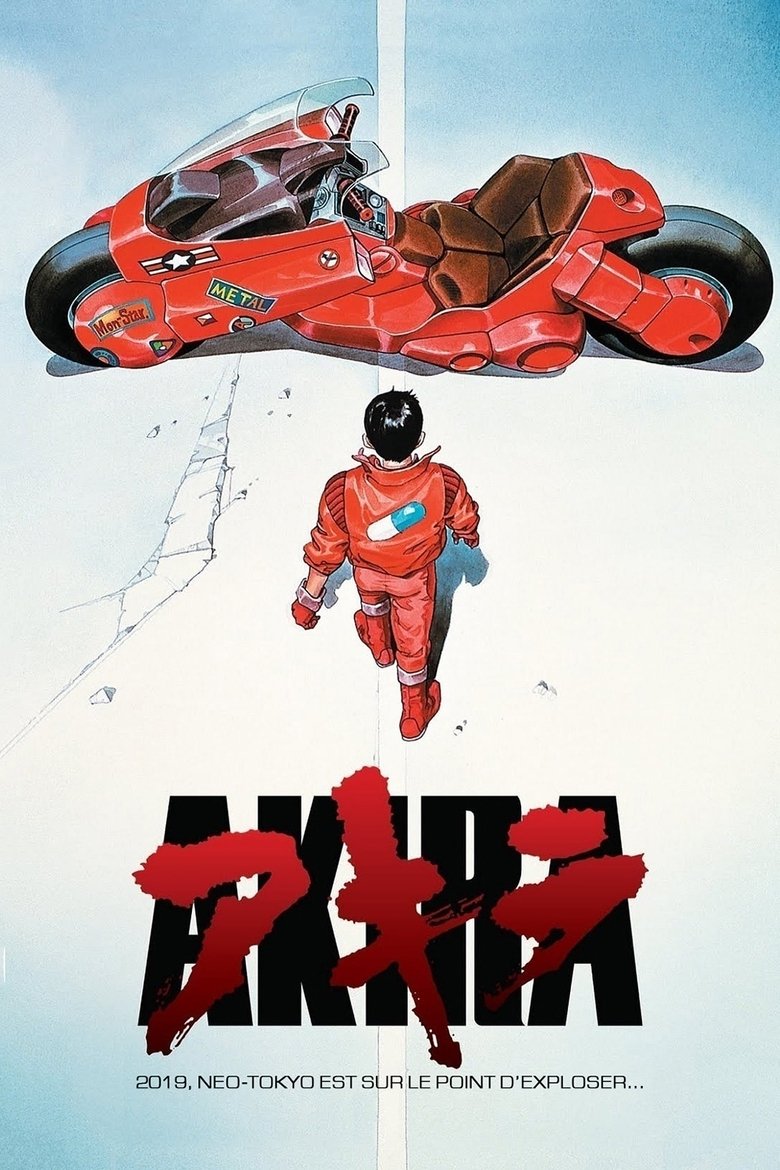
In 1988, Bandai was part of the major Akira Committee, the consortium created to finance and support Katsuhiro Ōtomo’s film Akira.
Bandai did not directly animate the film: the animation production was primarily handled by Tokyo Movie Shinsha, later TMS Entertainment.
Its role was more closely connected to financing, production and audiovisual exploitation.
This distinction is important for understanding Bandai’s place within anime.
The company does not operate like a traditional animation studio whose primary business is based on internal animation teams comparable to Toei Animation, Madhouse or Sunrise.
Instead, it acts more as a producer, investor, rights holder and participant in the media mix, connecting anime, video, toys, model kits and other merchandise.
In 1992, Bandai transferred its video-products business to Bandai Visual.
From that date onward, Bandai Visual became one of the group’s major audiovisual companies and continued this history through works such as Ghost in the Shell and numerous animated productions.
Bandai simultaneously continued its own activities, mainly around toys and IP exploitation.
Following the integration of Bandai and Namco within the same group in 2005, successive reorganizations gradually led to the current Bandai Namco structure.
Today, the audiovisual legacy of Bandai Visual can notably be found within Bandai Namco Filmworks, while Bandai remains a separate company primarily focused on Toy & Hobby.
For historical works from the 1980s and early 1990s, credits directly attributed to Bandai should therefore remain attached to this entity and should not be retroactively replaced by Bandai Visual or Bandai Namco Filmworks.
History
1950 — Bandai is founded
The company was founded on July 5, 1950 in Tokyo under the name Bandai-ya.
Its business was initially focused on toys.
Bandai quickly developed its own products and also began exporting.
Over the years, the company became one of Japan’s major manufacturers in the sector.
In 1961, Bandai-ya officially adopted the name Bandai.
The development of licensed characters
During the 1960s and especially the 1970s, the relationship between television, animation and toys gradually became essential to Bandai’s business model.
The company developed products associated with popular characters.
This strategy accelerated with Japanese superhero and robot series.
The success of products linked to Kamen Rider, followed by the robot Mazinger Z, demonstrated how directly an audiovisual work could feed the toy market.
Bandai therefore moved beyond selling independent products.
Its business became increasingly inseparable from major properties in Japanese popular culture.
1980 — Gundam and the Gunpla phenomenon
A major turning point came with Mobile Suit Gundam.
The animated series, produced by Sunrise, was not immediately a huge success during its initial broadcast.
Bandai, however, developed plastic model kits based on the Mobile Suits.
The first Gunpla were released in 1980.
The phenomenon became enormous.
Gundam demonstrated the power of a model in which anime, characters, robots, model kits and merchandise could mutually reinforce one another.
This experience deeply influenced Bandai’s future strategy.
1982 — Creation of the Frontier Department
In October 1982, Bandai created the Frontier Department.
This new structure was specifically devoted to the planning and production of animation and films.
The company no longer wanted merely to exploit characters created by other businesses.
It now intended to participate directly in the creation and financing of audiovisual content.
This decision marked the true beginning of Bandai as an anime producer.
Emotion
In November 1982, Bandai also created Emotion Ltd.
The company notably opened a video store under the Emotion name.
The Emotion brand gradually became very important within Bandai’s audiovisual operations.
For decades, it would be associated with home-video editions of anime and Japanese productions.
Bandai was therefore beginning to build a much more complete chain around its works: financing, production, video distribution and merchandise.
1983 — Dallos and the birth of the OVA
In December 1983, Bandai launched Dallos.
Directed in part by Mamoru Oshii, the production occupies a special place in the history of Japanese animation.
It is generally considered the first commercial Original Video Animation, or OVA.
Unlike a television series or a film intended primarily for theaters, an OVA is created directly for the home-video market.
The growth of the VCR market was creating a new audience willing to buy works specifically designed for animation enthusiasts.
A new economic model
The OVA market allowed creators to explore projects that might have been difficult to finance for television or conventional cinema.
Productions could target more specialized audiences.
Creators also gained greater freedom regarding length, format and content.
Bandai became one of the important players in this new economy.
The company could use its knowledge of manga, animation, robots and merchandise fans to identify projects capable of finding an audience directly.
Bandai and the rise of the media mix
This period strengthened a logic that would become fundamental to the Japanese entertainment industry: the media mix.
A property could exist simultaneously through several forms:
- anime;
- manga;
- video;
- toys;
- model kits;
- games;
- music;
- merchandise.
Bandai possessed a particular advantage within this model.
Unlike a studio specializing exclusively in animation, the company already controlled several markets associated with characters.
It could therefore help finance an anime while simultaneously developing its commercial exploitation.
1986 — A more direct move into cinema
In 1986, Bandai deepened its film activities.
The company notably participated in the production of The Baby Elephant.
But its most ambitious project at the time was an animated feature being developed with a young company called Gainax.
The film would become Royal Space Force: The Wings of Honnêamise.
Bandai and Gainax
The future founders of Gainax had already developed a strong reputation among Japanese fans through their amateur productions.
Through producer Shigeru Watanabe, among others, their feature-film project was presented to Bandai.
The idea interested the company.
The project, initially much more modest, gradually grew into a genuine theatrical feature.
Bandai agreed to finance an essential part of the undertaking.
1987 — Royal Space Force: The Wings of Honnêamise
Royal Space Force: The Wings of Honnêamise was released in Japan in 1987.
Directed by Hiroyuki Yamaga, the film was Gainax’s first feature.
Yoshiyuki Sadamoto notably worked on character design, while Hideaki Anno contributed extensively to the animation.
The score included a major contribution from Ryuichi Sakamoto.
For Bandai, the project represented a major step: it was one of the company’s first large animated theatrical productions to receive direct financial backing.
A considerable artistic gamble
Royal Space Force was a particularly ambitious production.
Its world was entirely original.
Its technology, architecture, clothing and society were designed specifically for the film.
Bandai therefore took a risk very different from simply exploiting an established franchise.
Initial commercial results remained limited compared with the investment.
But the film gradually gained a considerable reputation.
It became one of the major examples of the artistic ambition of Japanese animation during the 1980s.
1987 — Bandai and Disney
That same year, Bandai also signed an agreement with The Walt Disney Company to market video productions.
This activity shows that Bandai’s audiovisual development was not limited to producing Japanese anime.
The company was also seeking to become an important participant in home-video publishing and distribution.
1988 — The Media Department
In April 1988, Bandai created a Media Department.
The company thereby formalized its large-scale entry into the audiovisual-products business.
This period coincided precisely with one of the most important moments in the international history of anime.
A few months later, Akira was released.
1988 — Akira
Akira, directed by Katsuhiro Ōtomo, was released in Japan on July 16, 1988.
Its budget and ambition required several major companies to unite around the project.
A dedicated consortium was created: the Akira Committee.
It notably included:
- Kodansha;
- Mainichi Broadcasting System;
- Bandai;
- Hakuhodo;
- Toho;
- LaserDisc Corporation;
- Sumitomo Corporation.
These companies contributed to the financing and promotion of the production.
Bandai’s role in Akira
Bandai was therefore indeed one of the production companies behind Akira.
Its role must nevertheless be distinguished from the physical creation of the animation.
The actual animation production was primarily handled by Tokyo Movie Shinsha, now TMS Entertainment, with contributions from numerous artists and studios.
Bandai participated in the production and financing system built around the film.
This distinction perfectly reflects the role the company was developing during the 1980s.
A historic film for anime
Akira gradually became one of the most influential works in Japanese animation.
Neo-Tokyo, the motorcycles, urban lighting, extraordinarily detailed animation and violence of the story helped create a work very different from the image still commonly associated with animation in the West.
Its international distribution played a major role in the recognition of anime outside Japan.
Bandai’s participation in the production committee therefore placed the company at the heart of a project that became crucial to the global history of the medium.
1988 — Gunbuster
The same period saw Bandai participate in another important Gainax project: Gunbuster.
The OVA series represented the first major professional directing work by Hideaki Anno.
The project combines science fiction, giant robots, drama and references to popular Japanese genres.
Gunbuster perfectly illustrates the specialized OVA market Bandai helped develop.
It enabled creators and studios to work on productions aimed directly at dedicated audiences.
Patlabor
Bandai also participated in the production and video exploitation of Patlabor.
Created around the Headgear collective, the franchise imagines a near future in which industrial robots known as Labors have become commonplace.
Its universe develops through several formats: OVA, television, film, manga and merchandise.
This multiplicity corresponds perfectly to the business model Bandai knew how to exploit.
Patlabor became one of the important Japanese animation franchises of the late 1980s and early 1990s.
1989 — Expansion of the Emotion brand
In October 1989, Bandai expanded its music activities and further developed the Emotion brand.
The Emotion logo gradually became familiar to anime fans through videocassettes, LaserDiscs and later formats.
Home video was then a strategic market.
For many productions, domestic exploitation represented an essential part of financing and profitability.
Bandai therefore stood at the crossroads of production and distribution.
Anime, video and merchandise
By the end of the 1980s, Bandai’s strength rested precisely on this combination.
The company could financially participate in a work.
It could exploit its home-video release.
It could develop toys, figures or model kits.
It could support licenses over the long term.
This integration helped make Bandai a far more important player in the anime industry than its image as a toy manufacturer alone might suggest.
1992 — Transfer to Bandai Visual
A major transformation occurred in October 1992.
Bandai transferred its audiovisual-products business to Bandai Visual Co., Ltd.
This date represents an essential dividing point for the PANACHES database.
Historical productions credited directly to Bandai before this reorganization should remain associated with Bandai.
Later productions credited to Bandai Visual should be attached to that second entity.
Their credits should not be retroactively merged.
Bandai Visual continues the audiovisual legacy
Bandai Visual took over and expanded much of the video business originally developed by Bandai.
The company subsequently became a major player in Japanese anime.
It participated in the production, financing or exploitation of a broad catalog including works connected to Gundam, Patlabor, Ghost in the Shell and many other franchises.
Bandai’s audiovisual history therefore continued institutionally, but through a separate company.
1994 — Sunrise joins the group
In 1994, Sunrise became a Bandai group company.
The studio already possessed a considerable history and was notably responsible for Mobile Suit Gundam.
This acquisition greatly strengthened the group’s animation capabilities.
But Sunrise did not thereby become “Bandai.”
It remained a distinct company and animation studio with its own teams and production credits.
This separation should also be preserved in PANACHES.
Gundam at the heart of the Bandai model
The relationship between Bandai and Gundam probably represents the clearest example of its IP-development model.
The anime supports Gunpla model kits.
The model kits strengthen visibility for the franchise.
New series, films, games and products then maintain the cycle.
This system extends far beyond simple merchandising.
Bandai gradually helped build an ecosystem in which different media reinforced one another for decades.
2005 — Integration with Namco
In 2005, Bandai and Namco organized their integration under a new holding company.
The group gradually became Bandai Namco.
Bandai itself did not disappear.
Bandai Co., Ltd. continued to exist as a separate company.
Its activities increasingly focused on toys, cards, Gashapon, character-related merchandise and other Toy & Hobby sectors.
Audiovisual activities were now carried by other companies within the group.
Increasingly specialized structures
Through successive reorganizations, the former model in which Bandai itself could appear directly as an audiovisual producer gradually gave way to several specialized structures.
Bandai Visual developed video activities.
Sunrise directly produced animation.
Other companies within the group handled games, music, events and merchandise.
The underlying logic nevertheless remained largely the same: developing intellectual properties through multiple complementary forms of entertainment.
From Bandai Visual to Bandai Namco Filmworks
The group’s audiovisual organization continued to evolve over the following years.
Bandai Visual was incorporated into new structures through several Bandai Namco reorganizations.
In 2022, Sunrise, Bandai Namco Arts’ audiovisual business and Bandai Namco Rights Marketing were combined within Bandai Namco Filmworks.
This company now carries a large part of the group’s audiovisual production and exploitation activities.
It nevertheless remains a separate entity from Bandai.
Bandai today
In 2026, Bandai Co., Ltd. remains active.
The company belongs to the Bandai Namco group and is one of the principal companies within its Toy & Hobby business.
It notably develops toys, cards, Gashapon, confectionery, clothing and numerous products associated with intellectual properties.
Direct anime production is no longer its primary function.
Its historical role in the development of the home-video market and in financing several major works nevertheless remains essential.
What sets it apart
An anime producer originating in toys
Bandai followed a very different path from traditional animation studios.
The company began in toys.
It gradually understood that audiovisual characters could become the center of much broader ecosystems.
When it entered anime production directly, it therefore brought a business logic naturally connecting content, licensing and products.
This approach would become one of the defining characteristics of the Japanese entertainment industry.
A major role in the emergence of the OVA
With Dallos, Bandai directly participated in the commercial birth of the OVA format.
This model opened a new space between television and cinema.
It allowed productions to target specialized audiences and avoid complete dependence on the constraints of television schedules.
The following years saw the emergence of numerous works that became important in anime history.
Financing ambitious projects
Bandai did not always limit itself to supporting productions designed to sell toys immediately.
Royal Space Force: The Wings of Honnêamise is a major example.
The film was expensive, original and artistically risky.
Its financing demonstrates that Bandai was also attempting to build a genuine film-production business during this period.
Its participation in Akira further confirms that ambition.
The production-committee model
Akira perfectly illustrates another distinctive feature of the Japanese industry.
Rather than one company carrying the entire financial risk, several businesses combine their resources within a production committee.
Bandai could contribute financing, video expertise and commercial exploitation opportunities.
A studio such as Tokyo Movie Shinsha could focus more directly on producing the animation.
This distinction between producer and animation studio is fundamental.
An influence extending beyond direct credits
Bandai’s importance within anime cannot be measured only through works on which its name appears as producer.
The company helped make numerous franchises economically viable through toys, model kits, video and other products.
Its influence on Gundam is especially significant.
The growth of Bandai and that of several major Japanese franchises are therefore closely interconnected.
A complex corporate lineage worth preserving
Bandai, Bandai Visual, Sunrise and Bandai Namco Filmworks are historically connected, but they should not be treated as a single entity.
For a database devoted to works, preserving credits according to their original period makes it possible to represent the industry’s evolution accurately.
Therefore:
- a historical Bandai credit from the 1980s remains Bandai;
- a Bandai Visual credit remains Bandai Visual;
- a Sunrise credit remains Sunrise;
- a modern Bandai Namco Filmworks credit remains Bandai Namco Filmworks.
This separation is particularly useful for tracing anime history correctly.
Good to know
- Bandai was founded on July 5, 1950 in Tokyo.
- The company was initially named Bandai-ya.
- It adopted the name Bandai in 1961.
- Bandai historically developed its business around toys.
- Character-based merchandise gradually became an essential part of its business model.
- Kamen Rider products became highly successful in the early 1970s.
- Chogokin Mazinger Z became a major product during the 1970s.
- The first Gundam plastic model kits, or Gunpla, were released in 1980.
- In October 1982, Bandai created the Frontier Department, devoted to the planning and production of animation and films.
- Emotion Ltd. was created in November 1982.
- This period marked Bandai’s direct entry into audiovisual production.
- Dallos was launched in December 1983.
- It is generally considered the first commercial OVA in the anime industry.
- Mamoru Oshii participated in its direction.
- Bandai played an important role in the development of the OVA market during the 1980s.
- The company financed Royal Space Force: The Wings of Honnêamise.
- The film was released in 1987.
- Royal Space Force was Gainax’s first feature film.
- Hiroyuki Yamaga directed the film.
- Hideaki Anno contributed extensively to its animation.
- Bandai therefore directly contributed to the early professional development of several important Gainax creators.
- Bandai also signed an agreement with The Walt Disney Company for video distribution in 1987.
- In April 1988, Bandai created a Media Department and expanded its audiovisual business.
- Akira was released in Japan on July 16, 1988.
- Bandai was part of the Akira Committee.
- The committee also included Kodansha, Mainichi Broadcasting System, Hakuhodo, Toho, LaserDisc Corporation and Sumitomo Corporation.
- Bandai therefore did participate in the production and financing of Akira.
- Tokyo Movie Shinsha primarily handled Akira’s animation production.
- Bandai should therefore not be considered the studio that physically animated the film.
- Katsuhiro Ōtomo directed Akira.
- Akira’s international distribution played a major role in the worldwide recognition of anime.
- Bandai also participated in Gunbuster.
- Gunbuster became Hideaki Anno’s first major professional directing work.
- Bandai was also closely involved in the video exploitation of Patlabor.
- The Emotion brand expanded from 1989 onward within Bandai’s audiovisual and music businesses.
- In October 1992, Bandai transferred its video-products business to Bandai Visual Co., Ltd.
- Bandai and Bandai Visual should remain two separate entities in PANACHES.
- Historical credits attributed to Bandai should not be retroactively replaced by Bandai Visual.
- Sunrise became a Bandai group company in 1994.
- Sunrise nevertheless remained a separate studio.
- Bandai and Namco integrated their businesses within the same group in 2005.
- Bandai Co., Ltd. continued to exist after this integration.
- The group’s audiovisual business underwent several reorganizations during the following decades.
- In 2022, Sunrise, Bandai Namco Arts’ audiovisual business and Bandai Namco Rights Marketing were brought together within Bandai Namco Filmworks.
- Bandai Namco Filmworks is now one of the group’s major audiovisual companies.
- It remains separate from Bandai Co., Ltd.
- Bandai remains active in 2026.
- Its current activities are primarily focused on Toy & Hobby.
- Bandai nevertheless remains historically one of the important companies involved in anime financing, home video and the media-mix model.
- For Akira, the most accurate PANACHES relationship is Bandai = producer / production-committee member, while Tokyo Movie Shinsha = animation studio.