Camille Saint-Saëns (1835–1921) was a French composer, pianist and organist, and a leading figure of Romantic music. Renowned for his virtuosity and refined compositional style, he produced a remarkably diverse body of work encompassing symphonic music, concertos, opera and chamber music. His Carnival of the Animals, Danse macabre, Symphony No. 3 with Organ and the opera Samson and Delilah remain among his most celebrated compositions, reflecting his orchestral imagination and mastery of classical musical forms.
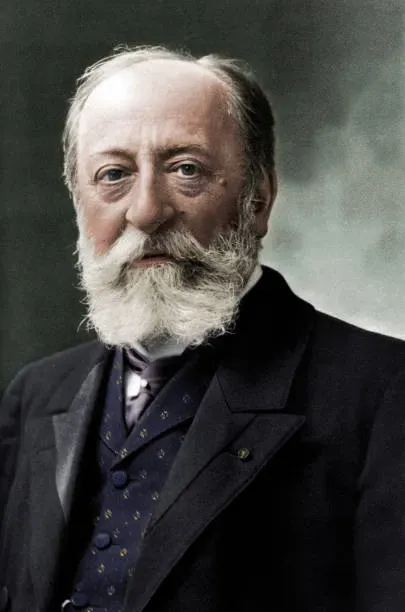
Camille Saint-Saëns
Virtuosity, elegance and imagination bring French Romanticism to life.
Details
- Type
- Music
- Countries
- 🇫🇷 France
- Genres
- Classical, Romantic music
- Albums
- 3
Synopsis
Camille Saint-Saëns
Glossary terms: Chamber music, Classical music, Composer, Composition, Opera, Orchestration, Organ, Piano, Suite, Virtuosity
Trailer
Watch the trailer
Overview
Presentation
Camille Saint-Saëns (1835–1921) was a French composer, pianist and organist, recognized as one of the major figures of Romantic music. Born in Paris, he displayed exceptional musical abilities from childhood and made his public piano debut at the age of eleven. Educated at the Paris Conservatoire, he later became organist at the Church of La Madeleine while pursuing an extensive career as a composer and performer.
His compositions encompass nearly every major classical genre, including symphonies, concertos, operas, symphonic poems, sacred music and chamber works. Combining classical structural balance with Romantic expressiveness, he developed a distinctive musical language characterized by clarity and precision. He also contributed to the revival of French instrumental music, notably through the founding of the Société nationale de musique in 1871.
Key Points
Saint-Saëns's music is distinguished by structural clarity, melodic elegance and sophisticated orchestration. His concertos emphasize instrumental virtuosity, while his symphonic compositions explore contrasts in orchestral color and expression.
His best-known works include The Carnival of the Animals, a humorous and descriptive musical suite, Danse macabre, a symphonic poem with a fantastical atmosphere, and Symphony No. 3 with Organ, which combines the power of the organ with a full orchestra. His opera Samson and Delilah also holds an important position in the French operatic repertoire.
Conclusion
Camille Saint-Saëns played a significant role in establishing French music on the international stage. His compositions, bridging classical tradition and Romantic expression, demonstrate remarkable stylistic diversity, with several works retaining a lasting place in the concert repertoire.
Did You Know?
- Birth: October 9, 1835, in Paris; died December 16, 1921, in Algiers.
- Child prodigy: he made his public concert debut at the Salle Pleyel in 1846.
- Famous work: The Carnival of the Animals, composed in 1886, was not published in full until after his death.
- Symphonic music: his Symphony No. 3 with Organ, composed in 1886, was dedicated to Franz Liszt.
- Cinema: in 1908, he composed an original score for The Assassination of the Duke of Guise, an early landmark in the collaboration between established composers and film.
Link graph
Open in the full graphLoading the graph…
Only the strongest links are shown.
View the list ({count})
Discography
Discography (3)

Album
1988
Saint-Saëns: Carnaval des Animaux / Alan Ridout: Ferdinand / Little Sad Sound / Frieder Meschwitz: Tier-Gebete
- Classical
- Romantic music


Album
2011
Schumann: Cello Concerto in A minor / Saint-Saens: Cello Concerto no. 1 in A minor
- Classical
- Romantic music