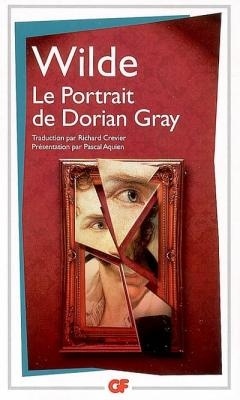
"In the centre of the room, fixed on a straight easel, stood the portrait at the foot of a young man of extraordinary physical beauty, in front of whom, within a short distance, sat the painter himself, Basil Hallward, the one whose sudden disappearance, a few years ago, at the moment, moved the public so much and gave rise to strange Dorian Gray, a young, seductive and worldly dandy, made this foolish wish: to keep the brightness of his beauty forever, while the face painted on the canvas would bear the burden of his passions and sins. And in fact, only the portrait of Dorian's black soul is aged, which, much later, will say to the painter: "Each of us carries heaven and hell in itself." And this book itself is double: it leads us into a lugrous and dull London, drowned in fog and opium fumes, but also opens the show comedy Nice neighborhoods. When he appeared in 1890, he was considered immoral. But his singularity, rather, is to be a realistic novel, all together, and an aesthetic novel - fascinating, both, of a strangeness that touches on the fantastic.
Book
Horror
Short story
Educational
Oscar Wilde : The Picture of Dorian Gray
- Flammarion Publisher
- Le Livre de poche Publisher
- Oscar Wilde Author
Details
- Type
- Book
- Genres
- Horror, Short story, Educational
- ISBN
- 9782253002888
Synopsis