Presentation
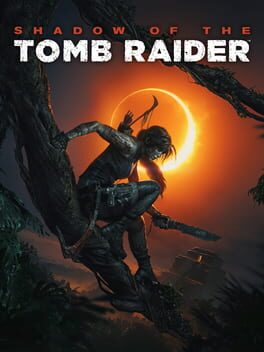
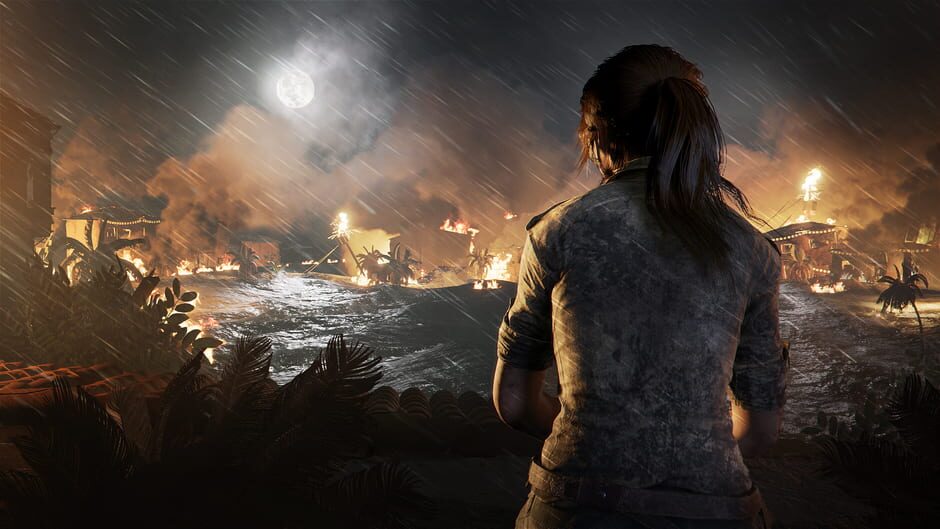
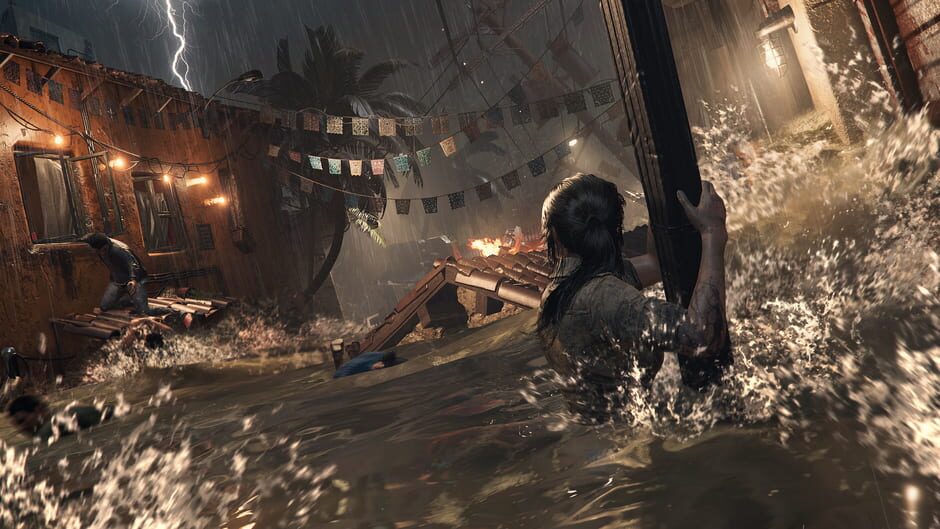
Shadow of the Tomb Raider is the final entry in the Survivor trilogy that began with Tomb Raider in 2013 and continued with Rise of the Tomb Raider. It returns to this version of Lara at a much more experienced stage of her life: she knows how to survive, fight and explore ancient ruins, but that mastery now comes with a confidence that can become dangerous. The story uses this development directly when her decision in Cozumel causes the disaster she then spends the rest of the game trying to stop.
Latin America gives the adventure a very different identity from Yamatai or Siberia. After Mexico, most of the journey takes place in the Peruvian jungle, among ruins, caves, rivers and hidden cities. Dense vegetation frequently restricts visibility and becomes an active part of both exploration and combat.
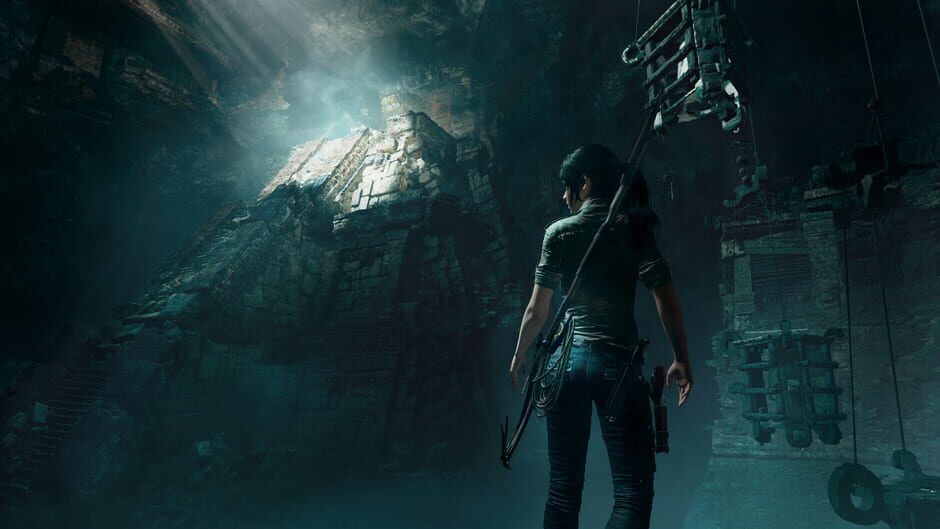
Exploration plays a larger role than in the previous two games of the trilogy. Areas contain documents, relics, crypts, monoliths and various secrets, while optional Challenge Tombs feature more elaborate puzzles. Several skills are earned directly by completing these tombs, giving players a tangible reward for moving away from the main path.
Traversal retains the climbing, axes, ropes and acrobatic movement introduced earlier while expanding several vertical situations. Lara can rappel down surfaces, swing from specific walls and explore more complex cave systems. Swimming is also significantly more important: underwater sequences become full exploration spaces with tunnels, narrow passages and sections where the route between air pockets must be carefully managed.
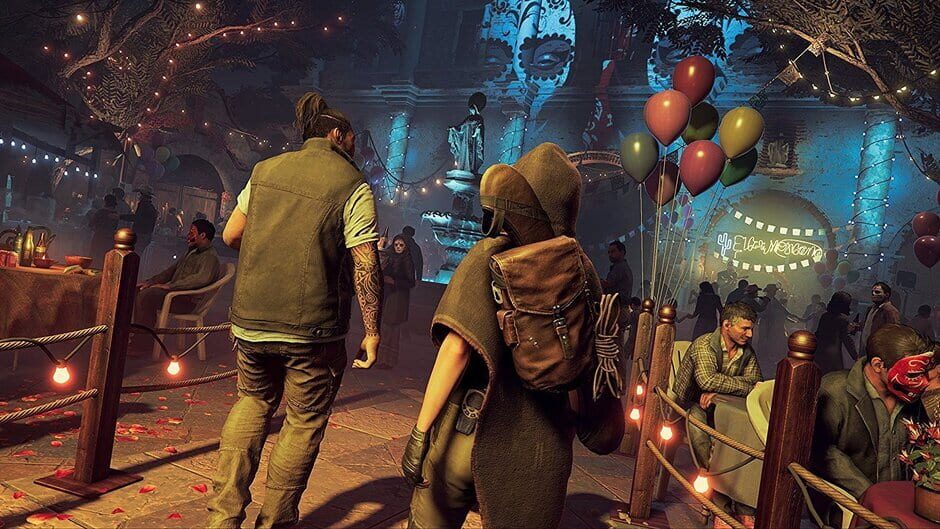
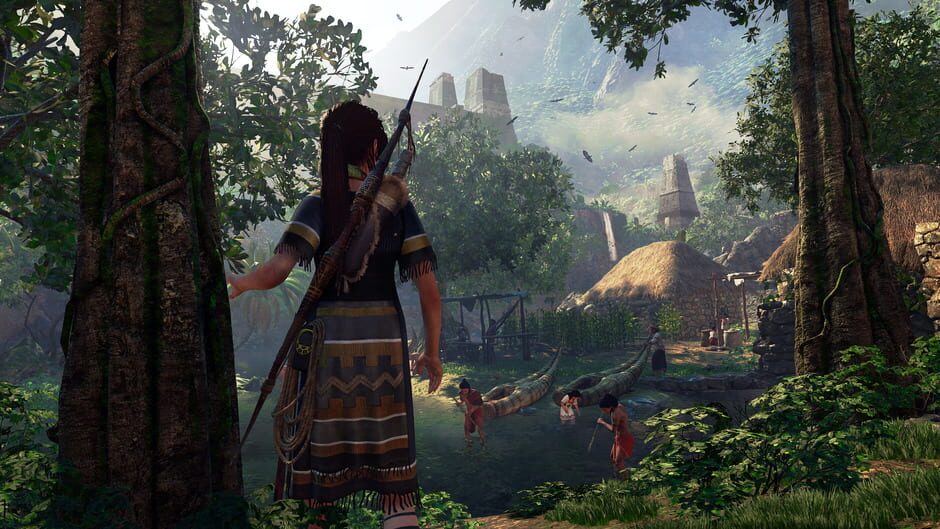
Paititi gives the game its largest inhabited hub. The city is not simply a backdrop for the campaign: Lara can meet residents, follow side stories and learn more about the tensions between its local factions. Its presence deliberately slows the pace and gives more room to the discovery of a society, although this density can also contrast sharply with the urgency of the main storyline.
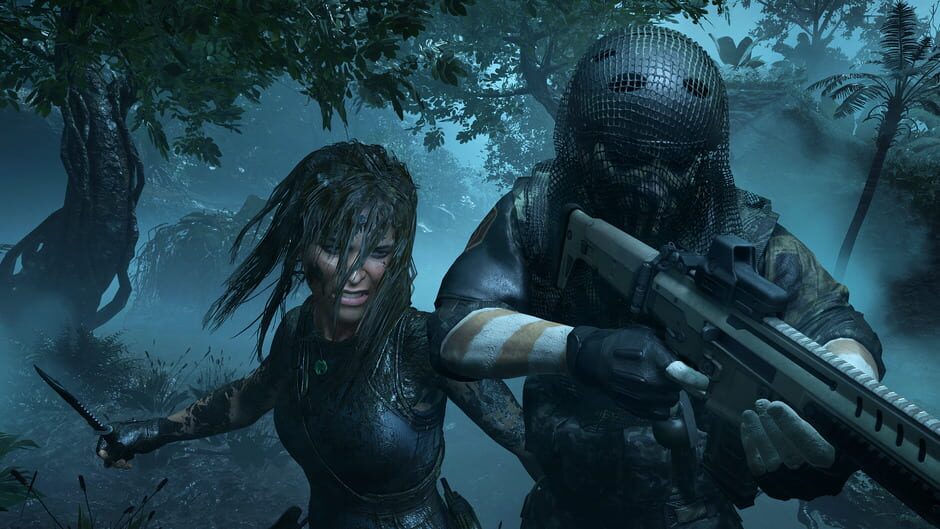
Combat retains the bow, firearms, upgrades and ammunition crafting of the Survivor trilogy. Lara can still confront armed groups directly, but Shadow strengthens her stealth options. The jungle allows her to hide in vegetation, use mud as camouflage and move around patrols before silently eliminating isolated enemies.
This direction fits the more aggressive version of Lara presented in this entry. She is now experienced enough to turn the jungle against her enemies, giving some sequences an almost predatory tone. Stealth still belongs to an action-adventure framework rather than a full simulation system: encounters allow several approaches, but their structure remains largely shaped by level design.
Progression continues to revolve around base camps and skill points. Abilities are divided into Warrior, Scavenger and Seeker branches, covering upgrades related to combat, resource gathering and exploration. Camps also allow Lara to manage her inventory, weapons, outfits and fast travel between previously discovered locations.
One of the more interesting developments concerns difficulty. Combat, exploration and puzzles can be adjusted separately. Players can therefore keep fights relatively accessible while removing most visual guidance from exploration and tombs, or choose the opposite balance and retain stronger guidance while making combat more dangerous.
The narrative remains closely tied to Jonah, who has become Lara’s most stable relationship across the trilogy. His role goes beyond that of a simple mission companion: he regularly challenges her obsession with Trinity and forces her to confront the human consequences of her decisions. This relationship supports one of the story’s central concerns, namely how Lara handles the responsibility that now comes with her experience.
Dr. Dominguez develops this theme from the opposite position. As the leader of Trinity and a figure directly connected to Paititi, he is not simply seeking power for its own sake. His plan to reshape the world is tied to his desire to preserve what he considers his people and heritage, making the conflict more personal than a straightforward confrontation between Lara and an enemy organization.
The narrative ambition does create some tension with the game’s structure. The campaign repeatedly emphasizes an approaching global catastrophe while its large areas encourage exploration, collecting and side activities. This kind of dissonance is common in open adventure games, but it is particularly visible here because Lara’s responsibility for the crisis is so central to the story.
The overall balance nevertheless places greater emphasis on the historical foundations of Tomb Raider. Tombs, environmental observation, puzzles and hidden passages occupy more space than they did in the 2013 reboot. Shadow of the Tomb Raider therefore retains the survival and combat systems of the trilogy while gradually bringing this modern version of Lara closer to the explorer traditionally associated with the series.
What to remember
- The third and final entry in the Survivor trilogy that began with Tomb Raider in 2013.
- An adventure set mainly in Mexico and Peru, centered on a catastrophe accidentally triggered by Lara and her struggle against Trinity.
- A greater emphasis on exploration, puzzles, crypts and Challenge Tombs.
- Expanded traversal, particularly through much more developed underwater exploration.
- Stronger stealth built around vegetation, camouflage and more tactical use of the jungle.
- Paititi as a major hidden city serving as a narrative, cultural and exploration hub.
- Separate difficulty settings for combat, exploration and puzzles.
Conclusion
Shadow of the Tomb Raider retains the foundations established by the two previous entries but clearly shifts its center of gravity toward exploration. Tombs are more prominent, puzzles have more space to develop, and underwater or vertical environments expand Lara’s role beyond direct conflict with Trinity. This direction naturally brings the game closer to several long-standing principles of the series.
The jungle also brings a meaningful evolution to stealth. Lara is experienced enough to use the environment against her enemies, bypass armed groups and control the beginning of encounters more effectively. These options coexist with a combat system still very close to Rise of the Tomb Raider, making the evolution noticeable without completely changing the formula.
The story finds its strongest idea in Lara’s responsibility. The initial disaster is not something that simply happens to her; she directly causes it. Jonah, Paititi and Dominguez gradually force her to confront the consequences of an obsession that had previously driven much of her growth.
The open structure sometimes conflicts with this narrative urgency, and the importance of Paititi can significantly slow a campaign that repeatedly announces escalating cataclysms. That breathing room nevertheless fits the decision to give more space to discovery, communities and tombs.
As the conclusion to the Survivor trilogy, Shadow of the Tomb Raider does not transform Lara through another dramatic acquisition of new abilities. It completes the journey that began on Yamatai by giving her the experience, independence and, above all, responsibility that were still missing from her earliest adventures.
Good to know
- Shadow of the Tomb Raider was released on September 14, 2018.
- The game was developed by Eidos-Montréal and Crystal Dynamics and is the final entry in the Survivor trilogy.
- The Survivor trilogy consists of Tomb Raider (2013), Rise of the Tomb Raider and Shadow of the Tomb Raider.
- This entry places more emphasis on exploration than the previous two and develops its Challenge Tombs more extensively.
- Swimming is much more developed than in Rise of the Tomb Raider, with full underwater exploration sections.
- Shadow of the Tomb Raider: Definitive Edition includes the main game, seven additional Challenge Tombs and the weapons, outfits and skills released as downloadable content.
- Combat, exploration and puzzle difficulty can be adjusted separately.