Presentation
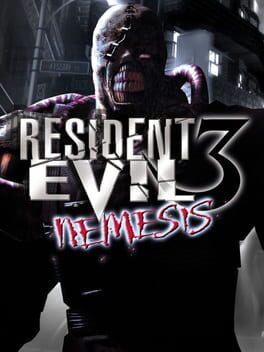
Developed and published by Capcom, Resident Evil 3: Nemesis was originally released for PlayStation in 1999. Directed by Kazuhiro Aoyama, produced by Shinji Mikami and written by Yasuhisa Kawamura, it brings Jill Valentine back after the events of the first Resident Evil and continues the Raccoon City disaster presented in Resident Evil 2.
The story begins on September 28, 1998, one day before Leon Kennedy and Claire Redfield arrive in the city. This chronology places Resident Evil 3 around the events of the second game: part of the adventure takes place before them, while the remainder follows the final days of Raccoon City. Players therefore experience the disaster from its streets and affected districts rather than primarily through a central building.
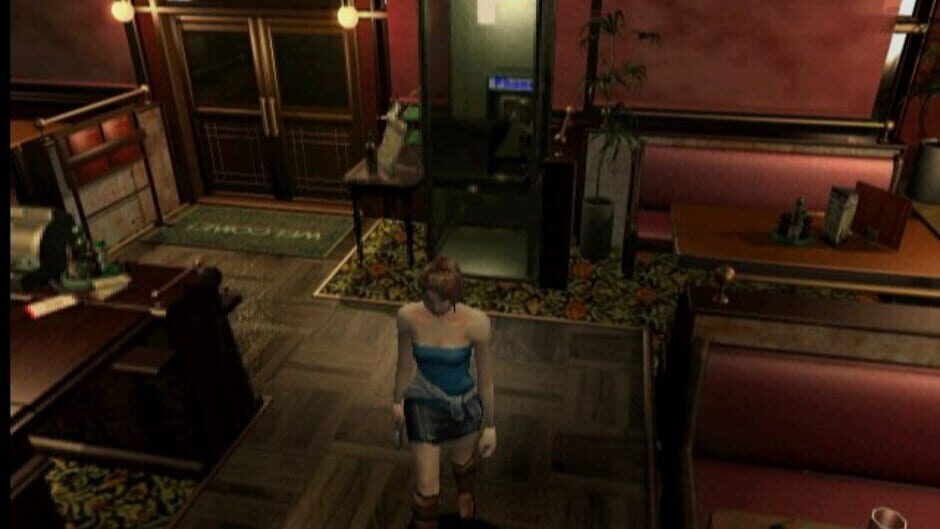
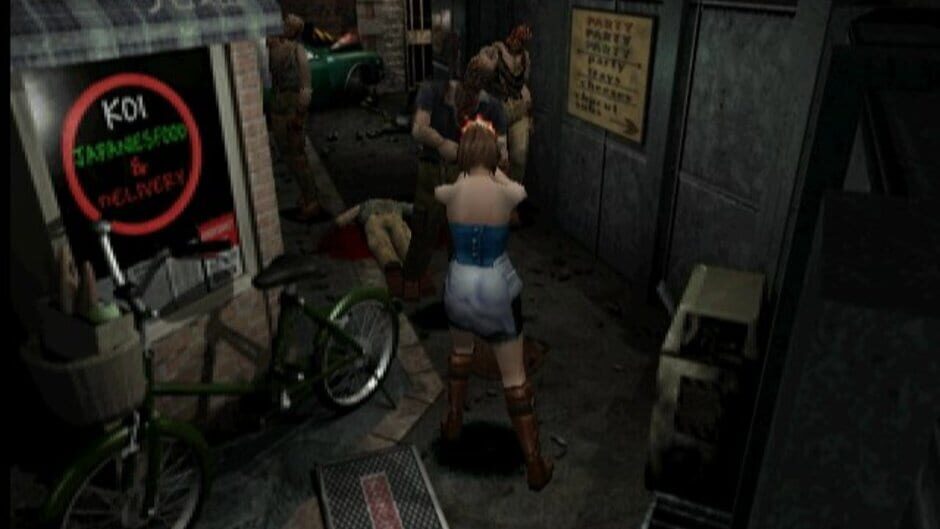
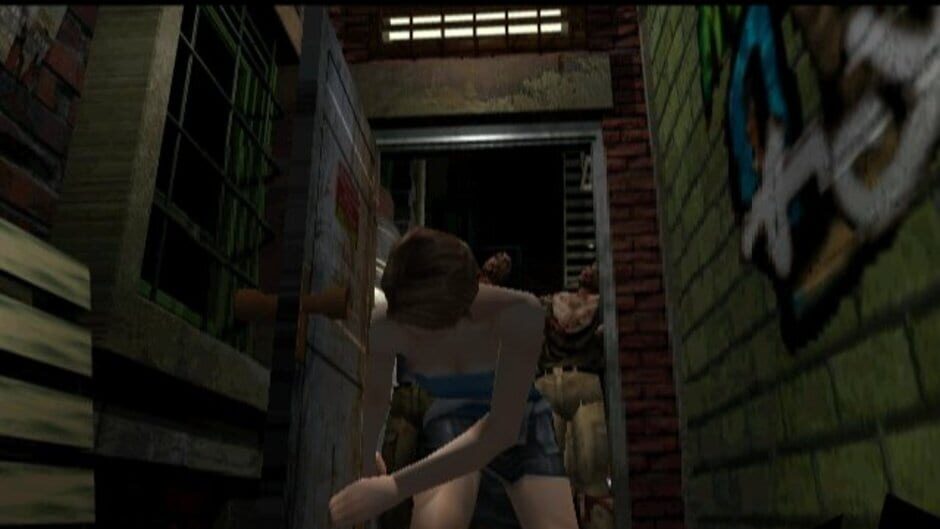
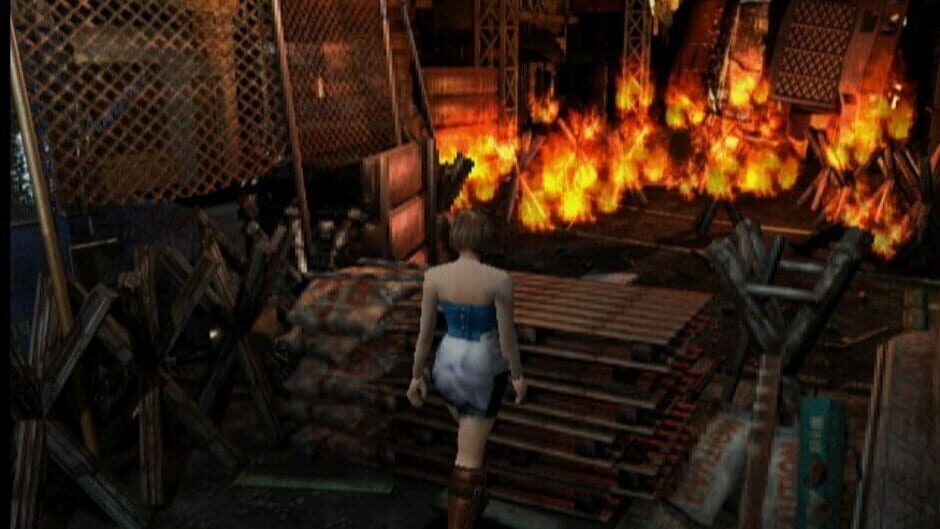
This difference immediately changes the organization of exploration. While the Spencer Mansion and the police station were large enclosed and highly interconnected environments, Resident Evil 3 moves through streets, shops, public buildings and facilities connected across the city. Some locations remain complex, but the overall journey creates a stronger impression of crossing a city in the process of collapsing.
The game nevertheless preserves the technical and mechanical foundations of the previous entries. Jill still moves as a 3D character across pre-rendered backgrounds viewed through fixed camera angles. Ammunition, healing supplies and inventory space require careful management, while puzzles and progression items continue to encourage backtracking between different areas.
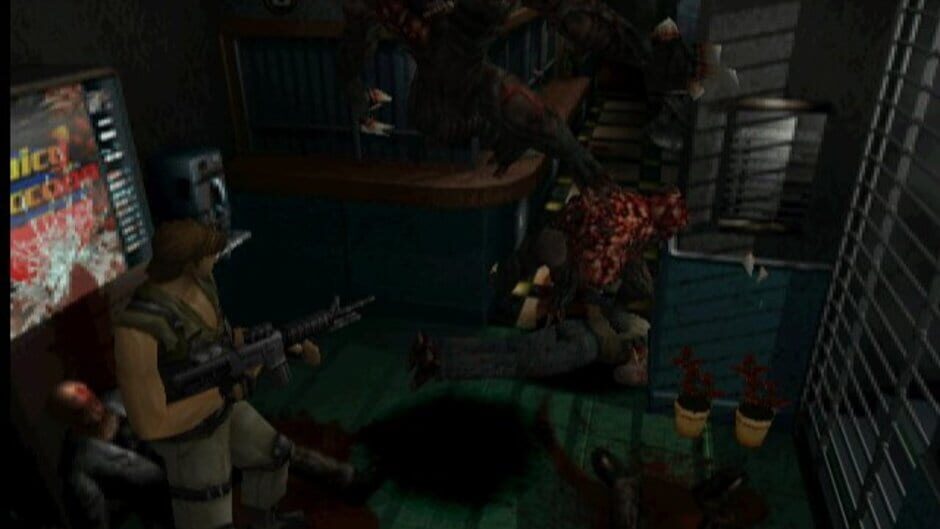
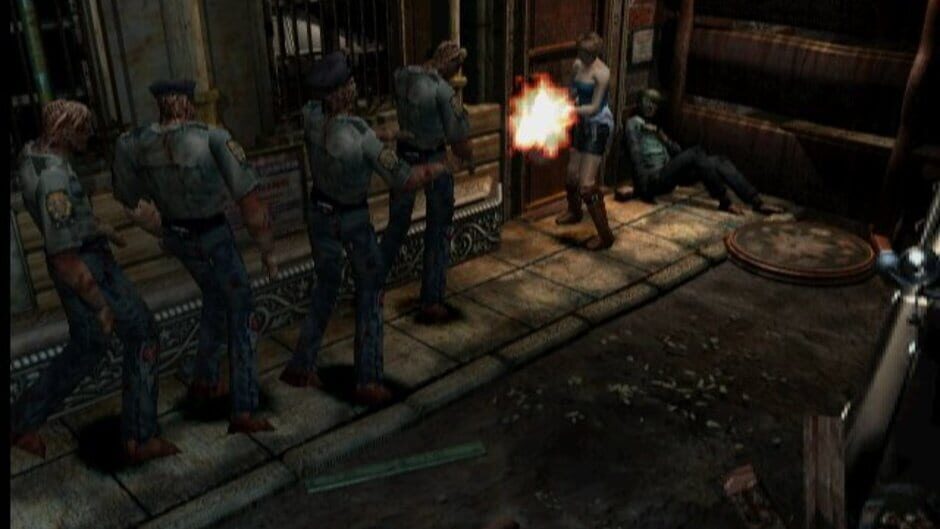
Resident Evil 3 does, however, give combat a noticeably larger role. Jill can now perform a dodge when an incoming attack is correctly anticipated, while several environmental objects can be used to damage enemies. The game also introduces a crafting system in which different gunpowders can be combined to produce several types of ammunition.
This evolution does not completely turn the series into an action game. Resources remain limited, and unnecessary combat can still weaken an unprepared playthrough. It nevertheless gives Jill more options for responding directly to creatures and supports a generally faster pace than that of the first two games.
The presence of Nemesis is the game's most recognizable feature. Unlike ordinary enemies, this biological weapon returns repeatedly throughout the adventure and can pursue Jill between certain areas. Its durability, speed and ability to use a rocket launcher make it a different kind of threat from the creatures previously encountered in the series.
Resident Evil 3 also introduces Live Selections, choices presented to the player during certain sequences. They must be made quickly and can change the way a situation unfolds, the route taken or certain later events. The story still follows a structured main path, but these variations create noticeable differences between playthroughs.
The story also gives an important role to the U.B.C.S., the Umbrella Biohazard Countermeasure Service. Carlos Oliveira, Mikhail Victor and Nicholai Ginovaef reveal another side of the corporation: Umbrella is no longer operating only through hidden laboratories but is also deploying armed personnel directly into the disaster. Their presence broadens the stakes surrounding the outbreak and prepares several later developments in the series.
What to remember
- An installment centered on Jill Valentine, returning after the first Resident Evil and directly confronting the collapse of Raccoon City.
- A story beginning on September 28, 1998 and taking place partly around the events of Resident Evil 2.
- Nemesis as a recurring threat specifically deployed to eliminate the surviving members of S.T.A.R.S. and capable of returning during multiple sequences.
- A greater emphasis on action through dodging, ammunition crafting and more frequent combat without abandoning resource management and exploration.
- Live Selections, which allow certain rapidly made decisions to alter scenes, routes or several details of progression.
- The introduction of Carlos Oliveira and the U.B.C.S., expanding Umbrella's presence in the field and broadening the depiction of the Raccoon City disaster.
Conclusion
Resident Evil 3: Nemesis takes a different approach from the first two games without abandoning their foundations. Moving into the streets of Raccoon City gives more room to movement and combat, but exploration, limited resources and puzzles continue to structure progression.
The city plays an important role in this evolution. Players are no longer simply following the traces left by a disaster inside an isolated location: they directly cross abandoned districts, damaged infrastructure and buildings where the consequences of the outbreak are visible on a much larger scale. Resident Evil 3 therefore complements the second game by showing another side of the same collapse.
Nemesis gives the adventure its own distinctive identity. Its repeated appearances prevent certain areas from ever becoming completely reassuring and introduce a threat that cannot simply be considered permanently resolved after each encounter. This pressure naturally supports the faster pace pursued by the game.
The new abilities given to Jill reinforce this direction. Dodging and ammunition crafting provide greater control during combat, while Live Selections introduce variations that distinguish some playthroughs without changing the overall structure of the adventure.
By bringing together Jill's return, the fall of Raccoon City, the U.B.C.S. and Nemesis, Resident Evil 3 closes much of the arc begun across the first two games. It retains the characteristics of Capcom's classic survival horror while already anticipating the increasing role action would play in some later evolutions of the series.
Good to know
- Resident Evil 3: Nemesis was developed and published by Capcom, with Kazuhiro Aoyama as director, Shinji Mikami as producer and Yasuhisa Kawamura as scenario writer.
- The game was originally released in 1999 for PlayStation and is titled Biohazard 3: Last Escape in Japan.
- Its story begins on September 28, 1998, one day before the main beginning of Resident Evil 2, and continues beyond its events.
- Nemesis is an experimental biological weapon deployed by Umbrella to eliminate the surviving members of S.T.A.R.S.
- Resident Evil 3 includes an additional mode titled The Mercenaries: Operation Mad Jackal, centered on several members of the U.B.C.S.
- Following its PlayStation release, the game was ported to Windows, Dreamcast and GameCube.
- The original should not be confused with Resident Evil 3 released in 2020, a remake that retains Jill, Carlos, Nemesis and the Raccoon City setting while substantially rebuilding the progression, environments and combat.
```