As Izuku Midoriya continues training to master One For All, his lessons with Gran Torino bring him face to face with new threats and the consequences of the growing conflict between Heroes and Villains. From the Hero Killer Stain incident to attacks carried out by the League of Villains, Deku and his classmates are drawn into increasingly dangerous battles. The story progresses toward the confrontation between All Might and All For One, while also allowing several events to be revisited from the Villains' perspective.
Video game
2018
Action
Fantasy
Fighting
My Hero One's Justice
- Bandai Namco Entertainment Publisher
- Byking Inc. Developer
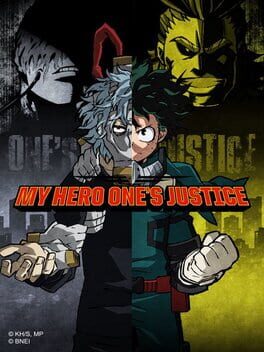
Heroes and Villains clash in destructible 3D arenas by combining Quirks, Plus Ultra attacks and support from two Sidekicks.
Details
- Type
- Video game
- Release
- 2018-08-23
- Genres
- Action, Fantasy, Fighting
- Platforms
- PlayStation 4, Xbox One, Nintendo Switch, PC
- Engine
- Unreal Engine 4
- Game modes
- Single player, Multiplayer
Synopsis
My Hero One's Justice
Trailer
Watch the trailer
Overview
Presentation
My Hero One's Justice is a 3D arena fighting game based on My Hero Academia. It allows players to control U.A. students, Pro Heroes and Villains in battles where Quirks directly define each character's playstyle.
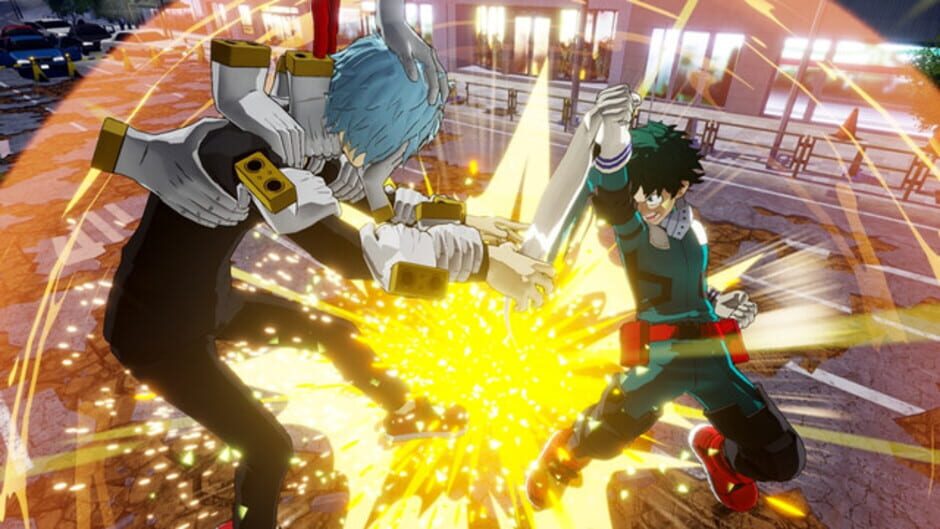
Battles pit two main fighters against each other, with each one able to bring up to two Sidekicks. These partners intervene periodically to attack, extend a combo or create an opening, but they do not directly replace the main fighter.
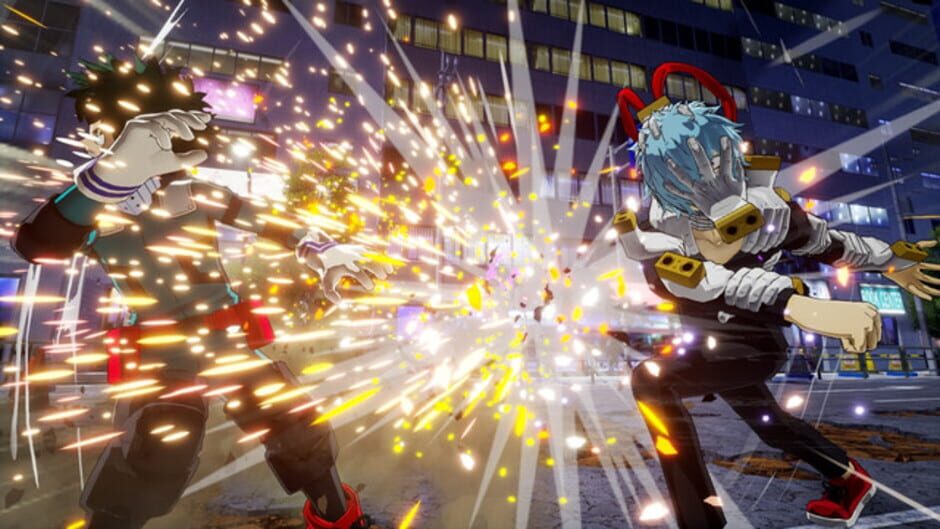
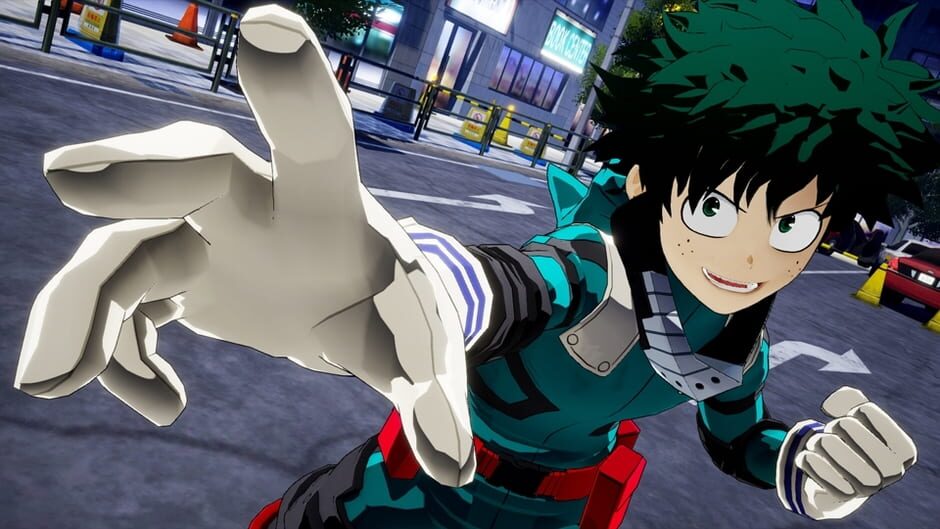
Each character has techniques inspired by their Quirk. Deku notably focuses on physical attacks powered by One For All, Bakugo uses explosions, while other fighters specialize in close combat, ranged attacks or space control.
Fights are not limited to the ground. Characters can be knocked into walls, battle in the air and interact with arenas where certain elements are destructible, giving attacks a more spectacular impact.
A gauge can be used to trigger Plus Ultra techniques, powerful special attacks unique to each fighter. When sufficiently charged, EX Plus Ultra also brings the Sidekicks into a combined attack.
The Story Mode adapts several events from the anime beginning with Deku's training under Gran Torino. It then follows the main battles leading up to the confrontation between All Might and All For One.
After completing the story from the Heroes' side, a separate route focused on the Villains allows several events to be revisited from their perspective. A few original situations also complement scenes directly adapted from the anime.
The Mission Mode offers different battles with specific rules and conditions. Rewards notably provide accessories and Hero Coins used to customize character appearances.
An Arcade Mode also allows players to fight through a sequence of battles against the AI, while online modes provide matches against other players, including ranked competition.
Key points
- A 3D arena fighting game based on My Hero Academia.
- Characters drawn from U.A. students, Pro Heroes and Villains.
- One main fighter accompanied by up to two Sidekicks.
- Playstyles directly shaped by each character's Quirk.
- Battles taking place on the ground, in the air and against the environment.
- Partially destructible arenas.
- Special Plus Ultra attacks.
- EX Plus Ultra combines the main fighter with their Sidekicks.
- A Story Mode running from the Gran Torino training arc to All Might versus All For One.
- A campaign showing events from both Hero and Villain perspectives.
- A Mission Mode with special conditions and rewards.
- Arcade and online modes complement the main combat options.
Conclusion
My Hero One's Justice translates the battles of My Hero Academia into 3D arenas where Quirks and environmental interactions play a central role.
The Sidekick system allows players to build a team around one main fighter without yet using the fully interchangeable team structure developed in later games.
Its Story Mode also adapts several important anime arcs, allowing key battles to be revisited from both sides before reaching the confrontation between All Might and All For One.
Good to know
My Hero One's Justice was developed by Byking and published by Bandai Namco Entertainment.
The game was released on October 26, 2018 in Western markets for PlayStation 4, Xbox One, Nintendo Switch and PC via Steam.
The Story Mode begins after Izuku Midoriya starts training with Gran Torino and progresses through to the battle between All Might and All For One.
Completing the main Hero route then unlocks a mode showing several events from the perspective of the Villains.
Arcade Mode was added through the update available at launch.
Several additional characters and pieces of content were released after launch. Endeavor notably appears as an additional character, while Deku Shoot Style was added for free as a playable fighter.
A sequel, My Hero One's Justice 2, was released in 2020 and continues the story after the events covered by this first game.
This entry focuses on the base game, Story Mode, Quirks, Sidekicks and the core systems of My Hero One's Justice, without detailing every character or downloadable content release individually.