Overview
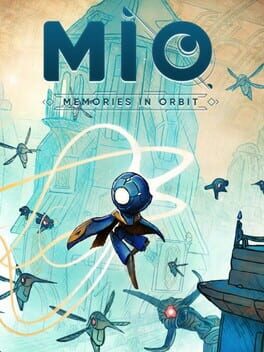
Developed by Douze Dixièmes and published by Focus Entertainment, Mio: Memories in Orbit is a video game released on January 20, 2026. The platforms listed in this entry are PlayStation 5, PlayStation 4, Xbox Series, Xbox One, Nintendo Switch, PC and Nintendo Switch 2. The associated genres are action, adventure, science fiction, platforming, arcade and indie. The specified game mode is Single player and the engine listed is Proprietary Engine.
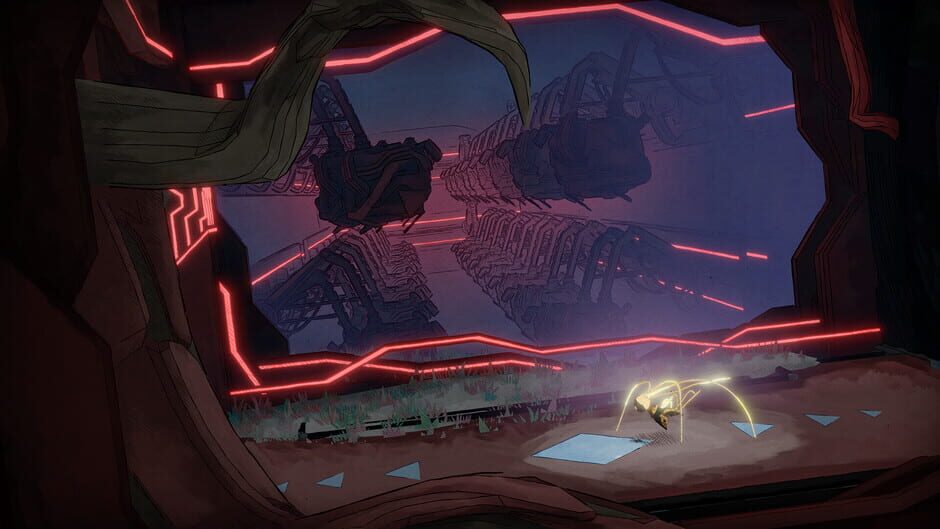
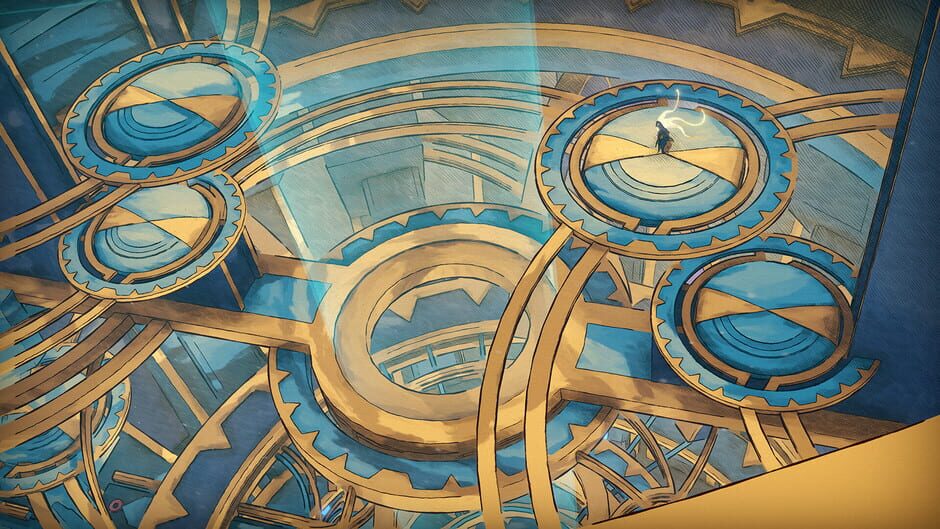
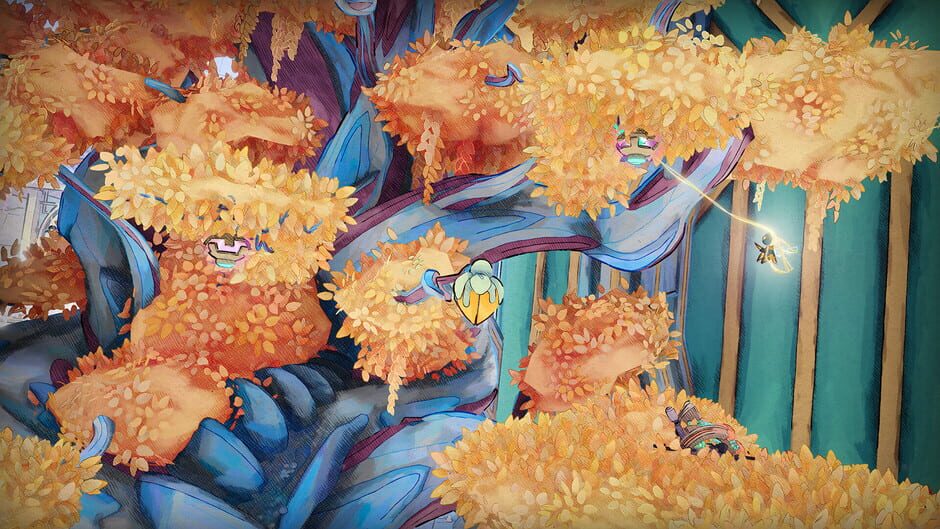
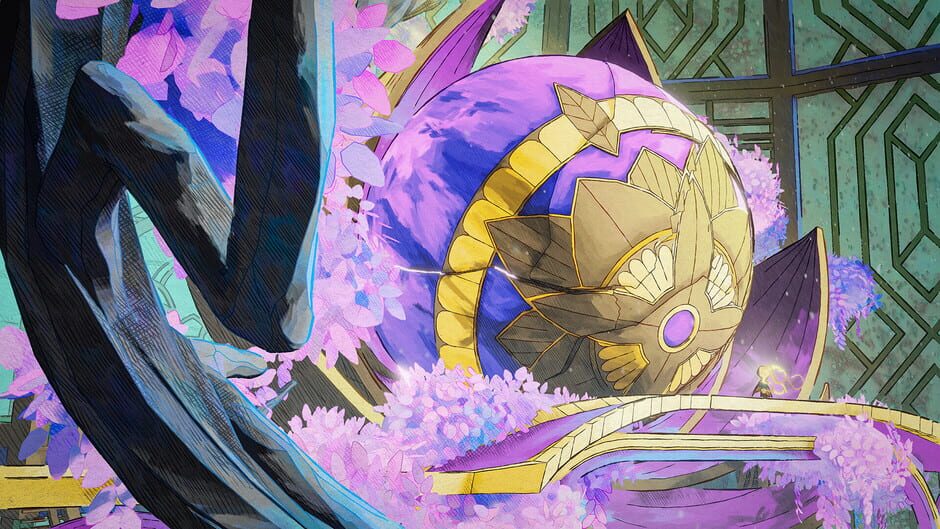
The game uses a side-scrolling Metroidvania structure centered on exploring the Vessel, a gigantic ship organized as an interconnected labyrinth. Its different regions have their own architecture, environments and mechanical populations, while numerous side passages and secrets encourage players to observe their surroundings and return to previously explored areas.
Progression largely depends on Mio’s movement abilities. Some of them significantly change how environments are traversed and make it possible to reach paths that were previously inaccessible.
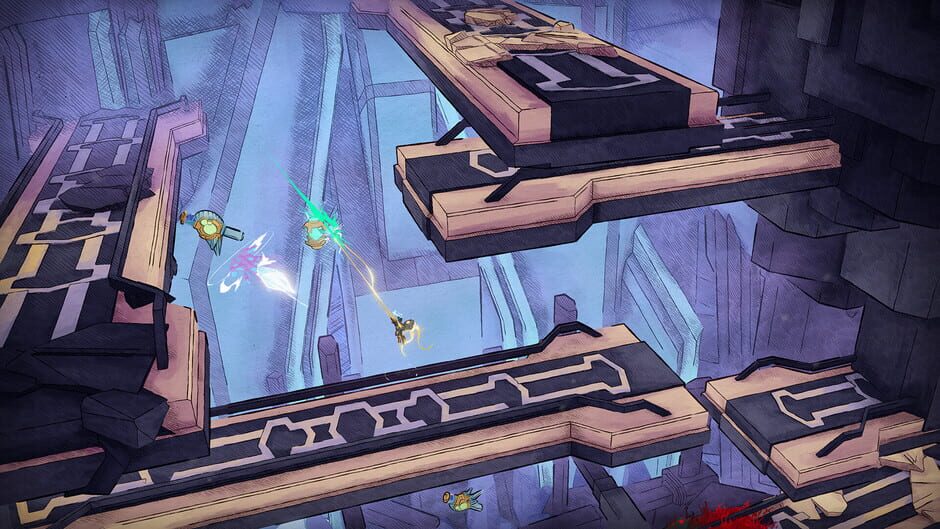
The grappling hook notably allows Mio to attach to certain elements and is used both during platforming sequences and in combat. Mio can also obtain a gliding ability, useful for extending aerial movement, as well as an ability to cling to walls.
These movements are combined in sequences built around precision, rhythm and timing. The game regularly requires several abilities to be chained together without interruption in order to cross areas made up of platforms, obstacles and moving mechanisms.
Mio’s powers are not used solely for movement. They also play a role in combat, where the player must adapt attacks and dodges to the behavior of the different machines encountered.
The grappling hook can therefore be used to avoid certain enemies or alter the distance between Mio and a target. Energy orbs provide ranged attacks, while another ability makes it possible to create decoys capable of surprising enemies from a different position.
Enemies have distinct movements and attack styles. The game features more than 30 enemy types as well as 15 guardian bosses, requiring movement and attack abilities to be used differently depending on the encounter.
Progression also involves collecting components from enemies. These elements are used to strengthen and customize Mio’s abilities through different modifiers.
These modifiers do more than simply increase statistics. They can change the behavior of certain skills: the grappling hook, for example, can be adapted for more offensive use or made more useful for evasion.
The system also allows for trade-offs between abilities. A configuration can, for example, sacrifice a defensive function such as the shield in exchange for increased damage, giving the player several ways to organize Mio’s equipment.
Exploration also includes damaged robots that Mio can repair. These encounters provide more information about the Vessel’s past and can grant different bonuses.
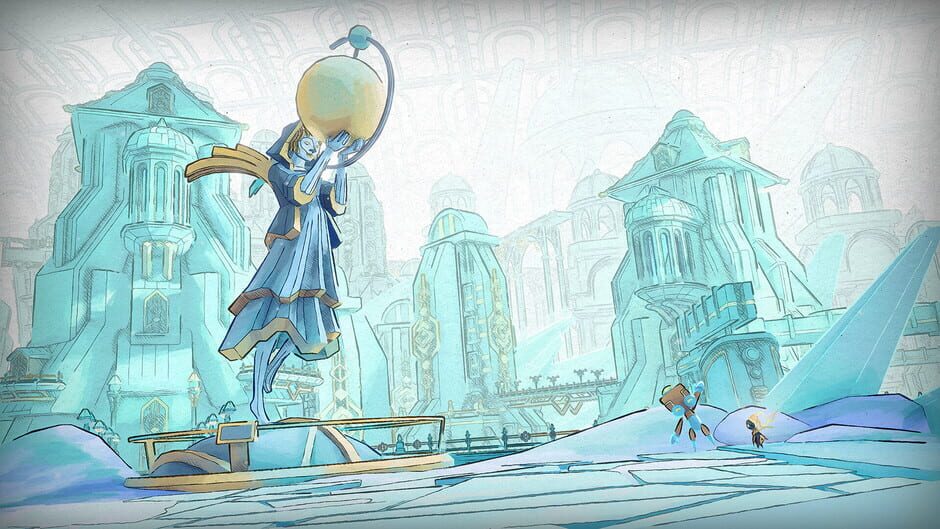
The environment itself contributes to this reconstruction. Certain elements of the scenery provide access to information about the ship’s history and memories, making exploration a way to gradually understand how this abandoned space functioned.
The art direction combines influences from comics, painting and Japanese animation. The environments blend technological structures, vegetation and machines within illustrated settings that accompany the diversity of the Vessel’s regions.
The soundtrack also evolves with exploration and notably combines lo-fi sounds with choral compositions, contributing to the rhythm of movement and the different areas.
Mio: Memories in Orbit therefore structures its progression around the same set of abilities used to explore, fight and reach new spaces. The Vessel gradually reveals itself as Mio’s movement options expand and collected components make it possible to alter how those abilities function.
Key takeaways
- Mio: Memories in Orbit uses a Metroidvania structure centered on exploring a vast interconnected ship.
- Mio develops several movement abilities, including the grappling hook, gliding and wall clinging.
- Platforming sequences rely on precision, rhythm and chaining movements together.
- Combat also uses Mio’s abilities, notably the grappling hook, energy orbs and decoys.
- The game features more than 30 enemy types and 15 guardian bosses with distinct behaviors.
- Components collected from enemies allow modifiers to be equipped and Mio’s abilities to be customized.
- Exploration makes it possible to discover secret paths, robots to repair and information about the Vessel’s past.
Conclusion
Mio: Memories in Orbit structures its exploration around a gigantic labyrinthine ship whose different areas gradually become more accessible as Mio develops new abilities.
The grappling hook, gliding and wall clinging are used both to overcome platforming sequences and to discover new paths, while some of these skills also play a direct role during combat.
Components and modifiers add a second form of progression by making it possible to alter the behavior of certain abilities and adapt Mio’s offensive or defensive options.
The game therefore combines Metroidvania exploration, precision platforming and combat within a structure where mobility, customization and discovery of the Vessel develop in parallel.
Good to know
- Mio: Memories in Orbit was released on January 20, 2026.
- The game was developed by Douze Dixièmes and published by Focus Entertainment.
- The platforms listed in this entry are PlayStation 5, PlayStation 4, Xbox Series, Xbox One, Nintendo Switch, PC and Nintendo Switch 2.
- The associated genres are action, adventure, science fiction, platforming, arcade and indie.
- The specified game mode is Single player.
- The engine listed in this entry is Proprietary Engine.
- The main documented movement abilities include the grappling hook, gliding and wall clinging.
- Mio’s abilities can be customized through components and modifiers collected during exploration and combat.