A young amnesiac girl awakens in the mysterious floating city of Hekseville with no memory of her past. Her encounter with a strange black cat, whom she names Dusty, soon reveals an extraordinary ability: she can alter gravity around herself. Now able to move in any direction, she takes the name Kat and begins helping the inhabitants of a city threatened by violent gravity storms and creatures known as Nevi. While searching for answers about her origins and the nature of her powers, Kat gradually becomes involved in the mysteries surrounding Hekseville.
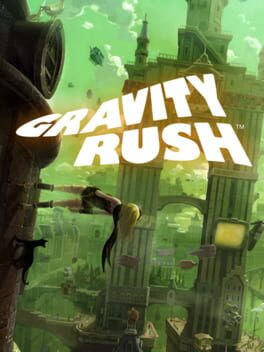
Video game
2012
Action
Adventure
Comedy
RPG
Open world
Sandbox
Gravity Rush
- SCE Japan Studio Developer
- Sony Computer Entertainment Publisher
When the ground stops being a certainty, the entire city becomes a playground for exploration.
Details
- Type
- Video game
- Release
- 2012-02-09
- Genres
- Action, Adventure, Comedy, RPG, Open world, Sandbox
- Platforms
- PS Vita
- Game modes
- Single player
Synopsis
Gravity Rush
Trailer
Watch the trailer
Overview
Presentation
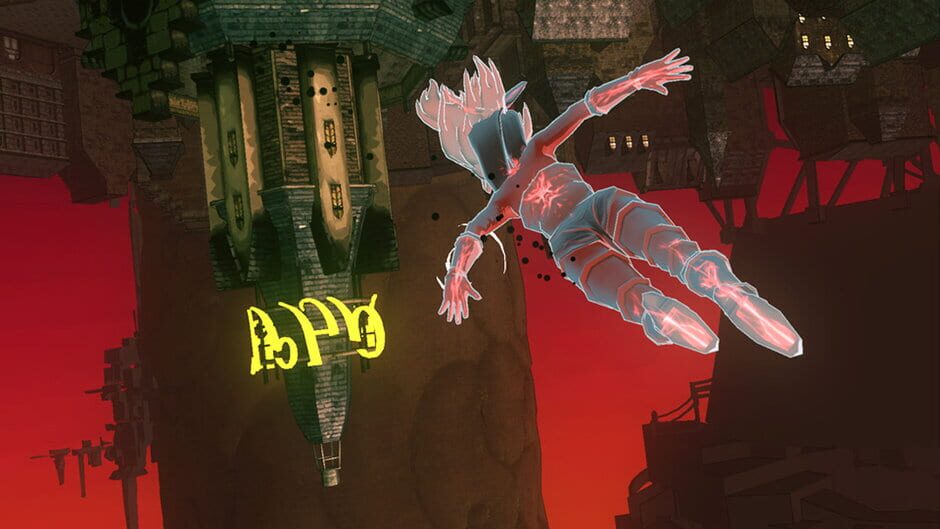
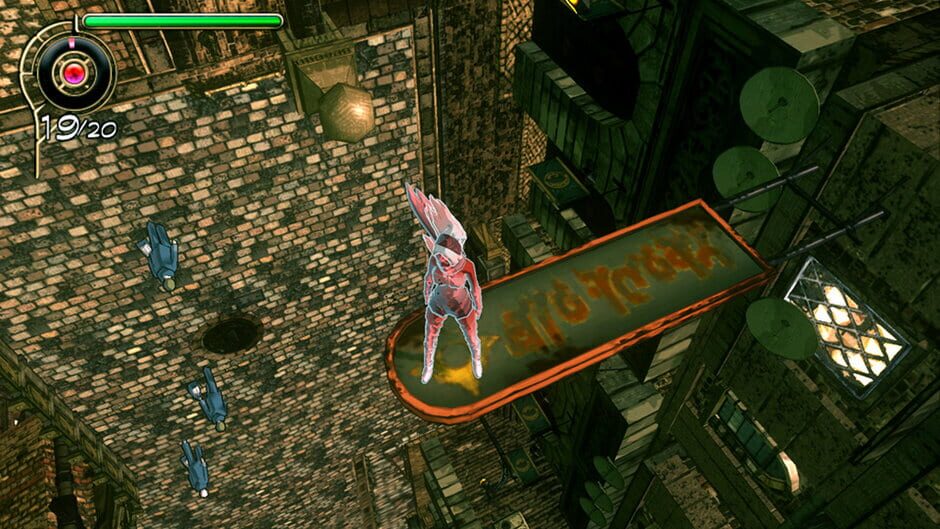
Gravity Rush is an action-adventure game built around an idea that completely transforms movement: Kat can change the direction in which gravity affects her. Rather than flying freely, she briefly suspends her fall, chooses a new direction and then “falls” toward a wall, rooftop, distant platform or directly through the skies of Hekseville.
This mechanic turns the city itself into a three-dimensional play space. Building facades stop being simple boundaries, rooftops become accessible surfaces and suspended districts can be approached from unusual angles. Exploration therefore requires constantly rethinking the meaning of up and down, using Kat's powers to cross large distances or reach places that would otherwise be difficult to access.
Her gravity powers are limited by a gravity gauge. Kat cannot maintain her altered direction indefinitely and must regularly return to normal gravity to recover energy. This limitation makes it necessary to anticipate trajectories and choose suitable landing points whenever a route requires several successive gravity shifts.
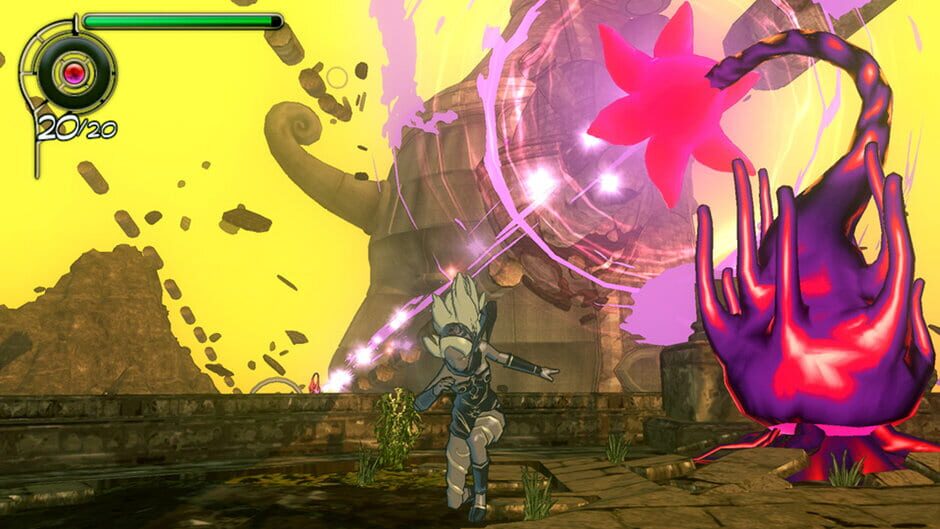
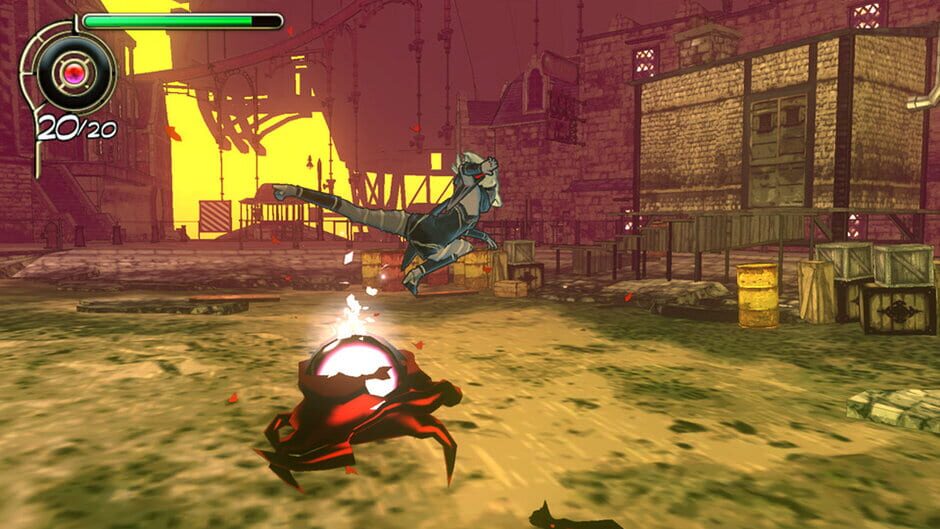
Combat directly uses the same principles. On the ground, Kat can attack enemies with kicks, but her abilities take on another dimension when she manipulates gravity. The Gravity Kick, for example, lets her launch herself toward a target at high speed, turning her fall into an attack. Battles against the Nevi often require identifying their weak points and finding the right angle from which to strike them.
The Stasis Field offers another use for her powers. Kat can draw certain objects from the environment toward herself, hold them in suspension and then launch them at enemies. This ability complements direct attacks and allows parts of the scenery to be used as projectiles. Other techniques, including the Gravity Slide and several special attacks, gradually expand her movement and combat options.
Progression notably relies on precious gems scattered throughout Hekseville and earned during the adventure. They can be used to improve different aspects of Kat's abilities, including the effectiveness of her gravity powers, movement, durability and combat skills. Exploring the city therefore directly provides some of the resources needed for her development.
Hekseville is more than a backdrop between missions. The city includes several districts suspended around a massive central structure, each with its own inhabitants, activities and atmosphere. Main missions advance the story, while various challenges ask players to use Kat's abilities in speed trials, combat encounters or tests of gravity control.
The game also makes use of the PlayStation Vita's hardware features to support its mechanics. Motion controls can assist with orientation while Kat manipulates gravity, while certain touch controls are used for specific actions. These inputs are designed to reinforce the sense of disorientation created when the environment shifts around the character.
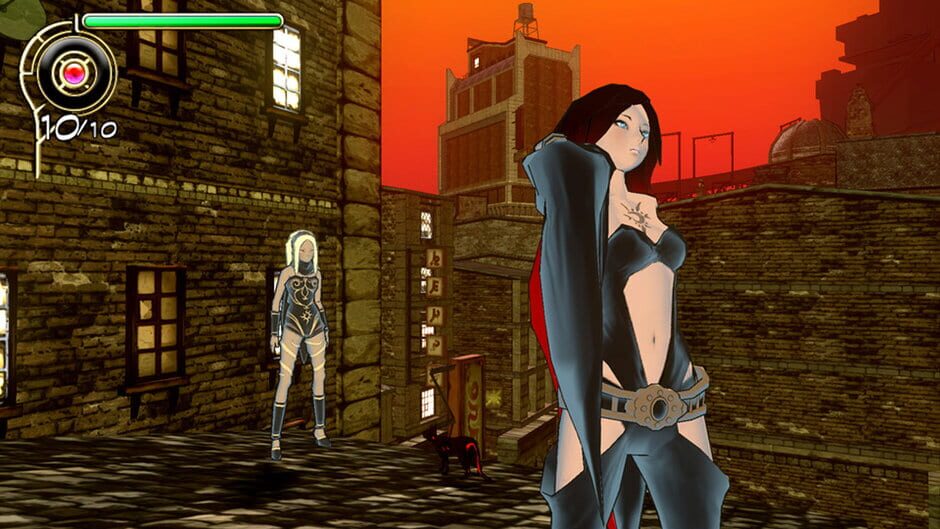
The art direction adopts a cel-shaded visual style combined with presentation inspired by comic books. Some transitions and story scenes use panel-like compositions, while the architecture, colors and character silhouettes give Hekseville an identity that directly supports the strangeness of its vertical structure.
Key points
- An open-world adventure built around gravity manipulation.
- Kat can change the direction of her fall to move across walls, ceilings and suspended structures.
- A gravity gauge temporarily limits continuous use of her powers.
- Combat combines ground attacks, the Gravity Kick, Stasis Field and special abilities.
- The Stasis Field lets Kat lift objects from the environment and throw them at enemies.
- Precious gems are used to improve Kat's movement and combat abilities.
- Hekseville offers strongly vertical exploration, where buildings and heights are fully part of the play space.
- Optional missions and challenges make use of different aspects of Kat's gravity powers.
- The original version uses PlayStation Vita features, including motion controls.
- A cel-shaded art style and comic-inspired presentation give the game its distinctive visual identity.
Conclusion
Gravity Rush organizes both exploration and combat around the same principle: changing gravity rather than simply moving through a conventional space. This mechanic transforms Hekseville into a vertical playground where a rooftop, building facade or floating platform can become the next destination as soon as Kat changes her orientation.
The system also acts as the core of progression. Improving her powers, learning to control trajectories and using gravity during combat gradually allow Kat to move through the city with greater freedom. The world, art direction and mission structure are therefore all built around this distinctive way of perceiving space.
Good to know
Gravity Rush was developed by Japan Studio, within the team associated with Project Siren, and published by Sony Computer Entertainment. It was directed by Keiichiro Toyama.
The game was originally released in 2012 for PlayStation Vita. In Japan, it is known as Gravity Daze.
A Gravity Rush Remastered version, adapted for PlayStation 4 by Bluepoint Games, was later released in the West in 2016. It notably improves visual presentation and performance and includes the three downloadable content packs originally released for the Vita version.
The music was composed by Kohei Tanaka, while the story is notably associated with Naoko Sato.
This entry covers Gravity Rush as the original work and its main content. Gravity Rush Remastered is a modernized adaptation of the same game and should not be confused with its sequel, Gravity Rush 2.