Presentation
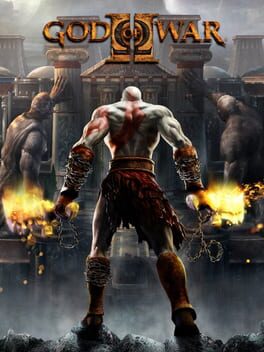
Developed by Santa Monica Studio and published by Sony Computer Entertainment, God of War II was released for PlayStation 2 in 2007. Cory Barlog succeeded David Jaffe as game director while also serving as lead designer, Steve Caterson handled production and David Jaffe remained involved as creative director. The game directly continues the story of the first installment and develops the conflict between Kratos and the gods of Olympus.
Kratos begins the adventure in a very different position from the one he occupied in God of War. He is now the God of War, but gaining divine power has brought him neither peace nor reconciliation with Olympus. His continued support of Sparta's conquests instead creates a growing divide with the other gods and quickly leads to confrontation with Zeus.
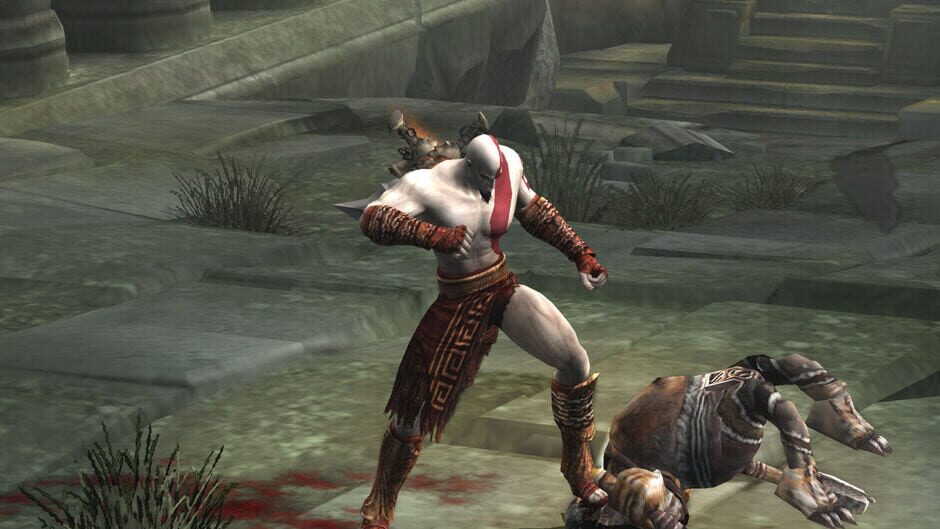
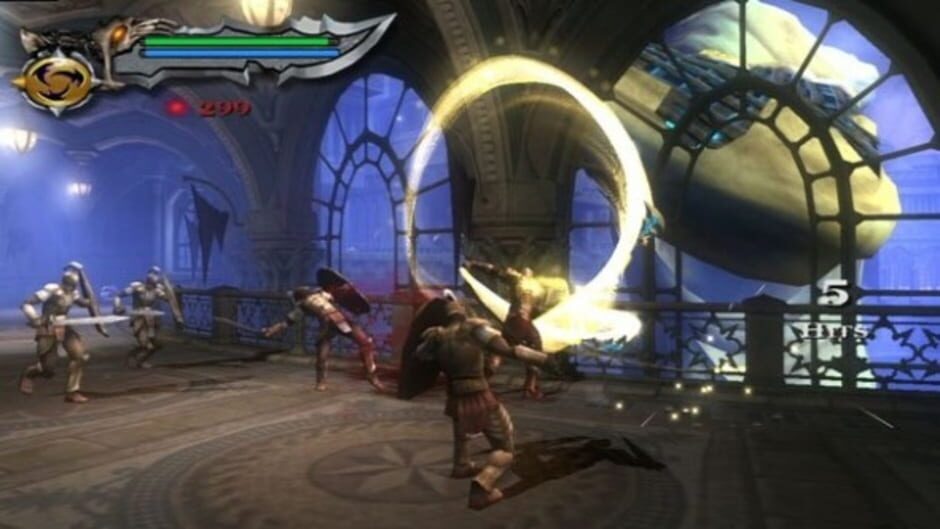
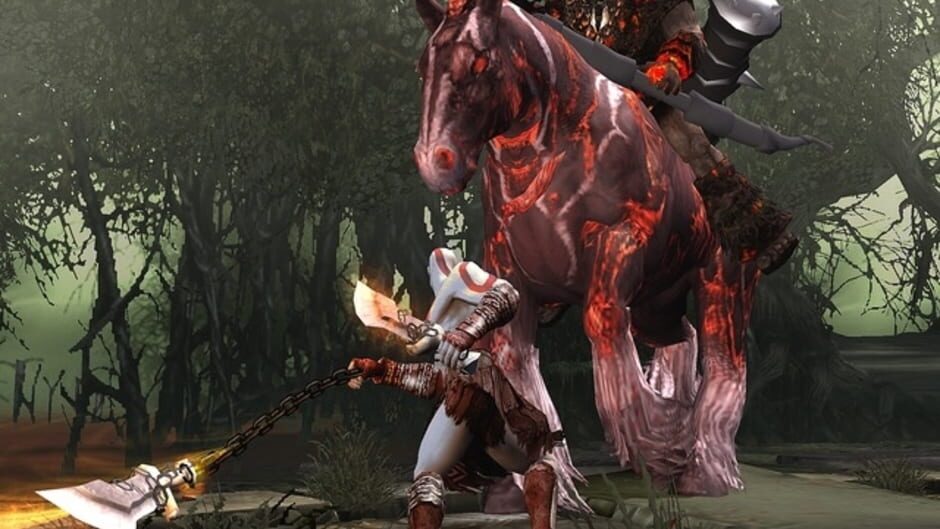
The combat system retains the principles established in 2005. The Blades of Athena, successors to the Blades of Chaos, remain Kratos' primary weapons and allow him to chain together quick attacks, powerful strikes and movements capable of hitting multiple enemies. Upgrading them unlocks new techniques and progressively increases their effectiveness.
God of War II significantly expands the arsenal, however. Kratos obtains different secondary weapons and several magical powers that can be upgraded using red orbs collected during the adventure. Players can therefore vary their approach more extensively while retaining the combo system that defines the series' combat.
New abilities also change mobility and defense. The Golden Fleece allows certain attacks to be blocked and reflected when used at the correct moment, while the Icarus Wings allow Kratos to glide across short distances. These tools are used in combat as well as platforming sections and environmental puzzles.
The Amulet of the Fates adds another dimension to exploration. In specific areas, it allows time to be temporarily slowed in order to pass mechanisms or reach locations that would otherwise be inaccessible. God of War II therefore integrates several of its new abilities directly into environmental design rather than limiting them to combat.
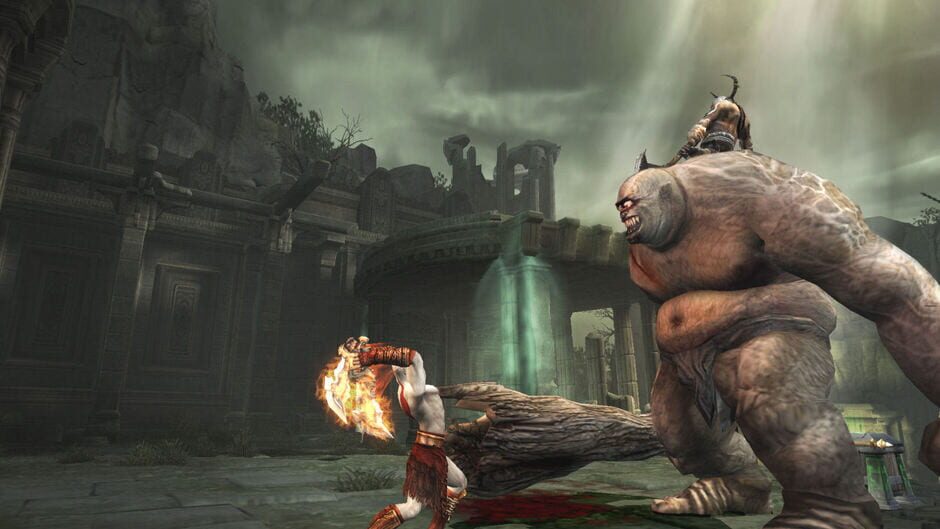
Progression places greater emphasis on spectacular traversal. Kratos notably uses Pegasus to cross certain regions and takes part in sequences where combat, platforming and presentation blend more closely than in the first game. Changes of scale are frequently used to move from conventional encounters into monumental architecture or creatures occupying a large part of the environment.
Puzzles and platforming remain essential. They involve mechanisms, movable objects, manipulation of time and coordinated use of Kratos' new abilities. The adventure therefore alternates combat with sequences in which observation and understanding of the environment take priority.
The bestiary further expands the use of Greek mythology. Cyclopes, minotaurs, gorgons and familiar creatures return alongside new figures drawn from myth, while several famous characters are reinterpreted to fit Kratos' journey. The Titans in particular become far more important and are directly connected to the Spartan's conflict with Zeus.
Presentation retains the developer-controlled camera but frequently aims for a greater sense of scale. Panoramic views, camera movements and transitions between gameplay and cinematics accompany larger environments and more imposing battles while preserving the clarity required for combat.
God of War II also develops Kratos' place within the series' mythology more directly. His relationship with Zeus, alliance with Gaia and search for the Sisters of Fate transform his personal story into a conflict between different generations of divine powers. The game therefore prepares a confrontation far broader than the one that structured the first installment.
What to remember
- A direct sequel that finds Kratos as the new God of War before his confrontation with Zeus transforms his divine power into another quest for revenge.
- Cory Barlog as director and lead designer, expanding the scale of battles and environments while retaining the foundations of the first game.
- The Blades of Athena as Kratos' primary weapons, joined by new weapons, magic and abilities that diversify combat.
- The Golden Fleece, Icarus Wings and Amulet of the Fates, used across combat, puzzles and platforming.
- The Sisters of Fate and the Titans at the center of a story that greatly expands the series' mythology and Kratos' conflict with Olympus.
- A more ambitious adventure in presentation, combining combat, puzzles, platforming, Pegasus and monumental encounters without abandoning the action-adventure structure of the first game.
Conclusion
God of War II takes an already well-established formula and approaches it with considerably greater ambition. The combat system remains immediately recognizable, but the increased number of weapons, powers and abilities gives players more options without changing the fluidity that defined the first installment.
The new abilities are particularly important because they do more than enrich combat. The Icarus Wings, Golden Fleece and Amulet of the Fates also play roles in platforming, puzzles and environmental design. Kratos' development therefore gradually changes the way the world is traversed as much as his offensive strength.
This evolution accompanies a much broader sense of spectacle. Monumental environments, travel on Pegasus and confrontations with enormous creatures reinforce the impression of a conflict that now extends beyond revenge against a single god. Santa Monica Studio's controlled camera emphasizes this scale without sacrificing combat readability.
The story follows the same progression. Kratos is no longer a servant seeking freedom from his past but a divine power directly challenging Zeus and the order established by Olympus. The Titans and Sisters of Fate broaden the mythological framework and turn his revenge into part of a much older struggle.
God of War II therefore consolidates the identity of the series while preparing its definitive increase in scale. Richer in mechanics, broader in environments and more directly centered on the war between Kratos and the gods, it transforms the foundations of the first installment into a genuine mythological saga.
Good to know
- God of War II was developed by Santa Monica Studio and published by Sony Computer Entertainment.
- Cory Barlog served as Game Director and Lead Designer, Steve Caterson as producer, while David Jaffe remained involved as Creative Director.
- The game was originally released for PlayStation 2 on March 13, 2007 in North America and on April 27, 2007 in France.
- The story continues directly after God of War and presents Kratos as the new God of War, successor to Ares.
- God of War II notably introduces the Sisters of Fate and gives the Titans, including Gaia, a much larger role in the story.
- The game was re-released alongside God of War in the God of War Collection for PlayStation 3 with remastered high-definition presentation.
- God of War II is the second main installment of the original Greek trilogy, whose story continues directly in God of War III.
```