Presentation
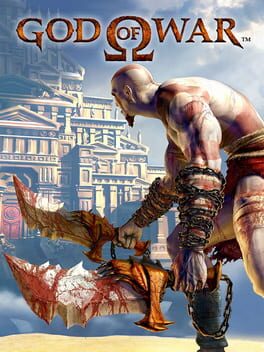
Developed by Santa Monica Studio and published by Sony Computer Entertainment, God of War was originally released for PlayStation 2 in 2005. The game was directed and designed under the leadership of David Jaffe, with Shannon Studstill serving as producer. It introduces Kratos and establishes the foundations of a series built around a spectacular reinterpretation of Greek mythology.
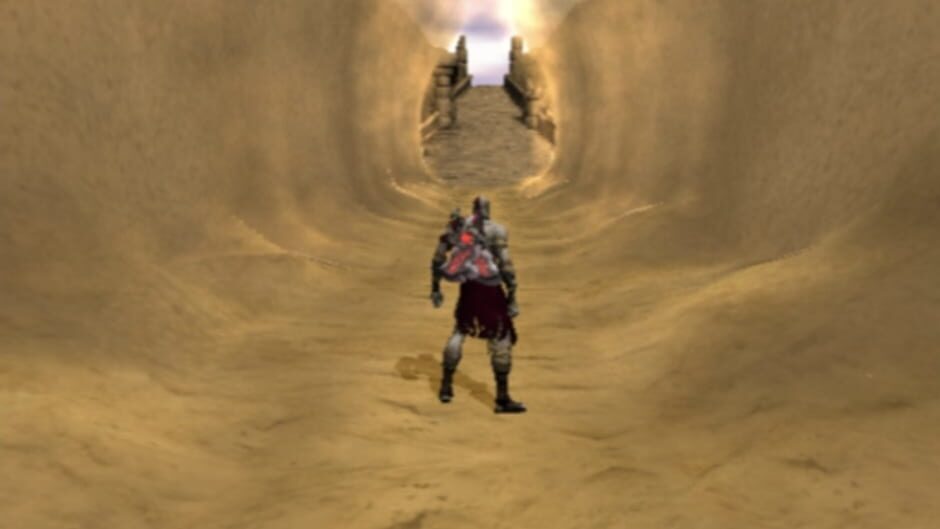
The game takes place in a reimagined ancient Greece where the gods of Olympus directly intervene in human affairs and mythological creatures naturally inhabit the cities, temples and landscapes crossed during the journey. God of War does not attempt to faithfully reproduce the ancient stories: it borrows their figures, locations and monsters to construct its own tragedy around Kratos.
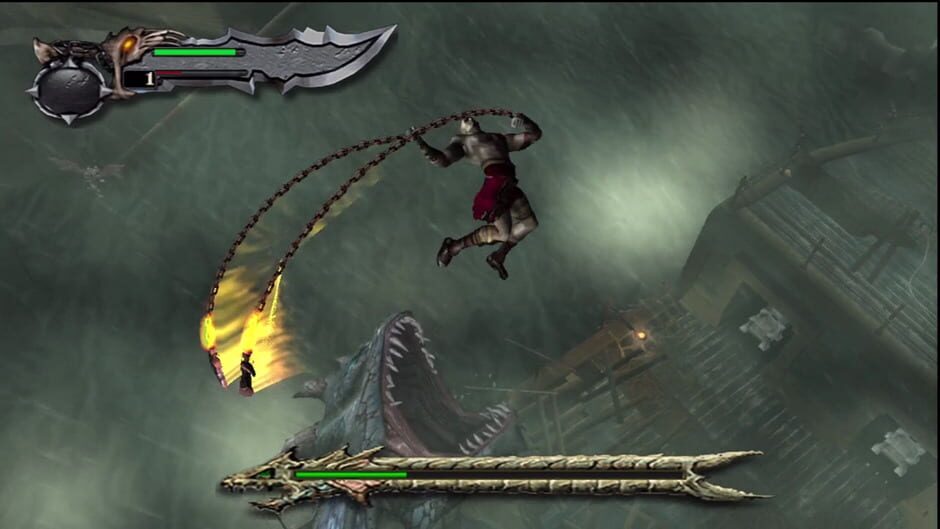
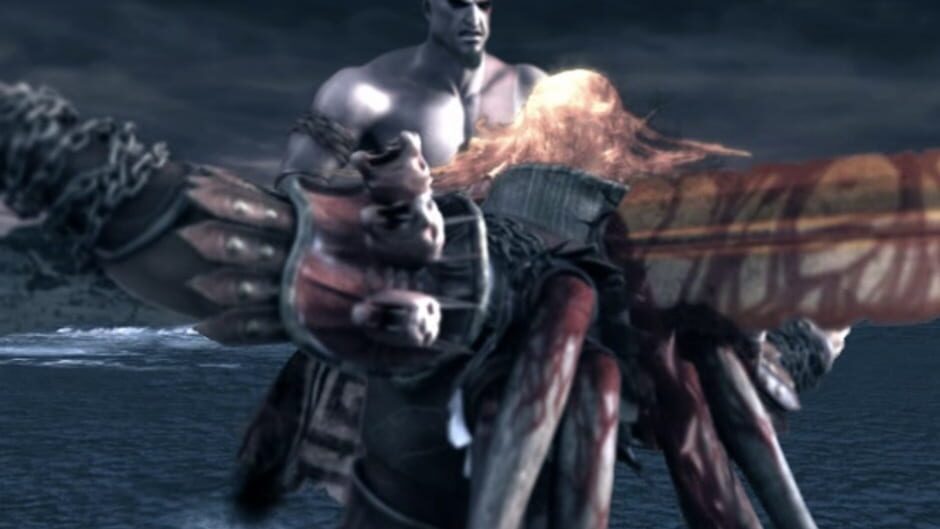
Combat revolves primarily around the Blades of Chaos, two weapons attached to Kratos' arms by chains. Their reach allows him to attack several enemies around him, combine quick and powerful strikes and remain highly mobile during combat. Additional techniques are gradually unlocked to expand the available combinations.
Kratos also receives several magical abilities granted by the gods he encounters. These powers complement physical attacks by controlling groups, dealing damage at range or responding to particular situations. Their use depends on a dedicated meter, requiring players to manage resources between different types of actions.
Weapon and ability progression relies on red orbs obtained through combat, destroying certain objects or opening chests. They can be spent to improve Kratos' abilities and unlock additional attacks. Green and blue orbs restore health and magic respectively.
God of War combines these battles with platforming sections and numerous environmental puzzles. Kratos must climb, jump, move mechanisms and manipulate different parts of the environment to continue. Several areas deliberately slow the pace and require more observation than brute force.
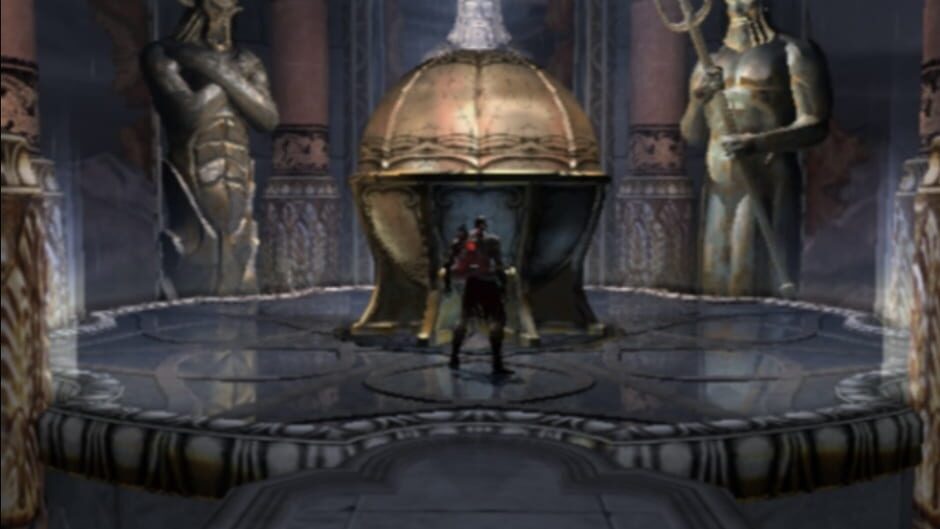
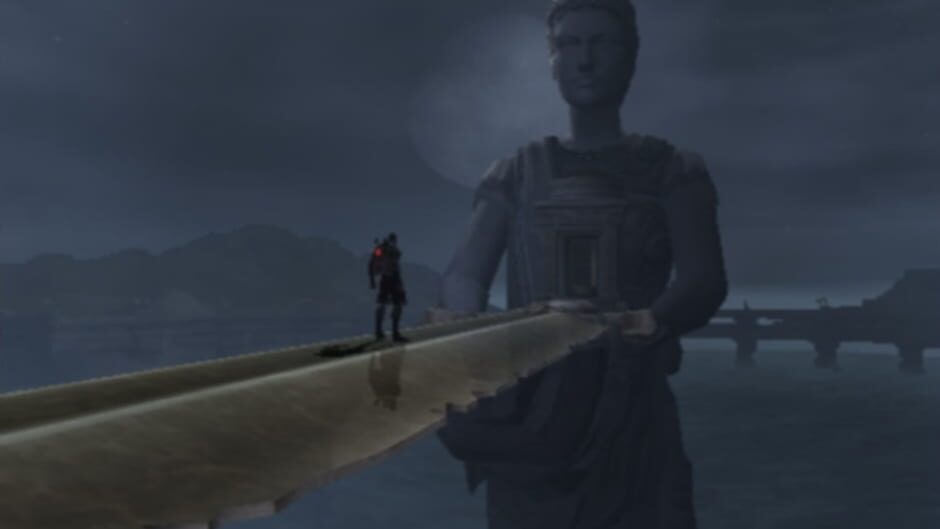
The camera is entirely controlled by the game and uses cinematic framing that changes according to the environment. It can pull back to emphasize the scale of a temple or move closer during certain battles without requiring players to manage its orientation themselves. This presentation strongly contributes to the spectacular nature of the adventure.
Quick Time Events also play an important role. Several creatures can be finished through sequences requiring players to quickly perform commands displayed on screen. These actions turn the end of a battle into a staged sequence and can reward the player with additional resources in certain situations.
The bestiary draws heavily from Greek mythology. Minotaurs, gorgons, cyclopes, harpies and other creatures are reinterpreted to provide different behaviors and combat constraints. Boss encounters use the same principles on a larger scale, combining observation, direct attacks and interactive sequences.
The story remains closely connected to the gameplay. Kratos' battles are not simply a succession of obstacles: they extend the story of a warrior shaped by violence and by his former relationship with Ares. Revelations about his past gradually give another meaning to his mission and explain the anger that defines the character.
God of War therefore establishes from its first installment a formula based on the combination of action, mythology, platforming, puzzles and spectacular presentation. The game does not rely solely on Kratos' strength, but on a rhythm that constantly alternates between group combat, exploration, environmental challenges and major narrative sequences.
What to remember
- The first appearance of Kratos, a Spartan warrior serving the gods of Olympus and a former servant of Ares.
- A combat system centered on the Blades of Chaos, combining reach, fast combos, magic and gradual ability upgrades.
- A freely reinterpreted mythological Greece populated by gods, minotaurs, gorgons, cyclopes, harpies and other figures drawn from ancient stories.
- An adventure alternating between combat, platforming, environmental puzzles and exploration rather than relying exclusively on battles.
- Presentation built around a cinematic camera controlled by the game and Quick Time Events integrated into several battles and major sequences.
- A story centered on Kratos' revenge against Ares but also on guilt and the consequences of his past, which become defining elements of the series.
Conclusion
God of War builds its identity around a direct combination of action and presentation. The Blades of Chaos immediately give Kratos a recognizable fighting style based on reach and flowing combinations rather than attacks limited to an enemy directly in front of him.
The variety of pacing prevents the game from becoming a simple succession of combat arenas. Puzzles, platforming sequences and monumental environments provide regular changes of rhythm, while the developer-controlled camera allows each location to become part of the presentation.
Greek mythology also plays an essential role. It provides the game's bestiary, powers, environments and part of its narrative structure, but it is constantly reshaped around Kratos' journey. This freedom allows Santa Monica Studio to create an immediately recognizable universe without being restricted by a literal adaptation of ancient myths.
The protagonist ultimately gives this spectacular violence a distinctive coherence. Kratos is not simply presented as a warrior capable of defeating monsters: his actions are tied to a personal history defined by guilt, anger and his relationship with gods who use him as much as they help him.
By combining fluid combat, mythology, spectacle and personal tragedy, God of War established the foundations of one of PlayStation's major series in 2005. Later installments would greatly expand its universe, but the core of its identity is already present in this first confrontation between Kratos, Olympus and his own past.
Good to know
- God of War was developed by Santa Monica Studio and published by Sony Computer Entertainment.
- The game was directed and designed by David Jaffe, with Shannon Studstill serving as producer.
- It was originally released for PlayStation 2 on March 22, 2005 in North America, followed by its European release several months later.
- The installment marks the first appearance of Kratos and the official beginning of the God of War series.
- Kratos' primary weapons are the Blades of Chaos, two chained blades attached to his arms and connected to his former service to Ares.
- God of War was re-released alongside God of War II in the God of War Collection for PlayStation 3 in 2009 in North America and 2010 in Europe, with high-definition presentation.
- This 2005 game should not be confused with God of War released in 2018 for PlayStation 4, which continues Kratos' story in a new setting inspired by Norse mythology.
```