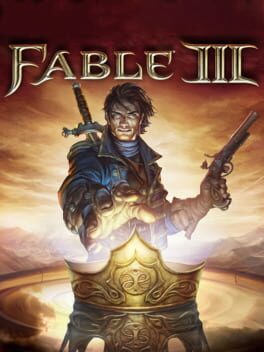
Fifty years after the events of Fable II, a new generation takes place in the heart of Albion. The player plays the child of the Hero from the previous episode and begins a journey that will lead him to the throne of the kingdom. This new adventure continues the story of Albion through the direct descendant of the character of Fable II. His journey no longer consists only of becoming a recognized Hero: he is now part of a trajectory linked to the power and direction of the kingdom. Fable III therefore places the question of reign at the center of its starting point, evolving the legacy of the previous Hero towards a new generation called to determine its own path to the throne of Albion.
Video game
2010
Action
Adventure
Comedy
Fantasy
RPG
Hack and slash
Simulation
Strategy
Open world
Sandbox
Fable III
- Lionhead Studios Developer
- Microsoft Game Studios Publisher
Fable III does not stop at conquering the throne: it then places the Hero face to face with the promises, compromises and decisions implied by Albion's government.
Details
- Type
- Video game
- Release
- 2010-10-26
- Genres
- Action, Adventure, Comedy, Fantasy, RPG, Hack and slash, Simulation, Strategy, Open world, Sandbox
- Platforms
- PC, Xbox 360
- Game modes
- Single player, Co-operative
Synopsis
Fable III


Trailer
Watch the trailer
Overview
Overview
Developed by Lionhead Studios and published by Microsoft Game Studios, Fable III is a video game released on October 26, 2010. The platforms listed in this entry are PC and Xbox 360. The associated genres are action, adventure, comedy, fantasy, RPG, hack-and-slash, simulation, strategy, open-world, and sandbox. The listed game modes are Single player and Co-operative.
The adventure returns to Albion, fifty years after Fable II, with the child of the previous Hero as the new protagonist. Progression retains several core elements of the series — combat, moral choices, reputation, social interactions, and economy — while placing much greater emphasis on the pursuit of power and the consequences of decisions made as a ruler.
Character progression is primarily handled through the Road to Rule. This area allows players to spend Guild Seals earned throughout the adventure to unlock combat abilities, spells, social expressions, and improvements related to professions. New sections of the road become accessible as the story progresses.
Fable III also replaces many traditional menus with the Sanctuary, a three-dimensional space serving as a management hub. Players can view their equipment, quests, finances, Hero status, and various customization options, while also accessing the Road to Rule.
Combat retains the series' three established approaches: melee, ranged combat, and magic. Players can use various melee weapons, firearms or other ranged weapons, and several magical powers, gradually improving their effectiveness through Guild Seals.
Magic relies in particular on spell gauntlets. Two powers can be combined to produce different combinations, allowing players to modify the effects used during combat and adapt their character's magical approach more freely.
Weapons also contribute to progression. Some can evolve visually and mechanically according to the player's actions or completed objectives. Hero weapons notably change their appearance as they develop, while other equipment has specific requirements for unlocking additional properties.
Moral choices remain central to the experience, but Fable III connects them directly to the character's political development. Decisions made throughout the journey influence how the inhabitants perceive the Hero and can have lasting consequences for Albion.
This dimension becomes particularly important when the character gains power. The Judgements system then requires players to settle various matters concerning the kingdom, with decisions that may benefit the population, public finances, or certain political priorities.
Promises made during the rise to the throne can also become commitments to honor or abandon once power has been obtained. The game therefore directly connects certain decisions made before the reign with those taken afterward as a ruler.
The economy continues to play an important role. The Hero can purchase properties, manage various sources of income, and work in different professions. These activities generate money used for both everyday life and the economic decisions associated with the character's progression.
Professions involve several mini-games, particularly blacksmithing, music, and pie-making. Improvements are also handled through the Road to Rule, where additional levels can be unlocked using Guild Seals.
Interactions with the inhabitants continue the social systems introduced in previous installments. Players can build relationships, use different expressions, and develop a personal life alongside quests and the challenges associated with power.
The companion dog also returns and continues to accompany the Hero during exploration. It helps locate certain elements in the world and remains part of the character's everyday life in Albion.
Co-operative play is more developed than in Fable II. A second player can join the adventure in Co-operative mode, bringing their own Hero in certain configurations. Both characters can have their own equipment and progression and can interact more freely with one another.
This co-operative experience allows each player to develop their abilities independently through the Road to Rule. The two Heroes can also purchase items, exchange gifts, and participate together in various activities throughout the world.
Fable III thus organizes its experience around two closely connected dimensions: the Hero's personal development and rise to power. Combat, magic, economy, relationships, properties, and individual progression continue to shape the character, while decisions made as a ruler extend their consequences across Albion.
Key Takeaways
- Fable III takes place fifty years after Fable II and follows the child of the previous game's Hero.
- The Road to Rule allows players to spend Guild Seals to unlock abilities, spells, expressions, and professional skills.
- The Sanctuary replaces many traditional menus with a 3D environment dedicated to character management.
- Combat combines melee, ranged weapons, and magic, with the ability to combine certain spells.
- Some weapons can evolve according to the player's progression and actions.
- Decisions no longer concern personal morality alone: they also extend to the management and government of Albion.
- Properties, professions, income, and social interactions remain integrated into progression.
- Co-operative mode allows a second Hero to join the adventure with greater independence than before.
Conclusion
Fable III continues the choice and character development systems of previous installments while extending some of their consequences to the scale of the kingdom. The character continues to evolve through abilities, equipment, relationships, and economic activities, but their journey also leads them to make decisions concerning Albion.
The Road to Rule structures much of the progression by using Guild Seals to unlock new possibilities, while the Sanctuary brings equipment, quests, finances, and Hero status management together in a dedicated environment.
Combat retains the combination of melee, ranged attacks, and magic, with evolving weapons and spell combinations complementing the different approaches available.
Fable III therefore connects RPG progression, life simulation, and the management of power: the character builds their identity through individual actions, then must deal with the broader consequences of their decisions for Albion.
Additional Information
- Fable III was released on October 26, 2010.
- The game was developed by Lionhead Studios and published by Microsoft Game Studios.
- The platforms listed in this entry are PC and Xbox 360.
- The associated genres are action, adventure, comedy, fantasy, RPG, hack-and-slash, simulation, strategy, open-world, and sandbox.
- The listed game modes are Single player and Co-operative.
- The Road to Rule is one of the main progression systems.
- The Sanctuary centralizes much of the character and equipment management.
- Player choices can have consequences for both the Hero and the functioning of Albion.