The evil Children of Hargon seek to eliminate every form of creation. They have forbidden building, cooking and crafting, capturing builders to impose their doctrine of destruction. As a young apprentice builder, you manage to escape their clutches before washing ashore on the Isle of Awakening. There, you meet Malroth, a fearless young man who has lost his memory. Together, you set out to develop the skills needed to become a fully fledged builder. Your journey will lead you into conflict with the Children of Hargon and the dangers of a mysterious world whose secrets, along with those of Malroth's past, await discovery.
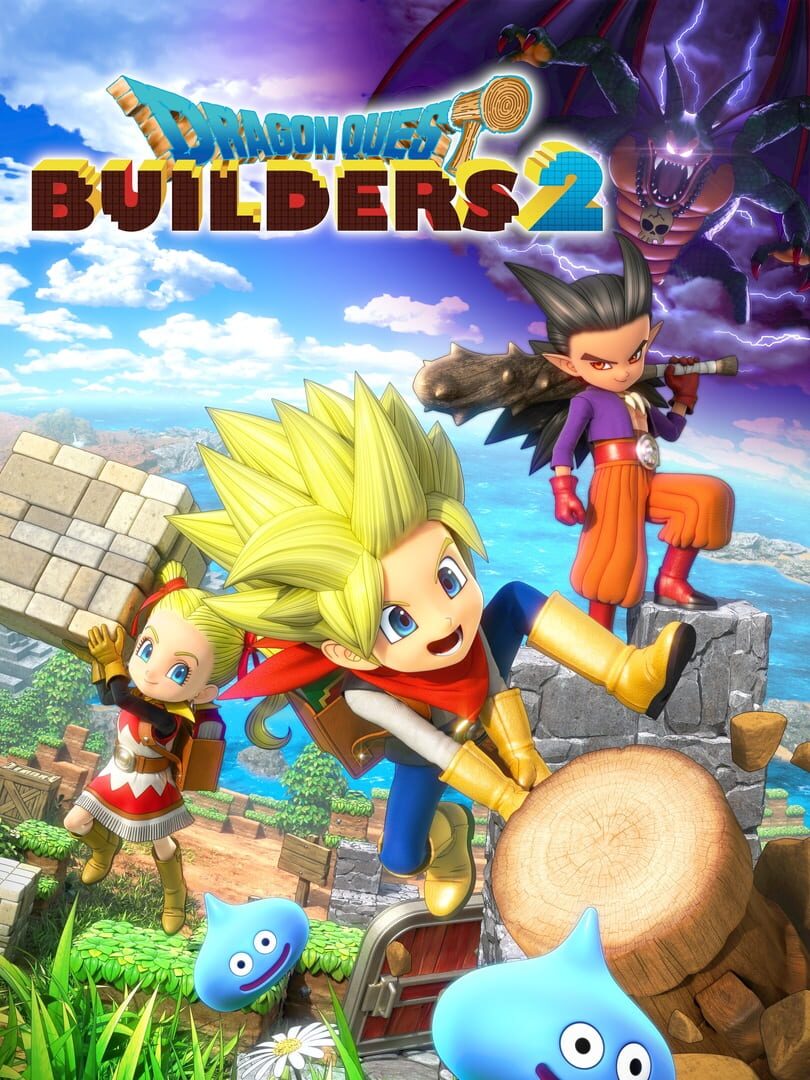
Video game
2018
Action
Adventure
Fantasy
RPG
Open world
Sandbox
Dragon Quest Builders 2
- Nintendo Publisher
- Omega Force Developer
- Square Enix Publisher
- Square Enix Business Division 5 Developer
In a world devoted to destruction, every creation brings new hope.
Details
- Type
- Video game
- Release
- December 20, 2018
- Countries
- 🇯🇵 Japan
- Genres
- Action, Adventure, Fantasy, RPG, Open world, Sandbox
- Platforms
- PlayStation 4, Xbox One, Nintendo Switch, PC
- Game modes
- Single player, Multiplayer, Co-operative
Synopsis
Dragon Quest Builders 2


Trailer
Watch the trailer
Overview
Presentation
Dragon Quest Builders 2 is an adventure, building and role-playing game released on December 20, 2018. A sequel to Dragon Quest Builders, it retains the concept of a fantasy world made of blocks that players can break, collect and assemble into their own creations. This new adventure follows a young apprentice builder confronting the Children of Hargon, a cult opposed to every form of creation. After washing ashore on the Isle of Awakening, the protagonist meets Malroth, a mysterious young man with no memory of his past who accompanies the builder during exploration and combat. The game combines a story-driven campaign with more open-ended construction activities, featuring multiple islands to explore, communities to assist and landscapes to transform.
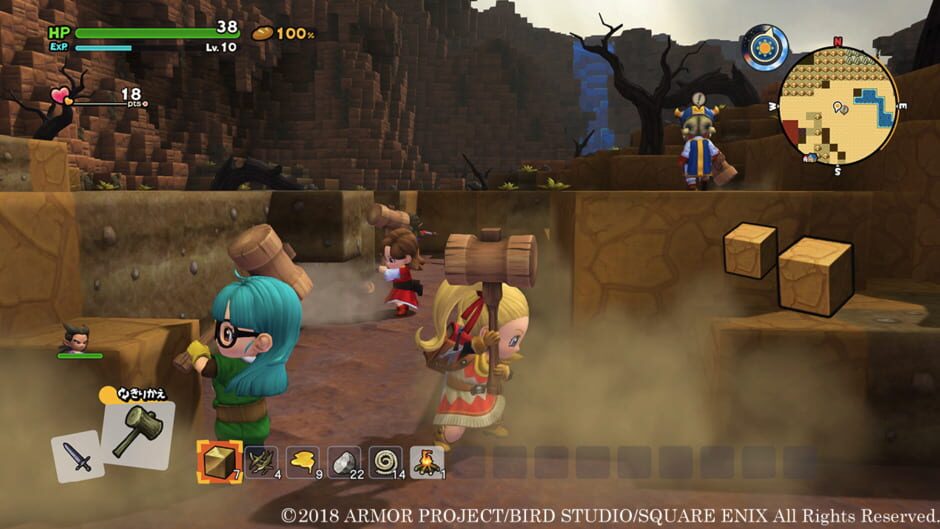
Building relies on gathering materials from the environment. Earth, stone, wood and other resources can be collected and used to craft objects, equipment and architectural elements. New recipes and blueprints become available as the adventure progresses. Players can construct houses, workshops, kitchens, sleeping quarters and communal facilities. The game recognizes certain rooms according to their size, walls, doors and furniture. A space meeting particular requirements can become a functioning bedroom, kitchen or workshop. Buildings therefore do more than change the appearance of the landscape: they also determine which activities residents can perform.
Village life is an important part of the experience. Characters encountered throughout the journey may request specific buildings, help construct them and use the facilities provided. Under suitable conditions, residents can cultivate fields, prepare meals and contribute to construction projects. Farming is particularly developed: players prepare the soil, plant different seeds, water crops and harvest produce. Fields can be organized according to the requirements of different plants, while villagers help maintain agricultural areas. Food supports the energy needed for travel and work, and communal facilities contribute to the development of settlements. Story progression gradually introduces additional construction methods and new possibilities for organizing each community.
Exploration takes players across islands featuring different environments and resources. The protagonist can run, swim, dive and glide using abilities and equipment obtained during the adventure. Villages, caves, mines and abandoned structures contain materials, treasure and familiar Dragon Quest creatures. Combat unfolds in real time, with direct attacks and movement rather than the turn-based encounters traditionally associated with the main series. Malroth assists the player with his offensive abilities. Certain powerful enemies require suitable equipment and careful observation of attack patterns, while construction can also play a part in defensive situations.
The Isle of Awakening functions as a central territory where players can develop personal projects and bring together inhabitants encountered during the adventure. It provides a creative space less restricted by the objectives associated with individual story areas. The game also features a multiplayer building mode supporting up to four participants, allowing friends to visit an island and construct buildings or other structures together. This cooperative mode is separate from the main campaign, which remains a single-player experience. Community features also include sharing photographs and discovering creations made by other players. Through its characters and monsters based on the artistic universe of Akira Toriyama, Dragon Quest Builders 2 combines the series' visual identity with gameplay in which creation and settlement development are central forms of progression.
Key Highlights
- A block-building RPG: collecting resources, crafting objects and constructing buildings are fundamental to the adventure.
- Functional room recognition: specific arrangements of walls, doors and furniture create facilities that residents can use.
- Active village communities: inhabitants can farm, cook and contribute to various projects.
- Developed farming mechanics: soil preparation, planting, watering and harvesting support settlement management.
- Exploration and real-time combat: islands, caves, mines, monsters and different movement abilities structure the journey.
- A combat companion: Malroth accompanies the builder and helps fight hostile creatures.
- Cooperation for up to four players: the multiplayer mode allows participants to create shared structures outside the single-player campaign.
Conclusion
Dragon Quest Builders 2 brings adventure and role-playing mechanics together through a construction system that directly influences the lives of its inhabitants. Resource gathering, crafting and village organization accompany progression based on discovering new territories. Real-time combat and varied movement abilities complement this structure, while the Isle of Awakening and cooperative mode allow players to pursue creative projects independently of the campaign's objectives.
Did You Know?
- Despite its title, Dragon Quest Builders 2 features a standalone adventure. Completing the first game is not necessary to understand its story.
- Players can customize their builder's appearance, including gender, hairstyle and certain clothing options.
- Buildings use room recipes: particular combinations of furniture and architectural elements can give rooms a function recognized by residents.
- Villagers can automatically participate in certain activities, including farming and cooking, when the necessary facilities and conditions are available.
- Movement abilities include running, swimming, diving and gliding, providing different ways to explore the environments.
- Cooperative play for up to four players focuses on building and exploring personal islands; the main story campaign does not become a multiplayer adventure.
- Photo Mode allows players to photograph their creations and apply filters. Community sharing features also provide access to constructions published by other players.
- An extended Jumbo Demo allows players to begin the adventure and transfer their save data to the full game on supported platforms.
Link graph
Open in the full graphLoading the graph…
Only the strongest links are shown.