Presentation
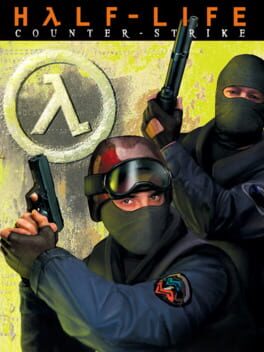
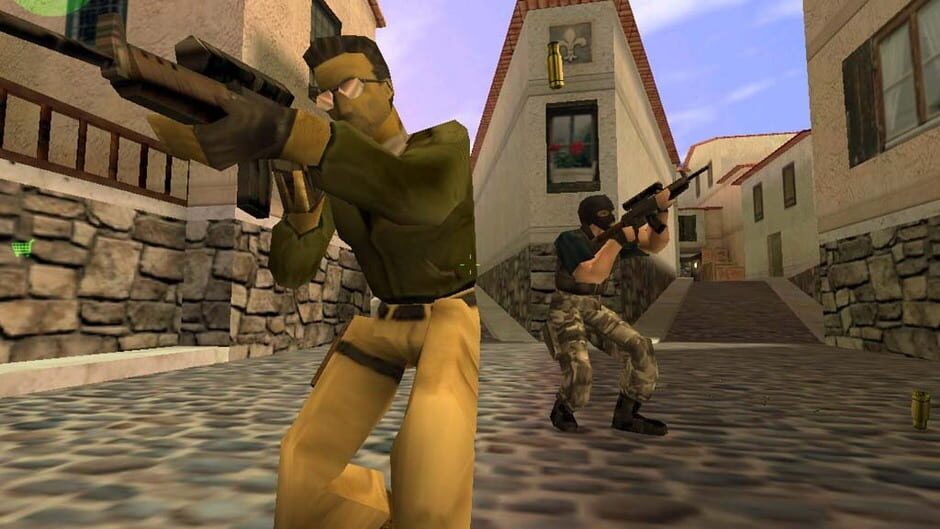
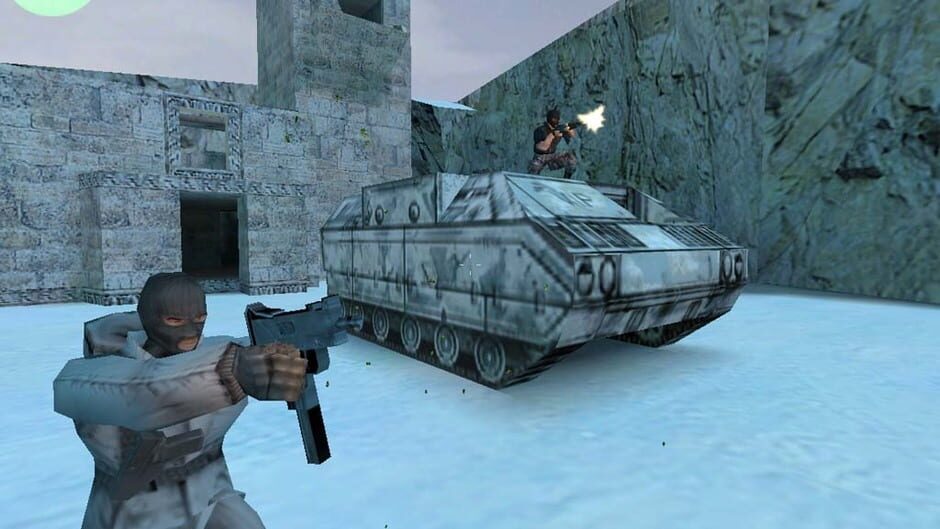
Counter-Strike began as a multiplayer mod for Half-Life before becoming a commercial game. It moved away from the fast, heavily armed battles of many contemporary FPS games to build short rounds around two teams with opposing objectives.
Death is particularly punishing because an eliminated player generally returns only in the next round. This rule gives greater importance to movement, watched angles and decisions made within a few seconds.
The economy is the other central element. Performance in previous rounds determines the money available to buy rifles, pistols, grenades, armor and other equipment. A team may therefore accept weaker equipment in one round to prepare better conditions for a later one.
Weapons behave differently enough to require real practice. Rate of fire, power, accuracy and recoil affect their use, while movement and sustained firing generally reduce effectiveness.
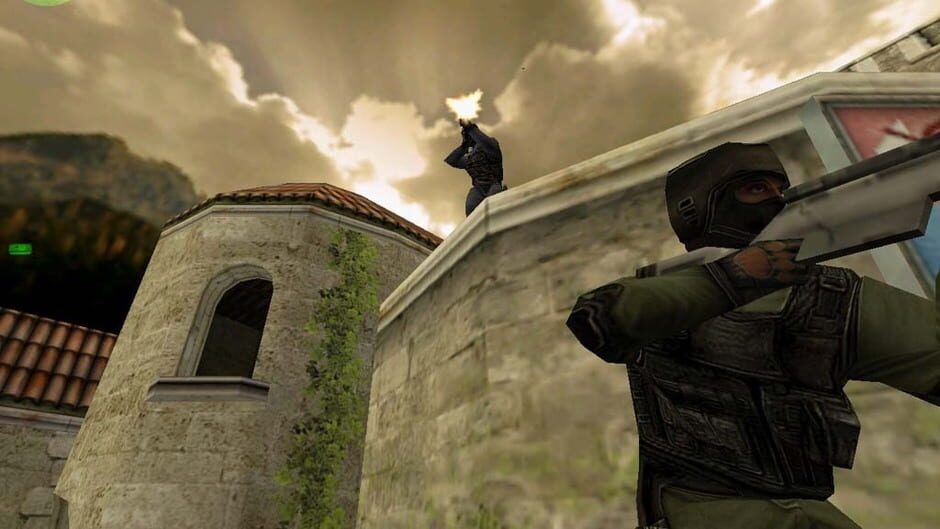
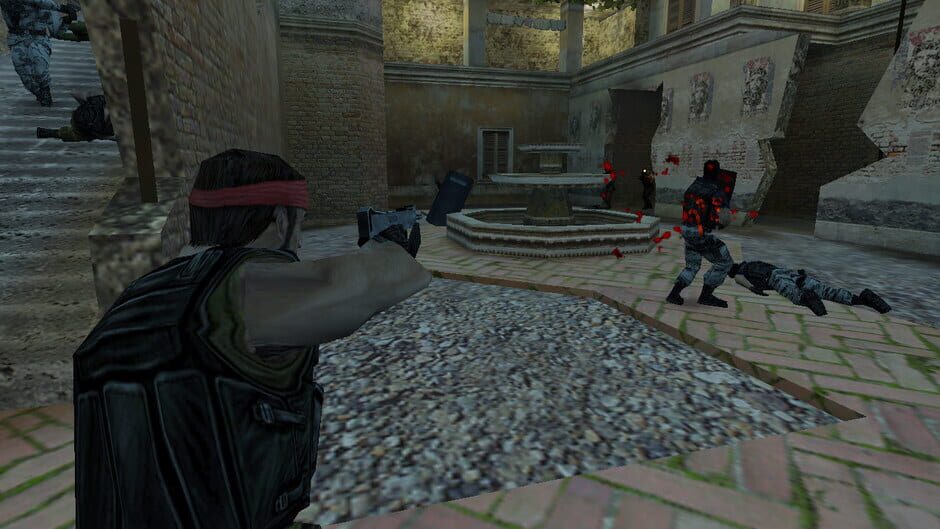
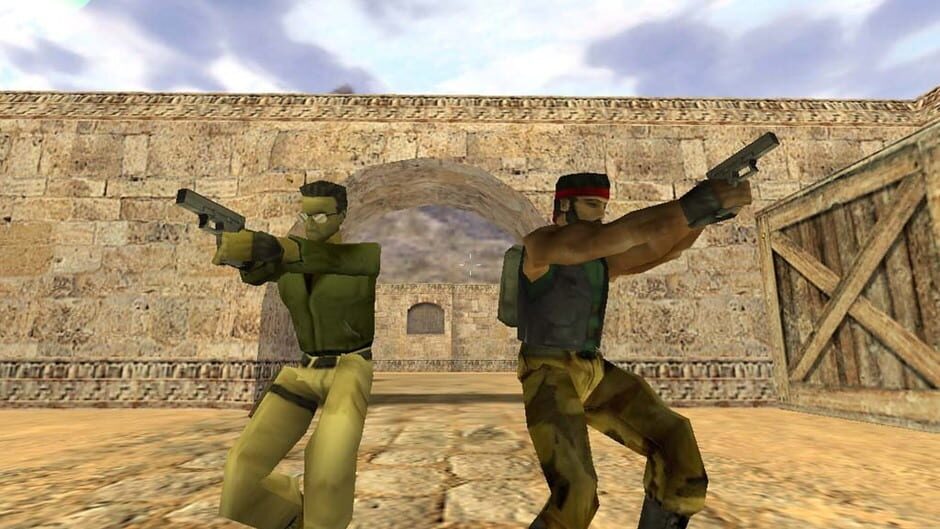
The maps themselves become part of the tactical system. Corridors, entry points, bombsites, defensive positions and secondary routes must be memorized to anticipate enemy movement. Maps such as Dust and Dust II would become strongly associated with the identity of the series.
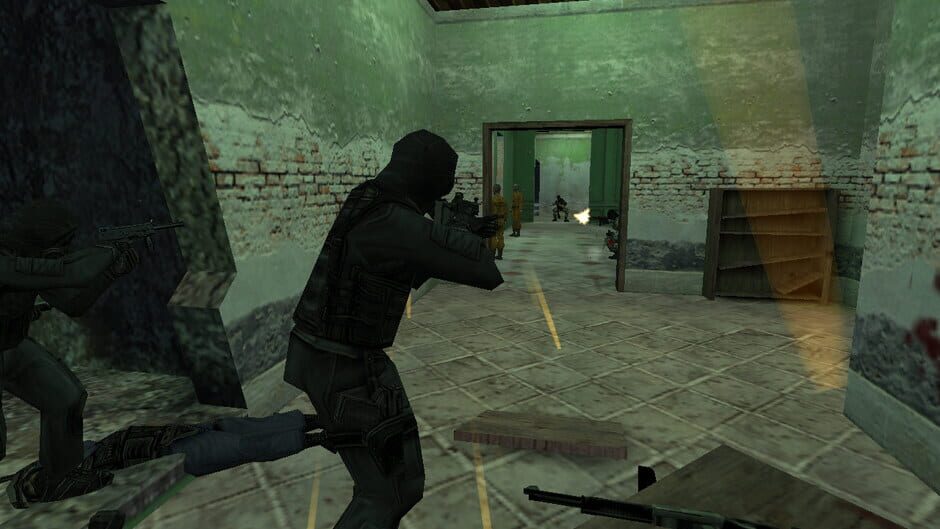
Objectives encourage teamwork. In bomb scenarios, terrorists must plant the explosive at a site while counter-terrorists try to stop them or defuse it. Hostage maps reverse the logic by requiring counter-terrorists to organize a rescue.
This structure makes communication essential. Information about an enemy position, a well-used grenade or a coordinated rotation can change a round without requiring more individual kills.
The apparent simplicity of its rules, combined with considerable mechanical depth, gives Counter-Strike a major place in the history of competitive FPS games. Its formula would continue to evolve through Condition Zero, Counter-Strike: Source, Global Offensive and eventually Counter-Strike 2.
What to remember
- A multiplayer FPS pitting terrorists against counter-terrorists in objective-based rounds.
- Its main scenarios revolve around bombs and hostage rescue.
- Eliminated players generally have to wait until the next round to return.
- An economy system is used to purchase weapons and equipment at the start of each round.
- Recoil, accuracy and the behavior of individual weapons require substantial practice.
- Map and positional knowledge matter as much as shooting skill.
- Communication and coordination play a central role in matches.
- The game originated as a Half-Life mod before becoming a franchise of its own.
Conclusion
Counter-Strike creates considerable depth from relatively simple rules. Two teams, a small number of objectives, an arsenal and short rounds are enough to produce very different situations depending on the decisions made by the players.
The lack of immediate respawning gives real weight to every mistake, while the economy connects individual rounds and forces teams to think beyond the current encounter.
Its strength also comes from the importance of knowledge. Mastering a map, understanding a weapon or communicating information at the right moment can be as decisive as aiming quickly.
This combination of individual precision and collective organization established an unusually durable competitive formula and created the foundations on which the entire Counter-Strike series would continue to develop.
Good to know
- Counter-Strike was originally created by Minh “Gooseman” Le and Jess Cliffe as a Half-Life mod.
- Its first beta versions began circulating in 1999.
- Valve hired the creators and acquired the rights to the project in 2000.
- Version 1.0 and the commercial edition were released for PC in November 2000.
- The game uses technology derived from Half-Life, later commonly known as GoldSrc.
- Counter-Strike is primarily designed around competitive team-based multiplayer.
- Version 1.6 became one of the game’s longest-lasting iterations and remains closely associated with the original Counter-Strike.
- An Xbox adaptation was released in 2003.