Ichigo Kurosaki, a young Substitute Soul Reaper tasked with fighting malevolent spirits, continues his adventures in the supernatural universe of Bleach. Throughout his journey, he revisits major battles and events from the manga and anime series, while other characters take part in these confrontations. Alongside the main story episodes, additional missions allow players to explore different environments, encounter new enemies and extend the adventures of the series' fighters.

Video game
2011
Action
Hack and slash
Bleach: Soul Resurrección
- NIS America Publisher
- Racjin Developer
Play as Ichigo and the fighters of Bleach, unleash their spiritual powers and battle hordes of Hollows.
Details
- Type
- Video game
- Release
- June 23, 2011
- Genres
- Action, Hack and slash
- Platforms
- PlayStation 3
- Game modes
- Single player
Synopsis
Bleach: Soul Resurrección
Glossary terms: 3D, Open world, Story mode, Subtitles, Victory condition


Trailer
Watch the trailer
Overview
Presentation
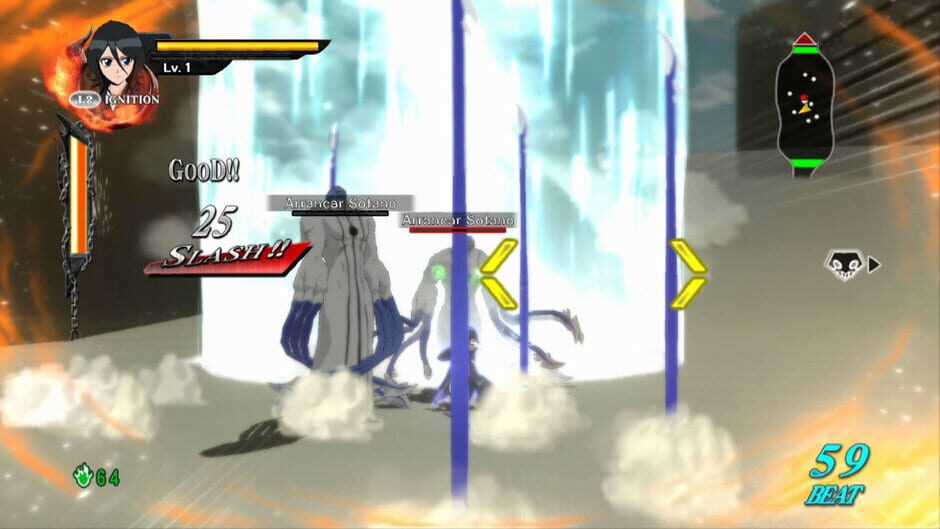
Bleach: Soul Resurrección is an action fighting game developed by Racjin and published by NIS America. Also known by its Japanese title Bleach: Soul Ignition, it marks the first adaptation of the Bleach franchise on PlayStation 3. Inspired by Tite Kubo's manga and its anime adaptation, the game brings battles between Soul Reapers, Hollows and Arrancars into a three-dimensional hack-and-slash formula. Characters fight numerous opponents simultaneously using their weapons and spiritual powers. The game features cel-shaded graphics, designed to reproduce the colors, silhouettes and visual effects characteristic of the anime.
Story Mode focuses on events from the Arrancar saga, primarily the battles in Hueco Mundo and the confrontation against the forces of Sōsuke Aizen. Players encounter Ichigo Kurosaki and several iconic characters, including captains of the Gotei 13 and powerful Espada. The campaign features 14 chapters, each dedicated to an important situation or battle from this period of the story. Missions alternate between short narrative sequences, dialogue and battles against Hollows and Arrancars, culminating in confrontations with major opponents. This structure selects specific moments from the story rather than providing a continuous adaptation of the entire manga.
Combat revolves around a system of close-range combos and spiritual attacks. Each character has a fighting style inspired by their abilities in Bleach, whether involving the sword techniques of Soul Reapers or the distinctive powers of Arrancars. Players can chain attacks, jump, fight in midair, perform rapid movements and lock onto targets. Spiritual attacks consume a Spiritual Pressure gauge, while special techniques can strike multiple enemies or inflict substantial damage. Evasive movements, particularly Shunpo and Sonído, complement these movement and combat options.
The combat system also features an Ignition Gauge, which gradually fills as players deal damage. Once activated, it temporarily increases the character's power and allows particularly devastating attacks. Players can notably unleash an Ignition Attack, an ultimate technique that consumes the remaining energy in this gauge. Abilities and animations differ between fighters, recreating their signature techniques. Boss battles place greater emphasis on movement management, special attacks and exploiting openings in the opponent's defenses.
Progression relies on a system of Soul Points, earned by defeating enemies, destroying certain environmental objects and completing missions. Extended combos increase the points multiplier, encouraging players to maintain a sustained offensive rhythm. After each level, performance is evaluated according to several criteria, including completion time, defeated enemies and techniques used. Accumulated points can be spent on developing characters through an upgrade grid, where each new space unlocks increased attributes or an additional ability. Certain upgrades become available only after sufficient progression with a fighter.
Alongside the campaign, Mission Mode offers 28 additional challenges, playable with unlocked characters. These trials include battles against groups of enemies, boss encounters and specific objectives, sometimes subject to time limits or restrictions. Soul Attack Mode revisits different combat situations with objectives focused on scores and performance. It also featured online leaderboards through PlayStation Network, allowing players to compare their results. With 21 playable fighters, several versions of Ichigo and missions independent of the main storyline, Bleach: Soul Resurrección combines the saga's major confrontations with individual progression built around mastering spiritual techniques.
Key points
- A 3D hack-and-slash game based on the Bleach manga and anime, featuring battles against numerous Hollows and Arrancars.
- A 14-chapter Story Mode, centered on events from the Arrancar saga and battles against Aizen's forces.
- 21 playable characters, including Soul Reapers, Espada and several forms of Ichigo Kurosaki.
- Combat built around combos, spiritual attacks and rapid movement, with techniques specific to each character.
- An Ignition Gauge, temporarily increasing fighters' power and allowing them to unleash ultimate attacks.
- A Soul Points progression system, featuring upgrade grids and unlockable abilities.
- A Mission Mode containing 28 challenges, with varied objectives, opponents and victory conditions.
- A Soul Attack Mode focused on performance and high scores, with online leaderboards offered through PlayStation Network.
Conclusion
Bleach: Soul Resurrección adapts the battles of Tite Kubo's universe into an action game centered on spiritual powers and combat against numerous opponents. Story Mode revisits several important confrontations from the Arrancar saga, while the different characters reproduce their signature techniques through combos, special attacks and abilities specific to their fighting styles.
The Ignition system, upgrade grids and additional modes expand progression beyond the main campaign. Soul Attack challenges and leaderboards also extend the possibilities offered by the different fighters. The game therefore combines large-scale combat, supernatural powers and individual progression, in an adaptation of Bleach dedicated exclusively to single-player action.
Good to know
Bleach: Soul Resurrección was originally released on June 23, 2011, in Japan, exclusively for PlayStation 3, under the title Bleach: Soul Ignition. The game was developed by Racjin and published internationally by NIS America. It was released in North America on August 2, 2011, followed by Europe on September 16, 2011. It was the first Bleach game developed for PlayStation 3.
The campaign primarily adapts events from the Arrancar saga, featuring several battles set in Hueco Mundo and confrontations against powerful opponents from the series. Story Mode comprises 14 chapters, each associated with a major episode from this period. The narrative is condensed around these confrontations and does not cover all the preceding story arcs from the manga.
The roster features 21 playable fighters, counting the different available forms of Ichigo. Characters include Ichigo Kurosaki, Rukia Kuchiki, Uryū Ishida, Byakuya Kuchiki, Kenpachi Zaraki, Tōshirō Hitsugaya, Yoruichi Shihōin, Shunsui Kyōraku, Grimmjow Jaegerjaquez, Ulquiorra Cifer, Tier Harribel, Gin Ichimaru and Sōsuke Aizen. Certain opponents also appear as bosses without being directly playable.
Several versions of Ichigo Kurosaki feature their own techniques and attributes. The game notably includes forms associated with his Bankai, Hollow powers and Final Getsuga Tenshō. The roster also includes Kokutō and a version of Ichigo inspired by the animated film Bleach: Hell Verse, released in Japan in 2010. These appearances allow players to encounter characters and powers outside the main confrontations of the campaign.
The progression grid allows players to improve each fighter's attributes and abilities by spending Soul Points. Upgrades are distributed across interconnected paths, with certain areas accessible only after reaching a specific level. Points earned depend notably on defeated enemies, completed combos and overall performance during missions.
Mission Mode features 28 challenges, gradually becoming available as players progress. Some require completing a stage and defeating a boss, while others impose special conditions, such as time limits or movement restrictions. Soul Attack Mode offers different challenges focused on achieving the highest scores. Its leaderboards were linked to PlayStation Network, but the game does not feature cooperative gameplay or multiplayer battles: combat is exclusively single-player.
The presentation uses three-dimensional cel-shaded character models, accompanied by visual effects recreating techniques from the manga and anime. Environments notably include the desert landscapes of Hueco Mundo and locations associated with the saga's major confrontations. Levels allow free movement within their combat areas but do not form a continuous open world connecting every location in the Bleach universe.
Western editions feature Japanese and English voice acting, with the option to select the preferred language in the settings. The edition released in France also includes French text and subtitles. In North America, early copies included a code allowing players to download episodes 190 to 192 of the anime through PlayStation Network as part of a limited promotional offer.
Link graph
Open in the full graphLoading the graph…
Only the strongest links are shown.