Presentation
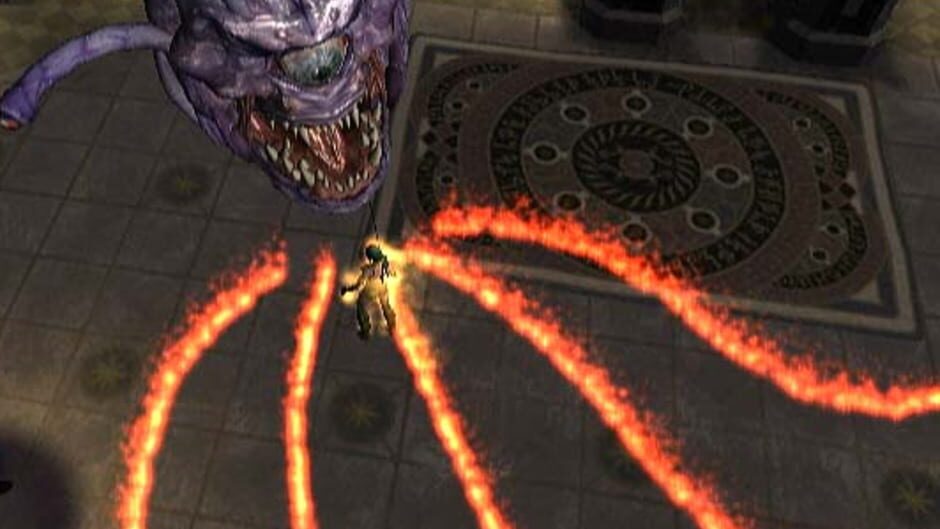
Baldur’s Gate: Dark Alliance retains the Forgotten Realms setting but abandons the tactical RPG structure of BioWare’s games in favor of a hack-and-slash action RPG. Combat takes place entirely in real time within 3D environments viewed from an elevated perspective.
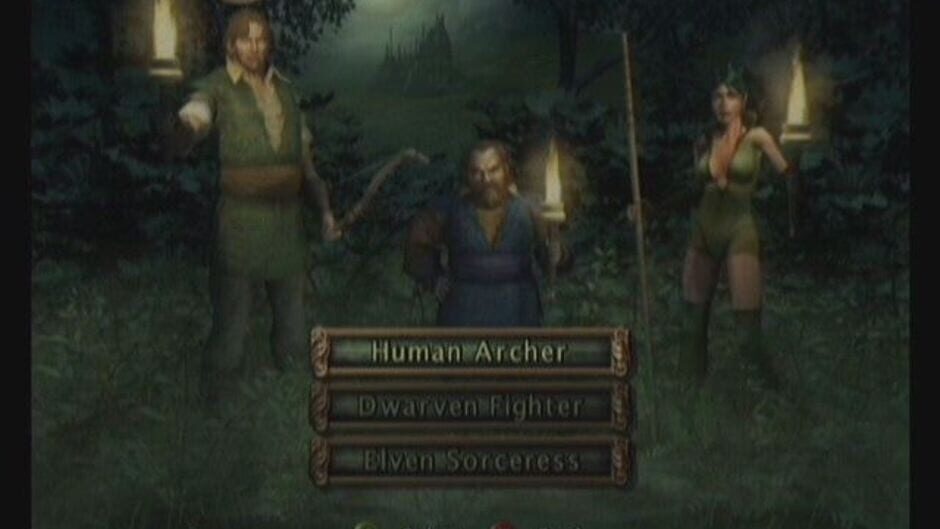
Three predefined heroes are available. Vahn is a human archer specializing in ranged attacks, Adrianna an elven sorceress focused on magic and Kromlech a dwarven fighter built around close combat. Their progression relies on experience, attributes and abilities specific to each playstyle.
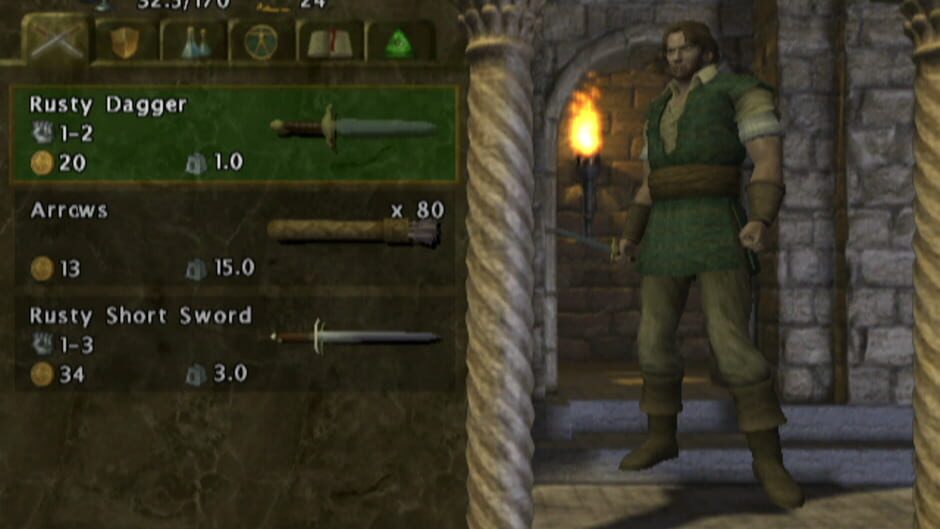
Combat occupies most of the adventure. Weapons, armor and items recovered from enemies or chests gradually improve the character, while unwanted equipment can be sold to finance new purchases.
Third-edition Dungeons & Dragons rules provide the basis for character development, but they are heavily adapted for immediate action. The game therefore emphasizes direct attacks, spells, evasion and resource management rather than party building and the extensive calculations of the first Baldur’s Gate games.
The campaign crosses several distinct environments: the streets and underground areas of Baldur’s Gate, the Sunset Mountains, mines occupied by Drow, the Marsh of Chelimber and the Onyx Tower. Progression remains mainly linear, with a small number of side quests.
The game can be completed alone or in local two-player cooperative play. Both characters share the same screen and fight together, making the adventure particularly suited to console co-op.
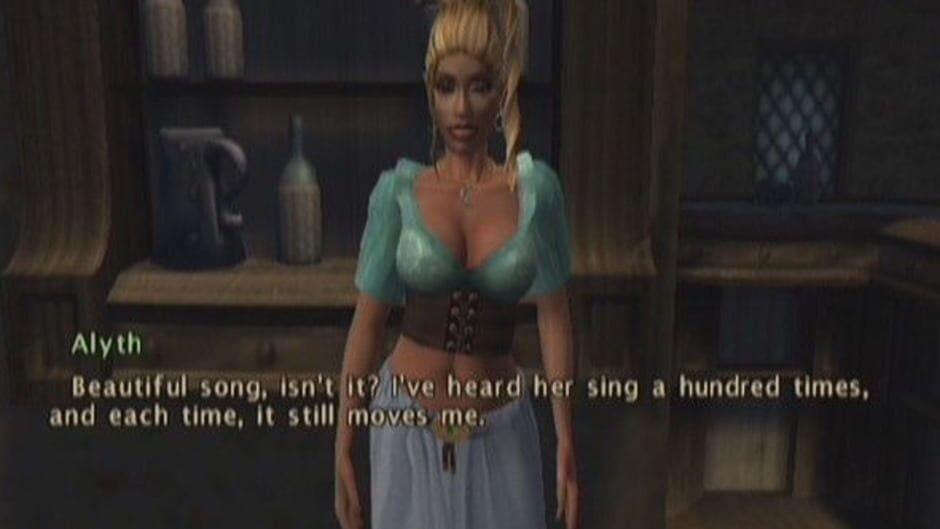
The Dark Alliance Engine contributes strongly to the game’s visual identity. Fully 3D environments, animated water, lighting, particle effects and numerous destructible objects gave the title an especially polished presentation for a console action RPG of its period.
After completing the adventure, the Gauntlet and Extreme mode provide additional challenges. Drizzt Do’Urden can also be unlocked, connecting the game more directly with familiar figures from the Forgotten Realms.
What to remember
- An action RPG set in the Forgotten Realms but independent from the Bhaalspawn storyline.
- Three predefined heroes: Vahn, Adrianna and Kromlech.
- Combat takes place entirely in real time with a strong hack-and-slash focus.
- Progression is based on levels, abilities, attributes and equipment.
- Third-edition Dungeons & Dragons rules are adapted to much more direct gameplay.
- The adventure crosses Baldur’s Gate, the Sunset Mountains, the Marsh of Chelimber and the Onyx Tower.
- The game supports local two-player cooperative play on a shared screen.
- Eldrith the Betrayer leads the alliance responsible for the attacks against Baldur’s Gate.
Conclusion
Baldur’s Gate: Dark Alliance uses the Forgotten Realms to offer an experience very different from the first two Baldur’s Gate games. The six-character party and tactical real-time-with-pause combat disappear in favor of direct control over a single hero and much more immediate encounters.
This simplification does not attempt to reproduce BioWare’s RPGs on console. Instead, it builds another formula around equipment, ability progression and the enjoyment of fighting through groups of enemies alone or with another player.
Local cooperative play is one of its main strengths, while the three characters provide sufficiently different approaches to encourage multiple playthroughs.
With its 3D engine and action-focused design, Dark Alliance established a parallel branch of the franchise whose formula would be directly continued in Baldur’s Gate: Dark Alliance II.
Good to know
- Baldur’s Gate: Dark Alliance was developed by Snowblind Studios, produced by Black Isle Studios and published by Interplay Entertainment.
- The original version was released for PlayStation 2 in 2001, followed by Xbox and GameCube versions in 2002.
- It was the first Baldur’s Gate game designed directly for consoles.
- The game uses the Dark Alliance Engine developed by Snowblind Studios.
- The campaign can be played solo or in local two-player co-op.
- Drizzt Do’Urden can be unlocked as a playable character after completing certain challenges.
- A Game Boy Advance adaptation developed by Magic Pockets was released in 2004 and differs in several ways from the home-console versions.
- The game was re-released from 2021 onward on several modern platforms, including PlayStation 4, Xbox, Nintendo Switch and PC.