Overview
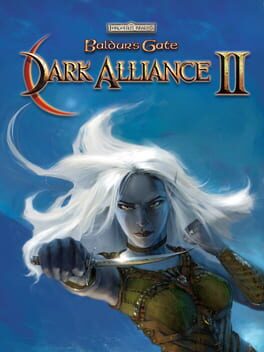
Developed by Black Isle Studios and published by Acclaim Entertainment and Interplay Entertainment, Baldur's Gate: Dark Alliance II is a video game released on January 20, 2004. The platforms listed in this entry are PlayStation 2, PC, Mac, Linux and Xbox. The associated genres are action, adventure, fantasy, historical, RPG and hack-and-slash. The specified game modes are Single player, Multiplayer and Co-operative, and the engine listed is the Snowblind engine.
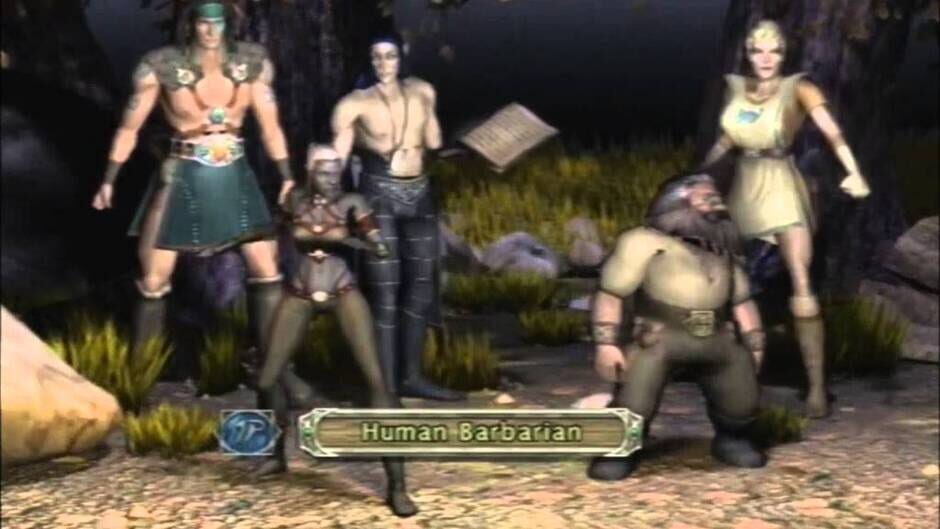
Like its predecessor, Dark Alliance II brings the Dungeons & Dragons universe into an action RPG focused on real-time combat, exploration of hostile areas, experience and the search for equipment. This sequel introduces five new heroes, each with abilities and talents that change the way combat is approached.
Choosing a character therefore involves more than appearance alone. The five profiles cover distinct approaches ranging from physical combat to magic, support and ranged attacks. Their progression comes through improving attributes and acquiring new feats that gradually develop their specializations.
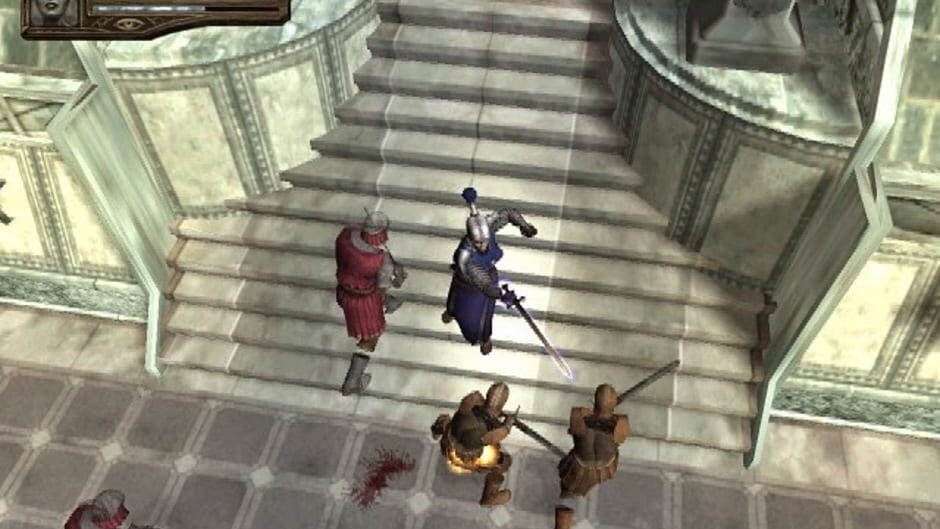
The game retains an isometric dungeon crawler structure. Progression takes the player through numerous areas filled with enemies, chests, hidden passages and items to collect. Steam and GOG list more than eighty levels, along with secret areas and hidden characters.
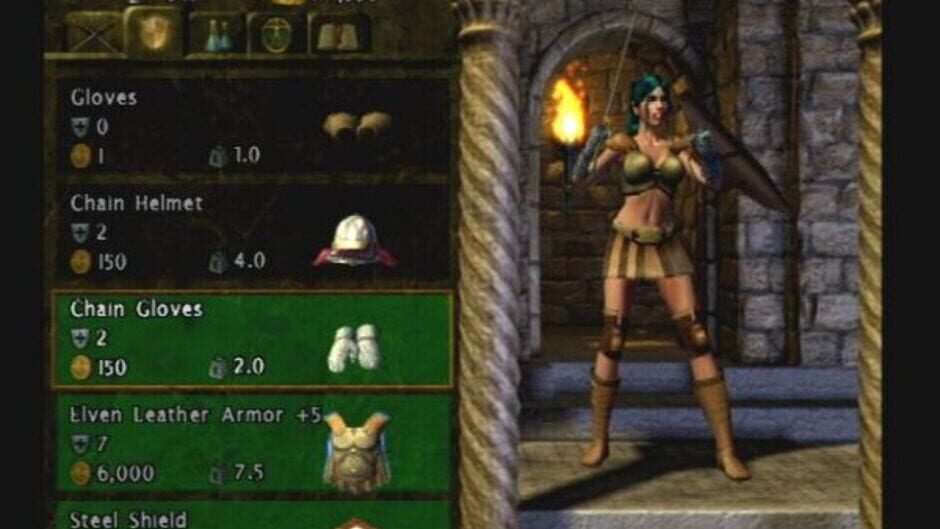
Equipment plays an important role in this progression. Weapons, armor, jewelry and other items can be found while exploring, but Dark Alliance II particularly expands on this with a crafting and equipment-upgrade system that was not present in this form in the first game.
At the workshop, certain pieces can be enhanced using rune stones and gems. Runes directly increase an item’s power and make it possible to add gems, whose effects vary depending on the type of equipment being used. A weapon, piece of armor or item of jewelry can therefore be transformed to better suit the character and the way they are played.
This customization gives loot an additional purpose. Finding an item no longer means simply comparing its statistics with currently equipped gear: certain pieces can serve as a foundation for more advanced upgrades using materials that have been found or purchased.
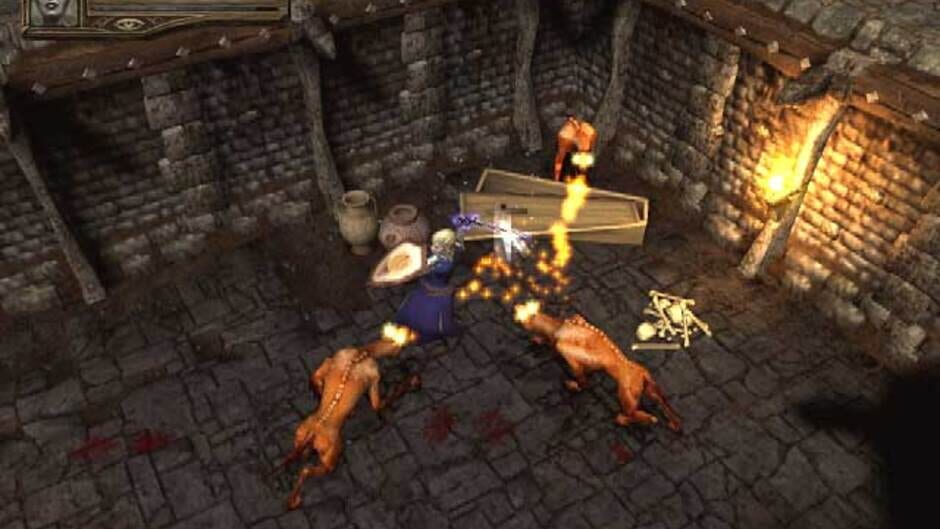
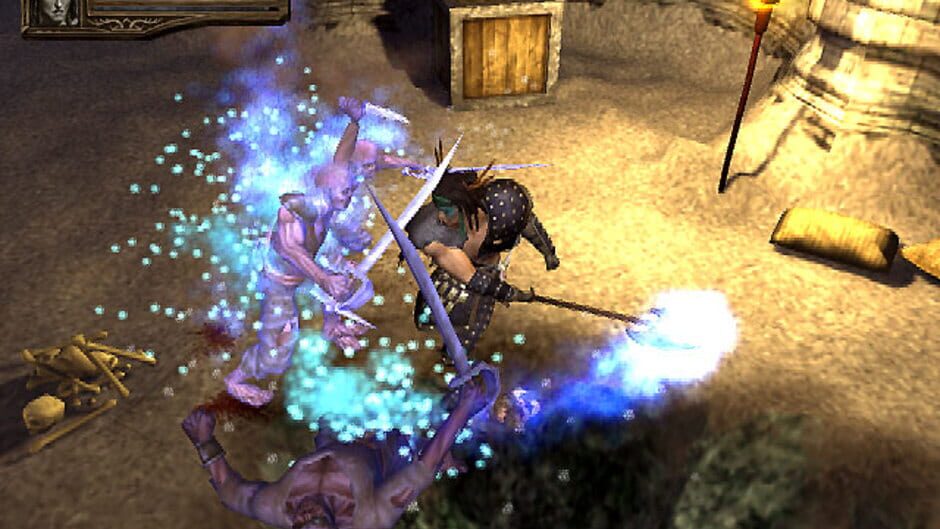
Combat remains built around immediate action: physical attacks, ranged weapons, spells and feats provide ways to deal with groups of enemies including hobgoblins, ghouls, golems and dragons. Character development gradually determines which techniques are available and the situations in which each hero is most effective.
Dark Alliance II also retains the option to play through the adventure in two-player co-op. Both characters fight and progress together through the same environments, making it possible to combine different profiles, for example by pairing a fighter focused on direct damage with a character using magical or support abilities.
The overall structure therefore remains built around a straightforward cycle: explore, fight, gain experience, collect loot, then strengthen the character and their equipment before entering more dangerous areas. The crafting system adds another dimension to this loop by allowing part of the equipment obtained to be shaped rather than relying solely on items found in the world.
Key takeaways
- Dark Alliance II continues the adventure immediately after the first game, with Baldur’s Gate threatened once again.
- The player chooses from five new heroes, each with their own abilities and feats.
- The game retains an isometric action-RPG hack-and-slash structure centered on combat, exploration and loot.
- Progression includes numerous areas, as well as hidden locations, secret characters and hundreds of items to discover.
- A workshop system allows players to craft and upgrade weapons, armor and jewelry, notably using runes and gems.
- The different specializations allow players to alternate between melee combat, ranged attacks, magic and support depending on the chosen hero.
- The adventure can be played in two-player co-op.
Conclusion
Baldur's Gate: Dark Alliance II continues the action-RPG formula of the first game without attempting to turn it into a traditional RPG in the Baldur’s Gate series. Progression remains directly tied to combat, exploration, feats and the equipment collected.
The main change comes from the wider range of possibilities available to the player. The five heroes offer more differentiated playstyles, while the workshop allows direct changes to the properties of some of the equipment obtained.
Co-op fits naturally into this structure: two characters with different specializations can travel through the same areas together and combine their abilities. Dark Alliance II therefore develops its identity around the variety of its heroes and the customization of loot, without abandoning the immediate hack-and-slash structure that defined the first game.
Good to know
- Baldur's Gate: Dark Alliance II was released on January 20, 2004.
- The game was developed by Black Isle Studios and published by Acclaim Entertainment and Interplay Entertainment.
- The platforms listed in this entry are PlayStation 2, PC, Mac, Linux and Xbox.
- The associated genres are action, adventure, fantasy, historical, RPG and hack-and-slash.
- The specified game modes are Single player, Multiplayer and Co-operative.
- The engine listed is the Snowblind engine.
- Five new heroes offer different abilities and specializations.
- Equipment can be customized and strengthened through the crafting system.