Age of Mythology: Retold revisits the 2002 real-time strategy game, immersing players in a world where gods and creatures from ancient legends directly influence human conflicts. The Greek, Norse, Egyptian and Atlantean civilizations clash under the protection of their deities, capable of unleashing supernatural powers and summoning fearsome mythological creatures. Across several campaigns comprising 50 missions, players travel through legendary lands, from the walls of Troy to the frozen realms of Midgard and the deserts of Egypt. Commanding armies of soldiers, heroes and monsters such as centaurs, cyclopes and trolls, they take part in a struggle for dominance between civilizations whose destinies remain closely bound to their gods.
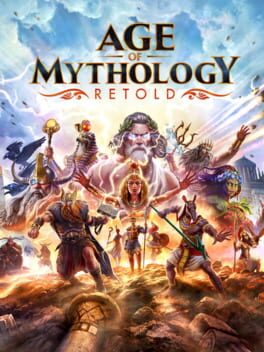
Video game
2024
Fantasy
Strategy
Real-time strategy
Age of Mythology: Retold
Summon the gods, command legendary creatures and build your empire at the heart of ancient mythologies.
Details
- Type
- Video game
- Release
- September 4, 2024
- Genres
- Fantasy, Strategy, Real-time strategy
- Platforms
- PlayStation 5, Xbox Series, PC
- Engine
- BANG!
- Game modes
- Single player, Multiplayer, Co-operative
Synopsis
Age of Mythology: Retold
Glossary terms: Cross-play, RTS (real-time strategy), Single-player mode, Subtitles


Trailer
Watch the trailer
Overview
Presentation
Age of Mythology: Retold is a new version of the real-time strategy game Age of Mythology, originally released in 2002. Part of the Age of Empires universe, it transports the franchise's building and conquest mechanics into a world where Greek, Egyptian, Norse and Atlantean mythologies come to life. Players develop cities, organize their economy and command armies, but can also call upon their deities to unleash supernatural phenomena or summon legendary creatures. Retold preserves the campaigns and core principles of the original game while rebuilding its visual presentation and modernizing several systems. Traditional strategy is therefore combined with a fantasy dimension in which gods, heroes and monsters directly participate in battles.
Each match revolves around developing a civilization, from its earliest settlements to the creation of a military power. Villagers gather food, wood and gold, while a fourth resource, Favor, notably allows players to recruit mythological units and use certain powers. The way it is generated depends on the characteristics of each pantheon, influencing economic organization. Progression spans four main ages: Archaic, Classical, Heroic and Mythic, unlocking new buildings, technologies and units. When advancing between ages, players choose Minor Gods who grant specific powers, creatures and upgrades. These decisions gradually shape their strategy by combining economic development, territorial expansion and divine support.
The four original pantheons possess distinct identities. The Greeks rely on powerful heroes and organized armies, while the Egyptians develop their civilization around pharaohs, monuments and religious powers. The Norse favor a particularly mobile military organization, in which warriors participate in constructing buildings. The Atlanteans, meanwhile, benefit from distinctive economic mechanics and can transform certain human units into heroes. Alongside these differences are mythological creatures, including cyclopes, centaurs, mummies, trolls and giants. Heroes play an essential role in confronting these monsters, while ordinary soldiers, siege weapons and naval forces retain their importance. Battles therefore require a balance between human units, heroes, legendary creatures and divine powers.
The campaigns form another major part of the experience. They bring together 50 missions that take players through several mythological worlds. The main campaign, Fall of the Trident, notably follows Arkantos, an Atlantean hero embarking on a journey that intertwines human conflicts with divine intervention. Missions cross iconic locations such as Troy, Egypt and the Norse realms, featuring objectives ranging from defending positions and exploration to sieges and large-scale battles. Other stories continue the history of the Atlanteans and the conflicts between different deities. The presentation relies on recurring characters and scripted events, giving the campaigns a narrative structure distinct from free-form battles.
Outside the campaigns, Age of Mythology: Retold offers skirmishes against artificial intelligence, competitive multiplayer battles and cooperative experiences. The Arena of the Gods mode, added after launch, introduces a series of challenges in which players obtain blessings and face special conditions. The new version also changes several mechanics inherited from the 2002 game: god powers can be used repeatedly by spending Favor, while the Wonder Age increases the strength of mythological units and allows more frequent divine interventions. Character models, environments, animations and supernatural effects have all been reworked. Retold therefore combines economic management, military strategy and mythological abilities, within a modernized interpretation of its universe.
Key points
- A new version of the 2002 mythological strategy game, combining empire building, fantasy and real-time combat.
- Four main pantheons, Greek, Egyptian, Norse and Atlantean, featuring distinct units, deities and economic mechanics.
- Progression through four ages, with choices of Minor Gods influencing available powers, technologies and units.
- Armies combining soldiers, heroes and legendary creatures, including cyclopes, centaurs, trolls, mummies and giants.
- Reusable god powers, allowing players to unleash disasters, strengthen armies or support their economy.
- Several campaigns totaling 50 missions, exploring ancient mythologies from Troy to Midgard and the lands of Egypt.
- Single-player, multiplayer and cooperative modes, alongside modernized graphics, mythological challenges and a scenario editor.
Conclusion
Age of Mythology: Retold revisits the foundations of real-time strategy while placing deities and creatures from ancient mythologies at the center of the experience. Civilization development relies on resource management, technological choices and army composition, while supernatural powers introduce tactical possibilities unique to each pantheon.
The campaigns explore Greek, Egyptian, Norse and Atlantean legends through scripted narratives, while skirmishes and multiplayer modes allow different strategies to compete. The improvements introduced in Retold, particularly reusable god powers and the visual overhaul, expand upon the original game's mechanics. The game therefore brings together empire building, strategic battles and legendary mythologies, within a formula where divine intervention can change the course of a battle.
Good to know
Age of Mythology: Retold was released on September 4, 2024, for PC and Xbox Series X|S, before arriving on PlayStation 5 on March 4, 2025. It revisits Age of Mythology, originally released in 2002, alongside the main content from its The Titans expansion. The game uses a modernized version of technology derived from the BANG! Engine, with completely reworked 3D models, lighting, animations and visual effects.
The base game features four pantheons: Greek, Egyptian, Norse and Atlantean. Each civilization chooses a Major God, such as Zeus, Ra, Odin or Kronos, before selecting Minor Gods when advancing through the ages. These choices notably determine the mythological units, divine technologies and powers available. Favor, required for several of these abilities, is generated through different mechanics specific to each pantheon.
God powers, previously generally limited to a single use, can now be activated multiple times at the cost of Favor and a cooldown period. They notably allow players to unleash storms, earthquakes or summon powerful creatures. The Wonder Age, accessible after constructing a Wonder, strengthens mythological units and considerably reduces the cost and cooldown of god powers.
The campaigns notably include Fall of the Trident, dedicated to the adventures of Arkantos, and The New Atlantis, which continues the Atlantean storyline. The content available at launch brings together 50 missions across several mythological territories. Scenarios feature legendary heroes, deities and supernatural creatures, with special objectives extending beyond the usual victory conditions of skirmishes.
The Arena of the Gods mode was added for free on November 7, 2024. It features 35 challenges in which players take on the role of Kastor and progress through environments affected by special conditions. Victories grant divine blessings, which modify the abilities available in subsequent missions. This mode can be played solo or cooperatively with two players. It was later expanded with new challenge variants, notably The Gauntlet.
Several expansions have introduced additional mythologies. Immortal Pillars, released in March 2025, introduces the Chinese pantheon, while Heavenly Spear, released in September 2025, adds deities and creatures from Japanese mythology. In April 2026, Obsidian Mirror expands the game with the Aztec pantheon, featuring three new Major Gods and a 12-mission campaign. These additions are available separately from the base game or through certain editions and expansion offers.
Age of Mythology: Retold includes single-player campaigns, skirmishes, competitive multiplayer and cooperative modes, with cross-platform play supported between compatible systems. A scenario editor and modding tools also allow players to create custom content. The game features voice acting, text and subtitles in English, French, Spanish, German, Italian, Japanese and several other languages, with availability varying by localization.
Link graph
Open in the full graphLoading the graph…
Only the strongest links are shown.