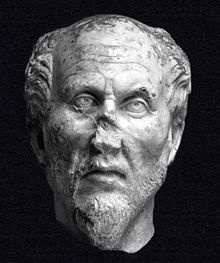
Plotin
Details
- Roles
- Author
Referenced works
Referenced works (6)
Plotinus: Enneads I
Author
Plotinus opened a school of philosophy in Rome and obtained the respect of his contemporaries through his virtues and his knowledge. He then obtained permission from the Emperor Gallienus to build a city to realize Plato's ideal republic, but envious people caused this project to fail. Plotinus had proposed to found eclecticism by taking as a basis the doctrine of Plato and striving to reconcile with it the other do…
- Philosophy
Plotinus: Enneads II
Author
Philosopher of the 3rd century AD, Plotinus constructed one of the most important metaphysics in Western history. His work was brought together by one of his disciples, Porphyry, who ordered the fifty-four treatises into six Enneads of nine treatises each.
- Philosophy
Plotinus: Enneads III
Author
Philosopher of the 3rd century AD, Plotinus constructed one of the most important metaphysics in Western history. His work was brought together by one of his disciples, Porphyry, who ordered the fifty-four treatises into six Enneads of nine treatises each.
- Philosophy

Plotinus: Enneads IV
Author
The fourth Ennead brings together nine treatises devoted to the soul: its essence, its immortality, its memory, its perception, its descent into the body and the question of the unity of all souls. Plotinus specifies the links between the individual soul, the Soul of the world and the intelligible world.
- Philosophy
- Classical
Plotinus: Enneads V
Author
The fifth Ennead explores Intelligence, intelligible realities and their relationship with the One. His nine treatises describe the procession of beings from the first principle, the nature of Ideas and the way in which the soul can rise towards intelligible beauty.
- Philosophy
- Classical
Plotinus: Enneads VI
Author
The sixth Ennead examines the kinds of being, the unity and omnipresence of being, numbers, freedom and the will of the One. It leads Plotinus' reflection to the Good, the supreme principle located beyond being and thought.
- Philosophy
Information may change.