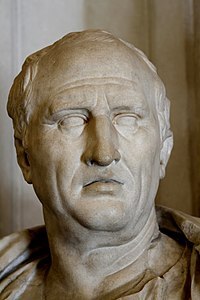
Cicéron
Details
- Roles
- Author
Referenced works
Referenced works (5)

Cicero: As It Should Be Among Honorable Men…
Author
What makes someone an honorable person, and how should we act justly toward others? In As It Should Be Among Honorable Men…, a selection from On Duties, Cicero examines the principles that should guide human conduct. He distinguishes four essential dimensions of virtue: the pursuit of truth, respect for justice and commitments, greatness of spirit, and self-control. These closely connected qualities help define the …
- Philosophy

Cicero: On Fate
Author
Are our actions predetermined, or are we genuinely free to choose? In On Fate, Cicero examines the relationships between necessity, natural causes, and human will. Confronting Stoic, Epicurean, and Academic doctrines, he questions the idea that all events are governed by an inevitable chain of causes. His investigation explores the consequences of this conception for moral responsibility, the possibility of acting o…
- Philosophy

Cicero: On the Ends of Good and Evil
Author
What is the highest good that human beings should pursue in order to lead a happy life? In On the Ends of Good and Evil, Cicero confronts the major ethical doctrines of ancient philosophy to examine the foundations of happiness and virtue. Through a series of dialogues, he presents Epicurean teachings, which place pleasure at the center of existence; Stoic principles, which regard virtue as the only true good; and t…
- Philosophy
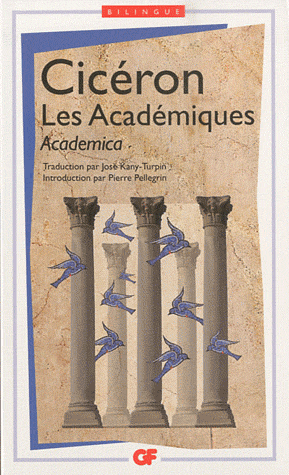
Cicero: Academica
Author
Can we attain certain knowledge, or are our judgments always open to question? In Academica, Cicero examines the foundations of knowledge and the limits of human certainty. Through a confrontation of Greek philosophical doctrines, he presents the arguments of the Academic skeptics against Stoic theories of truth. He questions the reliability of sensory perception, the possibility of distinguishing a true impression …
- Philosophy

Cicero: On Duties
Author
How can we determine what is right when our personal interests seem to conflict with our moral obligations? In On Duties, Cicero examines the principles that should guide human conduct, both in private life and in social and political relationships. Drawing particularly on Stoic philosophy, he distinguishes what is morally honorable from what appears useful or advantageous. He explores the major virtues, the demands…
- Philosophy
Information may change.