
Overview
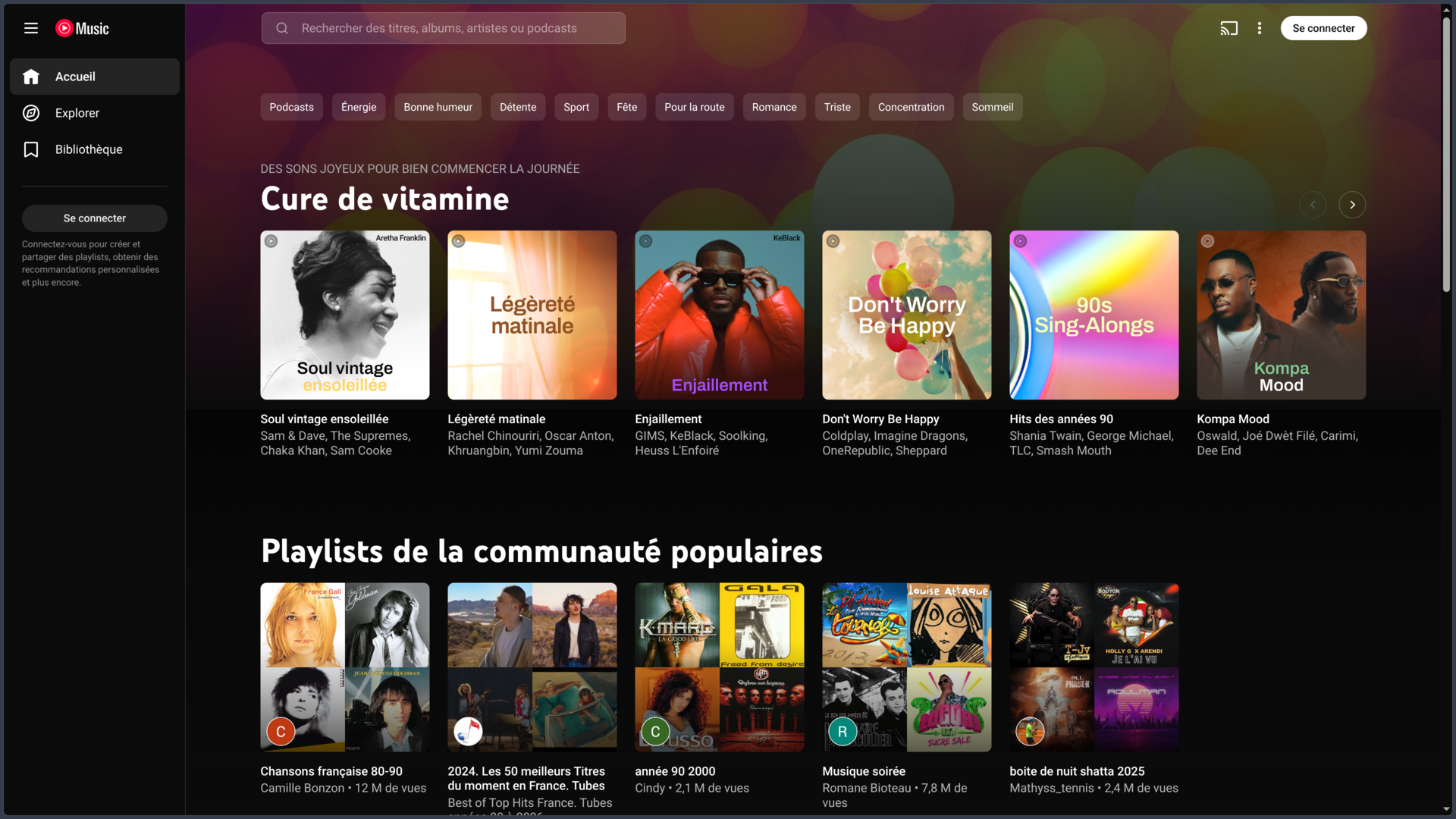
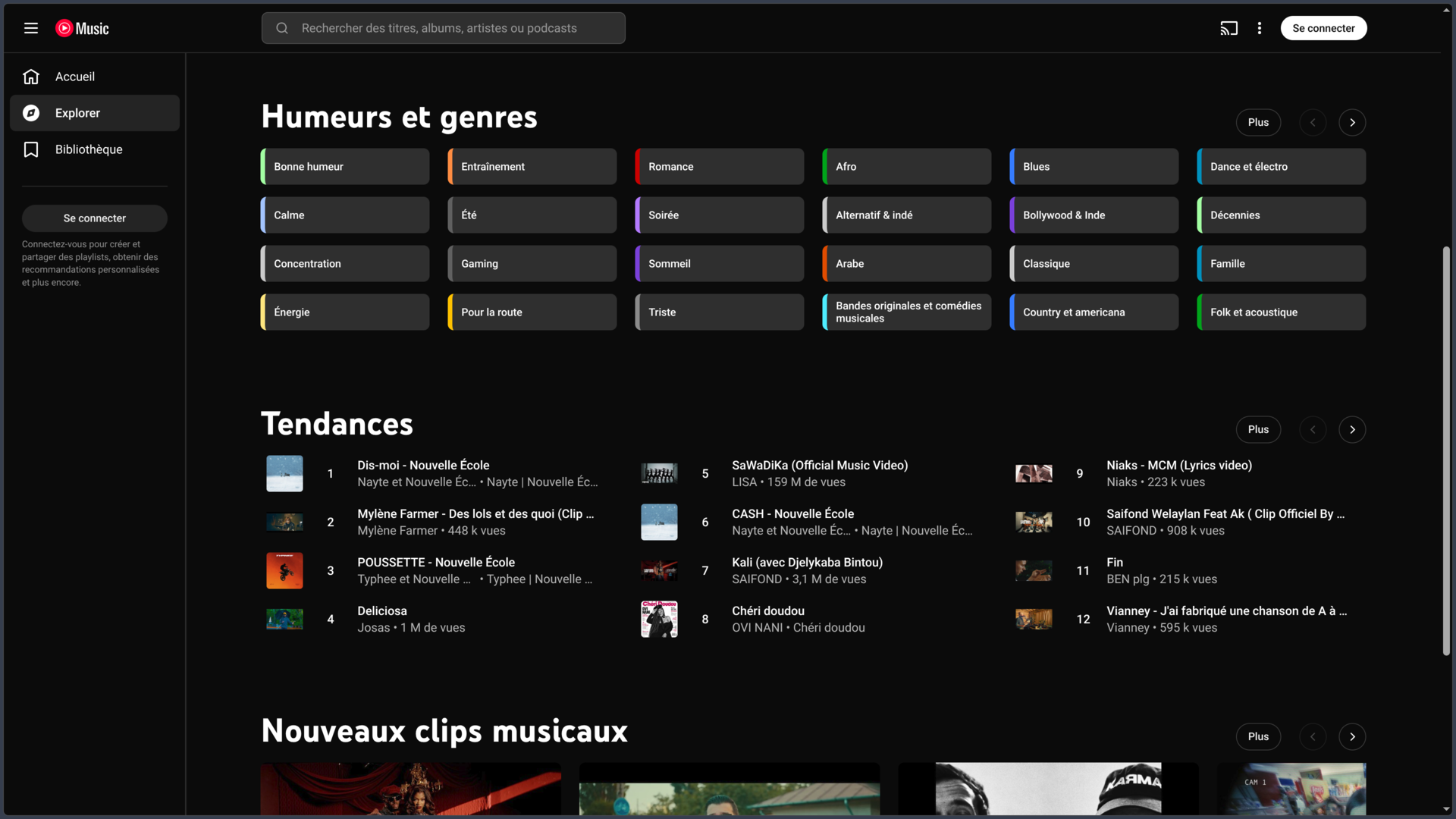
YouTube Music is Google's music streaming service built around the extensive YouTube ecosystem. It provides access to official artist releases, albums, singles, and playlists, as well as a substantial collection of music videos, live recordings, covers, remixes, and other music-related content published on YouTube.
This close connection to YouTube is its main distinguishing feature compared with Spotify, Deezer, or Apple Music. When a rare version, concert performance, or remix exists on YouTube, it may also appear within the music experience, even if it is not part of a traditional streaming catalog.
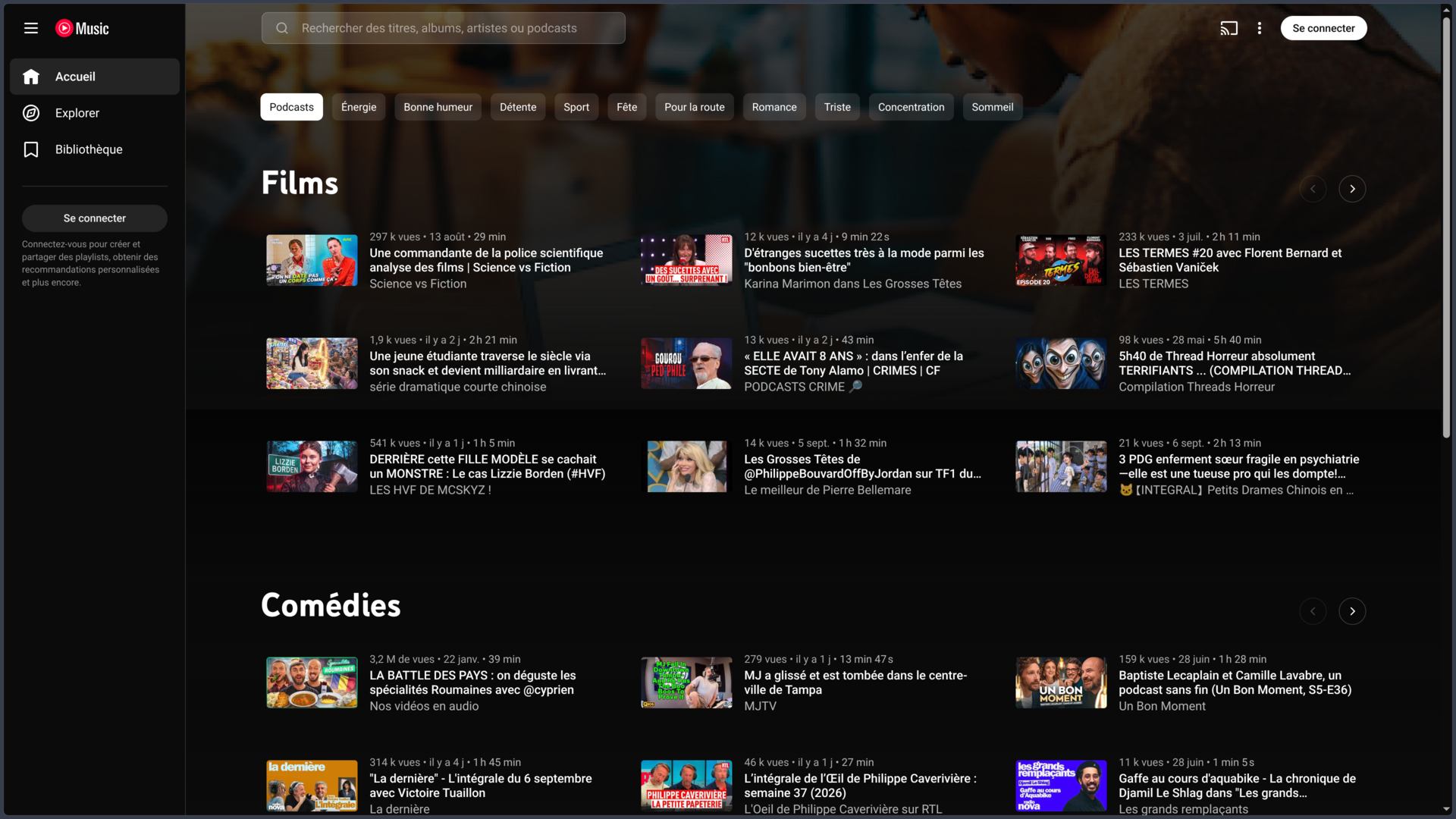
YouTube Music also brings together podcasts, personalized recommendations, automatic radio stations, and playlists in an interface dedicated to listening. Users can switch between audio and video when both versions are available and carry over some of their YouTube habits through the same Google account.
The service is available in a free, ad-supported version and through a YouTube Music Premium subscription. Premium removes ads from music and adds features including background playback, offline downloads, and audio-only mode.
YouTube Music Premium is also included with YouTube Premium. Users who already subscribe to YouTube Premium therefore do not need to pay separately for Music Premium.
Features
A Music Catalog Enhanced by the YouTube Ecosystem
YouTube Music provides access to the content expected from a music streaming service: artists, albums, singles, playlists, new releases, radio stations, and recommendations.
Its distinctive feature is its direct connection to YouTube. Search results can include not only official versions of songs but also music videos, concerts, live sessions, covers, remixes, and alternative performances available on the video platform.
This can make a significant difference for certain genres, independent artists, or tracks that are difficult to find elsewhere. Searches are not necessarily limited to discographies distributed by record labels.
However, this variety can also make results less consistent than those of a strictly music-focused catalog. Depending on the search, several versions of the same song may appear together: the official album version, music video, live performance, cover, or a video uploaded to YouTube.
Recommendations Based on YouTube History
YouTube Music uses a Google account and can draw on songs and music-related content previously listened to or watched on YouTube to personalize recommendations.
The home page evolves according to listening history, followed artists, liked songs, time of day, and certain listening contexts. Personalized mixes and radio stations then allow music to play continuously without having to create a playlist manually.
This advantage is particularly noticeable for people who already use YouTube extensively to discover music: the service does not have to learn their preferences entirely from scratch.
However, this connection can also mix habits from YouTube and YouTube Music. Users who want to keep these activities strictly separate therefore need to manage their history and recommendations more carefully.
Audio, Music Videos, and Switching Between Formats
YouTube's integration allows Music to offer an experience that combines audio and video.
With YouTube Music Premium, when a compatible music video is available for a song, users can switch between the audio and video versions directly from the player. Conversely, audio-only mode avoids loading the video when they simply want to listen to music.
This feature makes it convenient to alternate between regular listening and watching videos without having to search separately for the corresponding music video.
Podcasts work somewhat differently: for most podcasts, background playback, audio-only mode, and certain downloads are available even without a Music Premium subscription.
Samples for Quickly Discovering New Music
The Samples tab provides a personalized vertical feed featuring short excerpts from music videos.
The concept resembles short-form social media content, but it is directly connected to the music catalog. From a Sample, users can like a song, add it to their library or a playlist, open the full music video, or find other videos featuring the same music.
YouTube Music also allows users to preview certain artist pages, albums, playlists, and mixes through Samples.
This feature introduces a more visual and immediate discovery method alongside the service's traditional radio stations and recommendations.
Library, Playlists, and Personal Music
The library brings together saved playlists, podcasts, songs, albums, and artists.
YouTube Music also allows users to upload their personal music collection from a computer. Supported file formats include FLAC, M4A, MP3, OGG, and WMA, with a limit of up to 100,000 personal tracks.
Uploaded songs remain private: they are not accessible to other users and are not added to the public catalog. However, they can be included in playlists alongside tracks available through YouTube Music.
Interestingly, uploaded personal tracks can be played without ads, in the background, and offline even without a Music Premium subscription. However, uploading must be done through a web browser rather than directly from the mobile application.
This feature makes YouTube Music one of the services that still allows users to combine streaming and personal music libraries relatively easily.
YouTube Music Premium: Ad-Free, Background, and Offline Listening
The free version already allows users to listen to music and podcasts, but it is supported by advertising and restricts certain important music features.
YouTube Music Premium primarily adds:
- Ad-free music and music videos.
- Background music playback.
- Listening while the phone screen is turned off.
- Audio-only mode for music.
- Downloads of songs, albums, and playlists for offline listening.
- Higher audio quality options.
These features significantly improve the smartphone experience. Screen-off playback and downloads are particularly important for using YouTube Music as an everyday music player.
Podcasts are a special case: promotional messages or advertisements inserted directly by their creators may still be present, even with a Premium subscription.
Good Audio Quality, but Not Focused on Hi-Res
Music Premium subscribers can choose between different quality levels for streaming and downloads.
The Low setting reaches up to 48 kbps, Normal up to 128 kbps, and High up to 256 kbps in AAC or Opus. An "Always High" option maintains the higher bitrate even when the connection becomes less reliable.
This quality is more than sufficient for everyday listening, Bluetooth headphones, and most mobile use cases.
However, YouTube Music is not positioned as an audiophile service. It currently does not offer a comprehensive lossless or Hi-Res streaming option comparable to Qobuz, Apple Music, Amazon Music Unlimited, or certain specialized competitors.
For listeners whose main priority is maximum audio file quality, this is therefore not the service's primary selling point.
Several Premium Plans
In France, YouTube Music offers a free version and several Premium subscription plans.
| Plan | Listed Price | Intended Use |
|---|---|---|
| Free | €0 | Ad-supported listening |
| Individual | €10.99/month | One user |
| Two-Person | €14.99/month | Two members of the same household |
| Family | €16.99/month | Up to five additional household members |
| Student | €5.49/month | Eligible student with verification |
The listed prices apply to direct subscriptions and may change. They may also be higher when the subscription is purchased through an app store.
The Family plan uses a Google family group and requires members to live in the same household.
It is also important to distinguish YouTube Music Premium from YouTube Premium. Music Premium primarily covers the music experience, while YouTube Premium extends features such as ad-free viewing, background playback, and downloads to the standard YouTube service while also including Music Premium.
Use Cases
Replacing a Traditional Music Streaming Service
YouTube Music can be used daily in the same way as Spotify or Deezer to listen to albums, artists, playlists, and personalized radio stations.
The Premium version provides the expected features for this purpose: ad-free music, background playback, screen-off listening, and offline downloads.
It becomes particularly appealing to people who already use YouTube extensively and want to access their music habits through a dedicated player.
Finding Live Performances, Covers, and Rare Versions
A song may exist on YouTube without having been distributed through traditional streaming catalogs.
YouTube Music therefore makes it easier to discover concerts, radio sessions, covers, older videos, remixes, and alternative performances from the YouTube ecosystem.
For listeners who enjoy more than official studio recordings, this extensive variety is one of the service's main advantages.
Combining Streaming and a Personal Music Collection
Users who still own a collection of MP3, FLAC, or M4A files can upload up to 100,000 tracks to YouTube Music.
They can then access these songs in the same library as their playlists and streaming content.
This makes it possible to preserve rare albums, personal recordings, or tracks missing from the catalog without necessarily maintaining two entirely separate music players.
Seamlessly Switching Between Music and Videos
YouTube Music is particularly suitable for people who enjoy both listening to songs and watching their music videos.
When a video version exists, switching between audio and video avoids having to leave the player or perform another search on YouTube.
Samples further supports this approach by allowing users to discover a song through its visual presentation before playing the full version.
Getting Music Premium Through YouTube Premium
For users who also watch a lot of YouTube videos, subscribing to Music Premium alone may not necessarily be the most attractive option.
YouTube Premium already includes the benefits of Music Premium and extends them to YouTube.
It is therefore worth comparing the two subscription prices before subscribing separately: the price difference may make more sense than keeping Music Premium while continuing to use the standard, ad-supported YouTube experience.
Conclusion
YouTube Music offers the core features of a conventional music streaming service, but its identity is primarily shaped by its deep integration with YouTube.
Albums, singles, and playlists coexist with music videos, live performances, covers, and other video content. This variety gives the service a particular advantage when looking beyond the official versions available on traditional music platforms.
Recommendations also benefit from YouTube history, while Samples introduces a more visual discovery experience. The ability to upload 100,000 personal tracks adds a feature that has become relatively uncommon among major streaming services.
Music Premium removes the main limitations of the free version by adding background playback, screen-off listening, audio-only mode, downloads, and ad-free music. The experience then becomes much closer to that of a traditional music player.
The main compromise concerns audio quality. With a typical maximum of 256 kbps in AAC or Opus, YouTube Music is perfectly suitable for most listening situations but does not aim to compete with lossless and Hi-Res services designed for audiophiles.
For people who already spend considerable time on YouTube, watch music videos, regularly search for live performances, or still maintain a personal music library, YouTube Music offers a combination of features that is particularly difficult to replicate with a service focused exclusively on audio catalogs.
Points to Consider
-
YouTube Music is available for free with advertisements. Music Premium mainly adds ad-free music listening, background playback, audio-only mode, and offline downloads.
-
In France, Music Premium is currently priced at €10.99/month for an Individual subscription, with Two-Person, Family, and Student plans also available.
-
Prices may be higher when subscriptions are purchased through an app store. The French App Store, in particular, lists higher prices than direct subscriptions.
-
YouTube Premium already includes YouTube Music Premium. There is therefore no need to maintain both subscriptions separately for the same account.
-
The maximum audio quality currently offered by Music Premium reaches 256 kbps in AAC or Opus. The service does not provide a comprehensive lossless or Hi-Res option comparable to audiophile-focused platforms.
-
The catalog benefits from the YouTube ecosystem: music videos, live performances, covers, and certain alternative versions can complement official music releases.
-
Recommendations may take music-related activity on YouTube into account, which can be an advantage or disadvantage depending on how the account is used.
-
Users can upload up to 100,000 personal tracks in FLAC, M4A, MP3, OGG, or WMA formats from a computer.
-
Uploaded personal tracks remain private and can be played without ads, in the background, and offline even without a Music Premium subscription.
-
Family and Two-Person plans have household requirements. Family plan members use their own Google accounts, libraries, and recommendations.
-
Podcasts follow slightly different rules from music: several Premium features are available for free for most podcasts, and creator-inserted promotions may remain audible.
-
The experience varies depending on the device and country. The service is available on the web and through mobile applications, as well as on various devices compatible with the YouTube ecosystem.