
Overview
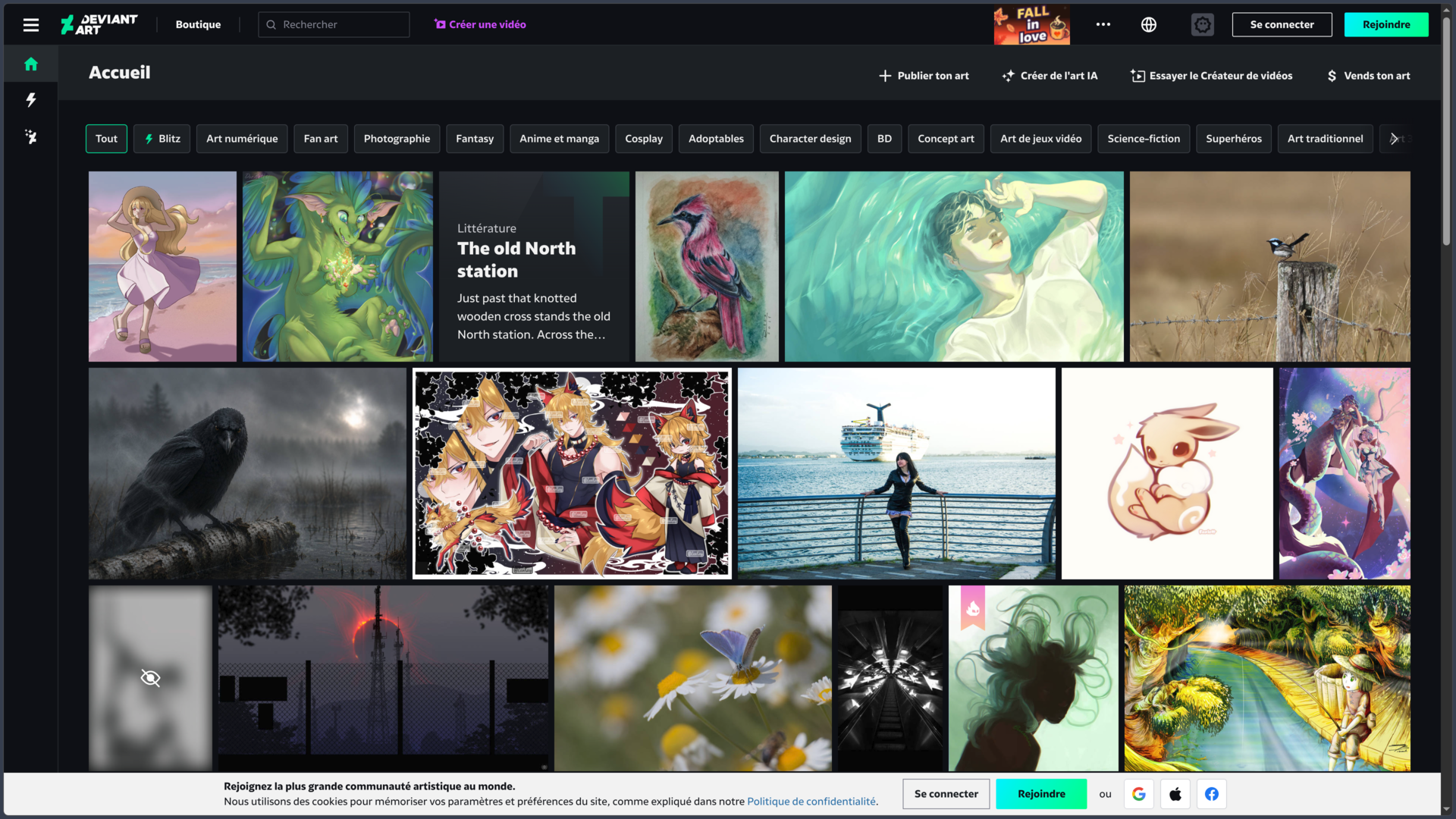
DeviantArt is one of the oldest major artistic communities on the Web. Launched in 2000 and operated by DeviantArt, Inc., a company acquired by Wix in 2017, it allows artists to publish their creations, organize a gallery, follow other creators and interact directly with their audience.
The platform now reports more than 100 million members and around 650 million published artworks. Its catalog is particularly varied: illustration, traditional drawing, digital painting, photography, 3D, fan art, pixel art, literature, animation, graphic resources and experimental creations all coexist within the same environment.
Unlike ArtStation, which is strongly oriented toward professional portfolios and creative industries, DeviantArt retains a much more community-driven dimension. Profiles are used to showcase work, but the experience also relies on comments, favorites, watchers, groups, journals and exchanges between members.
The service can be used for free. Core subscriptions mainly add tools for regular users and creators who want to develop or monetize their presence: customization, analytics, additional Sta.sh storage, selling features, DeviantArt Protect, advanced publishing and more generations with DreamUp.
Features
Publishing and organizing creations
An artwork published on DeviantArt is called a Deviation. It can contain a single image or several elements, accompanied by a title, description, tags and various information used to make it easier to find.
The profile then groups creations into galleries and sub-galleries. Users can also publish text, journals and different forms of content depending on the selected format.
DeviantArt accepts much more than simple JPEG images: documents, compressed files and several specialized formats can also be shared, which explains why the platform has long been used to distribute brushes, resources, textures and files intended for other artists.
Core accounts gain additional functions such as scheduled publishing, more elements within a single Deviation and more advanced customization options.
A community built around artists and groups
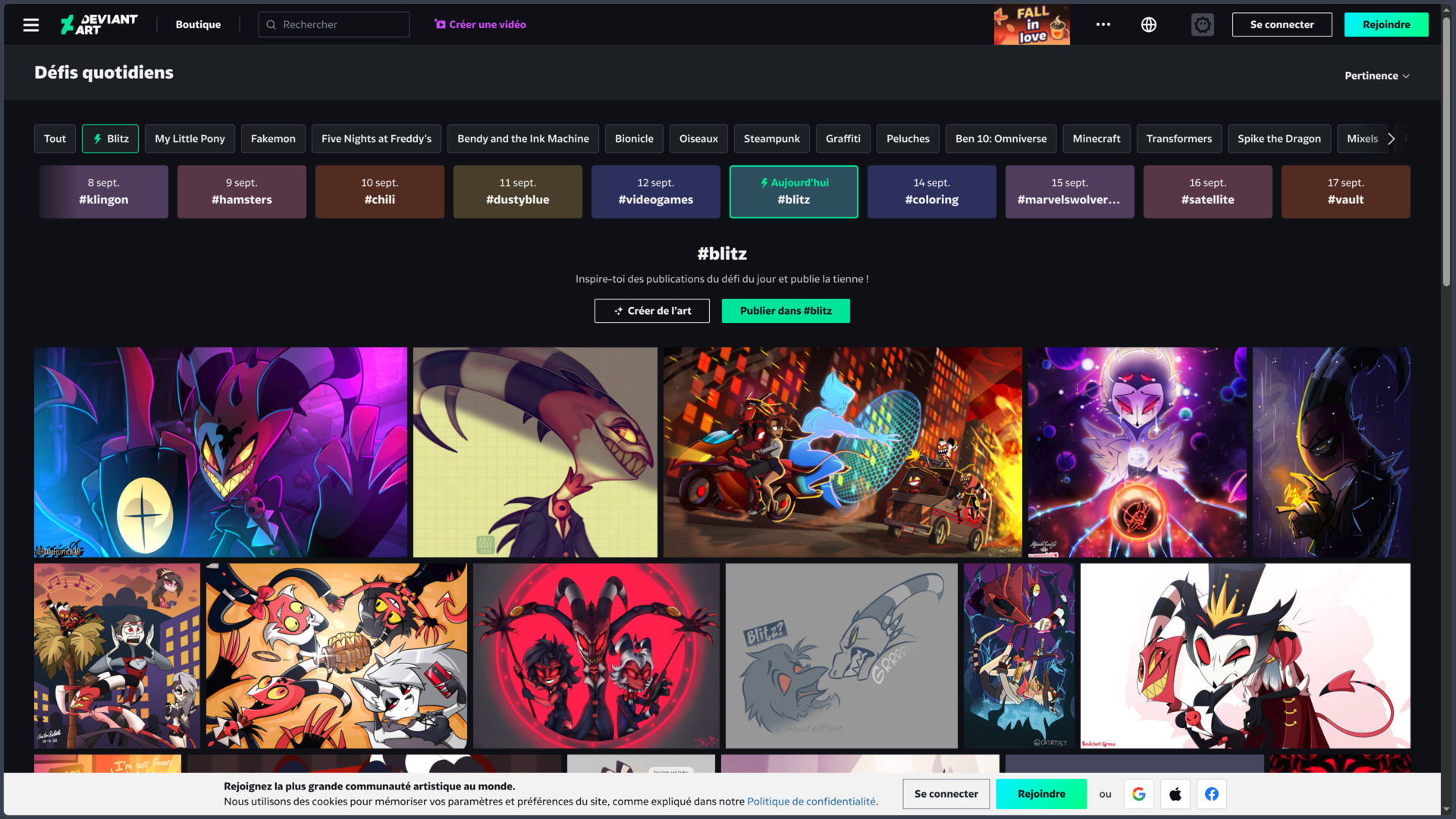
The Watch system allows users to follow an artist and find their latest artworks and publications. Favorites and collections help save interesting creations, while comments and messages make direct interaction possible.
Groups still play an important role. They bring members together around a practice, style, universe or specific subject and can feature selected artworks within their own galleries.
This structure is particularly well suited to niche communities: fan art dedicated to a franchise, animal drawing, pixel art, photography, character design or artist resources can all have dedicated spaces.
This is one of the main differences compared with a traditional portfolio platform: DeviantArt aims as much to build communities around creations as to showcase individual work.
Selling content and receiving support from an audience
The DeviantArt Shop allows creators to monetize several types of content. It notably includes Premium Downloads, Premium Galleries, Subscriptions, Exclusives, Originals and Arts & Crafts.
Subscriptions make it possible to offer monthly membership tiers with reserved content or benefits. Premium Downloads can be used to sell digital files, while Exclusives include adoptables and other unique creations.
Since July 2026, the previous Commissions system has been removed. DeviantArt now directs custom orders toward Originals, which allow a buyer to request a personalized creation from an artist. The finished work is then delivered as a unique Exclusive.
Fees charged by DeviantArt vary according to the product and Core level. Without Core, several types of sales currently carry a 20% platform fee, while paid tiers can significantly reduce these fees.
Core, Protect and tools for regular creators
DeviantArt currently offers several Core tiers: Core+, Core Pro, Core Pro+ and Core Max.
Beyond profile customization, these subscriptions increase Sta.sh storage, provide more detailed analytics, offer more Boosts and reduce fees on different products sold through the platform.
They also extend DeviantArt Protect, an image-recognition system that searches DeviantArt for publications that are highly similar to an artwork already uploaded. Works from free accounts are monitored during their first months, while Core members retain this protection for as long as their subscription remains active.
The system does not replace copyright law or a DMCA procedure, but it can help an artist identify potentially unauthorized reposts more quickly.
DreamUp and management of AI-generated content
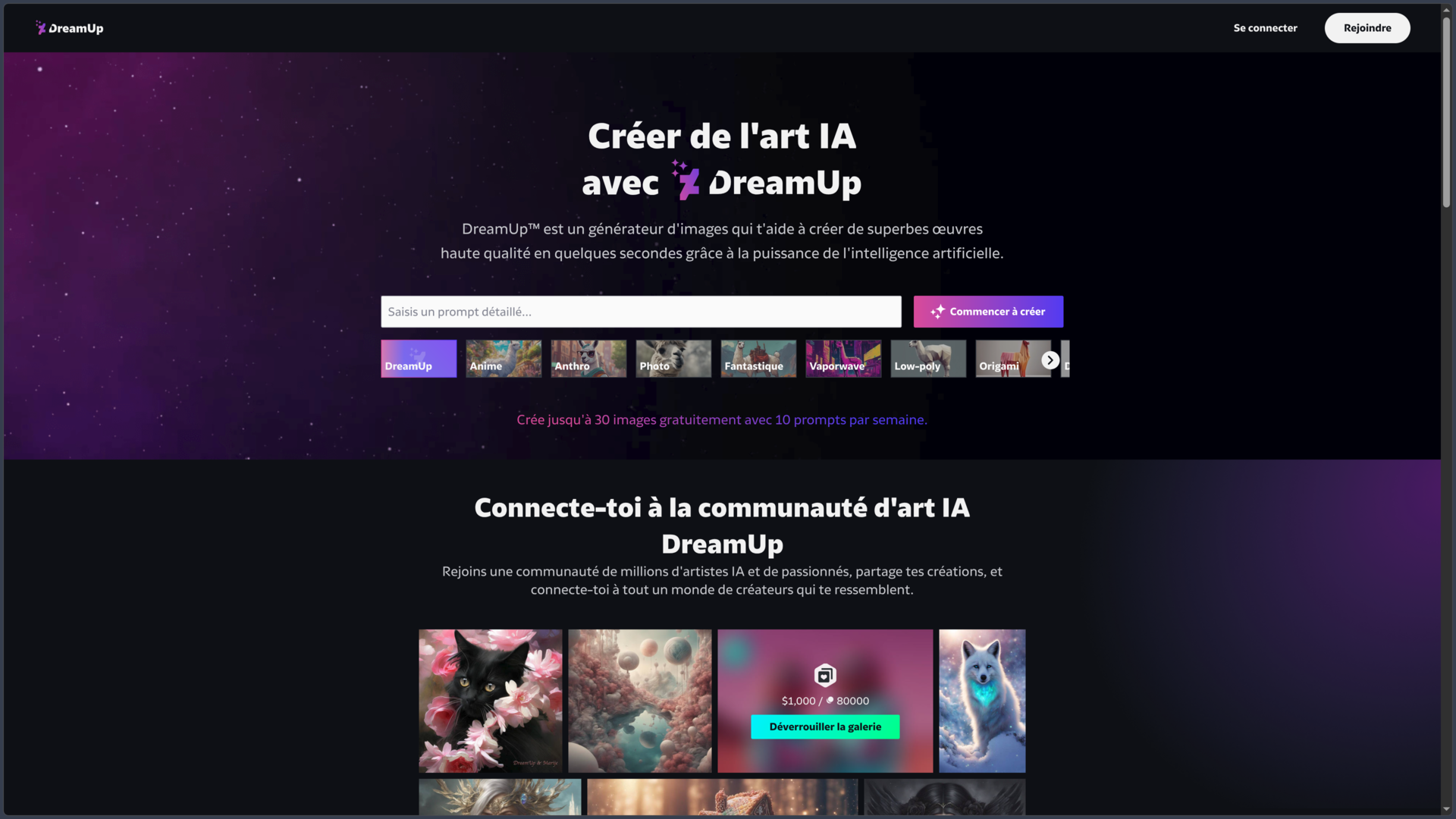
DeviantArt integrates its own image generator called DreamUp. Limited free use is available, while the different Core subscriptions significantly increase the number of prompts and images that can be generated each month.
The presence of AI-generated content has led DeviantArt to add several labeling and filtering tools. An artwork created with generative tools can be marked Created using AI tools, while users can choose to remove a large proportion of this content from their browsing experience through the Suppress AI option.
Artists also have access to the NoAI label, intended to indicate that an artwork is not authorized for inclusion in third-party datasets used to train artificial intelligence models.
This label clearly expresses the creator’s wishes, but it obviously does not provide a technical barrier capable of preventing every form of external downloading or scraping.
Use cases
Building a personal gallery and developing it over time
An illustrator can publish finished work, organize different series into galleries and keep several years of creations on the same profile.
Visitors can browse this evolution, add artworks to their favorites and follow the artist to receive future publications.
DeviantArt is therefore particularly suitable for people who want to build a lasting artistic presence, without necessarily limiting their profile to a few perfectly selected pieces as in a professional portfolio.
Finding a community around a specific practice
An artist beginning in pixel art, fan art or traditional drawing can join several specialized Groups.
They can discover the work of other members, submit their own creations to group galleries and exchange ideas around shared techniques or universes.
This approach makes it easier to find niche communities that would quickly disappear inside the feeds of a general-purpose social network.
Distributing or selling creative resources
A creator producing brushes, textures, references or other files can publish examples for free and then offer selected packs as Premium Downloads.
Another artist can use Subscriptions to reserve behind-the-scenes content, tutorials or additional creations for subscribers.
The platform therefore makes it possible to gradually move from a simple public gallery to a support and sales space directly connected to the creator’s community.
Ordering a custom creation
With Originals, a user can choose an offer provided by an artist, specify what they want and attach references.
The artist can then accept or decline the request before producing and delivering the work.
This workflow now replaces the previous integrated commissions system and centralizes the request, payment and delivery within the DeviantArt Shop.
Conclusion
DeviantArt does not play exactly the same role as ArtStation. ArtStation strongly prioritizes professional presentation and recruitment in visual industries; DeviantArt remains above all a huge artistic community where publishing, discovery, discussion and selling are closely connected.
This openness is one of its strengths. A professional illustrator can share the platform with a beginner, photographer, fan artist or someone simply posting their first creations. Groups, watchers, favorites and comments give the service a much stronger social dimension than a conventional portfolio.
Commercial tools have also expanded. Subscriptions, Premium Downloads, Exclusives and now Originals make it possible to monetize an audience without leaving the platform, while Core adds more tools for creators who use DeviantArt regularly.
The integration of DreamUp and the large amount of AI-generated content can, however, significantly change the discovery experience. DeviantArt provides labels and a Suppress AI filter, making it possible to adapt browsing more closely to personal preferences.
For someone who wants to regularly publish creations, meet other artists, join highly specialized communities and gradually develop an audience around their work, DeviantArt therefore retains an identity that is clearly different from a simple portfolio website.
Points to consider
-
Registration and publishing remain free, while Core mainly adds advanced tools, more storage and benefits for selling.
-
The displayed Core prices currently correspond to annual subscriptions paid upfront, with monthly equivalents of $6.67, $8.33, $12.50 and $16.67 depending on the tier.
-
The previous DeviantArt Commissions system was removed on July 1, 2026. Custom orders are now handled through Originals.
-
Selling fees vary significantly depending on the product and Core subscription. A free account can incur platform fees of up to 20% on several categories, with processing and withdrawal fees potentially added.
-
DeviantArt Protect searches for highly similar images published on DeviantArt, but it is not a general monitoring service for the entire Web and does not guarantee protection against art theft.
-
AI-generated content can be filtered with Suppress AI, but DeviantArt states that detection is not perfect and some content may bypass the filter.
-
The NoAI label indicates that an artwork is not authorized for training third-party models, but it does not technically block all external scraping.
-
Published artworks remain protected by their creators’ copyright. The fact that an image is visible or downloadable on DeviantArt does not mean it can be freely reused.