Overview
Deezer is a French music streaming platform founded in Paris in 2007. Like the other major services in the sector, it replaces the logic of a locally stored file collection with access to a remote catalog: users search for an artist, album or track, add it to their favorites or a playlist, then find their library again across their different devices.
The announced catalog now exceeds 120 million tracks, alongside podcasts, radio stations, mixes and various editorial content. The goal is therefore no longer simply to provide access to a considerable amount of music, but to help users navigate within that mass.
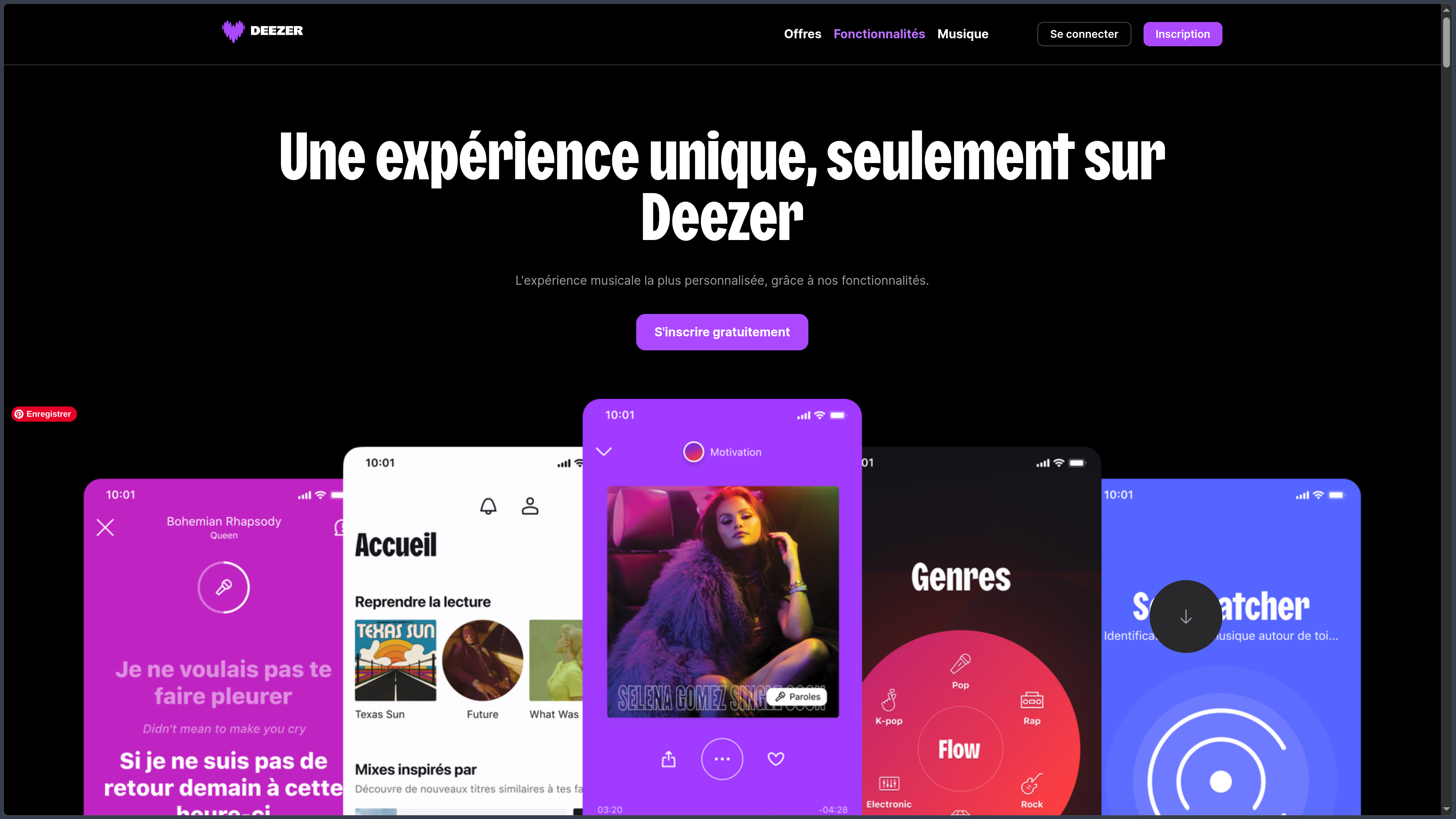
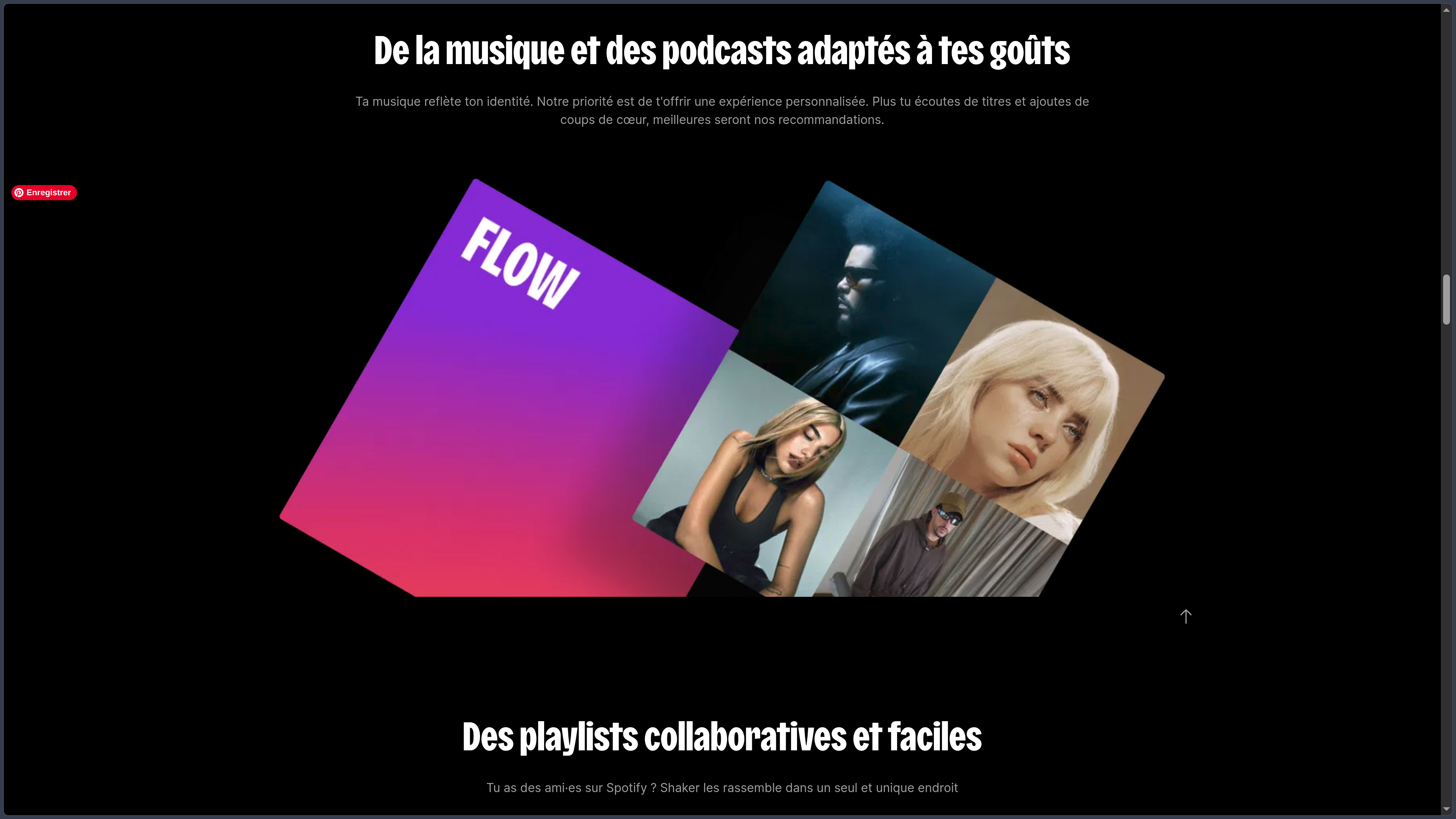
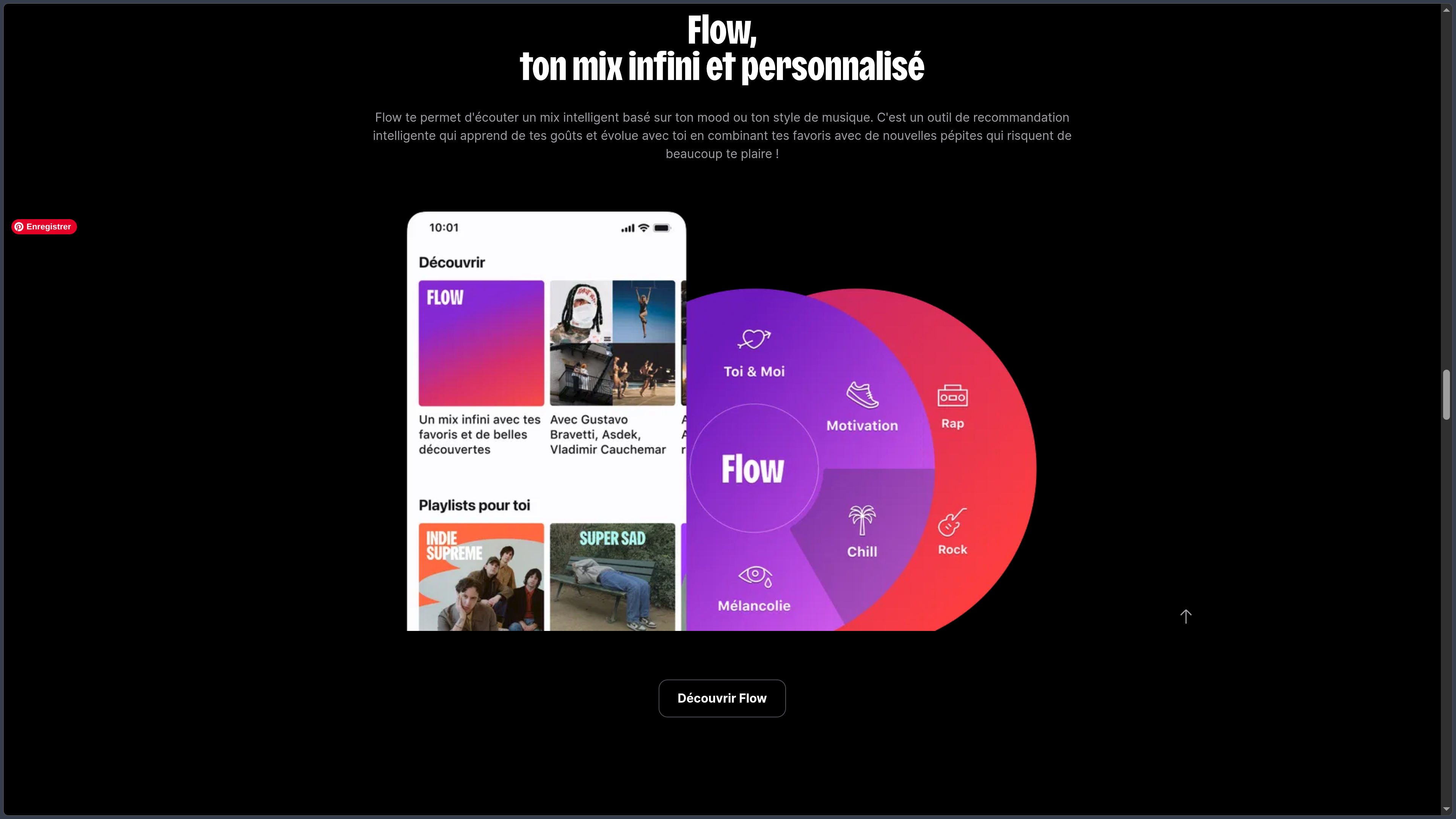
This is where Deezer has built an important part of its identity. Flow, its continuous personalized mix, combines tracks the user already enjoys with new recommendations based on listening history, favorites, skipped tracks and expressed preferences. Where a traditional search assumes that the user already knows what they want to hear, Flow aims to become a personal radio station that evolves with the account.
The service also develops several features that are less universal among competitors. SongCatcher identifies a track heard nearby but can also recognize a melody that is hummed, sung or whistled. Shaker creates collective playlists capable of bringing together the tastes of Deezer users as well as people coming from other platforms. Lyrics can be displayed during playback and some of them include translations.
Deezer has also differentiated itself through its policy regarding music entirely generated by artificial intelligence. The platform analyzes submitted tracks, identifies those it considers fully AI-generated, adds a specific label to them and removes them from Flow as well as from algorithmic and editorial recommendations. The goal is therefore not to prohibit their presence in the catalog, but to prevent them from being automatically inserted into recommendations without the listener being aware of it.
The business model remains freemium. Deezer Free allows the service to be used with advertising and certain limitations, while paid subscriptions notably add ad-free on-demand listening, offline downloads and HiFi audio.
In France, at the time of this verification on September 7, 2026, Deezer Premium costs €11.99 per month, Student €5.99, Duo €15.99 and Family €19.99. Annual plans also make it possible to reduce the average cost of certain subscriptions.
Features
A music catalog built as a personal library
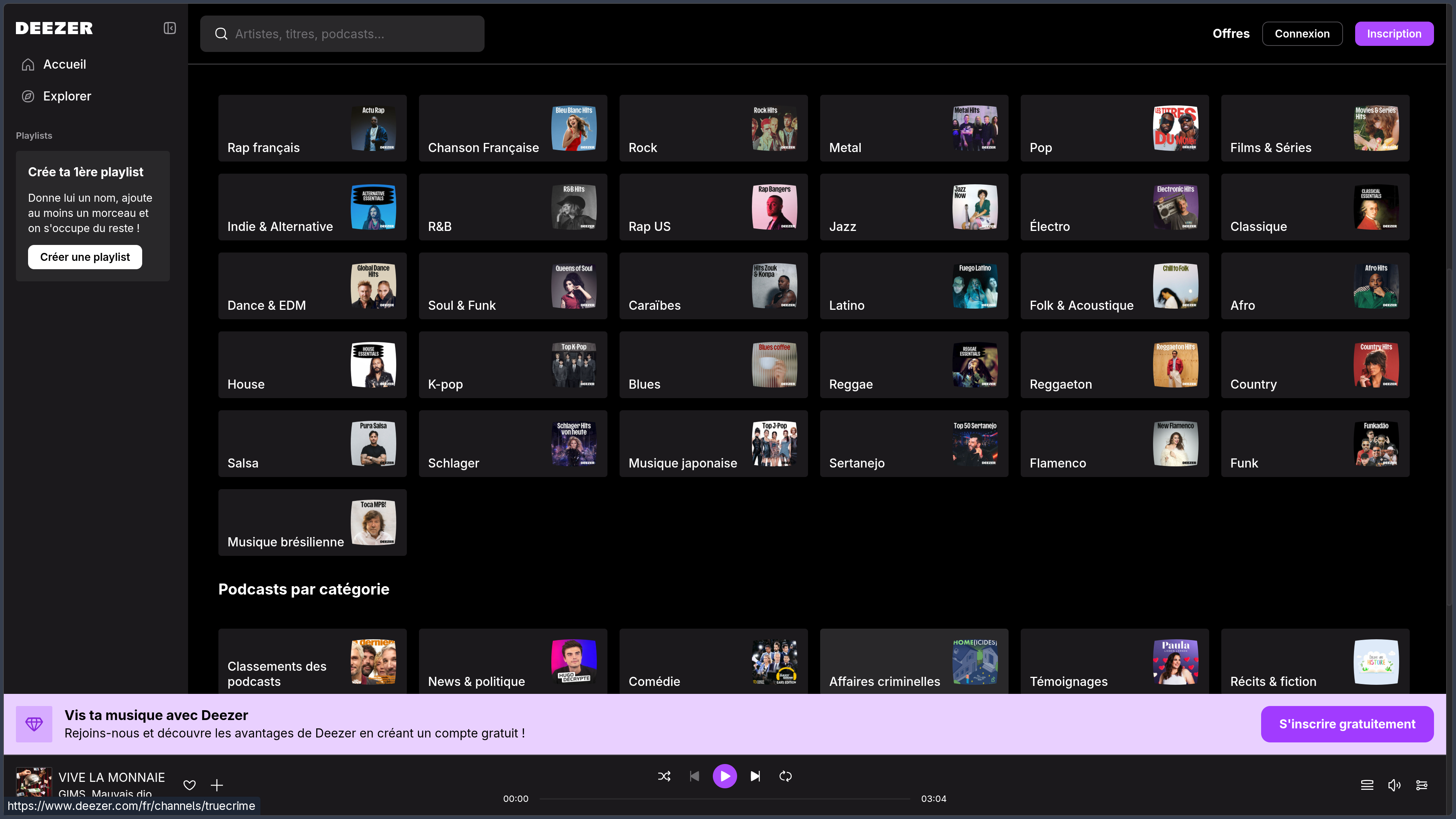
Deezer allows users to directly search for artists, albums, tracks, playlists, podcasts and other content available in its catalog.
Liked tracks can be added to favorites, artists can be followed and albums saved to the library. Playlists then make it possible to create personal collections independently from the original album structure.
This library is tied to the Deezer account rather than to a particular device. Favorites added on a phone are therefore available again in the web player or desktop application without any need to transfer files.
This simplicity fundamentally changes the management of a music collection. Users no longer need to organize folders, filenames, metadata or copies across several machines.
It nevertheless implies the same fundamental limitation as other streaming services: saving an album to a Deezer library does not mean owning that album. The library contains references to works available under license. If rights change or a version is removed from the catalog, it may become unavailable.
Flow as an evolving personal radio station
Flow is one of Deezer’s signature features. It is an endless personalized mix combining familiar music with new tracks likely to match the account’s tastes.
The system notably analyzes listening history, favorites, skipped tracks and songs that have been explicitly rejected. The more users indicate what they like or do not want, the more information Flow has to refine its choices.
It is possible to temporarily adjust the direction of the mix according to a mood or a genre. Flow can therefore focus on motivation, relaxation, melancholy, parties or other atmospheres without completely losing the musical profile built by the account.
Deezer also allows users to adjust the proportion devoted to new discoveries. This is useful because it responds to two very different uses: some people mainly use an algorithm to rediscover familiar music, while others specifically want to be surprised.
Recommendation settings can also be refined by more directly indicating which tracks should or should not influence the algorithm.
Flow is therefore not simply a playlist generated once. It works more like a dynamic layer between the personal library and the overall catalog.
Importing an existing library without starting from scratch
Changing music platforms can become difficult after several years of use. Playlists, favorites and habits gradually form a library that may represent hundreds or thousands of tracks.
Deezer includes a system for transferring a library from other streaming services.
Users can import their playlists and favorites and then immediately use this foundation to feed recommendations and Flow.
This feature considerably reduces the practical cost of changing services. It is no longer necessary to manually rebuild every playlist before Deezer can be tested under conditions comparable to the previous platform.
The result nevertheless depends on matches available in the catalog. Two platforms may use different versions of the same album, offer different regional editions or not have exactly the same works.
Import therefore provides an excellent starting point, but verification remains useful for large libraries.
SongCatcher to identify what is playing… or what you are humming
SongCatcher is built directly into Deezer and is used to identify a track whose title is unknown.
In its most traditional use, the phone listens to a few seconds of music playing around the user and compares its audio fingerprint with those available in its database.
Once the song has been identified, it can immediately be opened in Deezer, added to favorites or placed in a playlist. Identification and listening therefore take place within the same environment.
SongCatcher goes beyond simple recognition of a recording, however. Deezer also allows users to hum, sing or whistle a melody when no original audio source is available.
The feature then becomes useful in a very different situation: finding that song of which only a few notes remain in memory, without knowing either the lyrics or the artist.
Recognition is obviously not guaranteed for every melody or approximate performance, but its direct integration provides genuine practical value compared with using a recognition tool first and then a streaming service.
Lyrics integrated into listening
Many tracks include synchronized lyrics that scroll during playback.
This feature can simply be used to follow a song, but it also makes it possible to find a specific passage or better understand lyrics previously known only by ear.
Deezer also offers lyrics translation when available. This additional layer is particularly useful for discovering songs in languages the user does not understand.
Some songs can also be searched by their lyrics rather than by their exact title.
Lyrics can also be shared, turning part of a song into something that can be sent without having to search for it on a separate website.
As with all services of this kind, availability nevertheless depends on agreements, supplied data and the track concerned. Not every song therefore benefits from the same level of integration.
Shaker to mix the tastes of several people
Shaker offers a more social approach to collaborative playlists.
The user creates a group and then invites other people in order to build a selection based on their respective tastes.
The interesting feature is that guests do not necessarily need to use Deezer themselves. Shaker can include people using Spotify or Apple Music, for example, which prevents the collaborative playlist from being tied to a single service from the outset.
The system can compare tastes, display certain favorite tracks and quickly generate a mix representative of the group.
The playlist can then continue to be built collectively around a party, a trip, a gaming session or any other activity.
Shaker does not replace manual curation when someone wants to control every track. Its value appears more clearly when several different libraries need to be combined without spending an hour asking everyone to send their songs.
From compressed streaming to lossless FLAC
Audio quality has been one of Deezer’s important strengths for several years. Paid subscriptions allow the use of High Fidelity, or HiFi, mode.
The current maximum quality corresponds to 16-bit/44.1 kHz FLAC at 1,411 kb/s, equivalent to CD quality without destructive compression.
Two compressed levels remain available: Standard at around 128 kb/s and High Quality at around 320 kb/s. Deezer Free is limited to Basic or Standard levels, while paid plans can use HiFi.
Quality can be configured separately depending on context. Someone can, for example, select FLAC when listening over Wi-Fi and lower the bitrate on mobile data to save bandwidth.
Download quality can also be set independently.
FLAC naturally consumes far more data and storage space than a compressed stream. It is therefore not necessarily sensible to enable it everywhere.
It is also important to distinguish the quality of the file supplied by Deezer from the entire listening chain. A Bluetooth connection may re-encode the sound using a lossy codec. To fully benefit from FLAC, a wired connection or compatible audio equipment is generally more appropriate.
Unlike some services offering Hi-Res beyond CD quality, Deezer HiFi currently remains limited to 16-bit/44.1 kHz. This is an important point for users who mainly choose a streaming service based on audiophile specifications.
Downloading music for offline listening
Paid subscriptions allow users to download albums, playlists and other compatible content for use when the Internet connection is unavailable or unstable.
A dedicated section of the library groups downloaded content.
Users can prepare playlists before a trip and then enable offline mode to prevent the application from attempting to stream other tracks.
Deezer also supports downloads on certain compatible portable devices, including various smartwatches. Users can therefore go running without necessarily keeping their phone nearby.
As on other streaming platforms, these downloads are not unrestricted FLAC or MP3 files that can be moved into any player. They remain integrated into Deezer and depend on the account and subscription that authorize playback.
This distinction clearly separates offline listening from purchasing digital music.
Plans for one person, a duo or a family
Premium provides one individual account with the service’s paid features: on-demand listening, no music advertising, downloads and HiFi.
A Premium account can currently be associated with three devices.
Duo provides two independent accounts so that two people can keep their own favorites, playlists, histories and recommendations.
Family can include up to six accounts. Each person therefore keeps their own library and their own Flow instead of sharing one profile that would mix everyone’s tastes.
The Family plan can currently associate up to thirteen devices in total according to the service’s current account structure. The administrator can use three devices and each additional account up to two.
Profiles intended for children can also be configured in order to provide a more appropriate environment.
The Student plan includes the main Premium features at a reduced price, subject to the required eligibility and verification conditions.
Podcasts and radio around the music catalog
Deezer also includes podcasts within its catalog.
They can be searched, followed and downloaded for offline listening, then found again in the library alongside other content.
The platform also offers various radio stations and editorial selections.
This coexistence makes it possible to keep several audio habits within one application without constantly switching between a music player and a podcast player.
Deezer nevertheless remains much more clearly positioned around music than some platforms that have transformed their home page into an environment heavily mixing music, podcasts, video and audiobooks.
For users primarily looking for a music service, this orientation may be a more significant difference than a simple comparison of catalog size.
Identifying and removing fully AI-generated music from recommendations
For several years, Deezer has been developing detection technology for tracks entirely generated by artificial intelligence models.
Identified tracks receive a specific label so that users can know they are listening to artificially generated content.
In 2026, this approach has become particularly important due to the explosion in the volume of music submitted to platforms. Deezer says it now receives tens of thousands of fully AI-generated tracks every day, to the point that they represent a considerable share of new files submitted to the service.
Deezer’s policy does not simply involve labeling them. These tracks are excluded from Flow, algorithmic recommendations and editorial playlists.
Users can therefore still deliberately encounter AI-generated music available in the catalog, but it should not be automatically injected into their discovery system.
Deezer also seeks to identify artificially manipulated listening and exclude streams considered fraudulent from calculations used for remuneration.
This policy gives the service a fairly distinctive identity in the current streaming landscape: the question is no longer simply how much music is present in the catalog, but also what transparency accompanies its origin and recommendation.
Listening on desktop, mobile, watch, car and audio equipment
Deezer provides applications for Windows, macOS, Android, iOS and iPadOS, along with a web player.
The service works in the main modern browsers, including Chrome, Firefox, Edge and Safari.
Applications or integrations also exist for various televisions, audio systems, connected speakers, consoles, cars and watches.
Technologies such as Chromecast, AirPlay, Sonos, Amazon Alexa and various automotive systems extend listening beyond the phone or computer.
An important distinction from Spotify should nevertheless be kept in mind: Deezer Connect, which allowed one device to be used as a remote control for Deezer playback on another device, was discontinued on May 6, 2025.
Deezer therefore retains broad hardware compatibility, but currently no longer offers this universal layer of remote control between its applications.
For someone whose home audio setup relies heavily on a feature comparable to Spotify Connect or TIDAL Connect, this difference can become a genuine selection criterion.
Use cases
Moving from another service without rebuilding every playlist
Someone who has used Spotify, Apple Music or another platform for several years may have hundreds of favorite albums and many playlists.
Rebuilding this library manually would be a significant barrier to switching.
Deezer’s transfer tool allows the collection to be imported and immediately used to feed Flow and recommendations.
Users can therefore genuinely test Deezer with their own tastes rather than with an empty account that would need several weeks to understand their profile.
This option is particularly useful when comparing two services: the quality of a recommendation depends heavily on the information available about the listener.
Starting Flow without choosing every track
A user can open Deezer while working, cooking or driving and launch Flow directly.
The system then alternates familiar tracks and discoveries without requiring a new playlist to be selected every thirty minutes.
If the mood does not fit the moment, a different mood or genre can be selected.
When a track is liked, it can be added to favorites; when it does not fit the user’s tastes at all, that signal can instead improve future recommendations.
Flow therefore becomes particularly suitable for moments when you want to listen to music without spending your time deciding what to play.
Finding a song heard somewhere
A song plays in a movie, a shop or at a party without its title being displayed.
The user opens SongCatcher, lets the application listen for a few seconds and then directly adds the result to favorites.
In another situation, no recording is available: only a melody remains in memory. The track can then be searched by humming, singing or whistling it.
This continuity between recognition and library avoids multiplying applications and makes discovery much more immediate.
Preparing high-quality listening at home
A user with a DAC, wired headphones or a good-quality audio system can enable HiFi mode over Wi-Fi.
Deezer then streams available tracks in 16-bit/44.1 kHz FLAC rather than with destructive 320 kb/s compression.
The same account can retain lower quality over mobile data in order to limit consumption.
This flexibility makes it possible to prioritize fidelity when equipment and connectivity make it relevant, without imposing maximum bitrate in every situation.
For someone looking for Hi-Res beyond CD quality, Deezer will nevertheless be less ambitious than some specialist services.
Preparing playlists before a trip
Before leaving, a subscriber can download albums or playlists to their phone.
Tracks then remain available on a plane, subway, in a rural area or abroad when connectivity becomes poor or expensive.
A lower download quality can save a great deal of space, while HiFi can prepare a lossless offline collection when storage is not an issue.
For sports activities, certain compatible watches can also store downloaded playlists so the phone can be left at home.
These files nevertheless remain tied to Deezer. Anyone wishing to build a permanent music archive should still favor legally purchased or otherwise independently obtained files.
Building a playlist with friends using several platforms
A group is preparing a trip, party or holiday, but not everyone uses the same music service.
Shaker can bring several profiles together and create a selection representing the group’s tastes, including when some participants come from Spotify or Apple Music.
The playlist can then be adjusted collectively.
This avoids one person automatically imposing their library simply because their phone happens to be connected to the speakers.
It turns playlist creation into a shared activity rather than simply sending a link afterward.
Avoiding recommendations of fully AI-generated music
A user may be curious about generative music while not wanting it automatically mixed into their everyday recommendations.
Deezer’s policy provides precisely this separation.
Tracks identified as fully AI-generated may remain available in the catalog, but they are labeled and removed from Flow as well as editorial and personalized recommendation systems.
This obviously does not guarantee perfect detection of every existing track. Generative technologies evolve continuously and no automatic system can be considered infallible.
The approach nevertheless gives users additional information and control over how the algorithmic catalog is constructed.
Conclusion
Deezer shares the same general principle as Spotify, Apple Music, YouTube Music or TIDAL: turning a huge remote catalog into an immediately accessible personal library. The differences therefore lie less in the ability to play a known album than in everything surrounding that listening experience.
This is precisely where Deezer has an interesting identity. Flow is no longer merely a secondary feature but one of the central pillars of the experience. SongCatcher brings music recognition and streaming closer together. Shaker attempts to solve the problem of groups spread across several platforms. Translated lyrics, library import and built-in HiFi complete an ecosystem that goes far beyond a simple Play button.
16-bit/44.1 kHz FLAC is also included in paid subscriptions without requiring a separate audiophile plan. For CD-quality listening, Deezer therefore provides a simple and coherent proposition. Users primarily looking for 24-bit audio or higher sample rates will, however, need to consider services more specialized in Hi-Res.
The policy toward AI-generated music has now become another genuinely distinctive element. Deezer does not simply announce detection technology: identified content is labeled and removed from automatic and editorial recommendations. In a context where the volume of industrially generated tracks is increasing extremely quickly, this decision directly affects the quality of discovery and trust placed in the algorithm.
The platform nevertheless has a notable weakness in its multi-device experience since the disappearance of Deezer Connect. Deezer works across a wide variety of phones, computers, speakers, cars and televisions, but currently no longer offers a direct equivalent of the universal control provided by Spotify Connect. For some audio setups, that detail may matter more than differences in catalog size.
Finally, Deezer remains streaming. Downloading an album does not mean owning it, adding a track to favorites does not guarantee it will remain available forever, and the entire library ultimately depends on the account and the licenses held by the platform.
For someone looking for a music service centered on discovery, with an excellent personalized mix, genuine Lossless quality, original recognition and collaboration tools, and a particularly visible policy on transparency around AI-generated content, Deezer is a very strong alternative to the world’s largest platforms. Its appeal is especially clear when the goal is for the service to remain primarily a music environment rather than a general-purpose audio content aggregator.
Points to consider
-
Deezer follows a freemium model: Deezer Free allows users to listen with advertising and certain limitations, while offline listening, full control and HiFi are associated with paid plans.
-
French prices verified on September 7, 2026 are €11.99/month for Premium, €5.99/month for Student, €15.99/month for Duo and €19.99/month for Family. Promotions and trial periods may temporarily change the displayed price for some new accounts.
-
Annual subscriptions are also available: Premium currently costs €107.99/year, Duo €174.99/year and Family €218.99/year, with different savings depending on the plan.
-
The announced catalog exceeds 120 million tracks, but the overall number does not guarantee that every album, edition or version available from a competitor is present. Catalogs remain dependent on licensing and territories.
-
Deezer HiFi currently corresponds to 16-bit/44.1 kHz FLAC at 1,411 kb/s. It provides lossless CD-equivalent quality but does not constitute 24-bit Hi-Res.
-
Deezer Free is limited to Basic and Standard quality, while paid subscriptions can use Standard, HQ at around 320 kb/s or HiFi in FLAC.
-
A FLAC stream alone does not guarantee genuinely lossless listening all the way to the ears: a Bluetooth connection may re-encode the signal. Hardware and connection type therefore remain important.
-
Offline downloads remain locked inside the Deezer ecosystem: they do not become unrestricted FLAC or MP3 files that the user can archive or transfer to another player.
-
A Premium account can currently be associated with three devices. Deezer Family can manage up to six accounts and thirteen devices in total according to the organization currently provided by the service.
-
Deezer Connect was officially discontinued on May 6, 2025: the feature that allowed a phone to act as a remote control for Deezer on another device is therefore no longer available. Chromecast, AirPlay and various hardware integrations remain usable depending on equipment.
-
Flow depends heavily on the information provided to the account: favorites, skipped tracks, history and recommendation settings directly influence the results. A new account therefore needs some data before becoming truly personalized.
-
SongCatcher can identify a track playing nearby as well as a melody that is hummed, sung or whistled. Recognition in the second case naturally depends on the melody and the quality of the performance.
-
Shaker can include participants using other platforms such as Spotify or Apple Music, but catalog differences can prevent exact matches between services.
-
Deezer identifies and labels tracks it detects as fully AI-generated. These tracks are excluded from Flow, algorithmic recommendations and editorial playlists, but they are not necessarily removed from the catalog.
-
AI-generated content detection remains an automated technology: even with the accuracy rates announced by Deezer, it should not be interpreted as an absolute guarantee regarding the origin of every track.
-
The Student plan is subject to eligibility verification and its conditions must be renewed according to the rules of the program.
-
Deezer Family provides up to six separate accounts so that each member can keep their favorites, playlists and Flow. Children’s profiles include options adapted to family content.
-
The service is intended for personal and private use: a consumer subscription does not automatically constitute a license to play music commercially in a shop, restaurant or other professional venue.