











Overview
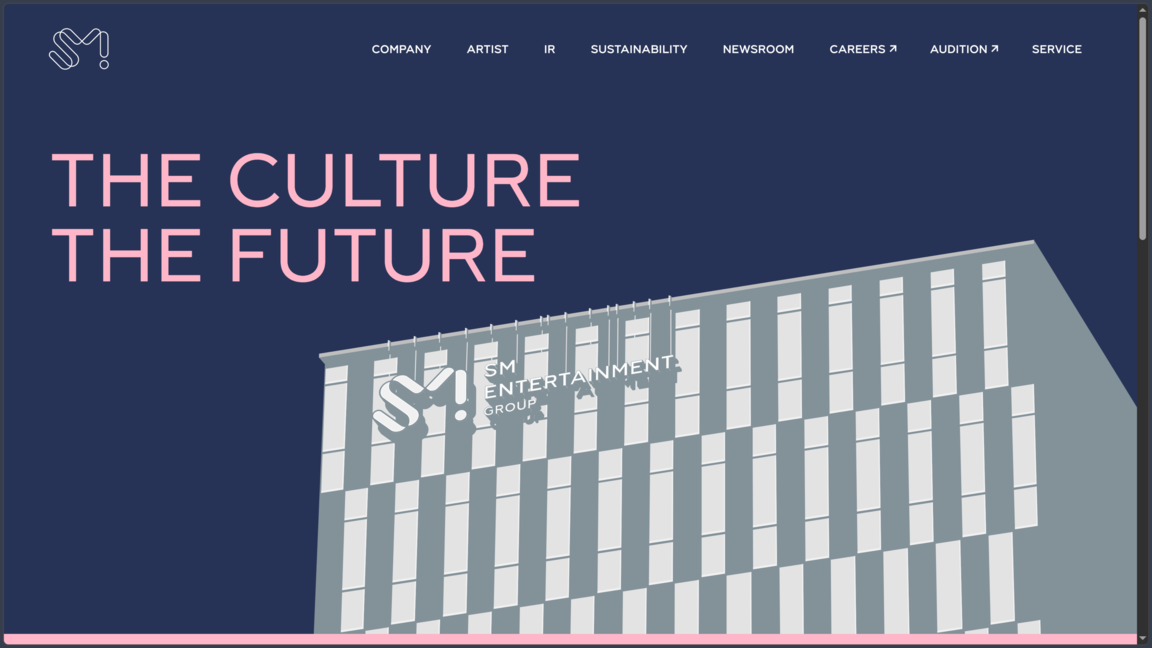
SM Entertainment is a South Korean music company whose origins date back to 1989, when Lee Soo-man established SM Studio in Seoul. Incorporated under the SM Entertainment name in 1995, it played a defining role in the development of modern K-pop by combining record production, artist training, choreography and international promotion.
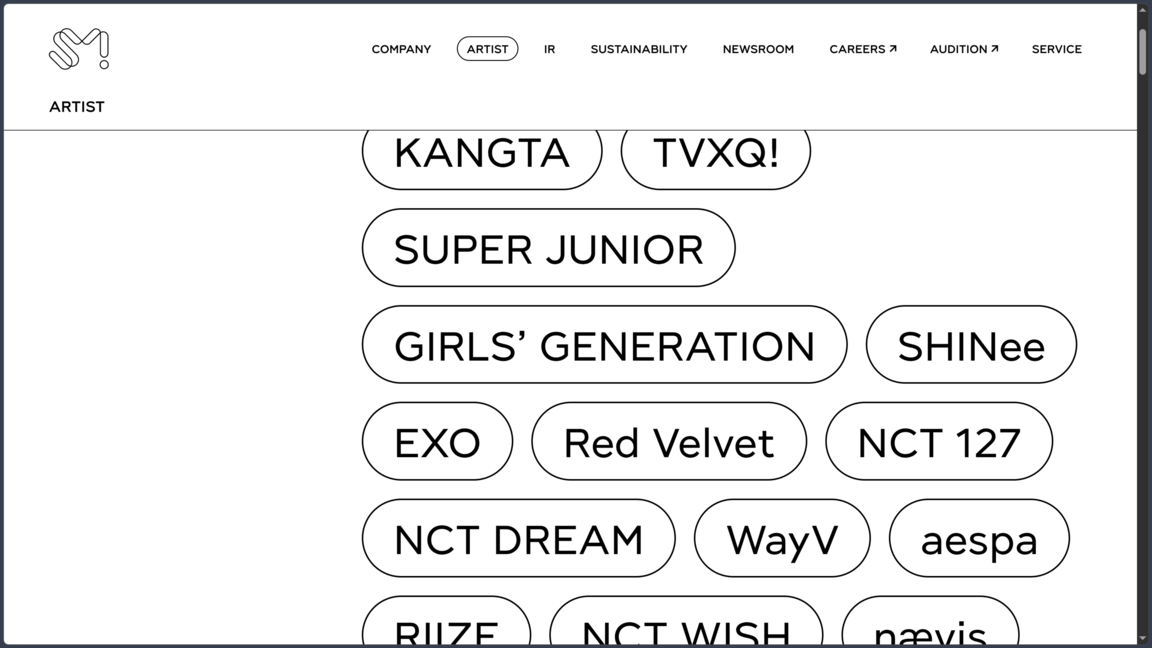
Its catalogue spans several generations of influential groups. Following S.E.S., one of K-pop's pioneering major girl groups, SM developed Girls' Generation, f(x), Red Velvet and aespa. The company also produced artists such as BoA, TVXQ!, Super Junior, SHINee, EXO and NCT, contributing to its presence in Asian and international markets.
Its operating model integrates performer selection, artistic preparation, recording production and the development of distinctive visual identities for each group. Albums, music videos, concerts and digital content all contribute to these musical worlds.
SM Entertainment continues to develop through specialised production teams and international partnerships. Since 2023, its structure has evolved around the “SM 3.0” strategy, followed in 2026 by the “SM NEXT 3.0” programme.
History
1989-2006 — Foundation and the first generations of K-pop
In 1989, Lee Soo-man established SM Studio in Seoul. After several years devoted to developing and producing artists, SM Entertainment was formally incorporated on February 14, 1995.
In 1996, the company launched H.O.T., a boy group whose success contributed to the emergence of a new model for South Korean pop acts. The following year, S.E.S. debuted with a repertoire combining pop and R&B. Albums including S.E.S. (1997), Love (1999) and A Letter from Greenland (2000) documented the group's development.
SM subsequently supported other artists, including Shinhwa, BoA and TVXQ!. BoA's expansion into Japan during the early 2000s marked an important step in the company's international development. Super Junior, which debuted in 2005, also contributed to its growing audience.
This period helped establish an integrated production system combining artistic training, music, dance and visual communication.
2007-2015 — Girls' Generation, f(x) and Red Velvet
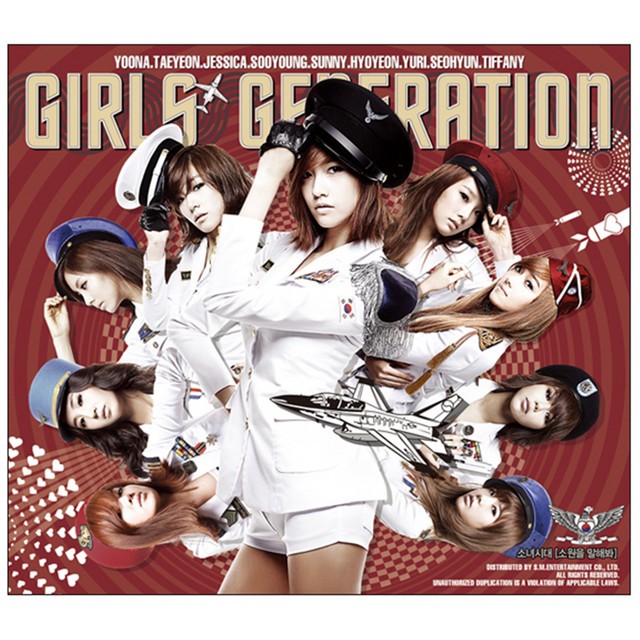
In 2007, SM launched Girls' Generation, a girl group that became one of the defining acts of K-pop's second generation. Its success accelerated with Gee (2009), followed by Genie and Oh! (2010). I Got a Boy (2013) later demonstrated an approach that combined several musical styles within a single song.
In 2009, f(x) debuted with a more experimental direction, blending electropop, dance music and electronic sounds. Electric Shock (2012), Pink Tape (2013), Red Light (2014) and 4 Walls (2015) became important milestones in this development.
In 2014, Red Velvet joined the catalogue. The group developed an identity based on two complementary approaches: “Red”, associated with bright, energetic pop, and “Velvet”, characterised by smoother R&B influences.
Ice Cream Cake (2015) and The Red (2015) established the early foundations of this identity. SM thus strengthened its presence in South Korean girl-group music through distinct creative approaches.
2016-2022 — Global expansion and new artistic identities
From 2016 onward, SM continued expanding internationally with NCT, whose concept involves multiple units and line-ups. The group joined a catalogue already featuring SHINee, EXO and numerous solo performers.
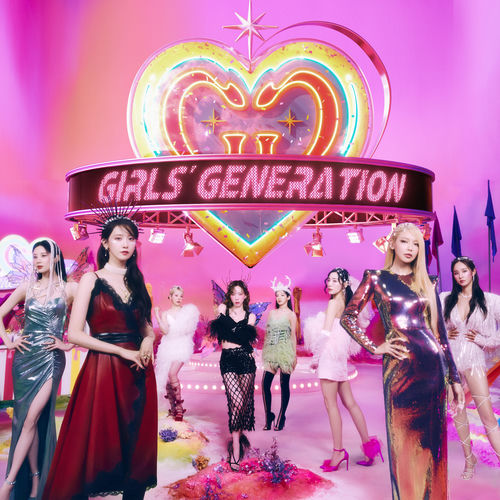
Girls' Generation marked its longevity with Holiday Night (2017), followed by FOREVER 1 (2022). Red Velvet continued exploring different musical directions through Perfect Velvet (2017), RBB (2018), the various instalments of The ReVe Festival (2019) and Queendom (2021).
In 2020, SM launched aespa, a girl group whose original creative world combined its real-life members with virtual characters. This concept accompanied music strongly influenced by electronic production and shifting rhythms.
Savage (2021) and Girls (2022) contributed to the group's international development. Meanwhile, the company strengthened its digital presence and expanded collaborations with overseas distributors and partners.
2023-2026 — SM 3.0 and renewed production systems
In 2023, SM introduced its “SM 3.0” strategy, designed to replace a highly centralised artistic supervision model with multiple production centres. The new structure distributed music creation and artist management across different teams.
That same year, Kakao and Kakao Entertainment became major shareholders in SM Entertainment. Their partnership supported the development of music distribution and the company's international activities.
Red Velvet released Chill Kill (2023), followed by Cosmic (2024), while aespa continued expanding with MY WORLD (2023), Drama (2023), Armageddon (2024) and Whiplash (2024).
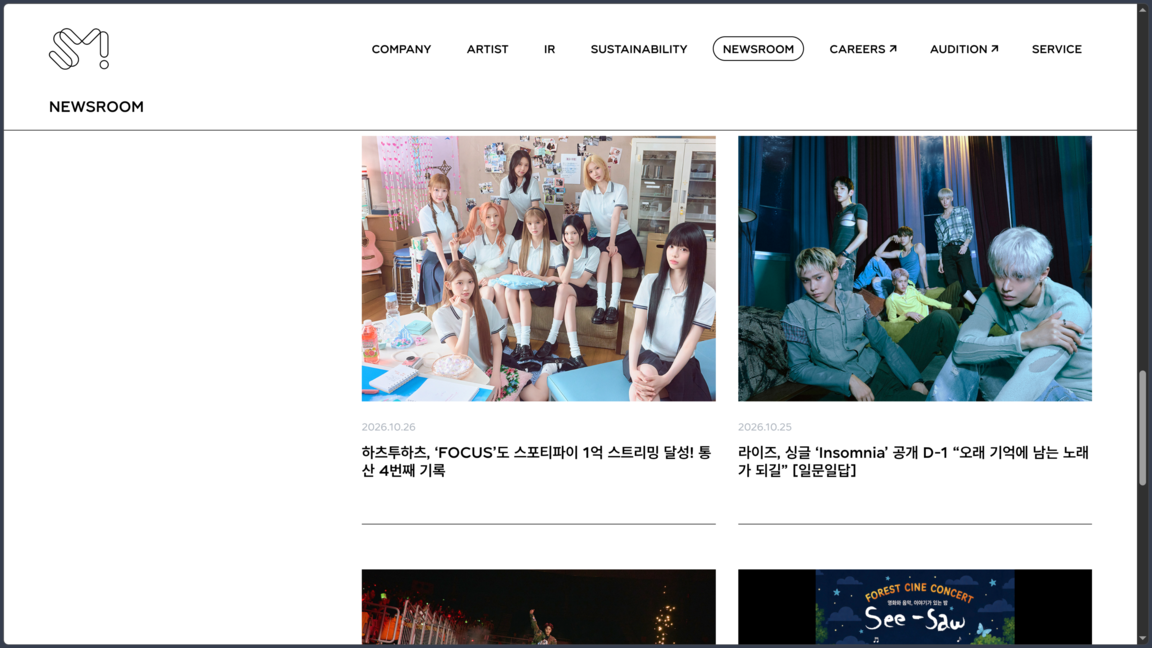
In 2025, SM celebrated the thirtieth anniversary of its incorporation under its current name. The company supported Hearts2Hearts, whose first mini-album, FOCUS, appeared that year, alongside aespa, which released Rich Man.
In January 2026, SM unveiled “SM NEXT 3.0”, an evolution of its strategy based on more flexible creative teams and stronger international cooperation.
That same year, aespa released its second studio album, LEMONADE, while Red Velvet returned with a full-group release, the mini-album Velvet Summer. These productions extended SM Entertainment's presence in contemporary K-pop.
Distinctive Features
An integrated model of artist development
SM Entertainment helped establish a structured approach to K-pop artist training, combining vocal development, dance, stage preparation, music production and promotion. This model influenced the organisation of numerous companies throughout the industry.
Distinctive musical and visual identities
Each generation of groups has developed its own characteristics. Girls' Generation represents coordinated pop performance, f(x) explores unconventional electronic structures, Red Velvet moves between contrasting aesthetics, and aespa combines music with a digital narrative world.
A lasting presence in international markets
Since the 2000s, the company has expanded outside South Korea, particularly in Japan, China, Southeast Asia and North America. Language adaptations, concert tours and local partnerships are central to this strategy.
An evolving production organisation
The transition to “SM 3.0” and subsequently “SM NEXT 3.0” has changed the distribution of creative responsibilities. The company relies on multiple production centres and an international network of songwriters, producers and partners.
Key Facts
- Origins: 1989, with SM Studio established by Lee Soo-man.
- Incorporation of SM Entertainment: February 14, 1995, in Seoul.
- Influential early groups: H.O.T. (1996) and S.E.S. (1997).
- International development: particularly BoA and TVXQ! during the early 2000s.
- Girls' Generation: debuted in 2007 and achieved major success with Gee (2009).
- f(x): debuted in 2009, with albums including Pink Tape and 4 Walls.
- Red Velvet: launched in 2014, associated with the “Red” and “Velvet” concepts.
- aespa: debuted in 2020, initially combining real performers with virtual avatars.
- Restructuring: “SM 3.0” strategy introduced in 2023.
- Corporate partnership: Kakao and Kakao Entertainment became major shareholders in 2023.
- New strategy: “SM NEXT 3.0”, introduced in January 2026.
- Recent releases: aespa's LEMONADE and Red Velvet's Velvet Summer (2026).
- Status: active music company in South Korea.