Les Editions de Londres
Publishing house
Details
- Type
- Publishing house
Referenced works
Referenced works (5)
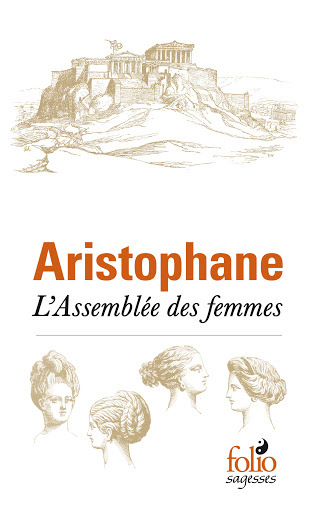
Women's Assembly
Publisher
Aristophan, whom some consider as the "beauf" of the century of Pericles, the scrap of the well-wise classes of ancient Greek where we translate the dogmatic dialogues of Plato, the whinings of Euripides, the strokes of the warriors of Eschyle, comes to us a second feminist piece, "The Assembly of Women". This time, Aristophan imagines with humor and salacity a society where it is the women who take care of the affa…
- Comedy
- Theatre
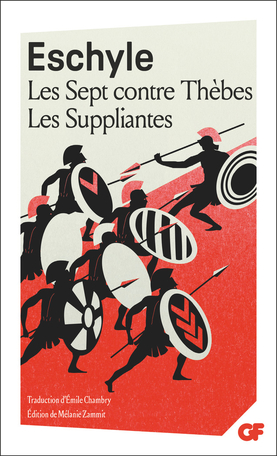
The Seven Against Thebes
Publisher
"The Seven Against Thebes" is a tragedy of Eschyle written and represented around 467 B.C.. Originally part of a Theban tetralogy, The Seven Against Thebes is one of the most beautiful classical tragedies. The action is in Thebes, when the armies of the Argians, led by Polynice, traitor to the City and brother of Eteocle, gather at the gates of the city, in order to conquer and destroy it. At each of the seven gates…
- Drama
- Theatre
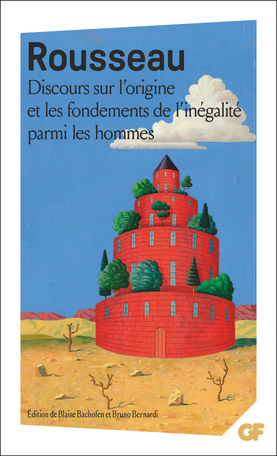
Rousseau: Discourse on the Origin and Foundations of Inequality Among Men
Publisher
The "Discourse on the Origin and Foundations of Inequality Among Men" is one of the greatest texts ever written, one of the most beautiful of the Enlightenment, and one of Rousseau's two great essays with "The Social Contract". For Chomsky, it is a fundamentally revolutionary text avant la lettre. Rousseau sees inequality as the origin of social ills: wars, poverty, violence of all kinds. From the persistence of ine…
- Philosophy
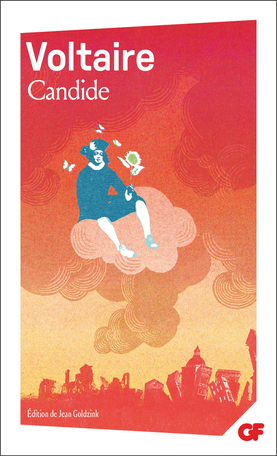
Voltaire: Candide
Publisher
In our time, Candide is Voltaire's most famous work. It was not always this way. Even for mortals like Voltaire, less condemned to oblivion than the rest of us, we don't really choose our destiny. That’s how it is, we spend our lives making mistakes, we fight against chimeras, we are deceived, flouted, betrayed, we hope, we are disappointed, and we end our lives by returning to the starting point. That way, we proba…
- Philosophy
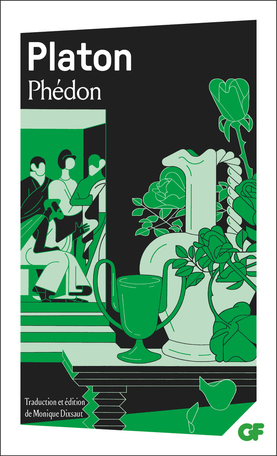
Plato: Phaedo
Publisher
The Phaedo tells of a death, that of Socrates. But the story of these singular farewells is an opportunity to have a different discourse on this subject. Because Socrates dies after speaking, after tearing off his frightening “mask” of a witch from death, and betting on the immortality of our souls. With him, death and philosophy engage in the same work as Penelope, undoing what life has woven and freeing the soul …
- Philosophy
Link graph
Open in the full graphLoading the graph…
Only the strongest links are shown.
View the list ({count})
Information may change.