James Brown was an American singer, dancer, songwriter and bandleader who became a major figure in soul music and one of the principal pioneers of funk. Nicknamed the Godfather of Soul, he developed a sound built around powerful rhythms, sharp horn arrangements and gospel-influenced vocals. Rising to prominence with Please, Please, Please, he transformed popular music through songs including Papa's Got a Brand New Bag, I Got You (I Feel Good), Cold Sweat and Get Up (I Feel Like Being a) Sex Machine. His work had a lasting influence on rhythm and blues, funk and hip-hop.
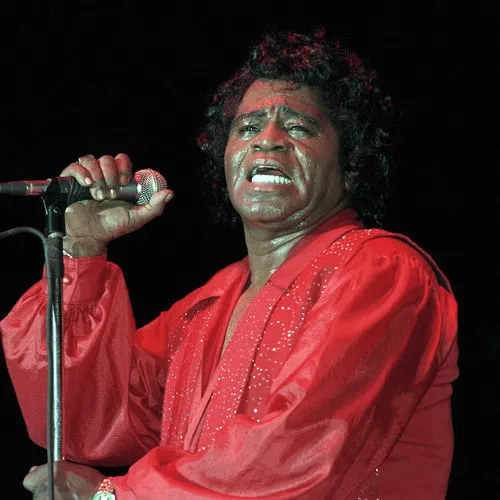
James Brown
An unstoppable rhythm, an explosive voice and the birth of funk.
Details
- Type
- Music
- Countries
- 🇺🇸 United States
- Genres
- Funk, Blues, Soul, Rhythm and blues, Classic soul
- Albums
- 19
Synopsis
James Brown
Glossary terms: Album, Bar / measure, Bass (voice), Blues, Brass, Chord, Composition, Disco, Drum kit / drums, Fundamental, Funk, Gospel, Hip-hop, Quarter note, Rhythm, Rock, Sharpening, Song, Soul, Story, Syncopation, Transformation
Trailer
Watch the trailer
Overview
Presentation
James Brown, born James Joseph Brown, was an American singer, dancer, songwriter and bandleader born in South Carolina in 1933. Raised in Augusta, Georgia, he discovered gospel and rhythm and blues, which deeply influenced his vocal style. During the 1950s, he joined the group that became the Famous Flames, associated particularly with Bobby Byrd. In 1956, Please, Please, Please brought the group its first major success. Brown established his place in rhythm and blues with Try Me and developed stage performances characterized by extraordinary physical and musical energy.
In 1963, Live at the Apollo, recorded during a concert in New York, helped establish his reputation as a live performer. The songs Papa's Got a Brand New Bag and I Got You (I Feel Good), released in 1965, marked a shift toward music increasingly organized around rhythm. With Cold Sweat in 1967, followed by I Got the Feelin' and Say It Loud – I'm Black and I'm Proud in 1968, Brown helped define the characteristics of funk while expressing Black pride in part of his repertoire.
In the early 1970s, he continued this transformation with instrumental ensembles featuring musicians such as Bootsy Collins, Fred Wesley, Maceo Parker and drummers Clyde Stubblefield and Jabo Starks at different stages. Songs including Get Up (I Feel Like Being a) Sex Machine, Super Bad, Get on the Good Foot and The Payback relied on repetitive rhythmic patterns and closely coordinated instrumental parts. During the 1980s, he collaborated with Afrika Bambaataa on Unity and achieved renewed success with Living in America, featured in the film Rocky IV. He continued performing until his death in 2006.
Key Takeaways
James Brown's musical contribution lies in his transformation of rhythm and blues rhythmic structures. He emphasized the first beat of each measure, known as the one, while bass, drums, guitar and horns developed short, complementary patterns. Repetition, syncopation and instrumental exchanges became central elements of his compositions, often taking precedence over chord progressions.
His performance style combined gospel-influenced singing, rhythmic shouts, call-and-response, dancing and band leadership. On stage, Brown directed changes in rhythm and individual musical contributions through precise gestures. This approach to performance and composition influenced soul, funk, disco and hip-hop, where his recordings became particularly important sources of samples.
Conclusion
James Brown holds a fundamental place in the history of African American popular music. By making rhythm the driving force of his compositions and performances, he contributed to the emergence of funk and permanently transformed musical practices in soul, dance music and hip-hop.
Did You Know?
- Full name: James Joseph Brown.
- Origins: South Carolina, United States (1933–2006); raised in Augusta, Georgia.
- Nicknames: Godfather of Soul, Soul Brother No. 1 and Mr. Dynamite.
- Early group: the Famous Flames, featuring Bobby Byrd.
- Signature songs: Please, Please, Please, I Got You (I Feel Good), Papa's Got a Brand New Bag, Cold Sweat, Sex Machine, The Payback and Living in America.
- Landmark albums: Live at the Apollo (1963), Sex Machine (1970), Revolution of the Mind (1971) and The Payback (1973).
- Associated musicians: Bobby Byrd, Fred Wesley, Maceo Parker, Bootsy Collins, Clyde Stubblefield and Jabo Starks.
- Musical innovation: emphasis on the first beat of the measure, a defining element of funk.
- Social significance: Say It Loud – I'm Black and I'm Proud (1968) became closely associated with the expression of Black pride.
- Legacy: his grooves and drum breaks became major sources of samples in hip-hop.
- Recognition: among the inaugural inductees into the Rock & Roll Hall of Fame in 1986.
Link graph
Open in the full graphLoading the graph…
Only the strongest links are shown.
View the list ({count})
Discography
Discography (19)


