Georges Brassens was a French singer-songwriter and poet who became a major figure in French-language songwriting. Originally from Sète, he developed a musical style built around acoustic guitar, jazz-influenced melodies and lyrics combining poetry, humor and irreverence. Rising to prominence in the early 1950s with La Mauvaise Réputation and Le Gorille, he influenced generations through songs including Chanson pour l'Auvergnat, Les Amoureux des bancs publics, Les Copains d'abord and Supplique pour être enterré à la plage de Sète. His work celebrates friendship, freedom and independent thought.
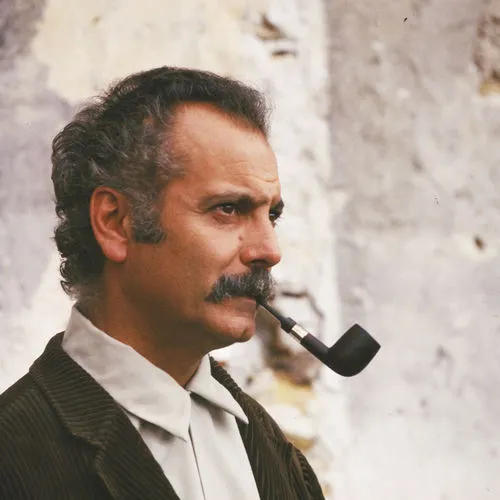
Georges Brassens
An acoustic guitar, uncompromising words and the art of turning poetry into song.
Details
- Type
- Music
- Countries
- 🇫🇷 France
- Genres
- French-language chanson, Chanson à texte
- Albums
- 21
Synopsis
Georges Brassens
Glossary terms: Accompaniment, Acoustic guitar, Acoustics, Album, Chord, Classical music, Composition, Foreground, Identity, Jazz, Melody, Reputation, Rhythm, Song, Swing
Trailer
Watch the trailer
Overview
Presentation
Georges Brassens, born in Sète in 1921, was a French singer-songwriter and poet. Raised in a family with a strong interest in music, he discovered popular songs, jazz and poetry during his adolescence. After moving to Paris in 1940, he devoted much of his time to reading, writing and composing. During the German occupation, he found refuge with Jeanne and Marcel Planche at Impasse Florimont, where he developed part of his early repertoire. His libertarian convictions and appreciation of classical literature gradually shaped his artistic identity.
In 1952, his meeting with singer Patachou marked a turning point. Despite his shyness, she encouraged him to perform his own compositions. He subsequently recorded La Mauvaise Réputation, Le Gorille, Le Parapluie and La Chasse aux papillons. His songs stood out for their independence of expression, literary references and sometimes provocative humor. He continued with Les Amoureux des bancs publics, Chanson pour l'Auvergnat, Les Sabots d'Hélène and Je me suis fait tout petit, establishing a distinctive songwriting style.
During the 1960s, Brassens expanded his repertoire with Les Trompettes de la renommée, Les Copains d'abord, La Non-demande en mariage and Supplique pour être enterré à la plage de Sète. The latter combined humor, reflections on death and attachment to his hometown. He continued with songs including Les Passantes, Mourir pour des idées and La Ballade des gens qui sont nés quelque part. His final album of original songs, Trompe la mort, appeared in 1976. He gave his last concerts in 1977 and died in 1981.
Key Takeaways
Georges Brassens's musical identity was built around the balance between lyrics and melody. His accompaniment, generally limited to acoustic guitar and double bass, placed words at the center of each composition. Behind this apparent simplicity lay rhythms influenced by jazz and swing, together with careful attention to chords, accents and the sounds of the French language.
His songwriting combined everyday speech, literary vocabulary, classical references and wordplay. He explored friendship, love, death, individual freedom and social conventions, often through irony. Brassens also set poems by François Villon, Victor Hugo, Louis Aragon and Antoine Pol to music, helping connect written poetry with popular song.
Conclusion
Georges Brassens holds an essential place in the history of French popular music. Through his artistic independence, attention to language and acoustic compositions, he developed a body of work combining poetic tradition with a libertarian outlook. His songs continue to be performed and adapted by artists from different generations.
Did You Know?
- Full name: Georges Charles Brassens.
- Origins: Sète, Hérault, France (1921–1981).
- Instruments: acoustic guitar and vocals.
- Early career: gained recognition at Patachou's cabaret in 1952 and subsequently worked with Jacques Canetti.
- Signature songs: La Mauvaise Réputation, Le Gorille, Chanson pour l'Auvergnat, Les Amoureux des bancs publics, Les Copains d'abord, La Non-demande en mariage and Les Passantes.
- Notable recordings: La Mauvaise Réputation, Les Sabots d'Hélène, Les Copains d'abord, Supplique pour être enterré à la plage de Sète, Fernande and Trompe la mort.
- Associated musician: double bassist Pierre Nicolas accompanied him throughout much of his career.
- Poetry: set Louis Aragon's Il n'y a pas d'amour heureux and Antoine Pol's Les Passantes to music.
- Cinema: Les Copains d'abord was written for Yves Robert's film Les Copains, released in 1965.
- Recognition: received the Grand Prix de poésie of the Académie française in 1967.
Link graph
Open in the full graphLoading the graph…
Only the strongest links are shown.
View the list ({count})
Discography
Discography (21)


Album
1979
Georges Brassens joue avec Moustache et Les Petits Français, volume 2
- French-language chanson


Album
1983
Hampton, Salvador, Clark Terry, Moustache et leurs amis jouent Brassens
- French-language chanson

