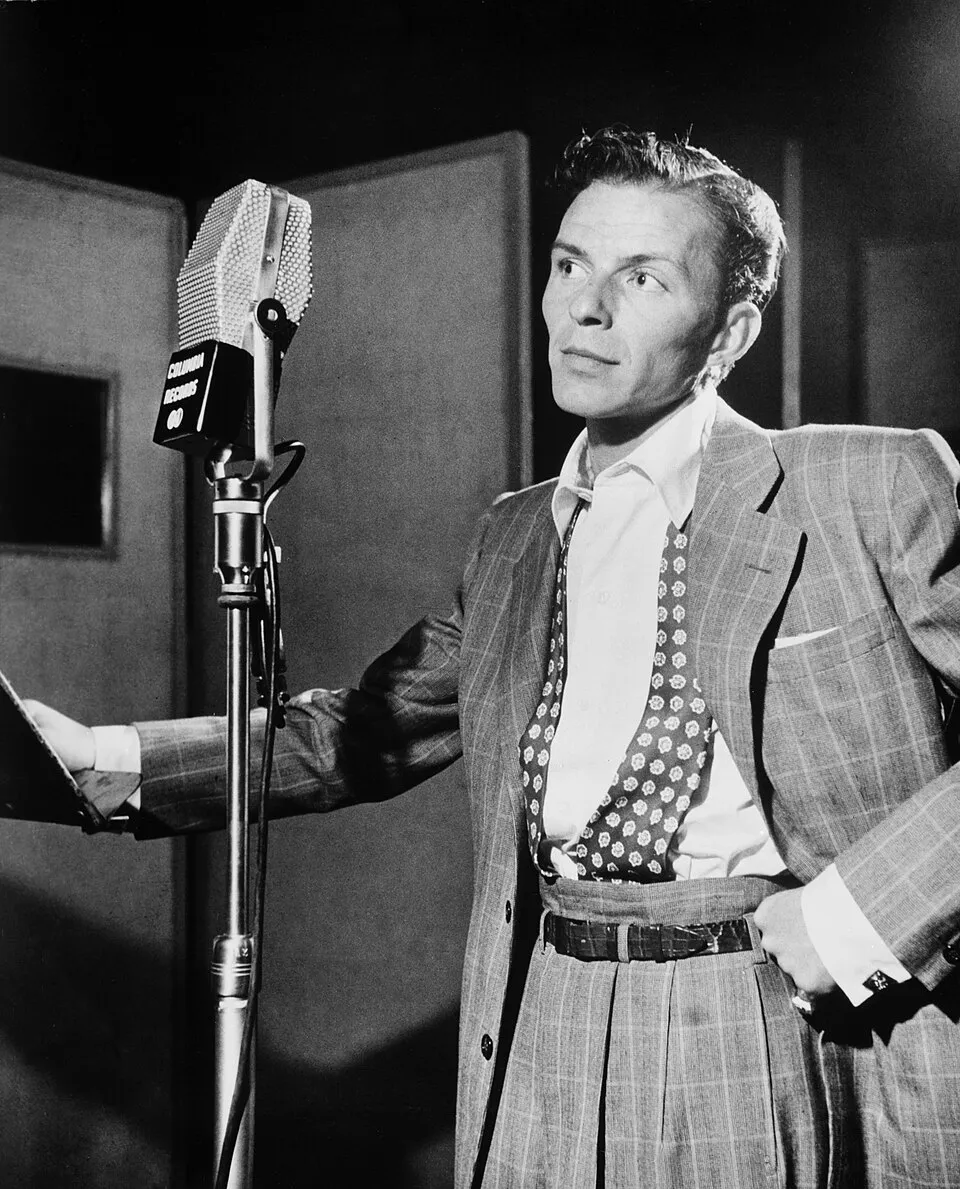
Frank Sinatra was an American singer and actor who became a major figure in vocal jazz, swing and twentieth-century popular music. Known for his baritone voice, distinctive phrasing and expressive interpretations, he began his career with the orchestras of Harry James and Tommy Dorsey before establishing an international solo career. Albums such as In the Wee Small Hours, Songs for Swingin' Lovers! and Come Fly with Me demonstrate his collaborations with prominent American arrangers. His interpretations of Fly Me to the Moon, My Way, Strangers in the Night and New York, New York remain central to his musical legacy.
Details
- Type
- Music
- Countries
- 🇺🇸 United States
- Genres
- Jazz, Swing
- Albums
- 14
Synopsis
Frank Sinatra
Glossary terms: Adaptation, Album, Arrangement, Author / songwriter, Ballade, Baritone, Composer, Interpretation, Interpretation, Interpretation, Jazz, Large orchestra, Phrasing, Song, Swing, Theme, Timbre
Trailer
Watch the trailer
Overview
Presentation
Frank Sinatra, born Francis Albert Sinatra, was an American singer and actor born in Hoboken, New Jersey, in 1915. Raised in a family of Italian descent, he began singing with vocal groups before joining Harry James's orchestra in 1939 and Tommy Dorsey's band in 1940. His interpretation of ballads and distinctive phrasing brought him recognition during the 1940s. He subsequently established a solo career, releasing The Voice of Frank Sinatra in 1946.
Following a period of declining popularity, Sinatra experienced a career revival during the 1950s. His collaborations with arrangers Nelson Riddle, Billy May and Gordon Jenkins helped reshape his repertoire. The albums In the Wee Small Hours (1955) and Songs for Swingin' Lovers! (1956) demonstrated two sides of his style: melancholy ballads and orchestral swing. He continued with Come Fly with Me, Frank Sinatra Sings for Only the Lonely and Nice 'n' Easy, developing an approach to albums organized around a consistent musical atmosphere.
In the early 1960s, he established his own record label, Reprise Records, and continued collaborating with Count Basie, Duke Ellington and Quincy Jones. His 1964 recording of Fly Me to the Moon with Count Basie's orchestra became one of his most recognizable interpretations. Songs such as Strangers in the Night, That's Life and My Way extended his success. Following a temporary retirement, he returned to performing in the 1970s and recorded Theme from New York, New York, released on Trilogy: Past Present Future in 1980. His final studio albums, Duets and Duets II, featured numerous guest artists. He died in 1998 at the age of 82.
Key Takeaways
Frank Sinatra's musical identity was based on a vocal approach resembling natural conversation. His flexible phrasing, breath control and rhythmic precision allowed him to interpret standards with carefully developed nuances. He adapted his singing to intimate ballads as well as energetic arrangements performed by large swing orchestras.
Sinatra also helped establish the concept of the vocal album built around a particular mood or theme. His work with arrangers and orchestra leaders played an essential role in shaping his repertoire. Primarily an interpreter rather than a composer, he brought new expressive possibilities to songs written by Cole Porter, George Gershwin, Richard Rodgers and many other American songwriters.
Conclusion
Frank Sinatra holds a central place in the history of vocal jazz, swing and American popular music. His interpretations of standards, orchestral collaborations and film career helped transform the role of the popular singer during the twentieth century.
Did You Know?
- Full name: Francis Albert Sinatra.
- Origins: Hoboken, New Jersey, United States (1915–1998).
- Nicknames: Ol' Blue Eyes, The Voice and Chairman of the Board.
- Early orchestras: Harry James and Tommy Dorsey.
- Landmark albums: In the Wee Small Hours, Songs for Swingin' Lovers!, Come Fly with Me, Frank Sinatra Sings for Only the Lonely, September of My Years and Sinatra at the Sands.
- Signature interpretations: Fly Me to the Moon, I've Got You Under My Skin, Strangers in the Night, My Way, That's Life and Theme from New York, New York.
- Arrangers and collaborators: Nelson Riddle, Billy May, Gordon Jenkins, Count Basie, Duke Ellington and Quincy Jones.
- Origins of My Way: Paul Anka wrote the English adaptation of Comme d'habitude, originally created by Claude François, Jacques Revaux and Gilles Thibault.
- Film career: won the Academy Award for Best Supporting Actor for From Here to Eternity in 1954.
- Musical recognition: nine Grammy Awards and a Grammy Lifetime Achievement Award in 1966.
- Final recordings: Duets (1993) and Duets II (1994) featured several guest vocalists.
Link graph
Open in the full graphLoading the graph…
Only the strongest links are shown.
View the list ({count})
Discography
Discography (14)


Album
1964
Frank Sinatra Sings Days of Wine and Roses, Moon River and Other Academy Award Winners
- Jazz
- Swing


