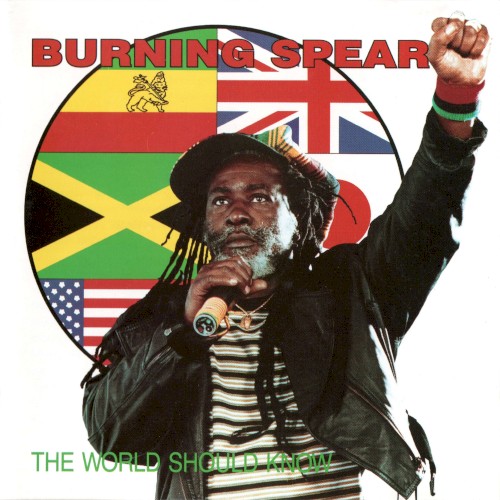
Burning Spear is the stage name of Winston Rodney, a Jamaican singer-songwriter and a defining figure in roots reggae. Rising to prominence in the 1970s with Marcus Garvey, Man in the Hills and Social Living, he developed music deeply rooted in Rastafari spirituality, African history and struggles for liberation. His chant-like vocals, hypnotic rhythms and lyrics inspired by Marcus Garvey characterise his work. From Calling Rastafari to No Destroyer, his career reflects artistic independence and a commitment to cultural heritage.
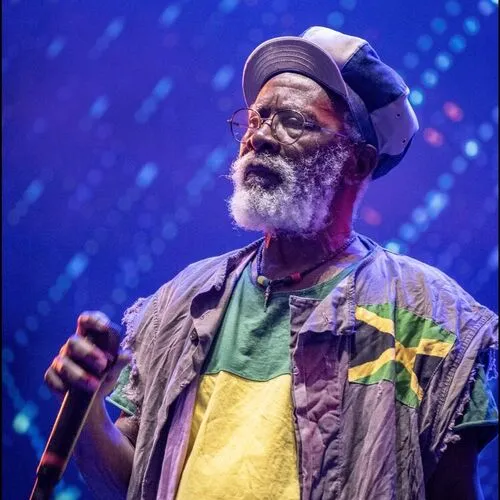
Music
Reggae
Burning Spear
Chant-like vocals, deep rhythms and African heritage at the heart of reggae.
Details
- Type
- Music
- Countries
- 🇯🇲 Jamaica
- Genres
- Reggae
- Albums
- 15
Synopsis
Burning Spear
Glossary terms: Album, Arrangement, Bass (voice), Brass, Composition, Development, Fundamental, Identity, Line level, Low register / bass, Movement, Percussion, Phrasing, Reggae, Rhythm, Row / record, Song, Story, Transmission, Version, Vocal harmony
Trailer
Watch the trailer
Overview
Presentation
Burning Spear is the stage name of Winston Rodney, a Jamaican singer-songwriter from Saint Ann's Bay. He began his musical career in the late 1960s after meeting Bob Marley, who encouraged him to visit Studio One, the recording studio run by Clement "Coxsone" Dodd. Originally used for a vocal group featuring Rodney, Rupert Willington and Delroy Hinds, the name Burning Spear gradually became associated primarily with its lead performer. Albums such as Studio One Presents Burning Spear (1973) and Rocking Time (1974) introduced a reggae sound deeply influenced by Rastafari spirituality.
With Marcus Garvey (1975), Burning Spear achieved international recognition. Produced by Lawrence "Jack Ruby" Lindo, the album featured Marcus Garvey and Slavery Days, two songs exploring historical memory and the liberation of African people and their descendants. It was followed by Garvey's Ghost (1976), a dub reinterpretation of the album, and recordings including Man in the Hills (1976), Dry & Heavy (1977), Social Living (1978) and Hail H.I.M. (1980). These releases established his musical identity through deep bass lines, percussion, horn arrangements and chant-like vocals.
Burning Spear continued his career with Resistance (1985), Calling Rastafari (1999), Our Music (2005) and Jah Is Real (2008). Both Calling Rastafari and Jah Is Real earned Grammy Awards for Best Reggae Album. Together with his wife and collaborator Sonia Rodney, he developed an independent production organisation that gave him greater control over his recordings. After a period away from the stage, he resumed live performances in 2022 and released No Destroyer (2023), his first studio album in fifteen years.
Key Takeaways
Burning Spear is distinguished by a meditative roots reggae sound built around repetitive rhythms, powerful bass lines and horn arrangements. His deep voice and chant-like delivery give his compositions a spiritual dimension, reinforced by influences from Jamaican vocal traditions and Rastafari culture.
Winston Rodney's work is closely connected to the ideas of Pan-African activist Marcus Garvey. His lyrics address the history of slavery, African heritage, dignity, self-determination and cultural preservation. His commitment to artistic independence and his exploration of dub versions are also defining aspects of his career.
Conclusion
Burning Spear holds a fundamental place in the history of Jamaican roots reggae. His music combines Rastafari spirituality, historical awareness and rhythmic experimentation while contributing to the international recognition of reggae and Pan-African ideas.
Did You Know?
- Identity: Winston Rodney, originally from Saint Ann's Bay, Jamaica.
- Stage name: Burning Spear, inspired by a nickname associated with Kenyan independence leader Jomo Kenyatta.
- Early recordings: Studio One, under producer Clement "Coxsone" Dodd.
- Original vocal group: Winston Rodney, Rupert Willington and Delroy Hinds, performing reggae vocal harmonies.
- Notable albums: Marcus Garvey (1975), Man in the Hills (1976), Dry & Heavy (1977), Social Living (1978), Hail H.I.M. (1980), Calling Rastafari (1999), Jah Is Real (2008) and No Destroyer (2023).
- Signature songs: Door Peep, Marcus Garvey, Slavery Days, The Invasion, Man in the Hills, Columbus and Jah Nuh Dead.
- Spiritual and political influences: the Rastafari movement and the teachings of Pan-African activist Marcus Garvey.
- Dub: Garvey's Ghost (1976), featuring dub versions of compositions from Marcus Garvey.
- Recognition: two Grammy Awards for Best Reggae Album, in 2000 for Calling Rastafari and in 2009 for Jah Is Real.
- Musical independence: development of Burning Music Productions with Sonia Rodney.
Link graph
Open in the full graphLoading the graph…
Only the strongest links are shown.
View the list ({count})
Discography
Discography (15)