During the Qing dynasty, the powerful Jia family gradually sees its fortune and prestige threatened. At the heart of this aristocratic society, young Jia Baoyu grows up surrounded by women whose aspirations clash with traditions and family obligations. His feelings for Lin Daiyu and his relationship with Xue Baochai unfold in a chronicle of love, rivalries, domestic intrigue and social decline.
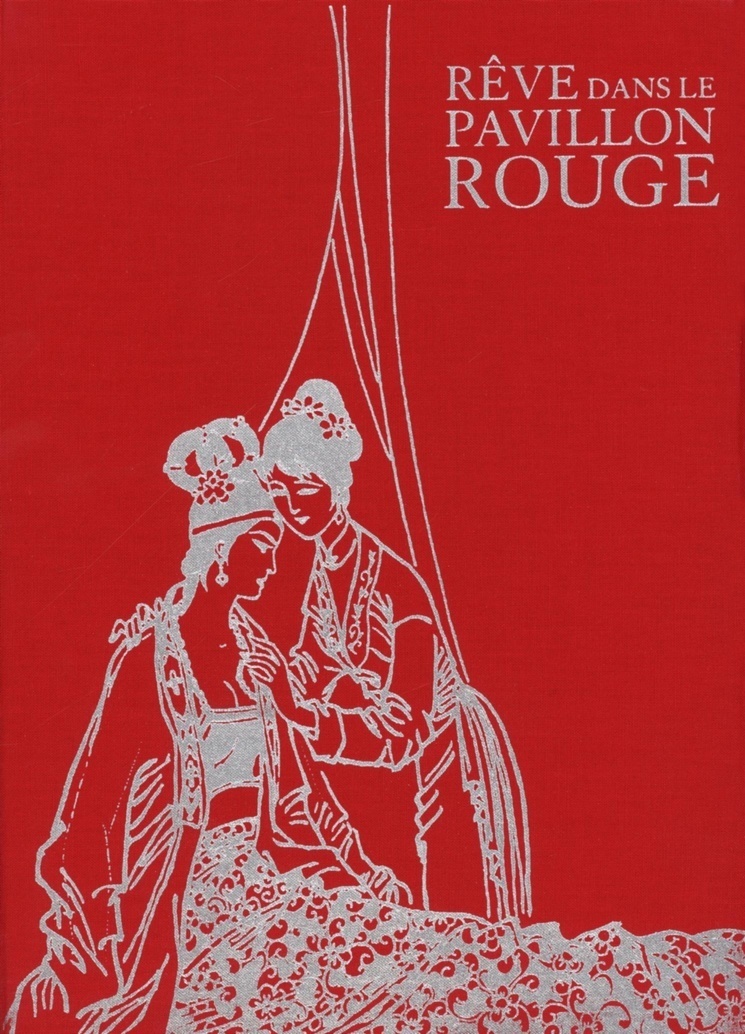
Book
2015
Drama
Romance
Historical
Novel
Fei: Dream in the Red Pavilion
紅樓夢
- Éditions Fei Publisher
- Cao Xueqin Author
A sweeping portrait of imperial China, where romantic passions accompany the decline of a great aristocratic family.
Details
- Type
- Book
- Release
- 2015-10-23
- Original title
- 紅樓夢
- Countries
- Chine
- Genres
- Drama, Romance, Historical, Novel
- Platforms
- Volumes
- 16
- Status
- Completed
- ISBN
- 9782359662047
- Information verified on
- 13 octobre 2026
Synopsis
Fei: Dream in the Red Pavilion
Overview
Overview
Published in France by Les Éditions Fei in 2015, Rêve dans le pavillon Rouge brings together an illustrated adaptation of one of the Four Great Classical Novels of Chinese literature. Written primarily by Cao Xueqin in the 18th century, the original novel, known as Hong lou meng, offers a sweeping portrait of Chinese aristocratic society during the Qing dynasty.
The story follows the fate of the powerful Jia family, whose wealth and influence conceal growing tensions. At the centre of the narrative is Jia Baoyu, a sensitive young man reluctant to conform to the conventions of his social class. His life unfolds mainly within a family residence where several generations coexist, navigating social obligations, domestic intrigue and personal aspirations.
Romantic relationships play an essential role in this chronicle. Baoyu shares a deep bond with Lin Daiyu, a cultured and delicate young woman, while Xue Baochai is another important figure in his life. Through their feelings and the expectations placed upon them, the novel explores the contradictions between love, family duty and social conventions.
This edition adapts the story into 16 lianhuanhua volumes, a traditional form of Chinese comics combining sequential illustrations with narrative text. It portrays the characters, family relationships and major events of a work whose richness lies as much in individual emotions as in its observation of an entire society.
Key Takeaways
Rêve dans le pavillon Rouge differs from the great Chinese epics centred on battles, journeys or political conflicts. Its narrative focuses on everyday life, human relationships and the gradual transformation of an aristocratic world. The decline of the Jia family thus becomes a reflection of a social order whose stability appears increasingly fragile.
One of the work's greatest strengths lies in the depth of its characters, particularly its female characters. Their conversations, desires and rivalries give considerable importance to emotions and the constraints imposed by society. This intimate dimension is accompanied by remarkable attention to customs, ceremonies, clothing and the organisation of family life.
The lianhuanhua adaptation allows readers to discover this world through visual storytelling that highlights the settings, costumes and expressions of the characters. The illustrated format follows the major events of the narrative while offering another perspective on a work renowned for its literary and psychological complexity.
Conclusion
Across its 16 volumes, Rêve dans le pavillon Rouge offers an illustrated adaptation of a landmark of Chinese literature. Through Jia Baoyu's passions and the fate of his family, this edition opens the door to a deeply human chronicle in which love, traditions and individual ambitions confront the upheavals of a declining aristocratic world.
Good to Know
The French edition, published on October 23, 2015, contains 2,284 black-and-white pages, divided into 16 small landscape-format volumes. The cloth-covered box set also includes a family tree of the Jia family and an introductory booklet.
The French translation was produced by Nicolas Henry and Si Mo. The foreword was written by Chi Li, a Chinese novelist associated with the neorealist literary movement.
The original work holds an exceptional place in Chinese culture. Its importance has given rise to a specialised field of academic research, often known as hongxue, devoted to studying its text, characters and numerous interpretations.
The French publication of this adaptation in 2015 coincided with celebrations marking the 300th anniversary of Cao Xueqin's birth. It completed the collection of the Four Great Classical Chinese Novels in lianhuanhua format published by Les Éditions Fei.