At twenty-seven, Anne Elliot lives with the regret of having given up the chance to marry Frederick Wentworth, a young naval officer without a fortune, eight years earlier. Persuaded by those around her that the match was unwise, she sacrificed her feelings to social conventions. When Wentworth returns, now a respected and prosperous captain, their paths cross once again. Amid memories, misunderstandings and family pressures, Anne must confront her past and the possibility of a second chance.
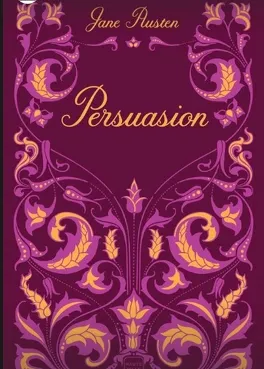
Book
2011
Drama
Romance
Novel
Persuasion
Austen : Persuasion
- Gallimard Publisher
- Jane Austen Author
Eight years after sacrificing her love to social conventions, a woman encounters the man she believed she had lost forever.
Details
- Type
- Book
- Release
- May 6, 2011
- Original title
- Austen : Persuasion
- Countries
- 🇬🇧 United Kingdom
- Genres
- Drama, Romance, Novel
- Volumes
- 1
- Status
- Completed
- ISBN
- 9782070439560
- Information verified on
- November 22, 2026
Synopsis
Persuasion
Overview
Overview
Published in Gallimard's Folio Classique collection in 2011, Persuasion is the last novel completed by Jane Austen, published posthumously in 1817. Through the story of Anne Elliot, a young woman haunted by the memory of a love she abandoned, the British author explores regret, social conventions and the possibility of rebuilding one's future after a painful decision.
At twenty-seven, Anne Elliot belongs to a family of the English landed gentry, deeply concerned with its social standing and appearances. Eight years earlier, she gave up the prospect of marrying Frederick Wentworth, a naval officer without a fortune, under the influence of those close to her. Since their separation, she has led a quiet existence, largely overshadowed by the concerns of her father and sisters. When Wentworth reappears in her social circle, now a captain and financially independent, the feelings and wounds of the past resurface.
The novel follows Anne through the different social settings she encounters, particularly in the countryside, the coastal town of Lyme Regis and Bath. These changes of location accompany the development of her relationships with Wentworth and those around her. Conversations, visits and social gatherings become opportunities to observe the behaviour, ambitions and contradictions of English society in the early nineteenth century.
In Persuasion, Jane Austen pays particular attention to her heroine's inner life. Anne stands out for her perceptiveness, sensitivity and ability to understand the intentions of others, even when she struggles to express her own desires. This edition features a French translation by Pierre Goubert, accompanied by a foreword by Christine Jordis, which places the novel within Jane Austen's literary world and body of work.
Key Takeaways
Persuasion differs from Jane Austen's other major novels through the maturity of its characters and the importance given to the passage of time. Rather than portraying the discovery of first love, the story explores the consequences of a relationship broken off several years earlier. Regret, missed opportunities and enduring feelings are the central elements of this romantic narrative.
The title refers directly to the influence that others can exert over individual decisions. Anne allowed her family's expectations and the advice of a trusted person to determine her romantic future. The novel therefore examines the boundaries between prudence, family duty and personal freedom, particularly for women whose prospects largely depend on their social position and marriage.
Jane Austen also develops a critique of traditional hierarchies. Through the Elliot family, attached to its title and prestige, she contrasts inherited privilege with personal qualities and achievements. The prominence of naval officers, whose careers can bring wealth and recognition, reflects the social changes taking place in England during the Napoleonic Wars.
The writing combines precise irony with a more melancholic tone than that of several of the author's earlier novels. Anne's feelings are often conveyed through subtle observations, silences and gestures rather than grand declarations. This attention to psychological nuance gives the narrative an intimate dimension while preserving Jane Austen's characteristic critical perspective on social conventions.
Conclusion
Jane Austen's final completed novel, Persuasion explores the passage of time, regret and the influence of social conventions on individual choices. Through Anne Elliot's experiences, the work combines a story of thwarted love with an observation of British society in the early nineteenth century. The 2011 Folio Classique edition, translated into French by Pierre Goubert, presents a style in which the analysis of emotions is accompanied by a subtle critique of social hierarchies and behaviour.
Good to Know
This edition was published by Gallimard on May 6, 2011, in the Folio Classique collection, number 5214. The publisher lists 432 pages for this volume, identified by ISBN 9782070439560.
The French translation was produced by Pierre Goubert, a Jane Austen specialist who has edited several of her novels. He also prepared the critical apparatus for this edition. The foreword was written by Christine Jordis, a French writer and essayist with a particular interest in British literature.
Jane Austen completed Persuasion in 1816, but the novel was not published until after her death in July 1817. It appeared at the end of that year alongside Northanger Abbey, in an edition whose title page bears the date 1818.
Frederick Wentworth is an officer in the Royal Navy, whose members play an important role in the novel. The context of the Napoleonic Wars helps explain their social mobility: naval prizes and military promotions could enable some officers to acquire wealth and a position independent of their birth.
Persuasion has received several screen adaptations, notably for British television and cinema. Its story, centred on reunion and long-suppressed feelings, remains one of the best-known representations of the theme of second chances in Jane Austen's work.
Link graph
Open in the full graphLoading the graph…
Only the strongest links are shown.