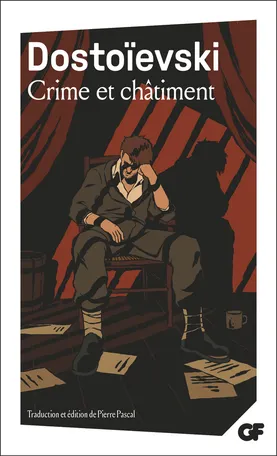
Crime and Punishment is a novel by the Russian writer Fiodor Dostoevski published in a series in 1866 and in a separate edition in 1867. The novel depicts the murder of an old pawnshop and his sister by a student from St Petersburg (Raskolnikov), and its emotional, mental and physical consequences on the murderer. This work is one of the best known of the novelist. Only the being capable of spiritual independence is worthy of the big companies. Like Napoleon who did not hesitate to open fire on a disarmed crowd, Raskollnikov, who admires the great man, places himself above the common of mortals. The theoretical considerations that drive him to kill an old usury coexist in opposing the hero's mind and constitute the very essence of the novel. For Raskolnikov, the crime he is going to commit is only justice to the men in general and the poor who have been abused in particular. "We accept to be criminal so that the earth finally covers itself with innocents", Albert Camus will write. But this ideal of humanity is not in harmony with the consciousness of superiority that animates the hero, as a "superman", it lies beyond good and evil. Fomented with a cold blood mixed with mysticism, yet murder turns to failure. The meagre spoil cannot satisfy his ideal of justice, while the crime far from raising him from the mass, lowers him among men. Raskolnikov will eventually surrender and accept condemnation, by the same token, he will gain access to purification. Crime and Punishment is the novel of human deprivation, the essential work of the master of Russian literature.
Details
- Type
- Book
- Countries
- 🇷🇺 Russia
- Original language
- Russian
- Genres
- Novel
- ISBN
- 9798654324986
- Information verified on
- November 15, 2026
Synopsis
Crime and punishment
Link graph
Open in the full graphLoading the graph…
Only the strongest links are shown.