Xenoblade Chronicles follows Shulk and his companions as they search for answers about the mysterious Monado sword while defending their homeland from the Mechon, dangerous mechanical creatures. Their journey takes them through an enormous world where exploration plays a central role. Across vast landscapes, hidden paths and encounters with countless creatures, they seek answers to the threat facing their people. As the first installment of the Xenoblade Chronicles series, the game subsequently led to other adventures, including Xenoblade Chronicles X and Xenoblade Chronicles 2, while remaining part of the broader family of Xeno creations.
Video game
2010
Action
Adventure
Science fiction
Fantasy
RPG
Open world
Xenoblade Chronicles
- Monolith Soft Developer
- Nintendo Publisher
Upon the bodies of two giants, a sword glimpses the future.
Details
- Type
- Video game
- Release
- June 10, 2010
- Countries
- 🇯🇵 Japan
- Genres
- Action, Adventure, Science fiction, Fantasy, RPG, Open world
- Platforms
- Nintendo Wii U, Nintendo Wii
- Game modes
- Single player
Synopsis
Xenoblade Chronicles


Trailer
Watch the trailer
Overview
Presentation
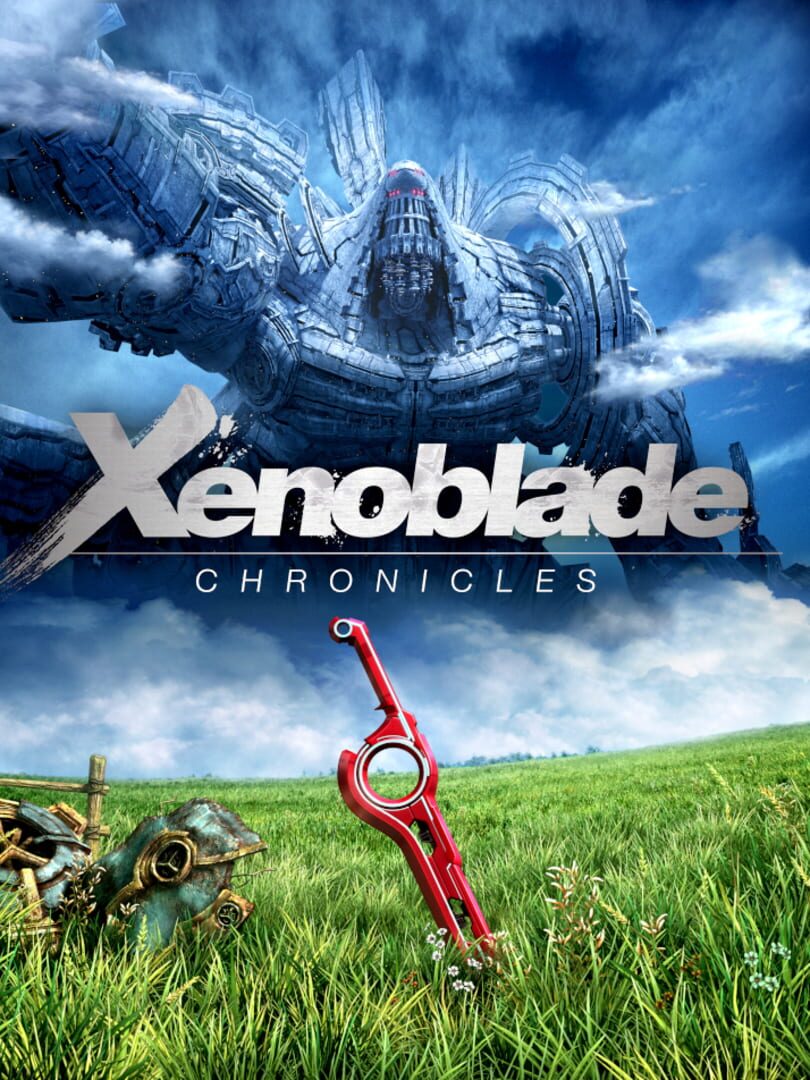
Developed by Monolith Soft and published by Nintendo, Xenoblade Chronicles is a role-playing game released on June 10, 2010, for Wii. Created under the direction of Tetsuya Takahashi, it established the Xenoblade Chronicles series, part of the wider family of Xeno games. Its science-fantasy universe is built around a distinctive idea: two enormous Titans, Bionis and Mechonis, once fought each other before becoming permanently frozen in battle. Civilizations developed upon their bodies, including the Homs living on Bionis, while the Mechon, mechanical enemies originating from Mechonis, threaten their territories. Players follow Shulk, a young mechanic from Colony 9, whose destiny becomes connected to the Monado, a mysterious sword capable of fighting these enemies. The narrative combines adventure and conflict between peoples with questions about destiny, freedom and the possibility of changing the future.
Exploration plays a central role. The world consists of expansive interconnected regions featuring plains, jungles, snowy mountains, marshes and enormous mechanical structures. Different parts of the Titans become explorable territories, giving the adventure a distinctive geographical identity. Players can leave the main story path to discover hidden locations, complete side quests, collect items and confront creatures of widely varying strength. The day-and-night cycle changes the appearance of landscapes, the availability of certain characters and the behavior of enemies. Discovered landmarks also become fast-travel points, making navigation easier as more of the world becomes accessible.
Combat takes place in real time, directly within the environments. Parties contain three combatants, with one controlled by the player while the other two act automatically. Regular attacks are performed when enemies are within range, but special techniques known as Arts must be activated manually and require time to recharge. Their effectiveness depends on positioning, enemy attention and the effects applied during battle. Certain Arts can inflict Break and then Topple, leaving an enemy vulnerable. Chain Attacks allow several characters to coordinate their actions within a single sequence. The Monado introduces another distinctive mechanic: visions of the future warn players about certain dangerous attacks, giving them time to intervene and protect their companions.
Progression also revolves around relationships between characters. The Affinity system develops through battles, quests and interactions between party members. It influences their cooperation, access to personal conversations and the sharing of skills. Each character possesses unique Arts and skill trees, while equipment can be customized through weapons, armor and gems crafted from ether crystals. Relationships between inhabitants of different regions are represented through an Affinity Chart, which changes according to completed quests. This system connects the discovery of the world with an understanding of its communities, extending progression beyond the main storyline.
The artistic direction emphasizes the contrast between the organic landscapes of Bionis and the mechanical architecture of Mechonis. Monumental environments visible from considerable distances reinforce the impression of a world constructed upon two gigantic bodies. The soundtrack brings together Yoko Shimomura, Manami Kiyota, ACE+ and Yasunori Mitsuda, combining orchestral music, piano, electric guitars and vocals. Certain environmental themes have distinct arrangements for daytime and nighttime. This integration of setting, music and cinematic presentation helped establish the identity of the first Xenoblade Chronicles, which later expanded into a larger series.
Key Highlights
- A world built upon two Titans: the civilizations of Bionis and Mechonis inhabit organic and mechanical environments with distinct identities.
- Expansive regions to explore: side quests, hidden locations, powerful creatures and a day-and-night cycle shape the journey.
- Strategic real-time combat: Arts, positioning, enemy attention management and Chain Attacks form the foundations of battle.
- The Monado's future visions: Shulk can anticipate certain attacks and intervene to change their outcome.
- An extensive Affinity system: relationships between companions and inhabitants influence skills, interactions and particular quests.
- Customizable progression: equipment, ether gems, skill trees and Arts allow characters to adapt to different situations.
Conclusion
Xenoblade Chronicles establishes the foundations of a role-playing series combining expansive environments with real-time combat and science-fantasy storytelling. Its world built upon the bodies of two Titans gives exploration a distinctive dimension, while the Monado's visions introduce the possibility of anticipating and changing certain events during battles. Affinity systems, character progression and the importance of music connect gameplay mechanics with human relationships and the central themes of the narrative.
Did You Know?
- The original concept began with a model depicting two giants frozen in battle, imagined by Tetsuya Takahashi and his team before the game's development.
- The project was initially presented under the title Monado: Beginning of the World before being renamed Xenoblade Chronicles.
- The Japanese version was released on June 10, 2010, followed by European and North American releases in 2011 and 2012 respectively.
- The Vision system allows players to warn a companion about an imminent attack by spending part of the Party Gauge.
- The Collectopaedia rewards players for gathering items found throughout the different regions, while the Affinity Chart tracks relationships between their inhabitants.
- The game was adapted for New Nintendo 3DS in 2015 and remastered for Nintendo Switch in 2020 as Xenoblade Chronicles: Definitive Edition. The latter includes the additional Future Connected story, absent from the original release.
- The soundtrack was primarily composed by Manami Kiyota and ACE+, with contributions from Yoko Shimomura and Yasunori Mitsuda, who composed the ending theme Beyond the Sky.
Link graph
Open in the full graphLoading the graph…
Only the strongest links are shown.