In 190 CE, China is descending into chaos. The Han dynasty is collapsing, while the young emperor has become a puppet in the hands of the tyrannical warlord Dong Zhuo. His brutal rule drives the empire further into anarchy. Facing this threat, three heroes bound by an oath of brotherhood gather support. Other warlords from China's great families form a fragile coalition to challenge Dong Zhuo's authority. Yet personal ambitions threaten to destroy their alliance. Amid oaths, betrayals and rivalries, the champions of this turbulent age will determine the future of China.
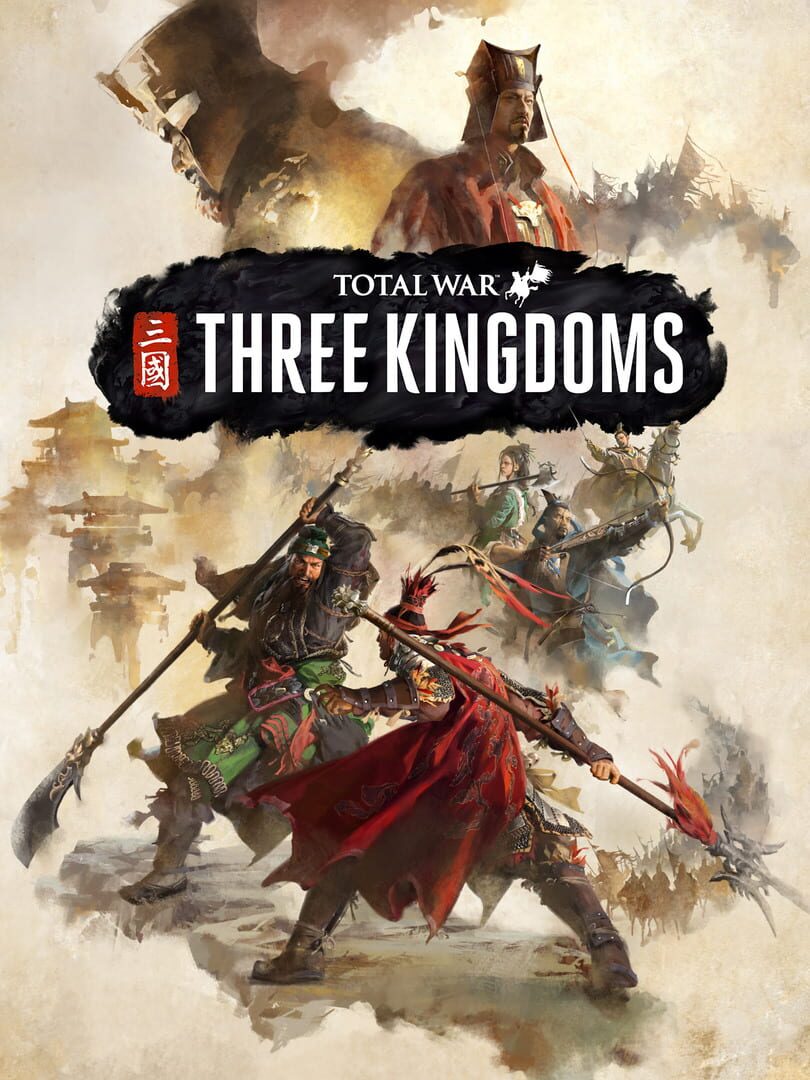
Video game
2019
Action
Historical
Strategy
Tactical
Real-time strategy
Total War: Three Kingdoms
- Creative Assembly Developer
- Sega Publisher
- Sega Games Publisher
In a divided China, alliances can build or destroy empires.
Details
- Type
- Video game
- Release
- May 23, 2019
- Countries
- 🇬🇧 United Kingdom
- Genres
- Action, Historical, Strategy, Tactical, Real-time strategy
- Platforms
- PC, Mac, Linux
- Engine
- TW Engine 3
- Game modes
- Single player, Multiplayer, Co-operative
Synopsis
Total War: Three Kingdoms



Trailer
Watch the trailer
Overview
Presentation
Developed by Creative Assembly and published by Sega, Total War: Three Kingdoms is a strategy game released on May 23, 2019. Set in 190 CE, during the final decades of the Han dynasty, it depicts a China divided by struggles for power. Its setting draws on both the historical events of the period and the novel Romance of the Three Kingdoms, attributed to Luo Guanzhong. Players lead a warlord such as Cao Cao, Liu Bei or Sun Jian, developing territories and competing with rival factions. The traditional Total War formula combines a turn-based campaign with real-time battles, but this installment places particular emphasis on the ambitions and relationships of individual characters.
On the campaign map, players administer commanderies, develop infrastructure, manage income, food supplies and public order, and recruit armies. A system of Reforms gradually unlocks economic, administrative and military advantages. Diplomacy offers detailed options, including trade agreements, territorial exchanges, coalitions, alliances, vassalage and complex negotiations. Each faction also possesses distinctive mechanics. Cao Cao, for example, can use Credibility to influence relations between other powers, while Sun Jian benefits from Heroism earned in battle. Military conquest is therefore not the only way to expand a faction's influence.
The Guanxi system, inspired by Chinese social relationships, is one of the game's defining features. Generals and court members develop friendships, rivalries and enmities according to their personalities, experiences and decisions. Their Satisfaction affects loyalty: a dissatisfied character may leave the faction, sometimes taking military resources with them. Players must consequently manage appointments, promotions and responsibilities. An espionage system also allows agents to infiltrate rival courts, gather intelligence and carry out certain acts of sabotage.
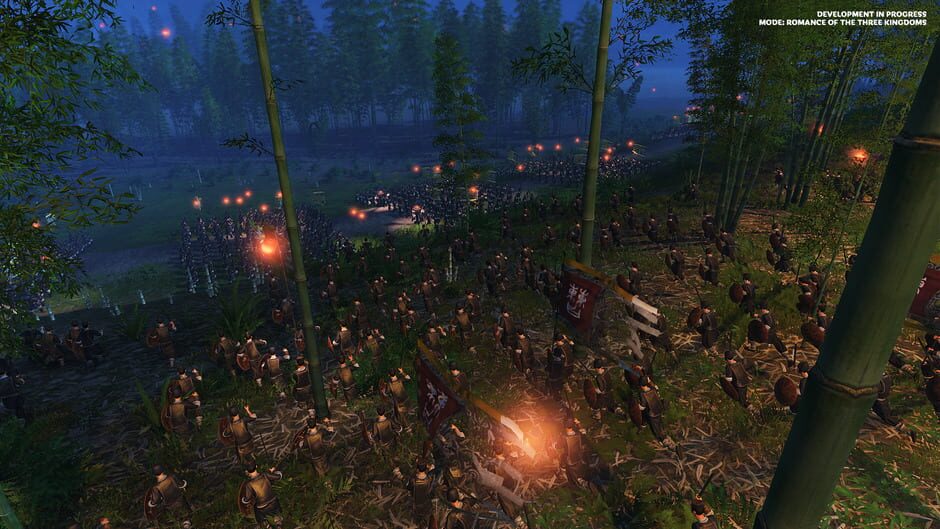
Real-time battles feature infantry, archers, cavalry and siege engines. Each army can include up to three generals, each commanding a retinue of up to six units. The composition of these forces depends partly on the abilities of their commanders. The Wu Xing system of five elements — wood, fire, earth, metal and water — connects character types, units and certain economic developments. Terrain, morale, formations and flanking maneuvers remain essential. In Romance mode, inspired by the novel, generals are exceptionally powerful heroes who can confront rivals in individual duels. Records mode takes a more historical approach: commanders are accompanied by bodyguards, fatigue plays a greater role, and battles emphasize collective military maneuvers.
Personal relationships and diplomatic decisions influence campaigns as much as military operations. Players can establish lasting alliances, negotiate with opponents or attempt to destabilize rival governments. The game also offers competitive and cooperative multiplayer campaigns, alongside battles against other players. Several downloadable expansions subsequently introduced additional factions, periods and campaigns, separate from the content available at the original launch.
Key Highlights
- A campaign set in Three Kingdoms-era China: warlords compete to reunify a divided territory.
- Two strategic layers: turn-based administration and diplomacy combined with real-time tactical battles.
- Expanded diplomacy: coalitions, negotiations, vassalage and political intrigue offer different paths to power.
- The Guanxi system: friendships, rivalries and Satisfaction influence character loyalty.
- Armies organized around generals: each commander leads a personal retinue whose effectiveness depends on individual abilities.
- Two battle styles: Romance emphasizes legendary heroes, while Records offers a more historically grounded approach.
- Political and military development: Reforms, court management and espionage support territorial expansion.
Conclusion
Total War: Three Kingdoms combines military conquest with political management based on alliances and personal relationships. The Guanxi system, faction-specific mechanics and diplomacy give individual characters a significant role in the development of campaigns. The Romance and Records modes provide two approaches to warfare, contrasting legendary heroics with more traditional military command.
Did You Know?
- The base game features twelve warlords, including Liu Bei, Cao Cao, Sun Jian, Yuan Shao and Zheng Jiang. Certain factions require specific conditions to become playable.
- The Wu Xing system is based on five elements: wood, fire, earth, metal and water. It influences character specializations, units and certain buildings.
- An army can contain three generals, each commanding a retinue of up to six units.
- In Romance mode, generals can fight as individual heroes and challenge opponents to duels. In Records mode, they command bodyguard units.
- Guanxi relationships evolve through events and interactions. Low Satisfaction may cause a character to defect to another faction.
- The espionage system allows agents to infiltrate rival factions and potentially occupy important positions, although they may become double agents.
- Diplomacy includes a detailed negotiation system and a feature that helps identify agreements other factions are willing to accept.
- The Eight Princes, Mandate of Heaven, A World Betrayed, The Furious Wild and Fates Divided expansions introduced additional campaigns or content after the base game's release.
Link graph
Open in the full graphLoading the graph…
Only the strongest links are shown.