In the middle of the 16th century, feudal Japan is torn apart by endless warfare. Central authority has collapsed, leaving the country divided among numerous rival clans. Ten legendary warlords struggle for supremacy. Amid conspiracies, fragile alliances and deadly conflicts, each seeks to reunify Japan. Only one will rise above the others and become the new shogun.
Video game
2011
Historical
Simulation
Strategy
Tactical
Real-time strategy
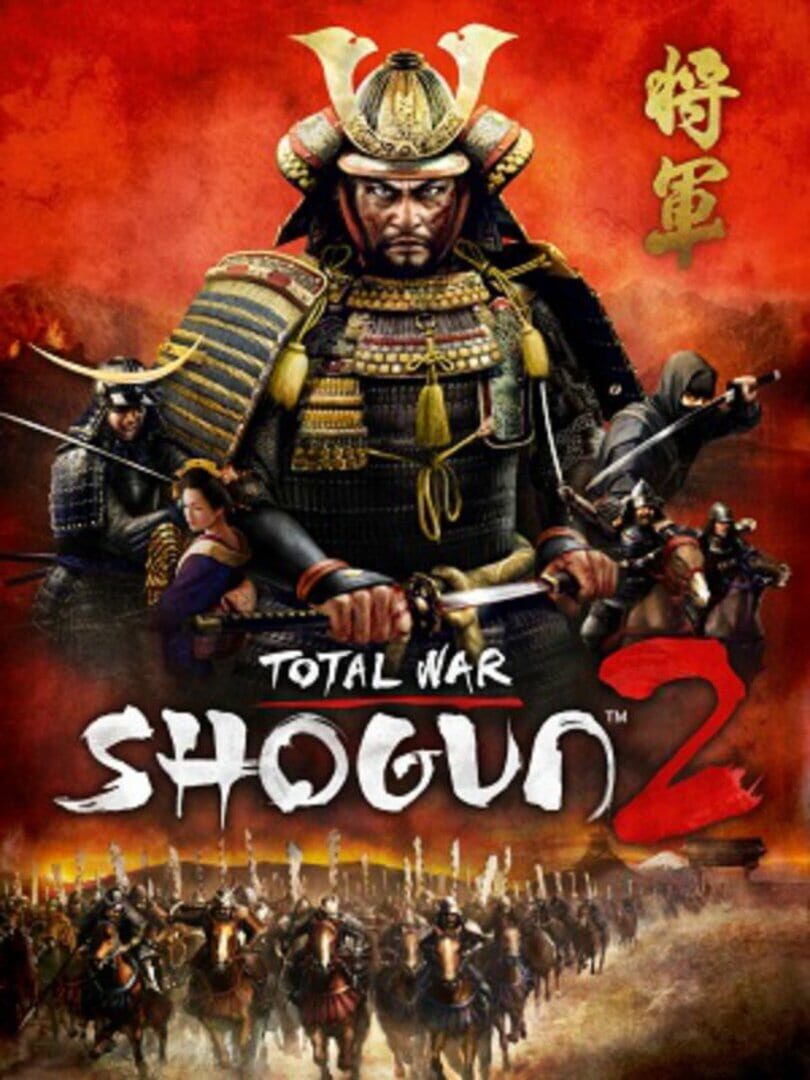
Total War: Shogun 2
- Creative Assembly Developer
- Feral Interactive Publisher
- Sega Publisher
In a divided Japan, every alliance can lead to power or betrayal.
Details
- Type
- Video game
- Release
- March 15, 2011
- Countries
- 🇬🇧 United Kingdom
- Genres
- Historical, Simulation, Strategy, Tactical, Real-time strategy
- Platforms
- PC, Mac, Linux
- Engine
- TW Engine 3
- Game modes
- Single player, Multiplayer, Co-operative
Synopsis
Total War: Shogun 2


Trailer
Watch the trailer
Overview
Presentation
Developed by Creative Assembly and published by Sega, Total War: Shogun 2 is a strategy game released on March 15, 2011. It takes place in Japan during the Sengoku period, an era of conflict between feudal warlords. Players assume the role of a daimyō, the leader of a clan seeking to expand its influence, reunify the country and claim the title of shogun. Among the available factions are the Oda, specializing in ashigaru troops, the Takeda, renowned for their cavalry, and the Shimazu, associated with sword-wielding samurai. Each clan has a different starting position, advantages and challenges. Like other installments in the series, the game combines a turn-based strategic campaign with real-time tactical battles.
Clan management revolves around provinces, castles and economic resources. Players develop farms, markets, ports and military infrastructure while monitoring income, taxation, food supplies and public order. Expanding a castle creates room for additional buildings but also increases food consumption. Progression depends on the Mastery of the Arts, divided between Bushidō, which focuses on military capabilities, and Chi, which develops the economy, administration and agents. Diplomacy allows players to negotiate alliances, trade agreements, political marriages and military access. Ninjas, monks, metsuke and geishas undertake espionage, surveillance and influence operations. The daimyō's honor and generals' loyalty also affect the stability of the clan.
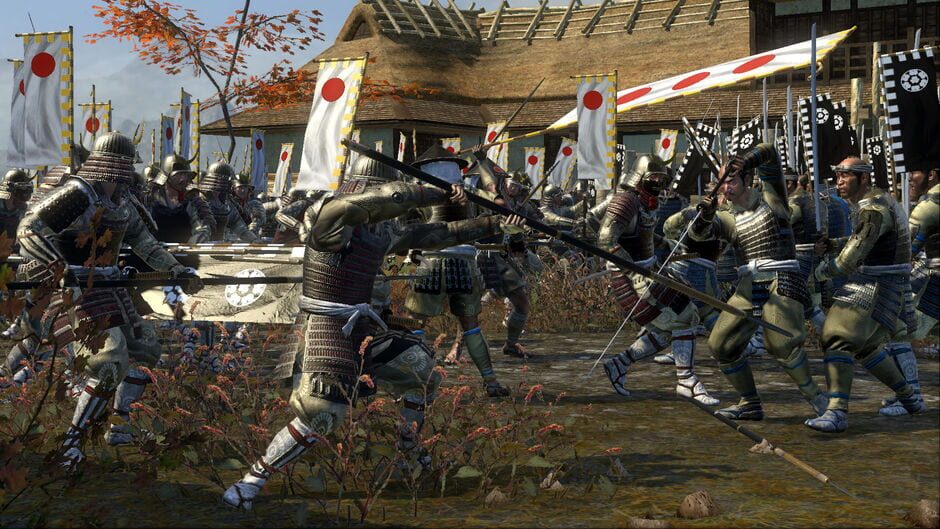
Land battles feature samurai, ashigaru soldiers, archers, spearmen and cavalry. Unit positioning, terrain, weather and morale play essential roles. Spearmen can resist mounted charges, archers weaken enemy formations from a distance, and flanking maneuvers can trigger a rout. Sieges involve attacking or defending multi-layered Japanese castles: assaulting troops can climb certain walls, capture towers and advance toward central defensive positions. Naval battles, fought with Japanese warships, also allow players to control sea routes and protect commerce.
As the campaign progresses, the Realm Divide mechanic can radically alter the political situation. When a clan becomes powerful enough to threaten Japan's existing balance of power, other factions may turn against it, making diplomacy and border defense increasingly important. Multiplayer features include two-player cooperative or competitive campaigns and battles against other participants. Avatar Conquest allows players to create a customized general, develop their abilities and advance across an online conquest map. Two additional campaigns later expanded the game's historical scope: Rise of the Samurai, set during the Genpei War, and Fall of the Samurai, set in the 19th century. Both are separate from the original campaign.
Key Highlights
- A campaign set in Sengoku Japan: rival clans compete to conquer provinces and claim the shogunate.
- Specialized clans: each faction possesses distinct military, economic or political advantages.
- Detailed strategic management: taxation, food supplies, buildings, trade, diplomacy and the Mastery of the Arts shape development.
- Tactical land and naval battles: formations, morale, terrain, sieges and flanking maneuvers determine engagements.
- Developing characters: generals and agents gain experience and improve their skills.
- Realm Divide: the rise of a powerful clan can provoke hostile coalitions and disrupt established alliances.
- Distinct multiplayer experiences: two-player campaigns, online battles and general progression through Avatar Conquest.
Conclusion
Total War: Shogun 2 combines the conquest of feudal Japan with the economic, diplomatic and military management of a clan. Faction specializations, the development of arts and character loyalty influence campaign decisions. The Realm Divide mechanic gradually transforms the political balance of power, while real-time battles allow players to directly command armies during engagements.
Did You Know?
- The original game features nine playable clans in its main campaign. Others, including the Ikko-Ikki, Hattori and Otomo, were introduced through additional content.
- The Mastery of the Arts has two main branches: Bushidō, dedicated to military development, and Chi, focused on economic and administrative improvements.
- Ninjas, monks, metsuke and geishas perform different operations, ranging from sabotage to religious influence and counterespionage.
- Realm Divide occurs when a clan's fame and conquests threaten the shogun's authority, causing diplomatic relationships to deteriorate significantly.
- Sieges allow attacking units to climb walls and capture towers. Castle layouts become more elaborate as their structures are upgraded on the campaign map.
- Avatar Conquest features progression separate from the single-player campaign, including general customization and additional unit unlocks.
- Rise of the Samurai was released as an additional campaign in 2011, while Fall of the Samurai, released in 2012, is a standalone expansion set in a different historical period.
- A new Complete Edition, launched on October 13, 2026, brings together the original game and its additional content in a modernized version. It adds graphical enhancements and more than fifty playable minor factions without replacing the original 2011 edition.
Link graph
Open in the full graphLoading the graph…
Only the strongest links are shown.