From the early Italian campaigns to the Battle of Waterloo, experience two decades of warfare that transform Europe and accompany the extraordinary military career of Napoleon Bonaparte. Whether commanding the famous general's armies or fighting against him, victory is never guaranteed. The course of history depends on your ability to lead your troops and prevail in decisive battles.

Video game
2010
Fantasy
Historical
Strategy
Tactical
Real-time strategy
Total War: Napoleon
- Creative Assembly Developer
- Feral Interactive Publisher
- Sega Publisher
- Typhoon Games Publisher
From Italy to Waterloo, every battle can change the fate of Europe.
Details
- Type
- Video game
- Release
- February 23, 2010
- Countries
- 🇬🇧 United Kingdom
- Genres
- Fantasy, Historical, Strategy, Tactical, Real-time strategy
- Platforms
- PC, Mac
- Engine
- TW Engine 3
- Game modes
- Single player, Multiplayer
Synopsis
Total War: Napoleon

Trailer
Watch the trailer
Overview
Presentation
Developed by Creative Assembly and published in part by Sega, Total War: Napoleon is a strategy game released on February 23, 2010. Following Empire: Total War, it focuses on the French Revolutionary and Napoleonic Wars of the late 18th and early 19th centuries. The game follows several major stages of Napoleon Bonaparte's military career while also allowing players to command opposing powers. It retains the series' defining formula: a turn-based strategic campaign, devoted to territorial administration and army movements, combined with real-time tactical battles.
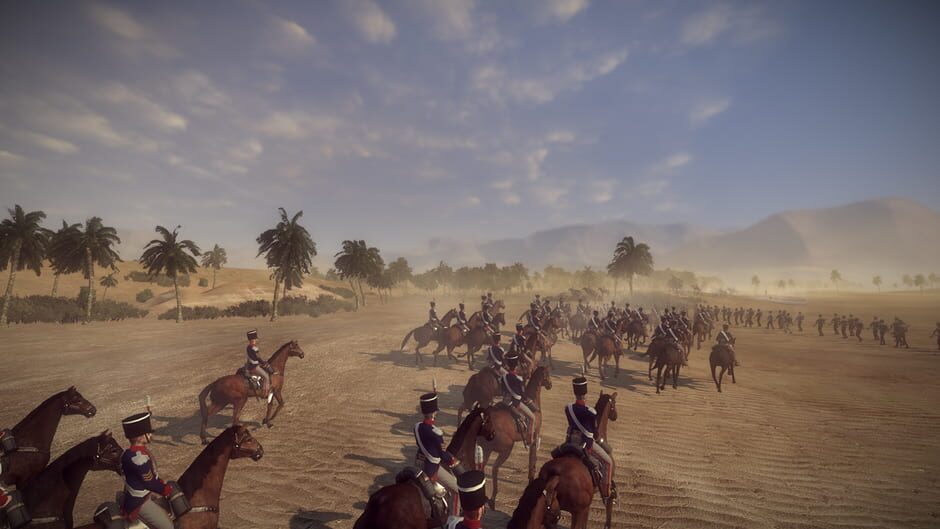
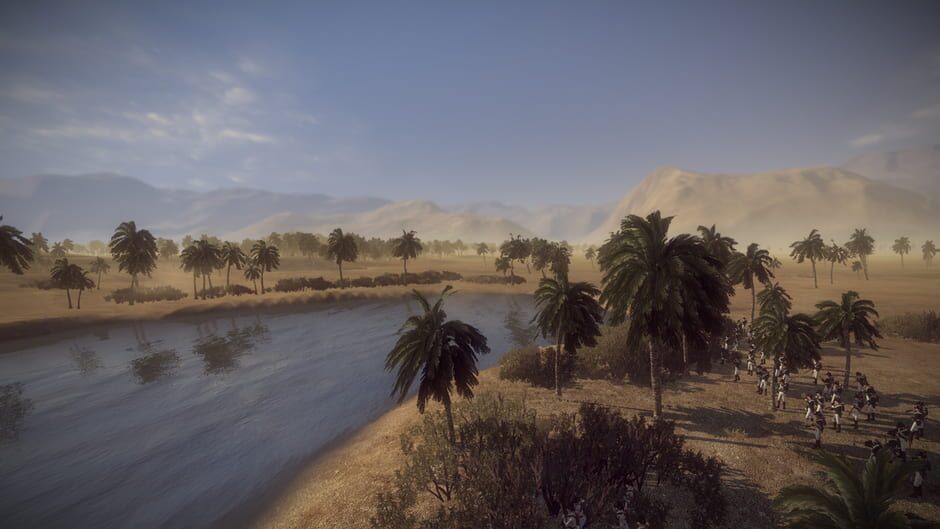
The main campaigns include operations in Italy, the expedition to Egypt and the struggle for control of Europe. The first two follow specific episodes in Bonaparte's career, featuring historical objectives and optional missions. The European campaign offers greater freedom in conquest and diplomacy. The Campaigns of the Coalition allow players to lead powers such as Great Britain, Austria, Prussia or Russia against Napoleonic France. On the strategic map, players develop infrastructure, finance armies, research technologies and negotiate trade or diplomatic agreements. Each turn represents two weeks, placing considerable emphasis on the timing of military operations.
Military management introduces systems of wear and recovery that influence movement. Armies exposed to extreme climates may suffer attrition, particularly in desert regions or during severe winters. Units that have lost soldiers gradually recover their strength in suitable friendly territory, especially near allied positions and supply facilities. This automatic replenishment replaces part of the troop restoration system used in earlier installments. Generals possess individual characteristics that influence their forces, while agents and diplomacy contribute to campaign preparation.
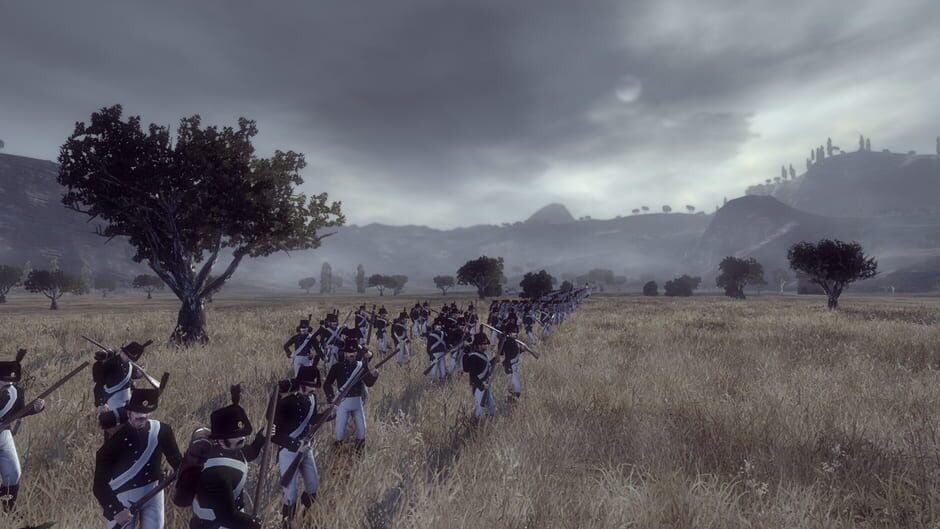
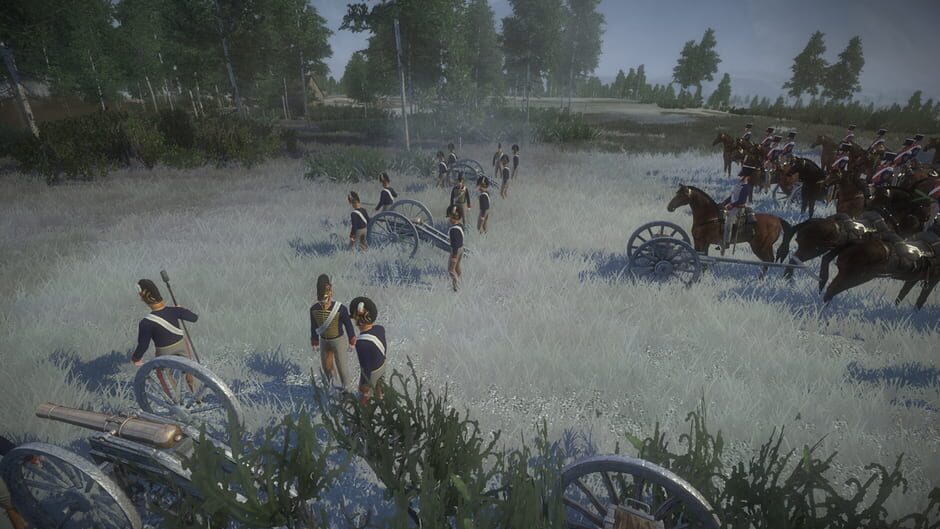
Land battles revolve around commanding line infantry, skirmishers, cavalry and artillery. Formations, charges, morale and terrain determine troop effectiveness. Musketeers must account for reloading times and firing conditions, while artillery can disrupt enemy formations from a distance. Weather also influences engagements: rain can interfere with firearms, and lingering gunpowder smoke can reduce visibility. At sea, players command sailing warships, using positioning, firepower and maneuvering to gain an advantage. Historical battles, including Waterloo, allow famous engagements to be replayed separately from the strategic campaigns.
The game also includes multiplayer battles, two-player campaigns and a drop-in battles system allowing another participant to command the opposing army during certain single-player campaign encounters. Additional content later expanded the experience, notably The Peninsular Campaign, focusing on warfare across the Iberian Peninsula. The Definitive Edition brings together these expansions and several unit packs, some of which were not included in the original release.
Key Highlights
- Strategy centered on Napoleon: campaigns explore his military operations and conflicts against European coalitions.
- Two levels of command: turn-based state management and real-time tactical battles.
- Distinct historical campaigns: Italy, Egypt, Europe and the Coalition powers.
- Army attrition and recovery: climate, losses and gradual replenishment influence military operations.
- Land and naval warfare: infantry, cavalry, artillery and sailing fleets require different tactical approaches.
- Multiplayer engagements: online battles, two-player campaigns and human opponents joining certain single-player encounters.
Conclusion
Total War: Napoleon adapts the series' mechanics to a military era defined by large armies, artillery and European coalitions. Its historical campaigns place particular emphasis on Bonaparte's operations and those of his opponents. Attrition, troop replenishment and weather conditions complement economic and diplomatic decisions, while land and naval battles translate those choices into military engagements.
Did You Know?
- The Italian Campaign begins in 1796, while the expedition to Egypt starts in 1798. Another campaign covers Napoleon's major European conquests.
- The Campaigns of the Coalition allow players to fight Napoleon as Great Britain, Austria, Prussia or Russia.
- Each campaign turn represents two weeks, a shorter time scale than the one used in Empire: Total War.
- Climate-related attrition can cause casualties in deserts or regions experiencing extreme cold, even without direct combat.
- Units can automatically replenish their numbers in certain friendly territories, with supply buildings improving the recovery rate.
- Some important military figures, including Napoleon, can return after being defeated in battle rather than disappearing permanently.
- Historical battles, such as Waterloo, are available separately from the strategic campaigns.
- The Peninsular Campaign expansion adds a campaign set in Spain and Portugal, featuring guerrilla warfare mechanics. The Definitive Edition includes this expansion, Coalition Battle Pack, Heroes of the Napoleonic Wars and Imperial Eagle Pack.
Link graph
Open in the full graphLoading the graph…
Only the strongest links are shown.