In a world devastated by famine, disease and war, a new power is emerging from the vast steppes of the East. Leading an immense force of horsemen, a formidable warrior king approaches. His sights are set on Rome as the ancient world descends into a period of turmoil.

Video game
2015
Action
Fantasy
Historical
Strategy
Tactical
Real-time strategy
Total War: Attila
- Creative Assembly Developer
- Sega Publisher
As empires falter, lands burn and entire peoples migrate.
Details
- Type
- Video game
- Release
- February 17, 2015
- Countries
- 🇬🇧 United Kingdom
- Genres
- Action, Fantasy, Historical, Strategy, Tactical, Real-time strategy
- Platforms
- PC, Mac, Linux
- Engine
- TW Engine 3
- Game modes
- Single player, Multiplayer, Co-operative
Synopsis
Total War: Attila



Trailer
Watch the trailer
Overview
Presentation
Developed by Creative Assembly and published by Sega, Total War: Attila is a strategy game released on February 17, 2015. Its Grand Campaign begins in 395 CE, when the Roman Empire is divided between East and West and numerous peoples are migrating across Europe. Players can command a Roman power, a Germanic kingdom, a nomadic faction or an Eastern empire. Unlike installments primarily focused on territorial expansion, this entry places considerable emphasis on the survival of states and populations. The traditional Total War formula remains intact, combining turn-based political, economic and military management with real-time tactical battles.
The campaign map depicts territories threatened by warfare, disease and gradually deteriorating climatic conditions. Land fertility affects harvests and food production. As conditions worsen, some regions become increasingly difficult to exploit, forcing players to adapt agricultural buildings, expenditure and territorial strategies. Sanitation and public health facilities help control outbreaks of disease, which can affect both settlements and armies. Provincial management also includes public order, religion, income and technological development. For the Roman Empires, retaining existing territories can be as challenging as conquering new ones.
Migratory factions and the Huns use a distinctive horde system. Unlike settled kingdoms, their armies can establish mobile encampments containing buildings, recruitment facilities and economic activities. Migratory peoples may choose to settle in conquered cities and establish territorial kingdoms, while the Huns remain nomadic. The game also allows players to raze conquered settlements or abandon their own cities through a scorched-earth policy. These decisions destroy infrastructure, reduce regional fertility and leave behind devastated territories that require resources to rebuild.
Internal politics plays an important role. A family tree displays members of the ruling dynasty, marriage alliances and potential successors. Characters may be appointed as governors, assigned political offices or involved in intrigues. Players must balance the influence of their ruling family against that of other nobles to limit the threat of rebellion. Governors possess individual abilities and can enact provincial edicts. Diplomatic negotiations and relations between factions complement these systems, while campaign objectives vary according to the power being controlled.
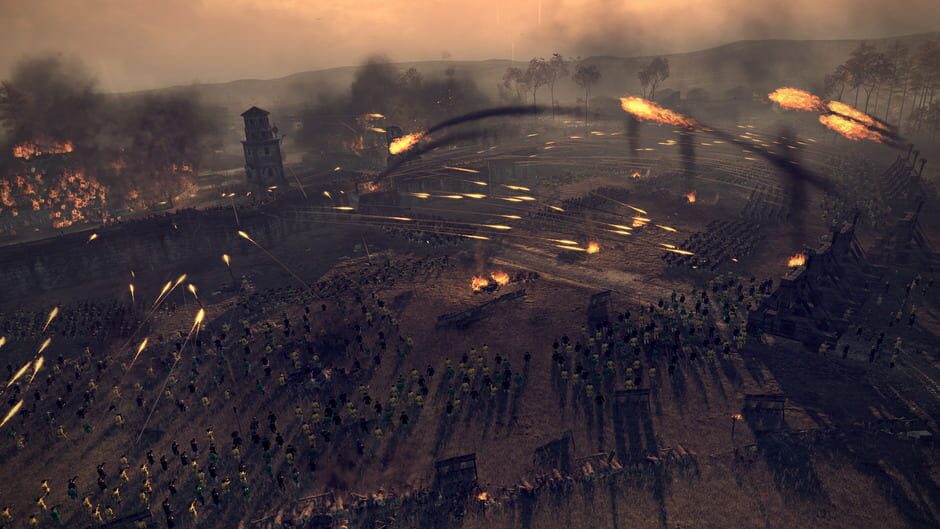
On real-time battlefields, armies include infantry, archers, cavalry and siege weapons. Fatigue, morale, charges and flanking maneuvers strongly influence engagements. Urban battles feature destructive fires: buildings can catch fire, damage persists after combat, and defenders suffer the consequences of their city's destruction. Prolonged sieges gradually weaken fortifications, while defenders can construct barricades in the streets. Naval battles and amphibious operations expand the available military options. The game also supports cooperative or competitive multiplayer campaigns and battles against other players.
Key Highlights
- A campaign set in Late Antiquity: the Roman Empires, migrating peoples and Eastern powers compete in an unstable world.
- Survival-oriented strategy: food supplies, fertility, sanitation and disease complicate territorial administration.
- Nomadic factions: hordes operate through mobile encampments with their own economies.
- Dynastic politics: succession, governors, influence and rivalries can undermine political stability.
- Lasting destruction: burning cities, razed settlements and devastated lands transform the strategic map.
- Tactical battles: morale, fatigue, cavalry, sieges and spreading fires shape warfare.
Conclusion
Total War: Attila places the series' strategic systems within a period marked by migration, economic crises and weakening imperial authority. Horde mechanics, climatic changes and territorial destruction reshape conventional conquest objectives: maintaining a kingdom, protecting its resources or finding new lands become major concerns. Political management and real-time battles complete this portrayal of the transformations of Late Antiquity.
Did You Know?
- The Grand Campaign begins in 395 CE, the year Emperor Theodosius I died and imperial authority passed to his sons in East and West.
- The base game features ten playable factions, including the Western and Eastern Roman Empires, the Huns, Visigoths, Ostrogoths and Sassanid Empire.
- The Huns cannot become a settled faction. Unlike certain other migrating peoples, they retain their horde-based structure.
- A horde in encampment stance can develop economic and military buildings without owning a city.
- Razing or abandoning a settlement reduces the fertility of its region. Ruins can be resettled, but rebuilding requires resources.
- Prolonged sieges gradually damage fortifications. During urban battles, spreading fires can reduce defenders' morale and fighting effectiveness.
- The family tree allows players to manage marriages, heirs, appointments and political intrigues, influencing the faction's internal balance of power.
- The The Last Roman and Age of Charlemagne expansions introduce additional campaigns set in different historical periods. They are separate from the base game.
Link graph
Open in the full graphLoading the graph…
Only the strongest links are shown.