In 1555, in a Japan ravaged by the wars of the Sengoku period and infested with yokai, a half-human, half-yokai mercenary makes a living hunting supernatural creatures. Unable to fully control the powers inherited from their demonic nature, they meet Tokichiro, a spirit-stone merchant capable of helping them master this force. Their partnership eventually brings them into the service of Oda Nobunaga and draws them into the heart of the conflicts reshaping the country. As their fate becomes intertwined with major historical figures, the struggle surrounding spirit stones and yokai forces gradually reveals a threat whose roots extend far beyond the Sengoku era.
Video game
2021
Action
Adventure
Fantasy
Historical
RPG
Hack and slash
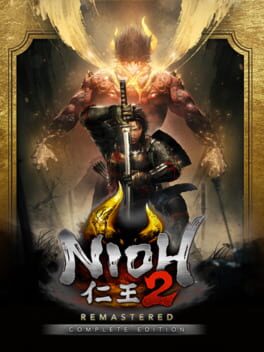
Nioh 2 Remastered: The Complete Edition
Samurai and yokai become one in a brutal journey through war-torn Japan, completed by three voyages into its past.
Details
- Type
- Video game
- Release
- 2021-02-05
- Genres
- Action, Adventure, Fantasy, Historical, RPG, Hack and slash
- Platforms
- PlayStation 5, PlayStation 4, PC
- Engine
- Katana Engine
- Game modes
- Single player, Multiplayer, Co-operative
Synopsis
Nioh 2 Remastered: The Complete Edition

Overview
Presentation
Nioh 2 Remastered: The Complete Edition brings together the entirety of Nioh 2 and its three expansions in a remastered version for PlayStation 5. The adventure retains the demanding action-RPG structure of the original game: exploring dangerous areas, fast-paced combat, equipment collection and the development of a character capable of using both human techniques and yokai powers.
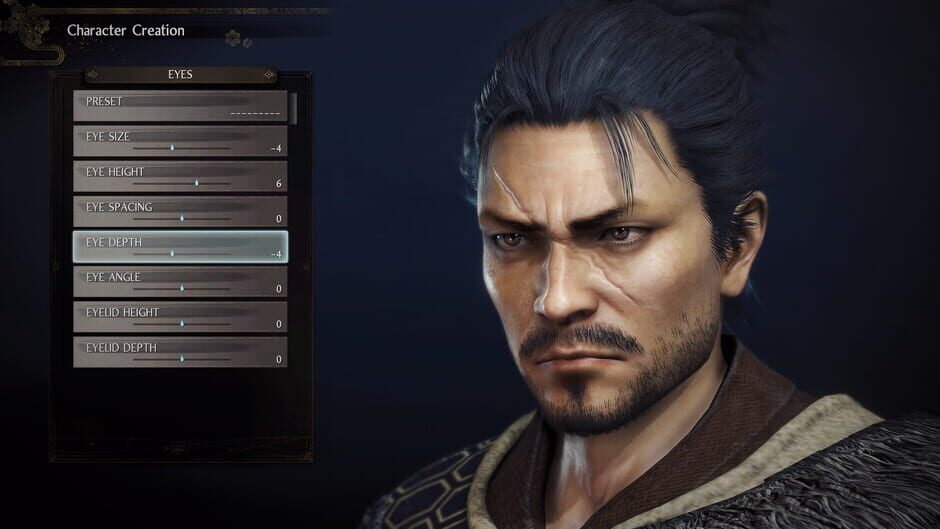
The player creates their own protagonist, a half-human, half-yokai mercenary living in Sengoku-period Japan. Their appearance can be extensively customized, while weapons, armor, attributes and skills allow very different combat styles to be built over time.
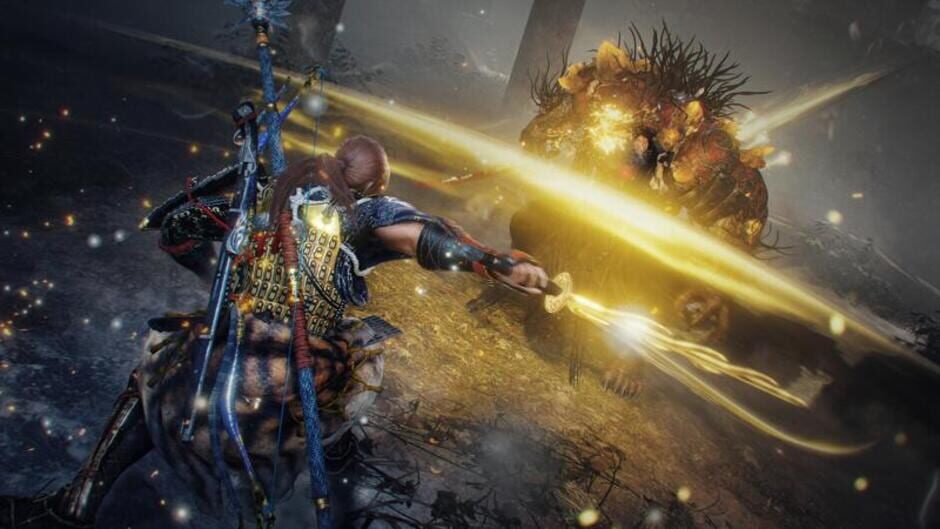
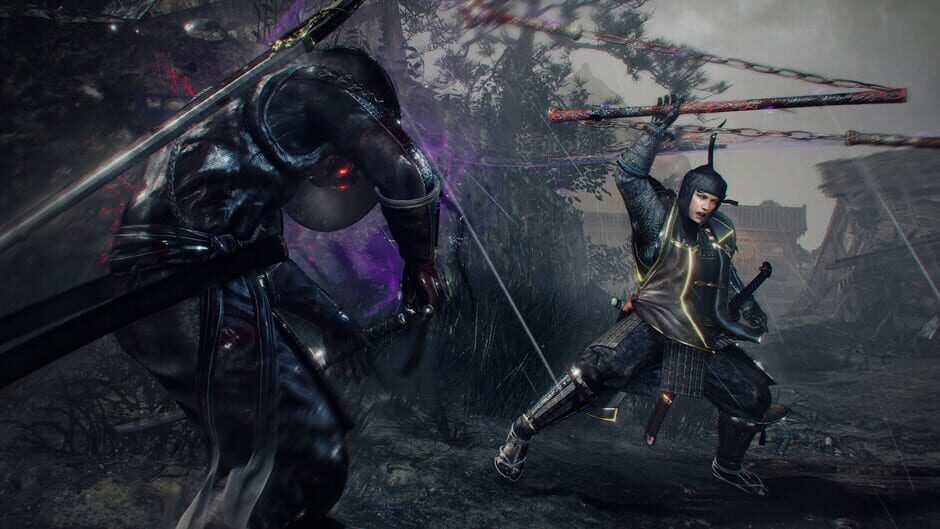
Combat relies heavily on Ki management, a resource used to attack, dodge and defend. The Ki Pulse restores part of the stamina spent after a series of attacks when performed with proper timing. This mechanic works alongside three stances — high, mid and low — that alter reach, speed, power and Ki consumption depending on the weapon being used.
The game features a wide arsenal including katana, dual katana, spears, axes, kusarigama, odachi, tonfa, hatchets and switchglaives. Each weapon category has its own techniques and skill trees, allowing the character to be progressively shaped around specific attacks, counters and combinations.
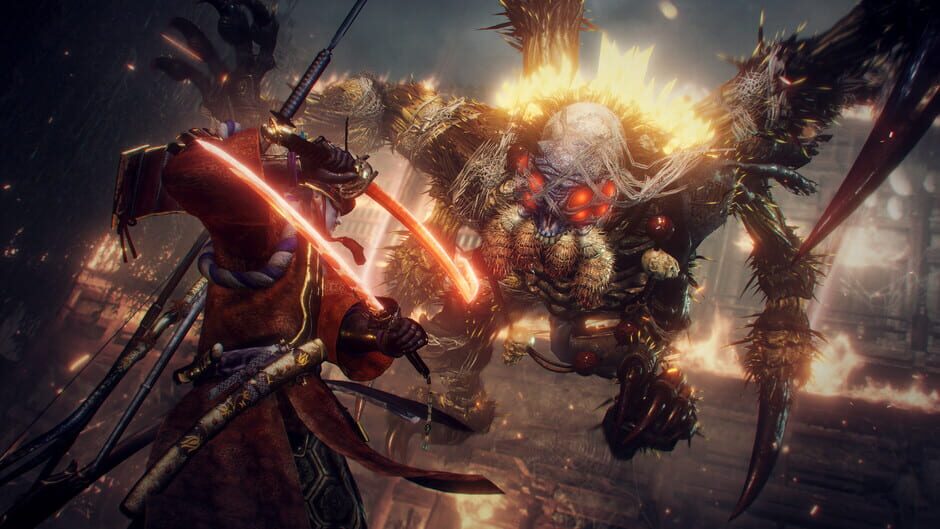
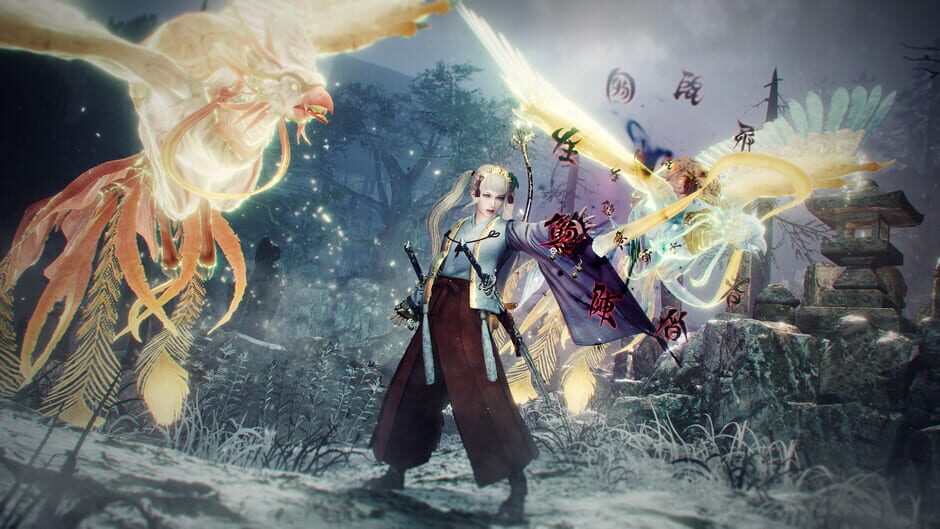
The protagonist's hybrid nature is one of the main differences from the first Nioh. Yokai Shift temporarily allows them to assume a demonic form and use specific attacks. Powerful enemy strikes can also be interrupted with a yokai-based counter, provided it is performed at the correct moment.
Certain defeated yokai drop Soul Cores. Once attuned to a Guardian Spirit, they allow the direct use of abilities associated with those creatures by spending Anima. Supernatural powers are therefore not limited to a temporary transformation: they remain permanently integrated into the character's combat arsenal.
Guardian Spirits also influence combat and contribute to different character builds. They exist alongside Onmyo magic, ninjutsu and the many weapon-based skills, giving progression several complementary layers.
Enemies can create a Dark Realm, a corrupted space where Ki recovery becomes more difficult and yokai grow stronger. Some areas also remain contaminated by this supernatural influence until its source is removed. Mastering Ki and yokai abilities therefore becomes even more important in these situations.
Exploration remains organized around separate missions and regions rather than an open world. Castles, villages, forests, caves and battlefields contain side paths, shortcuts, shrines and optional enemies. Dying causes accumulated Amrita to be left at the place of defeat, where it can be recovered during the next attempt.
Progression also relies heavily on loot. Weapons and armor come in different levels, rarities, effects and bonus combinations. The blacksmith allows some of this equipment to be managed and modified, while additional missions and successive difficulty levels extend character development beyond the main campaign.
The Complete Edition includes all three Nioh 2 expansions. The Tengu's Disciple transports the protagonist to the late Heian period during the conflict between the Genji and Heike clans. Darkness in the Capital travels further back into that era and leads to the ancient capital. The First Samurai explores the beginning of the Heian period and concludes this series of journeys into the past. Together, they expand the story, add new enemies, equipment and combat options, and deepen the origins of several events from the main game.
The game can be played in single-player, but several multiplayer features also allow players to fight together. Visitors can be summoned for assistance, while Expeditions allow missions to be tackled cooperatively while preserving Nioh's demanding combat and progression structure.
Key points
- The remastered and complete PlayStation 5 edition of Nioh 2.
- A demanding action RPG combining samurai combat and supernatural powers.
- A customizable half-human, half-yokai protagonist.
- A combat system built around Ki, Ki Pulse and three stances.
- Numerous weapon categories with their own skills and playstyles.
- Yokai Shift allows temporary transformation into a demonic form.
- Soul Cores grant access to abilities from defeated yokai.
- Guardian Spirits, Onmyo magic and ninjutsu expand character customization.
- The Dark Realm strengthens yokai and disrupts Ki recovery.
- Exploration organized around separate missions and regions.
- Progression strongly tied to collecting and improving large amounts of equipment.
- All three expansions — The Tengu's Disciple, Darkness in the Capital and The First Samurai — are included.
- Playable in single-player and online multiplayer.
- The PS5 version notably offers 4K, up to 120 fps and faster loading on compatible hardware.
Conclusion
Nioh 2 Remastered: The Complete Edition brings the full Nioh 2 experience together in one version. Its combat system preserves the series' demanding focus on Ki, stances and weapon mastery, while greatly expanding the supernatural dimension through Yokai Shift, Soul Cores and the many abilities inherited from defeated creatures.
Customization forms the other major part of the experience. Weapons, armor, skills, Guardian Spirits, ninjutsu and Onmyo magic support very different approaches while preserving a combat system where positioning, timing and knowledge of enemy behavior remain decisive.
The three expansions finally extend the adventure beyond the Sengoku era and use journeys into the Heian period to develop the origins of several major story elements. The remastered edition therefore functions as a complete package containing the main campaign and the entirety of its narrative continuation.
Good to know
Nioh 2 Remastered: The Complete Edition was developed by Team NINJA and published by Sony Interactive Entertainment on PlayStation 5.
This edition was released on February 5, 2021 for PlayStation 5, alongside Nioh 2 – The Complete Edition on PC. The "Remastered" title specifically refers to the next-generation version made for Sony's console.
It includes Nioh 2 and all three expansions: The Tengu's Disciple, Darkness in the Capital and The First Samurai.
The PlayStation 5 version notably supports resolution up to 4K, significantly reduced loading times and a mode capable of reaching 120 frames per second with a compatible display.
Save data from the PlayStation 4 version can be transferred to PlayStation 5, allowing an existing progression to be resumed. Multiplayer also supports cross-generation play between compatible PlayStation versions.
Owners of Nioh 2 – The Complete Edition on PS4 could obtain the complete PS5 version at no additional cost. Owners of the base game could also upgrade Nioh 2 and access on PS5 the expansions they already owned.
Nioh 2 is set mainly from 1555 onward, before the events of the first Nioh. Its protagonist meets Tokichiro before entering the service of Oda Nobunaga, blending historical figures and Japanese mythology in a fantastical reinterpretation of the Sengoku period.