Naruto Shippuden: Ultimate Ninja Storm 2 adapts the second major part of Naruto's story, covering chapters 245 to 450 of the original manga. The main adventure, centered on Naruto Uzumaki, unfolds across eight chapters, including a prologue, and follows the events of this new period in the saga. An additional chapter titled Fragment extends the narrative by revisiting the unsuccessful attempt by Sasuke's group Taka to capture Killer Bee, the jinchuriki of the Eight-Tails.

Video game
2010
Action
Adventure
Fighting
Strategy
Naruto Shippuden: Ultimate Ninja Storm 2
- Bandai Namco Entertainment Publisher
- CyberConnect2 Developer
Join Naruto in his new adventure and face the most formidable ninjas of Shippuden.
Details
- Type
- Video game
- Release
- October 15, 2010
- Countries
- 🇯🇵 Japan
- Genres
- Action, Adventure, Fighting, Strategy
- Platforms
- PlayStation 4, PlayStation 3, Xbox One, Nintendo Switch, PC, Xbox 360
- Game modes
- Single player, Multiplayer
Synopsis
Naruto Shippuden: Ultimate Ninja Storm 2
Glossary terms: 3D, Art direction, Main mission, Subtitles

Trailer
Watch the trailer
Overview
Presentation
Naruto Shippuden: Ultimate Ninja Storm 2 is an action, adventure and fighting game developed by CyberConnect2 and published by Bandai Namco Entertainment. A direct sequel to Naruto: Ultimate Ninja Storm, it adapts the first major story arcs of Naruto Shippuden through an experience combining exploration, storytelling and three-dimensional arena battles. This installment notably expands the cinematic presentation of boss battles, the role of support characters and multiplayer features, while retaining an art direction inspired by the anime.
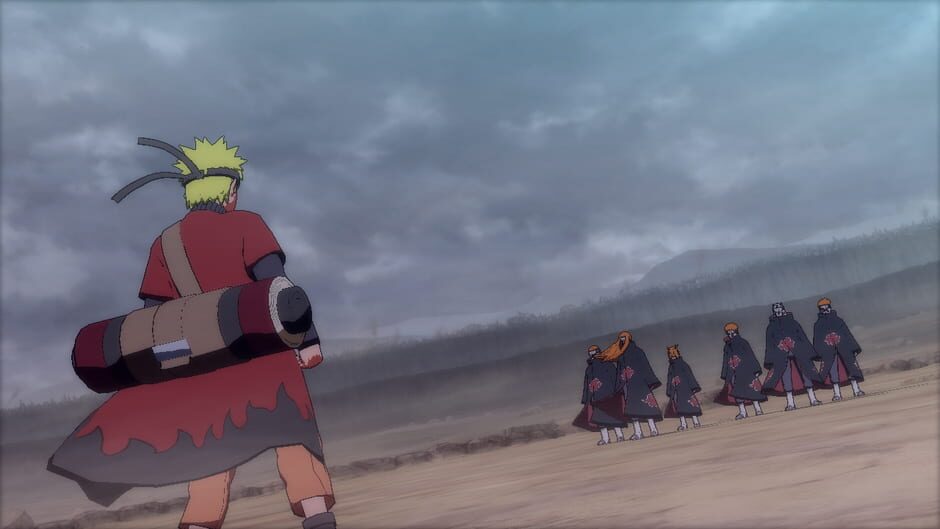
Ultimate Adventure Mode forms the core of the game. It follows Naruto Uzumaki through the events after his return to Konoha, leading to the major confrontations involving the Akatsuki. The story is divided into chapters and alternates between dialogue, exploration, cinematics and scripted battles. Several important characters, including Sasuke Uchiha, Sakura Haruno, Kakashi Hatake and members of the Akatsuki, play central roles throughout the narrative. An additional chapter, Fragment, also allows players to discover an adventure focused on Sasuke and his group Taka.
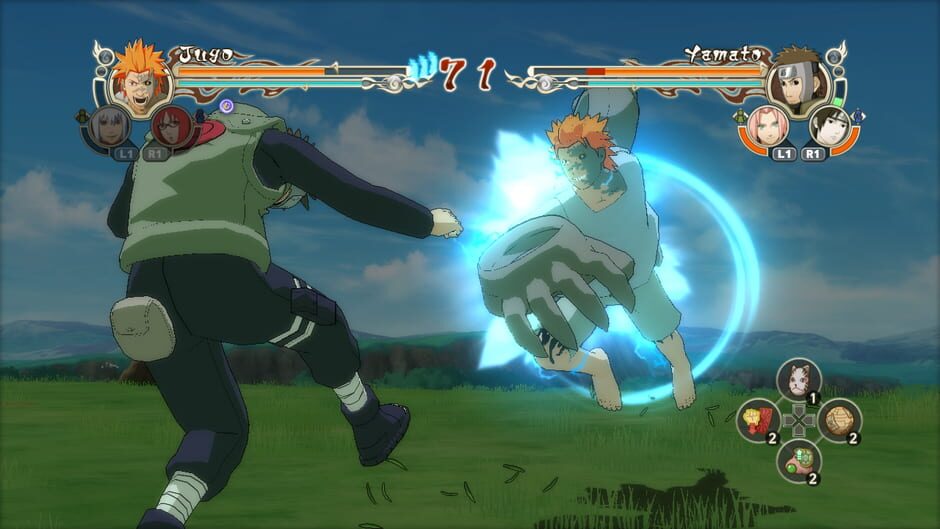
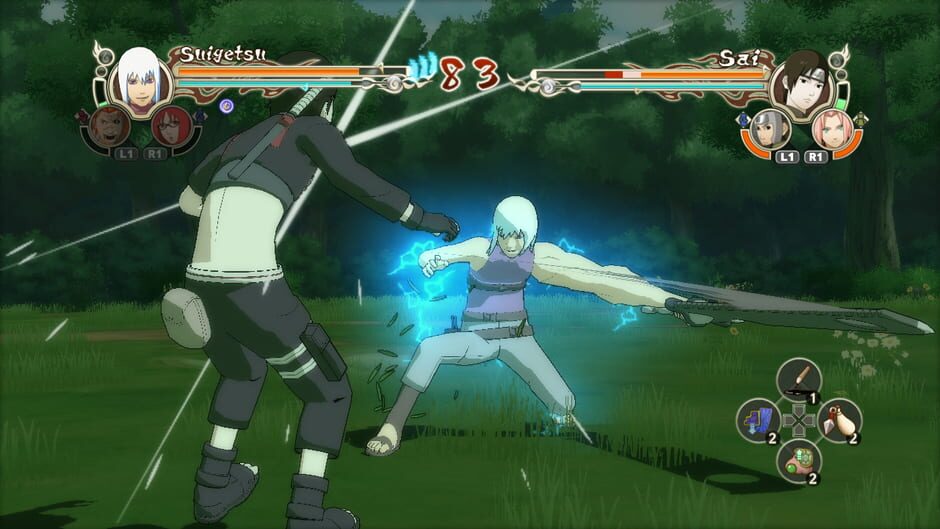
Battles retain the principle of 3D arena combat, allowing characters to move freely around their opponents. The system revolves around close-range attacks, throws, rapid movement and the use of chakra to unleash ninjutsu techniques. Substitutions provide a way to escape certain attacks, while Secret Techniques trigger powerful moves accompanied by spectacular animations. Some fighters can also activate an Awakening Mode, temporarily altering their abilities and fighting style.
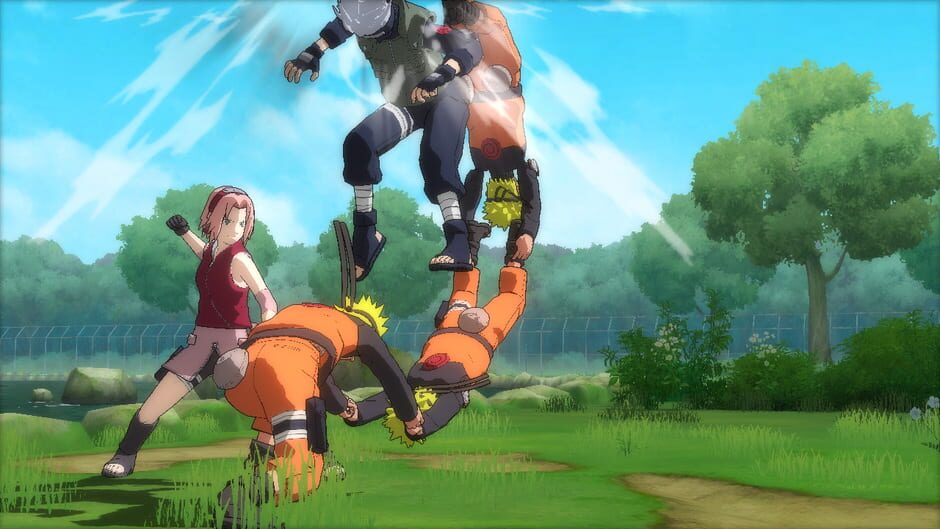
Team composition plays a more important role than in the first installment. Players can select a main ninja and up to two support characters, specializing in offensive, defensive or balanced actions. Using these allies progressively activates the Support Drive system, allowing them to intervene automatically in certain situations. A sufficiently coordinated team can also unleash powerful Team Ultimate Jutsu, combining several characters in a single attack. Choosing the right partners therefore becomes an essential part of combat strategy.
One of the defining features of this installment is its cinematic boss battles. Several major encounters from the story alternate between traditional combat phases, changes in perspective and quick-time events requiring players to press the correct buttons at the indicated moment. Some battles unfold across multiple stages and feature exceptionally large opponents. Successfully completing interactive sequences can also reveal Secret Factors, short additional scenes providing further insight into the characters or events.
Between main missions, players can explore several locations from the Naruto universe, including the Hidden Leaf Village of Konoha, Suna and various natural environments. Unlike the more open exploration of the first Ultimate Ninja Storm, movement primarily takes place through interconnected areas. Players can meet characters, complete side requests, gather materials and purchase items from shops. The game also includes Free Battle and online multiplayer, allowing players to challenge others in casual or ranked matches. This structure combines an extensive narrative campaign with a combat system focused on ninja techniques and teamwork.
Key points
- An action, adventure and 3D arena fighting game adapting the first major story arcs of Naruto Shippuden.
- An Ultimate Adventure Mode campaign organized into chapters, featuring exploration, dialogue and narrative sequences.
- Cinematic boss battles combining multiple combat phases, quick-time events and additional scenes.
- A system built around ninjutsu, chakra, substitutions, Secret Techniques and Awakenings.
- Three-ninja teams, consisting of one main fighter and two support characters.
- The Support Drive system, enabling automatic interventions and Team Ultimate Jutsu.
- Exploration of Konoha and other environments, accompanied by side requests and material gathering.
- Free Battle and online multiplayer, featuring casual and ranked matches.
Conclusion
Naruto Shippuden: Ultimate Ninja Storm 2 continues adapting the Naruto universe by placing greater emphasis on storytelling and the major battles of Shippuden. Its campaign combines exploration and scripted encounters, while boss battles use cinematics and quick-time events to recreate the manga's defining moments.
The evolution of support characters, the introduction of Support Drive and the addition of online multiplayer expand on the possibilities of the first Ultimate Ninja Storm. This second installment therefore combines narrative adventure, spectacular battles and ninja teamwork, while establishing several mechanics carried forward into subsequent games.
Good to know
Naruto Shippuden: Ultimate Ninja Storm 2 was originally released on October 15, 2010, for PlayStation 3 and Xbox 360. It was developed by CyberConnect2 and published by Bandai Namco Entertainment. It was the first main installment in the Ultimate Ninja Storm series to introduce online battles.
Adventure Mode covers chapters 245 to 450 of the Naruto manga, corresponding to a large portion of the early events of Naruto Shippuden. The main story consists of eight chapters, including the prologue, followed by an additional chapter titled Fragment, focusing on Sasuke, the Taka group and their confrontation with Killer Bee.
Boss battles introduce interactive sequences in which players can earn stars by successfully completing quick-time events. Certain performances unlock Secret Factors, consisting of memories or additional scenes that expand the narrative dimension of these encounters.
The Support Drive system is based on three support specializations: Attack, Defense and Balanced. Depending on their role, allies can extend combos, protect the main fighter or use projectiles. Once the shared gauge reaches a sufficient level, certain teams can perform a Team Ultimate Jutsu.
Exploration includes various side requests, notably finding characters, retrieving items and gathering materials used to create ninja tools. Shops also allow players to obtain equipment, while certain activities provide access to rewards and additional character-related content.
Online multiplayer notably introduces Player Matches, dedicated to casual encounters, and Ranked Matches, which are integrated into a ranking system. Players can also quickly search for opponents, choose match settings or create their own sessions.
An HD remastered version was released on August 25, 2017, for PlayStation 4, Xbox One and PC. It is also included in the Naruto Ultimate Ninja Storm Trilogy and Ultimate Ninja Storm Legacy collections. The Trilogy collection subsequently arrived on Nintendo Switch on April 26, 2018, making this second installment available on the console.
The game features Japanese and English voice acting, alongside text and subtitles in several languages, including French and Spanish. The campaign and local battles are available offline, while online multiplayer features require an Internet connection.
Link graph
Open in the full graphLoading the graph…
Only the strongest links are shown.