Presentation
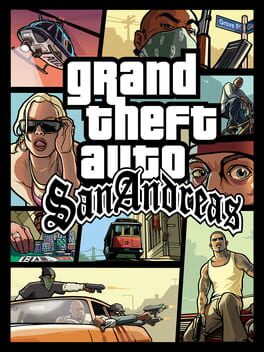
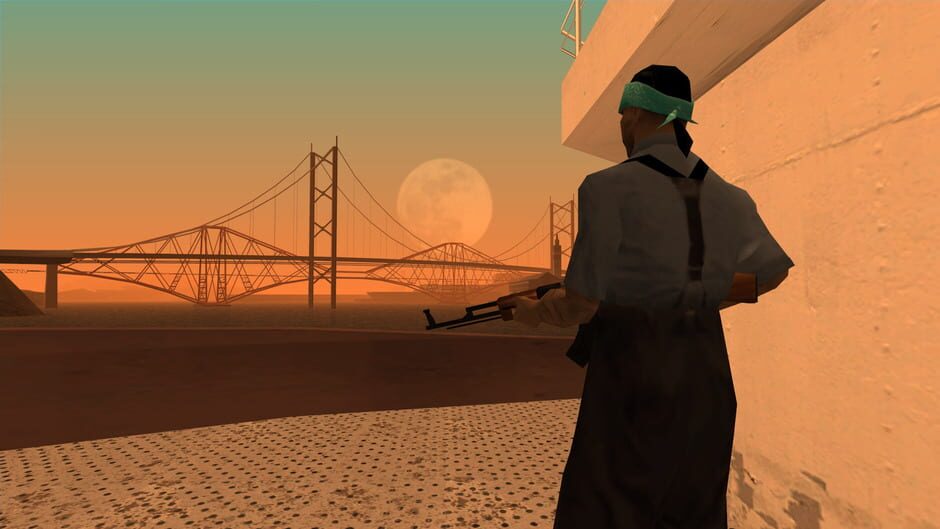
Grand Theft Auto: San Andreas considerably expands the formula developed by Grand Theft Auto III and Vice City. Instead of concentrating the adventure within a single metropolis, Rockstar North builds an entire state made up of three major cities connected by countryside, mountains, small towns and desert regions. Los Santos is inspired by Los Angeles, San Fierro by San Francisco and Las Venturas by Las Vegas, giving each stage of the journey a very different visual and cultural identity.
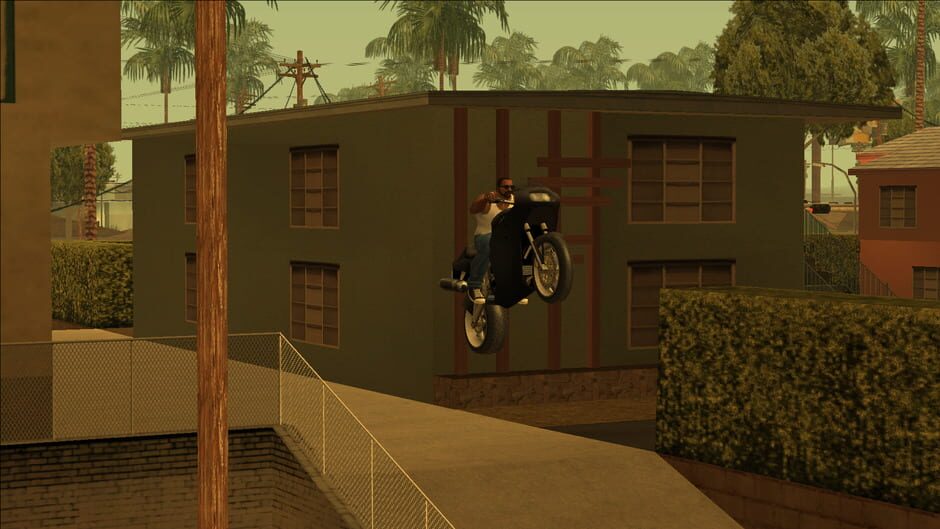
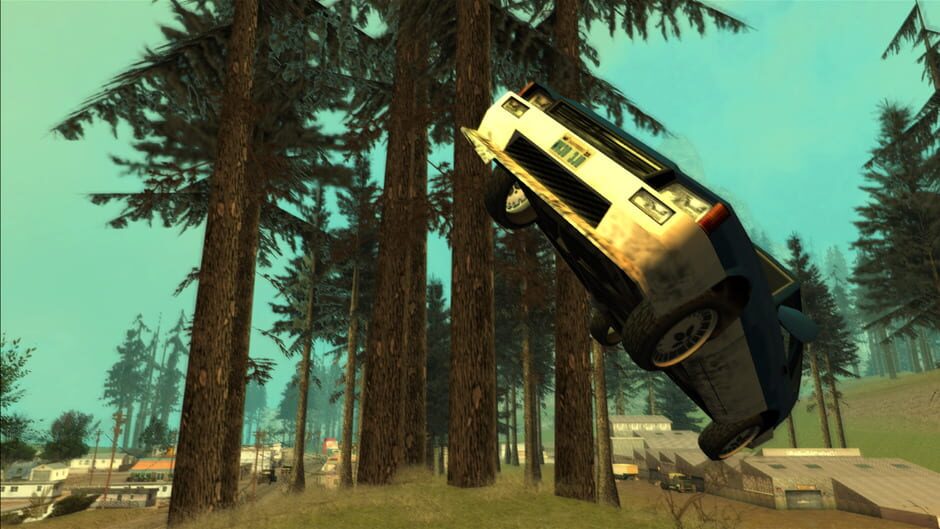
This scale changes the feeling of exploration. Leaving Los Santos to cross the countryside, climb Mount Chiliad, reach San Fierro or spend several minutes driving through the desert gives movement a genuine sense of travel. Cars, motorcycles, bicycles, boats, planes, helicopters and even trains allow the player to cross this space with a freedom that went far beyond the previous entries.
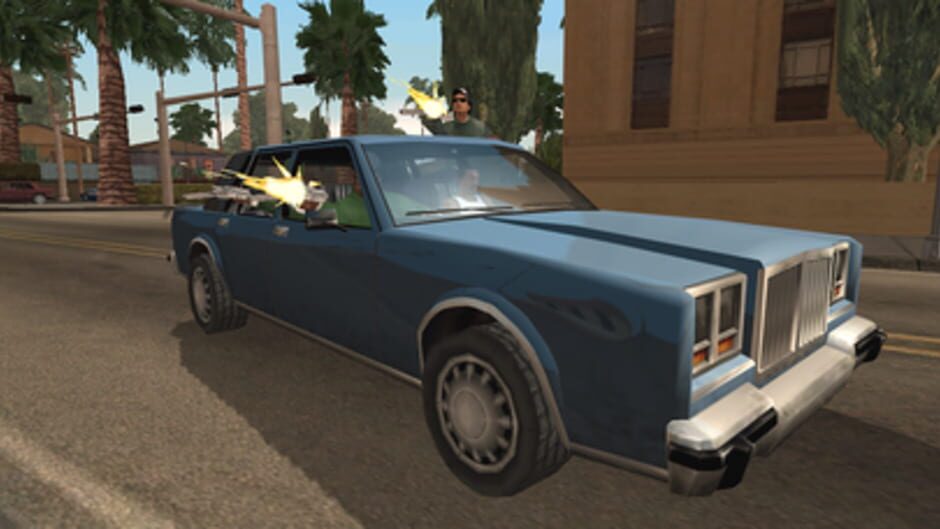
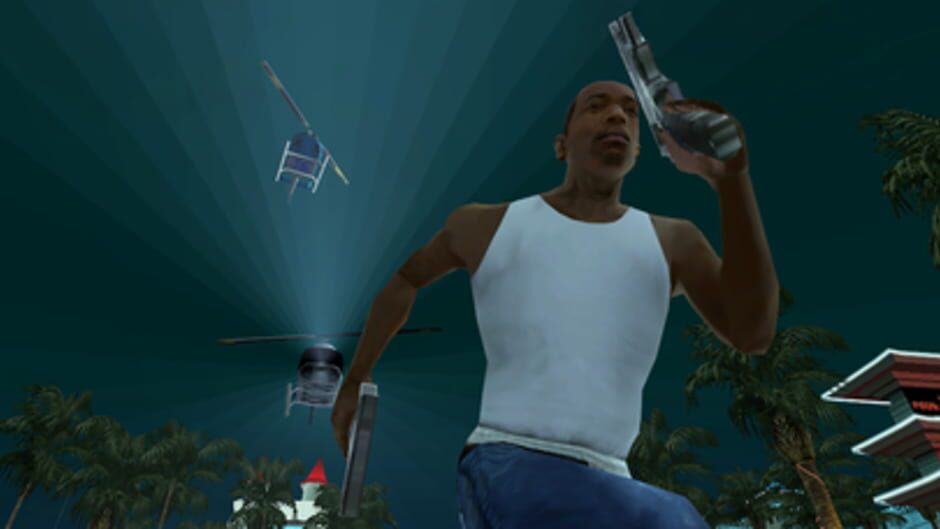
Los Santos initially forms the heart of the story. The city is divided between several gangs, and certain areas can be conquered for Grove Street Families. These battles trigger gang wars in which CJ must survive several enemy waves before the neighborhood changes hands. The map temporarily becomes a direct representation of the balance of power between the different factions.
Character progression also includes elements close to an RPG. Stamina, strength, lung capacity and proficiency with different weapon types improve depending on the player’s actions. Running increases stamina, training builds muscle and regularly using a weapon category gradually improves its handling. Driving, motorcycle and flying skills can also develop.
CJ’s body changes according to his lifestyle. He can gain weight by eating heavily, lose mass through exercise or build muscle in gyms. These transformations affect his appearance and certain physical performances, giving the player unusual control over how the protagonist develops during the adventure.
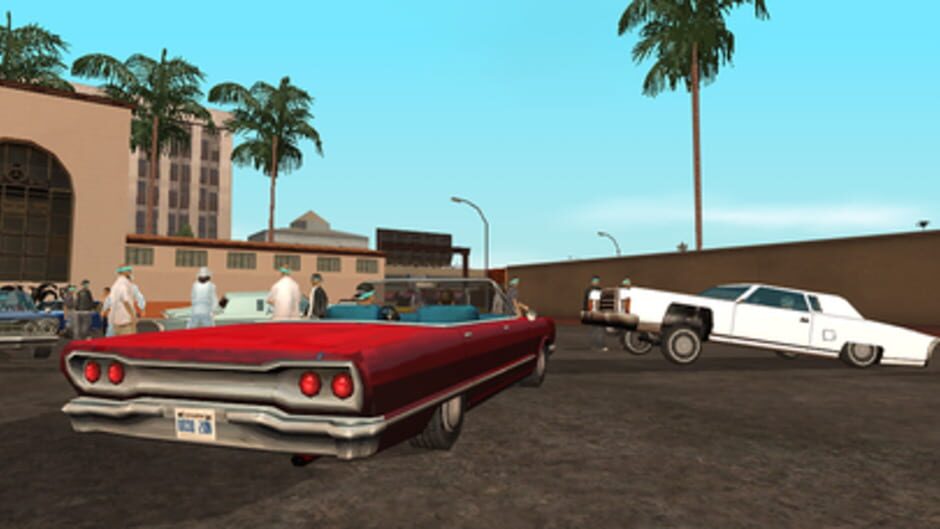
Customization extends to clothing, hairstyles, tattoos and vehicles. Different stores correspond to several styles and price ranges, while certain garages allow cars to be modified with paint jobs, wheels, suspension and body parts. This attention to appearance reinforces the idea that CJ gradually builds his own identity within San Andreas.
The available activities support the same desire for expansion. CJ can visit gyms, play pool, take part in races, gamble, perform vehicle missions, burglarize houses at night or purchase certain properties and businesses. Las Venturas naturally adds casinos and several gambling activities, while driving, motorcycle, boating and flight schools develop mastery of the different vehicles.
Combat remains close to the previous Grand Theft Auto games but gains new possibilities. CJ can lock onto targets, move more freely with certain weapons and learn several close-combat styles. Skill progression also improves some performances, creating a direct link between the time spent using a weapon and its effectiveness.
Mission design benefits greatly from the geographical variety. A gang operation in the streets of Los Santos can be followed a few hours later by a countryside race, an infiltration sequence, an aircraft theft or a mission linked to the casinos of Las Venturas. This variety allows the game to regularly refresh its situations despite a particularly long campaign.
The story uses this expansion to develop CJ. He begins as a man returning almost reluctantly to a neighborhood he had left behind and gradually becomes capable of managing garages, properties and far more ambitious operations. His rise never completely separates him from Grove Street, however: his relationship with Sweet continues to remind him that personal success does not automatically solve his family’s problems.
Big Smoke, Ryder and especially Frank Tenpenny give the story a more political dimension. Gang wars are tied to drug trafficking, while C.R.A.S.H. presents a police force capable of exploiting that violence to protect its own interests. Tenpenny, voiced by Samuel L. Jackson, repeatedly uses CJ while remaining sufficiently protected by his position to avoid the immediate consequences of his actions.
The period is also essential to the game’s identity. Set in 1992, it draws on West Coast hip-hop culture, Los Angeles social tensions, gangs, police corruption and several references to early-1990s America. Radio stations cover hip-hop, funk, rock, country, house and several other genres, giving every journey a strong musical identity.
The whole experience remains deeply satirical. Radio, advertisements, secondary characters and side activities mock consumerism, media, conspiracy theories, the entertainment industry and the American fascination with money. This absurdity coexists with a more serious family story, allowing the game to constantly alternate between caricature and crime drama.
What to remember
- An open world representing an entire state, with Los Santos, San Fierro and Las Venturas connected by countryside, mountains and desert.
- Carl “CJ” Johnson returns to Los Santos in 1992 after his mother’s death and finds Grove Street Families in decline.
- Gang wars allow the player to capture and defend certain territories for Grove Street.
- A statistics system improves stamina, strength, weapon proficiency, driving, motorcycle and flying skills according to the player’s actions.
- CJ’s weight and muscle can change, while clothing, hairstyles, tattoos and vehicles offer extensive customization.
- A large number of activities and vehicles accompany a campaign that regularly changes setting and mission type.
- Frank Tenpenny and the C.R.A.S.H. unit place CJ’s journey within a story involving crime, drug trafficking, gangs and police corruption.
- An entry that pushes the scale and variety of the 3D Grand Theft Auto formula exceptionally far.
Conclusion
Grand Theft Auto: San Andreas impresses first through the sheer amount of material it tries to bring together. Rockstar North no longer offers only an open city: CJ’s journey crosses three metropolitan areas, several rural environments and a desert while gradually introducing new activities, vehicles and organizations.
This scale remains effective because it accompanies the protagonist’s development. CJ begins by trying to repair the situation in Grove Street before being driven away from Los Santos and discovering opportunities far beyond his old neighborhood. The garages of San Fierro, operations in the desert and casinos of Las Venturas give his rise a concrete dimension without erasing the family conflict that brought him back to San Andreas.
Statistics and customization reinforce this sense of ownership over the character. Watching CJ change physically, improve with weapons or gradually become a better pilot gives progression a presence that the other entries in the 3D trilogy explore far less. Some mechanics can feel rudimentary or require repetitive actions, but together they give the world a remarkable variety of interactions.
The game’s size naturally creates some inconsistencies. Certain activities remain superficial, mission quality varies and the controls retain several limitations typical of their era. The enormous number of systems does not mean that each one has great depth. Their appeal comes mainly from their coexistence within the same journey.
That combination explains the distinctive place of San Andreas. Behind its enormous catalogue of activities lies an adventure structured around CJ’s return, his displacement and his gradual reclaiming of a place within his own environment. The game turns the freedom associated with Grand Theft Auto into a genuine journey across an entire state, while making that geography one of the main engines of its story.
Good to know
- Grand Theft Auto: San Andreas was developed by Rockstar North and published by Rockstar Games.
- The original game was released on October 26, 2004, for PlayStation 2 before being adapted for Xbox and PC.
- The story takes place in 1992 and follows Carl “CJ” Johnson after his return to Los Santos.
- The state of San Andreas contains three major cities: Los Santos, San Fierro and Las Venturas.
- The game greatly expands CJ’s customization through physical statistics, clothing, hairstyles, tattoos and different fighting styles.
- Samuel L. Jackson provides the voice of Frank Tenpenny, a corrupt officer in the C.R.A.S.H. unit.
- Grand Theft Auto: San Andreas – The Definitive Edition is included in Grand Theft Auto: The Trilogy – The Definitive Edition, released in 2021 alongside Grand Theft Auto III and Grand Theft Auto: Vice City.