Overview
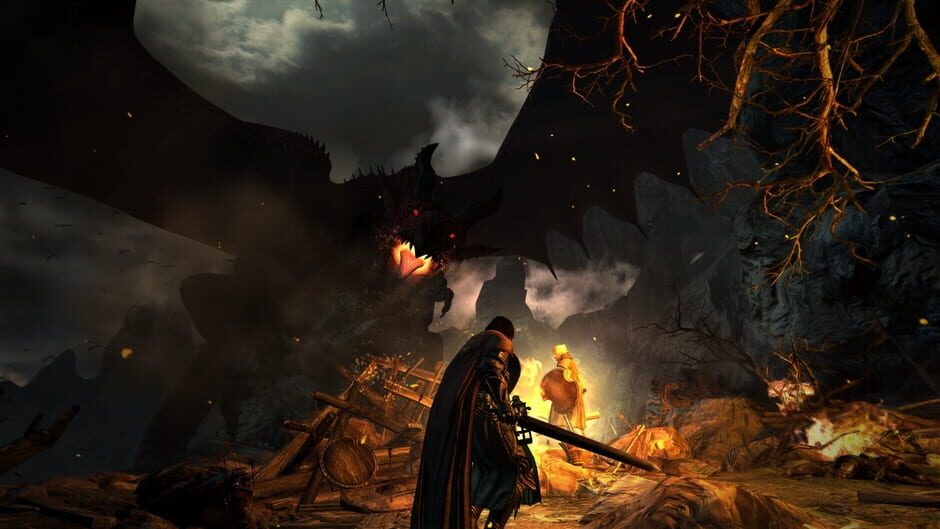
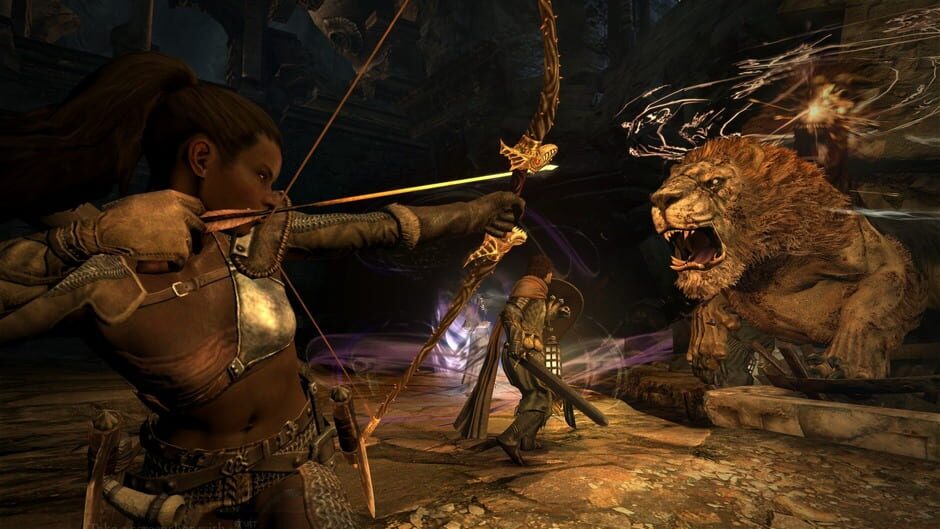
Dragon's Dogma builds its action RPG around a party of four characters and a combat system that allows direct physical interaction with large creatures. The Arisen can fight on the ground, attack from a distance, use magic or climb directly onto monsters to reach specific parts of their bodies and exploit their weaknesses.
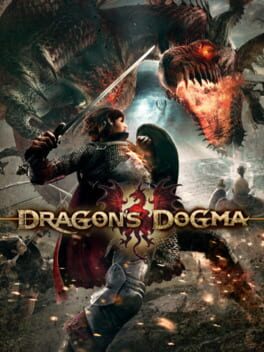
Developed and published by Capcom, the game was first released on May 22, 2012. This original version was released on PlayStation 3 and Xbox 360. It uses the MT Framework and is played primarily solo, while integrating network features connected to the Pawn system.
The main character can be built around several vocations that determine equipment, skills and combat style. Approaches range from close-range combat to ranged attacks and magic, with vocations capable of specializing further or combining multiple orientations.
The system offers a total of nine vocations, each with its own skills. Changing vocation therefore plays an important role in progression: switching class changes the available weapons, usable abilities and the role performed within the party.
One of the game’s most important features remains the Pawn system. The Arisen creates a fully customizable main Pawn and can then complete the party with two additional companions. These characters are controlled by artificial intelligence and fight autonomously alongside the player.
Pawns do more than simply add extra fighters. They develop knowledge about enemies, locations and certain quests, then use that information to warn the player, suggest tactics or draw attention to elements within the world.
The network gives this system a particular dimension without turning Dragon's Dogma into direct cooperative play. Pawns created by other players can be recruited through the Rift, while the main Pawn can itself be hired into other users’ games and return with new knowledge or rewards.
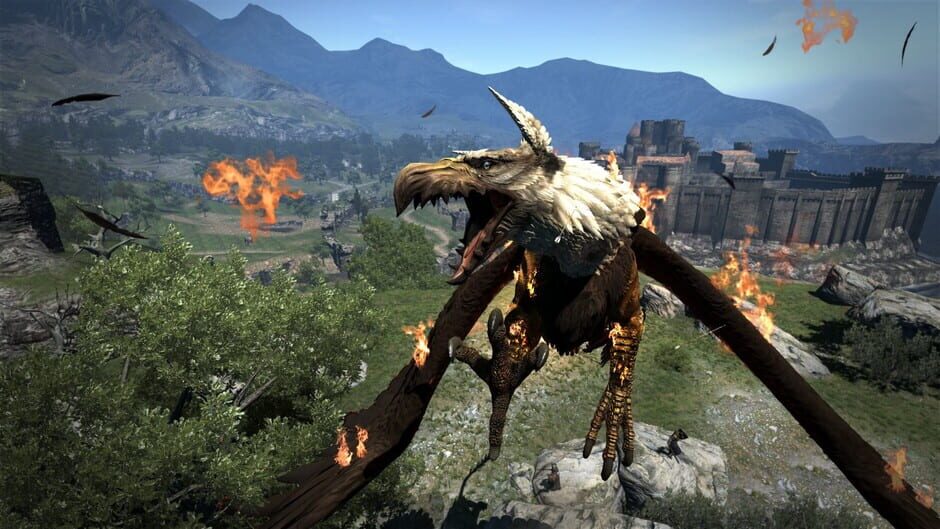
Combat against large creatures notably stands out through the ability to climb them freely. The player can cling to a cyclops, hydra, griffin or other monsters in order to directly reach a particular area of their body rather than waiting for a predefined sequence.
Physical weaknesses therefore play a concrete role. Certain creatures can be staggered, deprived of some of their abilities or attacked from a more favorable position by targeting a head, wings or another vulnerable area.
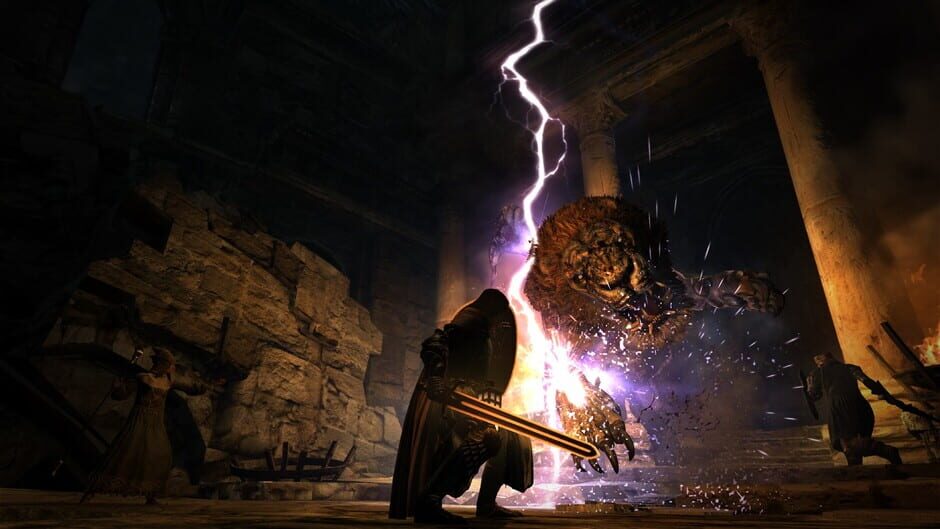
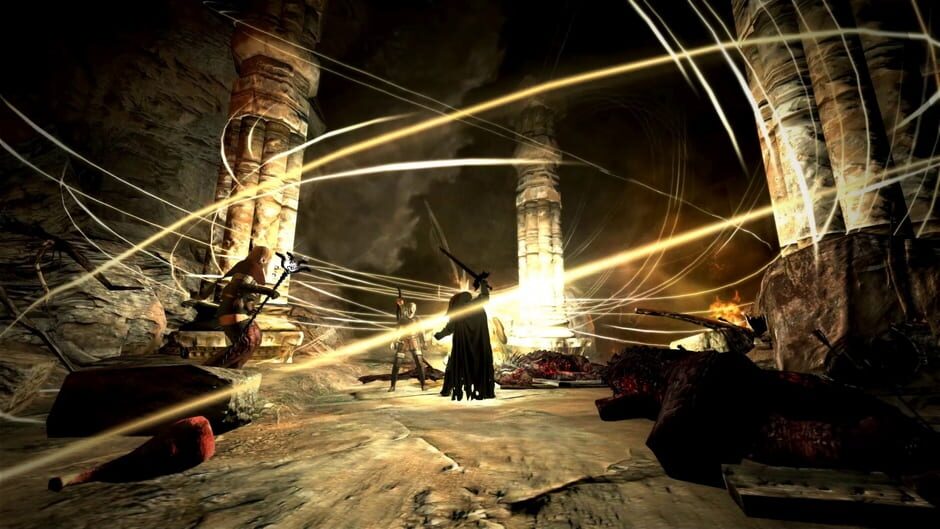
Magic follows the same spectacular logic. Specialized vocations can prepare spells whose casting takes time but produces far greater effects once completed. The rest of the party can then protect the caster during preparation or exploit the effects created.
Encounters also rely on stamina. Running, performing certain techniques or remaining attached to a large creature consumes this resource, requiring the player to consider the remaining reserve before extending a risky action.
Exploration of Gransys connects villages, roads, plains, forests, fortifications and dungeons. Travel takes place directly through the world and regularly exposes the party to monsters or other dangers, giving the journeys themselves an important role in the adventure.
The party then allows roles to be distributed: one fighter can draw a creature’s attention, a ranged character can target a difficult-to-reach area, a mage can prepare a spell and another member can exploit an identified weakness. Pawn composition therefore directly changes how the same encounter can be approached.
Dragon's Dogma therefore combines direct action with group organization. The player controls only their own character, but vocation choices, party composition, knowledge acquired by Pawns and the physical reactions of monsters constantly involve the other members of the team.
Key takeaways
- The adventure takes place in Gransys and follows an Arisen whose heart was torn out by the Dragon.
- The player travels with a customizable main Pawn and two additional Pawns.
- Pawns are controlled by AI and can acquire knowledge about enemies, locations and quests.
- Pawns created by other players can be recruited through the network without turning the game into direct cooperative play.
- The progression system includes nine vocations with different weapons and skills.
- Large creatures can be climbed directly during combat.
- Monster weaknesses can be exploited through positioning, equipment and party composition.
- Stamina notably affects movement, certain combat actions and climbing creatures.
Conclusion
Dragon's Dogma organizes much of its identity around the relationship between the Arisen and the Pawns. Party composition does more than distribute damage: the companions’ skills, knowledge and behavior change how each encounter can be approached.
The ability to climb directly onto large creatures also gives combat a distinctive physical dimension. Size, positioning and anatomy become exploitable elements alongside character stats and vocation abilities.
Vocations, Pawns and interactive monsters therefore come together in a system where progression is not limited to increasing the hero’s statistics. It also comes through building the party, acquiring new abilities and developing a better understanding of the creatures encountered across Gransys.
Good to know
- Dragon's Dogma was first released on May 22, 2012.
- The game was developed and published by Capcom.
- The original version was released on PlayStation 3 and Xbox 360.
- The engine used is MT Framework.
- Dragon's Dogma is an open-world fantasy action RPG.
- The adventure is played primarily solo, with network features connected to Pawns.
- The system offers nine vocations that can significantly change the combat style.
- Its distinctive mechanics notably include Pawns, monster climbing and directly exploiting their weaknesses.