In Divinity: Original Sin, become a young Source Hunter tasked with ridding the world of those who practice the most dangerous forms of magic. When you begin what should have been a routine murder investigation, you uncover a conspiracy whose consequences could threaten the very fabric of time.

Video game
2014
Adventure
Fantasy
Historical
RPG
Tactical
Puzzle
Open world
Indie
Divinity: Original Sin
- Larian Studios Developer
- Larian Studios Publisher
A simple investigation could challenge the very laws of time.
Details
- Type
- Video game
- Release
- June 30, 2014
- Countries
- 🇧🇪 Belgium
- Genres
- Adventure, Fantasy, Historical, RPG, Tactical, Puzzle, Open world, Indie
- Platforms
- PC, Mac
- Engine
- Divinity Engine
- Game modes
- Single player, Multiplayer, Co-operative
Synopsis
Divinity: Original Sin
Trailer
Watch the trailer
Overview
Presentation
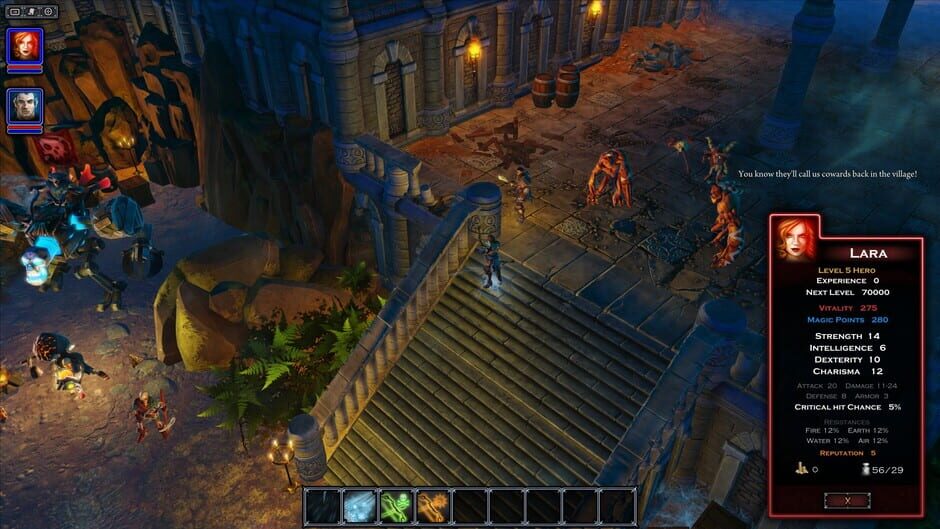
Developed and published by Larian Studios, Divinity: Original Sin is a role-playing game released on June 30, 2014. Set within the fantasy universe of Divinity, it returns to the foundations of classic RPGs: exploration, branching dialogue, character development and strategic turn-based combat. The adventure begins in the region of Cyseal, where two Source Hunters are sent to investigate a suspicious murder. These agents are responsible for monitoring the use of forbidden magic, whose dangers gradually extend beyond the scope of their original assignment. Players create both protagonists, select their attributes and shape their personalities through their decisions. Their conversations can reveal disagreements, giving the relationship between the two characters a distinctive role in the adventure.
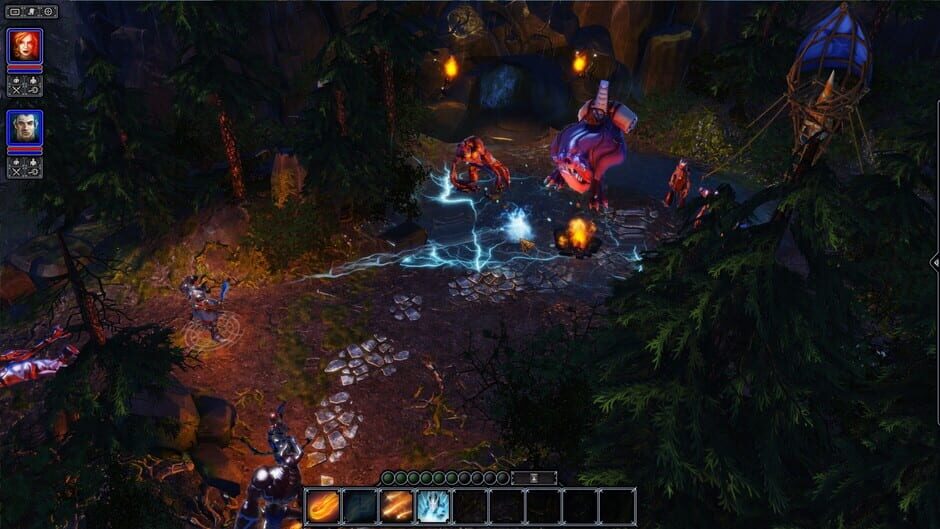
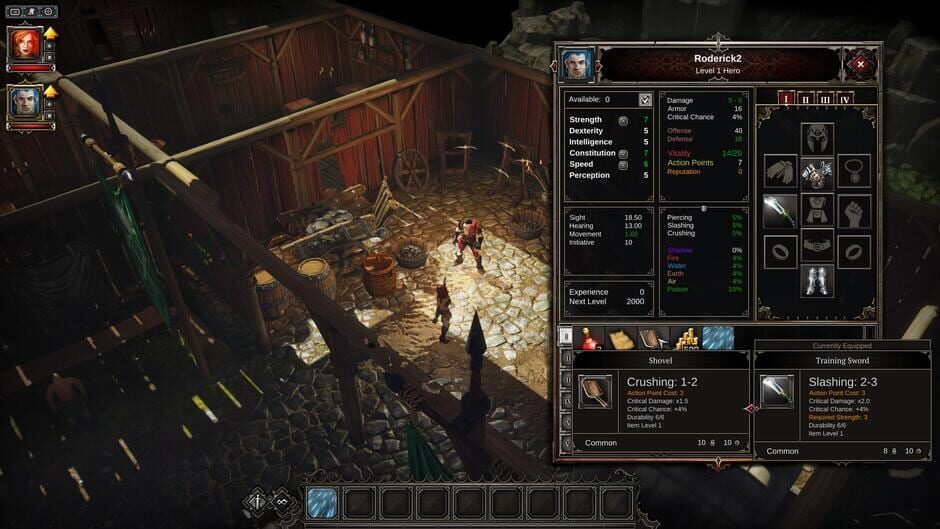
Battles use a tactical turn-based system in which each combatant has action points to spend on movement, attacks, items or spells. Environments become strategic tools: a pool of water can conduct electricity, an oily surface can catch fire, and certain conditions allow areas to be frozen or poisoned. Elemental effects can combine, affect multiple enemies or endanger allies. Positioning, initiative and resource management therefore directly influence the outcome of encounters. Character progression offers considerable freedom through attributes, talents and different schools of abilities, allowing players to develop warriors, mages, archers or versatile adventurers without being locked into permanent classes.
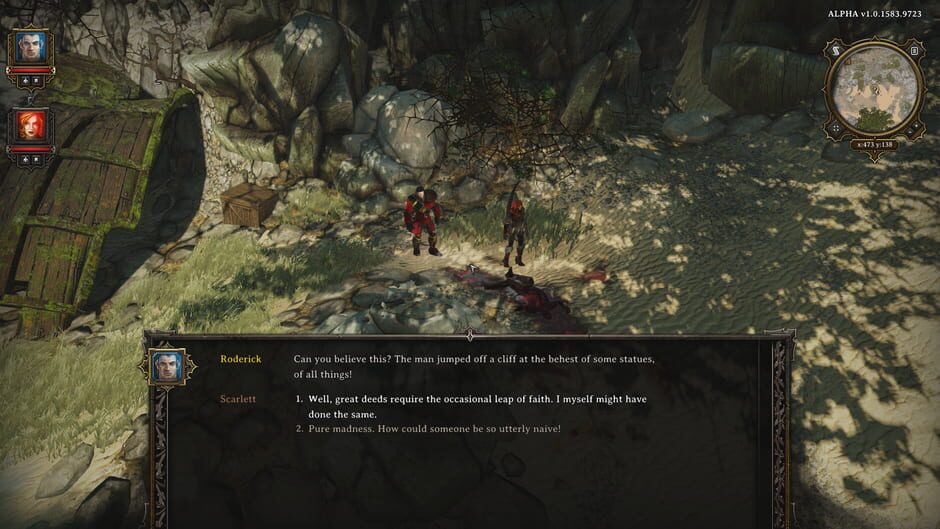
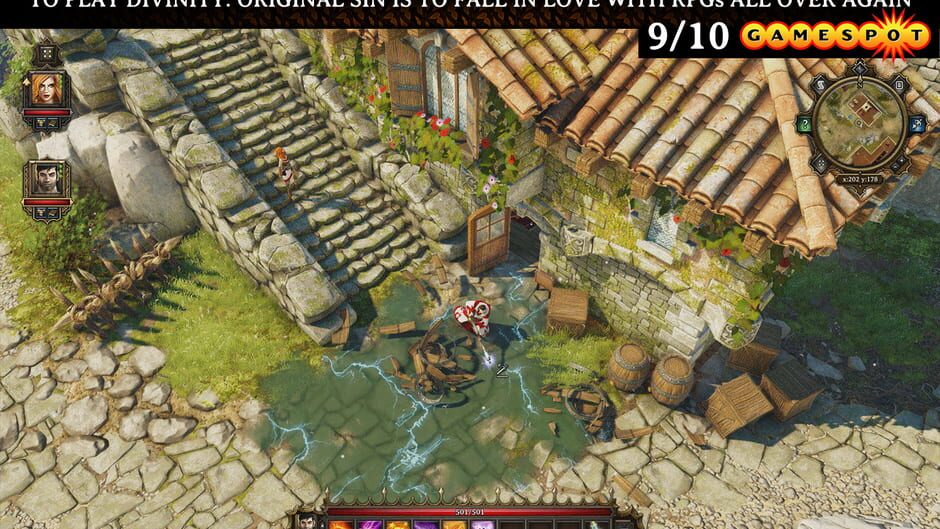
Exploration uses an isometric perspective and takes place across open-ended regions containing settlements, forests, beaches, ruins and underground locations. Players can examine numerous objects, move certain environmental elements, discover hidden passages and resolve situations through different approaches. Dialogue choices influence relationships and character behavior. When disagreements arise, the two protagonists can defend opposing positions, with the outcome determined through a persuasion system represented by rock-paper-scissors. The world also encourages experimentation through a crafting system based on combining objects and materials: ingredients, weapons, tools and equipment stations can be used to produce additional items or consumables. Side quests and books scattered throughout the environments further develop the history of Rivellon.
The adventure can be played alone, controlling both Source Hunters and their companions, or through two-player online cooperation. Each participant then controls a protagonist, takes part in conversations and can explore or act independently, adding another dimension to shared decisions. The party can contain up to four characters, including two additional companions. The game also provides The Divinity Engine, a modding toolkit used to design environments and custom content, which can be distributed through the Steam Workshop. Artistically, the game combines colorful fantasy environments, magical effects and occasionally humorous situations. Its soundtrack, composed by Kirill Pokrovsky, accompanies exploration, encounters and combat in a world where environmental interaction remains a fundamental part of the adventure.
Key Highlights
- Two customizable protagonists: the Source Hunters possess individual characteristics, opinions and dialogue options.
- Tactical turn-based combat: action points, positioning and environmental conditions determine battle strategies.
- Interactive elemental magic: fire, water, ice, poison and electricity can be combined to change the conditions of an encounter.
- Open-ended exploration: environments contain movable objects, secrets, quests and alternative solutions.
- Flexible character progression: abilities, talents and equipment allow a variety of combat specializations.
- Two-player online cooperation: players can make individual decisions while sharing control of an adventuring party.
- Modding tools: The Divinity Engine supports the creation and sharing of custom content.
Conclusion
Divinity: Original Sin combines the traditions of Western role-playing games with a combat system in which interactions between magic and the environment play a central role. Its two-protagonist structure gives dialogue and decision-making a distinctive dimension, while flexible progression and object manipulation encourage experimentation. By integrating cooperation into both storytelling and combat, the game establishes several foundations that Larian Studios would subsequently develop further in Divinity: Original Sin II.
Did You Know?
- The game received additional development funding through a Kickstarter campaign launched in March 2013, raising $944,282 from 19,541 backers.
- The two Source Hunters are created separately. Their dialogue choices can influence personality traits associated with character bonuses.
- Disagreements between protagonists use a rock-paper-scissors persuasion mechanic, which also appears in certain conversations with other characters.
- The original campaign is designed for one or two players, although the adventuring party can contain up to four characters.
- The Divinity Engine editor is a development tool separate from the game, allowing users to create maps, scenarios and modifications shared through the Steam Workshop.
- The soundtrack was composed by Kirill Pokrovsky, who also created music for several earlier installments in the Divinity series.
- The Enhanced Edition, released on October 27, 2015, is a separate version featuring a revised storyline, fully voiced dialogue, controller support and local split-screen cooperation. These features were not included in the original 2014 release.
Link graph
Open in the full graphLoading the graph…
Only the strongest links are shown.