The Divine is dead. The Void approaches, and the powers lying dormant within you are about to awaken. The battle for Divinity has begun. Choose wisely and trust sparingly: darkness lurks within every heart.
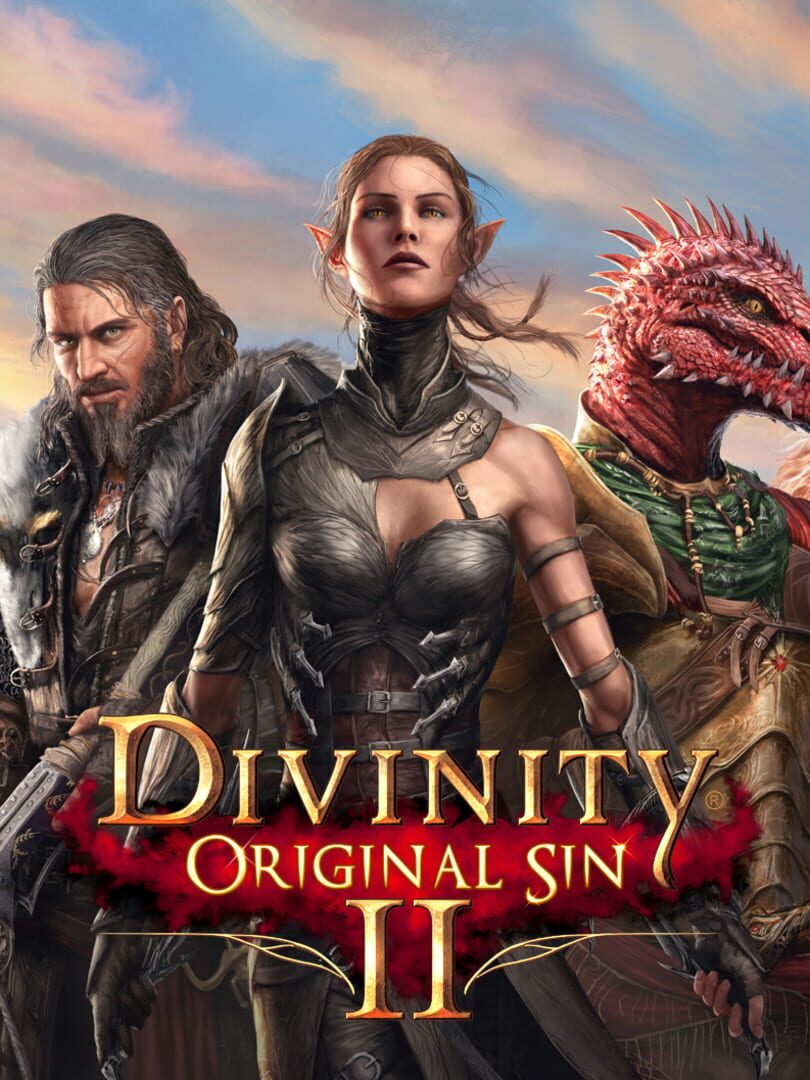
Video game
2017
Adventure
Fantasy
RPG
Strategy
Divinity: Original Sin II
- Elverils LLC Developer
- Larian Studios Developer
- Larian Studios Publisher
When the gods fall silent, every decision can change the world.
Details
- Type
- Video game
- Release
- September 14, 2017
- Countries
- 🇧🇪 Belgium
- Genres
- Adventure, Fantasy, RPG, Strategy
- Platforms
- PC, Mac, Mobile
- Engine
- Divinity Engine
- Game modes
- Single player, Multiplayer, Co-operative
Synopsis
Divinity: Original Sin II


Trailer
Watch the trailer
Overview
Presentation
Developed by Larian Studios, with Elverils LLC also credited among its developers, and published by Larian Studios, Divinity: Original Sin II is a role-playing game released on September 14, 2017. A sequel to Divinity: Original Sin, it takes players to Rivellon, a fantasy world threatened by the Void and divided by religious and political conflicts. The adventure begins in part at Fort Joy, where the Divine Order imprisons individuals capable of wielding Source, a form of magic considered dangerous. Players assume the role of one of these Sourcerers and become involved in a struggle for divine power. The narrative places considerable emphasis on decisions, alliances and the consequences of individual actions, without imposing a single solution to the situations encountered.
Character creation offers a choice between six Origin characters, each with their own background, personality and quests, or a fully customized adventurer. Humans, elves, dwarves, lizards and undead possess distinctive characteristics that influence certain interactions. Dialogue takes the character's race, history and traits into account, while companions pursue personal objectives that may sometimes conflict with one another. Players can negotiate, find alternative routes, uncover hidden information or resort to violence, with consequences for characters and events. Progression is not restricted to rigid classes: attributes, talents and different schools of abilities allow players to freely develop warriors, mages, archers and hybrid combatants.
Battles take place in turn-based tactical combat, across environments where positioning and elemental interactions are particularly important. Each character receives action points to spend on movement, attacks and special abilities. Surfaces can be transformed: oil can be set ablaze, water can be electrified or frozen, and poisonous clouds can become explosive. Elevation, obstacles and enemy placement also influence strategy. The game distinguishes between Physical Armour and Magic Armour, two defenses that absorb different types of damage and prevent certain status effects while they remain intact. This separation encourages players to plan their attacks and coordinate the party's abilities rather than simply focusing on dealing damage.
Exploration uses an isometric perspective and emphasizes open-ended regions filled with characters, secrets, objects and side quests. Most environmental elements can be examined, moved or used creatively. Teleportation, stealth, persuasion and supernatural abilities provide different ways to overcome obstacles. Certain skills also allow communication with animals or spirits, revealing information that might otherwise remain inaccessible. Books, conversations and environmental discoveries deepen the history of Rivellon, while crafting and equipment management contribute to character development.
The adventure can be experienced alone with a four-character party or through online cooperation for up to four players, with local split-screen also available on supported versions. Participants can pursue different objectives, make individual decisions and occasionally compete with one another, making cooperation a narrative feature as well as a tactical one. The game also includes an Arena mode for competitive encounters and a Game Master Mode, allowing one participant to create and direct original adventures for other players. Powered by the Divinity Engine, it combines detailed fantasy environments, elemental effects and an orchestral soundtrack composed by Borislav Slavov. A Definitive Edition, released in 2018, subsequently introduced revisions to balancing, interface design and content.
Key Highlights
- An RPG shaped by player choices: dialogue, relationships, origins and decisions influence quests and the world's reactions.
- Six Origin characters: each has a distinctive background and objectives, alongside the option to create a custom protagonist.
- Tactical turn-based combat: action points, separate armor systems, positioning and elemental effects determine battle strategies.
- Character progression without fixed classes: attributes, talents and schools of abilities allow extensive customization.
- Interactive exploration: movable objects, teleportation, specialized dialogue and multiple approaches encourage experimentation.
- Cooperation for up to four players: the adventure allows individual decisions and occasionally competing objectives.
- Adventure creation tools: Game Master Mode allows players to design and run multiplayer scenarios.
Conclusion
Divinity: Original Sin II develops a role-playing formula in which player freedom shapes both the narrative and the combat systems. Character origins offer different perspectives on Rivellon, while elemental interactions and flexible progression encourage a wide range of possible solutions. Cooperative play and Game Master Mode extend this freedom by enabling shared adventures in which participants' decisions and objectives may diverge.
Did You Know?
- The six Origin characters are the Red Prince, Sebille, Lohse, Ifan ben-Mezd, Beast and Fane. They can be played directly or encountered as companions.
- Elves possess a distinctive ability that allows them to absorb memories by consuming certain remains, sometimes revealing information or new skills.
- Undead characters react differently to healing: ordinary healing effects can harm them, while poison restores their vitality.
- During character creation, players can select an instrument whose sound becomes more prominent during certain musical passages, particularly in combat.
- Game Master Mode draws inspiration from tabletop role-playing games: one participant directs the story, controls encounters and adapts events to the other players' actions.
- The Definitive Edition, released on August 31, 2018, revised combat balancing, certain dialogue, the quest journal and the interface. It was provided free to owners of the original PC release.
- The soundtrack by Borislav Slavov was recorded partly with the Hungarian Studio Orchestra. Its official digital album contains 42 tracks.
Link graph
Open in the full graphLoading the graph…
Only the strongest links are shown.