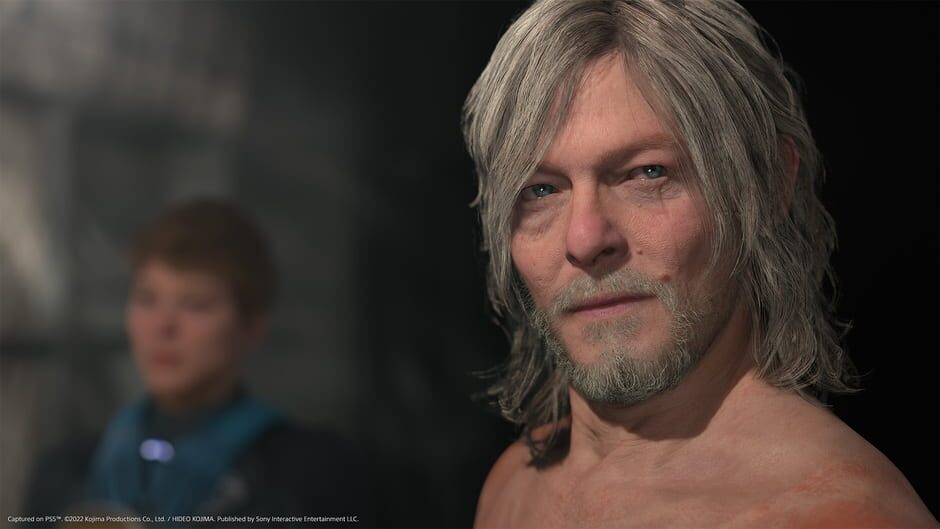
Eleven months after helping reconnect a fragmented America, Sam Porter Bridges lives a more withdrawn life alongside Lou. Fragile, however, brings him a new mission: extend the chiral network beyond the borders of the United Cities of America. His journey begins in Mexico before an event takes him to Australia, where he joins Drawbridge and sets out to reconnect isolated communities across the continent. Accompanied by new allies and confronted by both human and supernatural enemies, Sam continues his journey through a world still shaped by the Death Stranding, while a new question follows every connection he makes: should humanity really have been connected?

Video game
2025
Action
Adventure
Horror
Science fiction
FPS
Stealth
Open world
Death Stranding 2: On the Beach
- Kojima Productions Developer
- Kojima Productions Publisher
- Sony Interactive Entertainment Publisher
Reconnecting the world is no longer enough: Sam must now face the consequences of the bonds he created.
Details
- Type
- Video game
- Release
- 2025-06-26
- Genres
- Action, Adventure, Horror, Science fiction, FPS, Stealth, Open world
- Platforms
- PlayStation 5, PC
- Engine
- Decima
- Game modes
- Single player
Synopsis
Death Stranding 2: On the Beach



Trailer
Watch the trailer
Overview
Presentation
Death Stranding 2: On the Beach continues Sam Porter Bridges' journey while expanding the movement, delivery and connection systems established in the first game. The adventure takes place mainly in Australia, after an opening section in Mexico, and gives Sam the mission of reconnecting new communities to the chiral network with the organization Drawbridge.
Transporting cargo remains at the heart of the game. Before each expedition, players choose the equipment to carry, distribute the load across Sam and take weight, balance and route hazards into account. Poorly arranged cargo increases the risk of stumbling or falling, while the condition of packages influences the final quality of a delivery.
Terrain remains a genuine gameplay system. Slopes, rocks, rivers and rough ground must be assessed before committing to them, notably with the help of the terrain scanner. The shortest route is not necessarily the most efficient: a longer but safer path can preserve equipment, save resources and avoid confrontation.
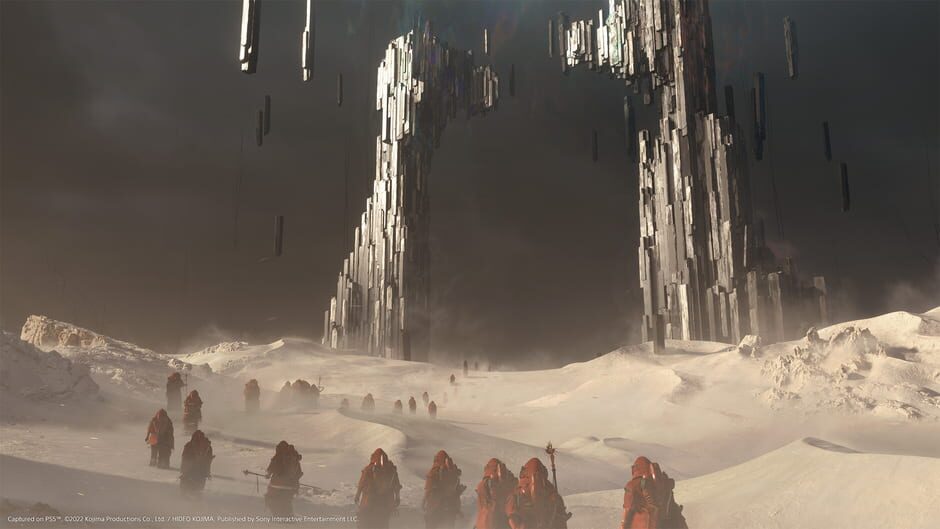
The world is now more strongly affected by environmental changes. The day-night cycle, Timefall and natural disasters such as earthquakes, sandstorms and wildfires can alter travel conditions. Some events temporarily transform areas and force players to reconsider routes that previously appeared safe.
The range of tools and transport options has also been expanded. Motorcycles, vehicles and various pieces of equipment allow greater quantities of cargo to be moved or certain regions to be crossed more efficiently. Their usefulness still depends on terrain, range and preparation before departure.
Building infrastructure plays an even greater role. Ladders, ropes, generators, bridges, roads and ziplines still allow players to gradually transform the regions they cross. The sequel notably adds monorails, which can make it easier to move large quantities of cargo between several points.
The DHV Magellan serves as Drawbridge's mobile base. It accompanies Sam throughout his journey and provides a place to meet his companions, prepare and access different services. Certain fast-travel systems also reduce the need to retrace already explored distances, without eliminating the need to prepare deliveries and explore new regions.
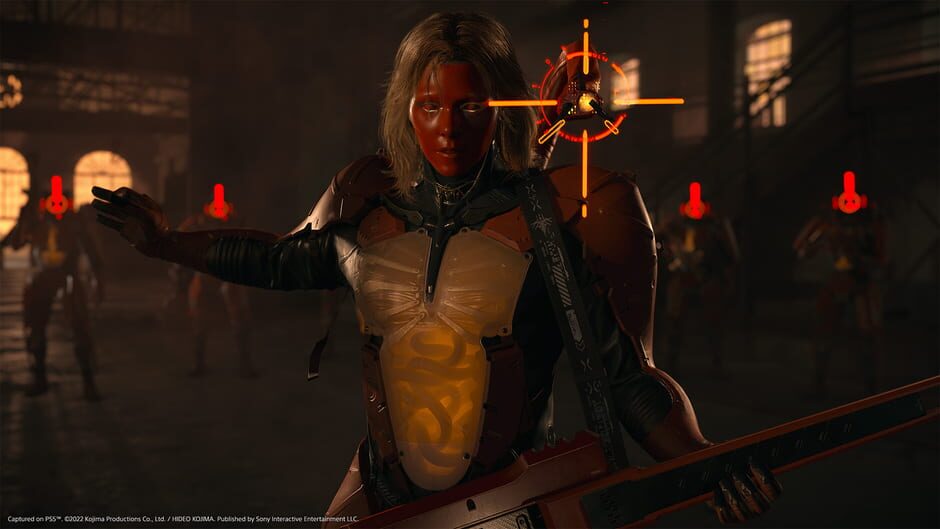
Combat offers more options than in the first game. Sam has access to several firearms, non-lethal tools and specialized devices, but direct confrontation remains only one possible approach. Hostile camps can be infiltrated quietly, some enemies can be neutralized stealthily and it is sometimes preferable to avoid a dangerous area entirely.
Stealth therefore plays a larger role. Decoy holograms, silent movement, ranged attacks and enemy observation make it possible to avoid certain fights. Against BTs, the Odradek remains essential for detecting their presence and moving through areas where the world of the dead overlaps with that of the living.
Sam's progression is also more customizable. His actions develop different practical skills: regularly traveling across difficult terrain or relying on certain combat methods gradually improves his efficiency in the corresponding areas. The APAS system also allows upgrades focused on transportation, combat, stealth or other expedition-related aspects to be equipped and rearranged according to current needs.
The Social Strand System returns in its asynchronous form. Once a region is connected, players can encounter structures, vehicles, signs or traces left by other porters. These installations can be used, upgraded with contributed resources, supplemented through shared lockers or used to complete a delivery abandoned by someone else.
These interactions do not require players to meet directly. A bridge built in one playthrough may make another person's journey easier, while a road, zipline or monorail developed collectively can gradually transform the traversal of an entire region. Likes remain the main way to acknowledge these contributions and also contribute to porter reputation.
The game ultimately preserves the distinctive structure of Death Stranding: progression depends as much on the ability to prepare for and complete a journey as it does on combat encountered along the way. The sequel provides more tools for deciding how to travel, avoid threats or reshape the terrain while keeping delivery and human connection at the center of the experience.
Key points
- A sequel set eleven months after Death Stranding.
- An adventure that begins in Mexico before taking place mainly in Australia.
- Sam joins Drawbridge to reconnect new communities to the chiral network.
- Cargo transport remains central, with management of weight, balance and package condition.
- Terrain must be assessed and routes prepared rather than simply followed.
- A world affected by the day-night cycle, Timefall and several natural disasters.
- More vehicles, equipment and options for organizing travel.
- Infrastructure such as roads, bridges, ziplines and monorails can permanently transform routes.
- The DHV Magellan serves as Drawbridge's mobile base.
- Encounters can be approached through direct combat, stealth or avoidance.
- A larger arsenal combining lethal weapons, non-lethal solutions and specialized equipment.
- APAS upgrades allow Sam's abilities to be further specialized.
- Repeated actions also develop different practical skills.
- The Social Strand System still allows players to help one another indirectly through structures, resources and traces left in the world.
- Primarily a single-player experience enriched by asynchronous multiplayer features.
Conclusion
Death Stranding 2: On the Beach preserves the central idea of the first game: turning movement itself into a challenge. Carrying cargo still requires reading the terrain, choosing equipment, organizing the load and deciding which route to take, but the sequel greatly expands the number of ways these problems can be solved.
New vehicles, infrastructure and progression systems provide more freedom, while natural disasters make the world less predictable. Stealth and combat also gain more possibilities without replacing preparation and delivery as the main driving forces of the experience.
The Social Strand System finally extends the idea of connection beyond the story itself. Roads, bridges, monorails and other structures can gradually reshape a region through the accumulated actions of players who never directly meet. This mechanic responds directly to the question at the heart of the sequel: after treating connection as a solution in the first game, On the Beach now examines its consequences.
Good to know
Death Stranding 2: On the Beach was developed by KOJIMA PRODUCTIONS, produced by Sony Interactive Entertainment and directed, designed and written under the leadership of Hideo Kojima.
The game was originally released on June 26, 2025 for PlayStation 5.
A Windows PC version was later released on March 19, 2026 through Steam and the Epic Games Store, developed in collaboration with Nixxes Software.
The game is designed as a single-player experience with asynchronous multiplayer features. On PlayStation 5, using the Social Strand System does not require a PlayStation Plus subscription.
Norman Reedus returns as Sam Porter Bridges. The cast also notably includes Léa Seydoux, Troy Baker, Elle Fanning, Shioli Kutsuna and Luca Marinelli.
Characters and mechanical designs are notably developed under the artistic direction of Yoji Shinkawa, while the original score is composed by Ludvig Forssell.
The game directly includes a summary of the story of the first Death Stranding, allowing players to revisit the main characters, events and concepts before continuing Sam's journey.
The 2026 PC release was accompanied by several additions that were also deployed on PlayStation 5, including an extra difficulty level and new training content. These later additions are not treated here as part of the foundations of the original June 2025 release.
This entry covers Death Stranding 2: On the Beach as a whole and focuses on its lasting systems without revealing the major twists of its narrative.