Presentation
A Plague Tale: Requiem directly continues the relationship established in Innocence, but changes its scale considerably. Amicia is no longer the young girl suddenly learning how to survive. She knows how to move through hostile environments, use her sling, craft alchemical solutions and eliminate an opponent when the situation demands it.
That experience does not turn her into an invulnerable warrior. Soldiers remain dangerous, direct confrontations can quickly become difficult and stealth still plays an important role. The main difference lies in the number of options available when a plan fails.
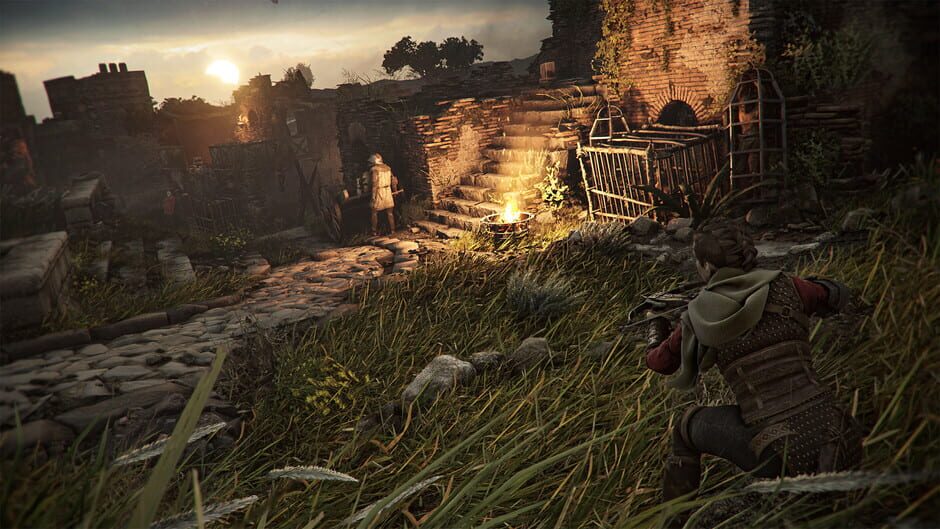
The environments are more open and offer additional paths. Tall grass, side routes, buildings, environmental objects and enemy positions can be observed before acting. Amicia can avoid a patrol, distract a guard, use alchemy to alter the environment or choose to rely directly on force.
Her sling remains a central tool, but her arsenal expands notably with the crossbow. More powerful and capable of eliminating certain enemies protected against ordinary stones, it gives Amicia significantly greater offensive potential. Ammunition remains limited enough, however, to prevent that power from becoming a universal solution.
Alchemy preserves the same complementary logic. Fire can create a safe area against the rats or, conversely, be extinguished to expose an enemy to the swarm. Different mixtures allow players to manipulate light, flames and enemy behavior, making it possible to reshape the environment rather than solving every obstacle in the same way.
Hugo also has more powerful abilities. His connection to the Macula allows him to sense the presence of certain people beyond obstacles and, in some situations, directly influence the rats. This power radically changes the relationship established in the first game: the swarms are no longer only a catastrophe to avoid, but can sometimes become a force Hugo turns against those threatening them.
This evolution is not a simple increase in power. The more Hugo uses this connection, the more inseparable the Macula seems from him. The mechanics therefore give tangible form to the conflict at the heart of the story: what saves the brother and sister in the immediate moment may also accelerate the very thing they are trying to prevent.
Amicia’s progression similarly reflects the way the player chooses to survive. Rather than relying only on skills purchased through a traditional tree, certain abilities develop according to the approaches being used. Caution, aggression and the use of tools gradually shape her capabilities, creating a more direct connection between behavior and character development.
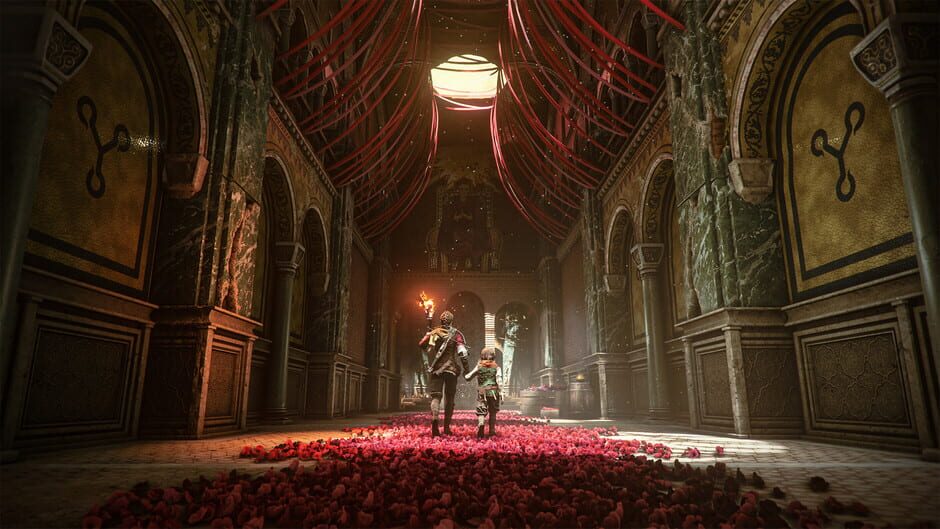
The rats nevertheless remain the series’ most spectacular image. Requiem greatly expands their presence: they flood streets and buildings, surge like waves and can transform an entire environment within moments. Light remains a vital boundary. A torch, brazier or isolated flame may represent the few meters still separating the characters from a black mass capable of swallowing them.
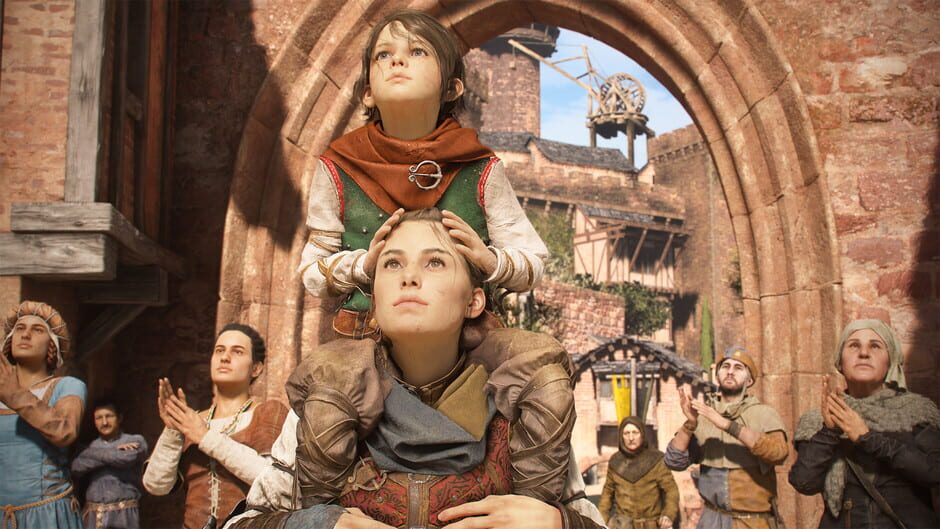
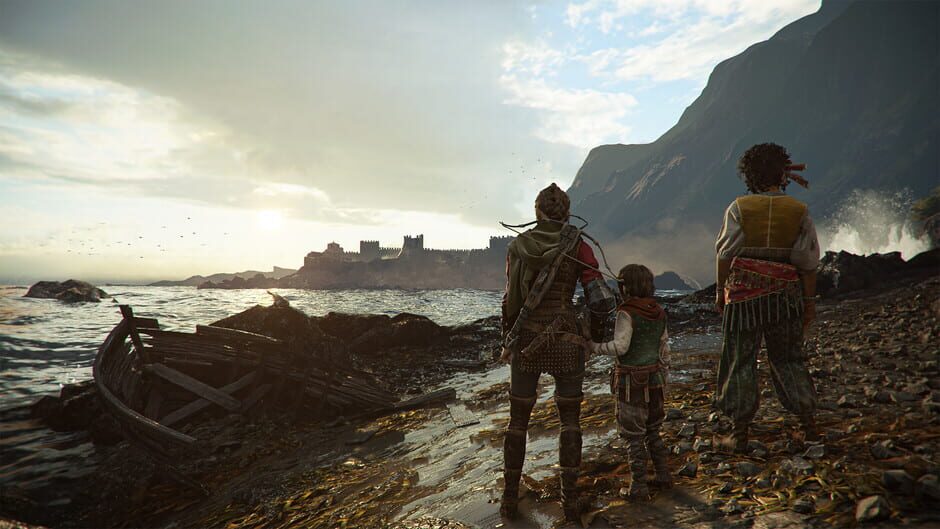
This larger scale is accompanied by an art direction brighter and more contrasted than that of Innocence. Southern France offers markets, Mediterranean landscapes, colorful fields and lively towns that can seem far removed from the horror of the first journey. The contrast makes the arrival of plague and rats even more brutal: the catastrophe no longer unfolds only in places that are already sinister, but also destroys locations that still seemed capable of beauty and life.
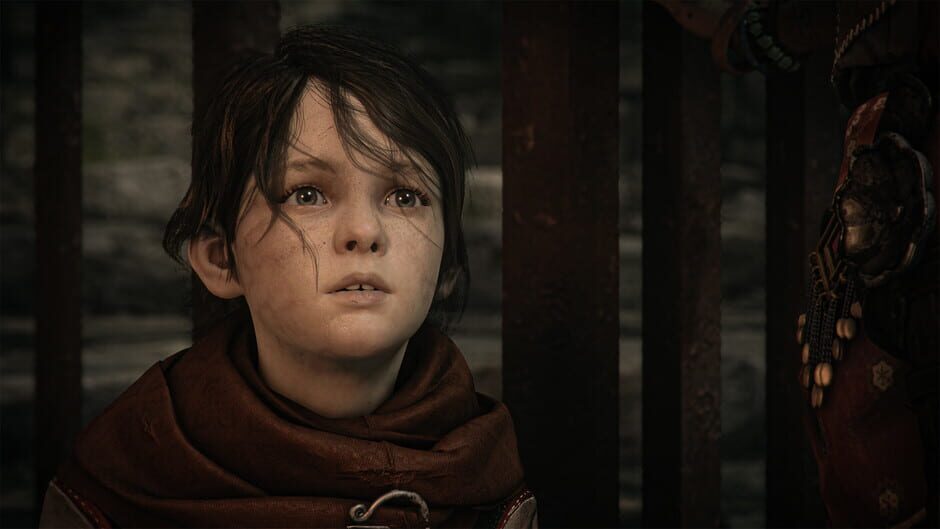
The heart of Requiem, however, remains Amicia and Hugo. The older sister constantly searches for a concrete solution while others begin to speak of acceptance. Hugo, meanwhile, increasingly understands what is happening inside him and directly feels the consequences of the violence surrounding them.
This difference gives their relationship a new tension. Protecting someone does not necessarily mean understanding what they need, and Amicia’s love for her brother gradually becomes as powerful as it is dangerous. Requiem therefore uses their flight across France to explore less the birth of their bond than what happens when that bond is pushed to its limits.
What to remember
- The direct sequel to A Plague Tale: Innocence, once again centered on Amicia and Hugo de Rune.
- A journey through southern France and toward a mysterious island that may be connected to the Macula and Hugo’s fate.
- More open areas offering additional possibilities between stealth, distraction, alchemy and direct confrontation.
- An expanded arsenal for Amicia, notably through the crossbow, while retaining the sling and alchemical tools.
- More developed powers for Hugo, allowing him in particular to sense enemies and interact with the rats.
- Far larger swarms of rats, still closely tied to light and the manifestations of the Macula.
- A story where Amicia’s determination to save her brother gradually becomes as important as the threat pursuing them.
Conclusion
A Plague Tale: Requiem could easily have settled for being a larger version of Innocence. It has more space, more enemies, more tools and rat swarms capable of reaching spectacular proportions. Yet its most important evolution lies elsewhere: Amicia has changed.
In the first game, she was learning to survive in order to protect Hugo. In Requiem, she already knows how to survive, and that ability gives her the conviction that every new threat can be overcome if she fights hard enough. The game gradually turns that determination into a question rather than an unquestionable virtue.
This evolution explains why the combat possibilities are broader. An Amicia capable of using a crossbow, setting traps or responding directly to violence corresponds to the person she has become. But every confrontation also recalls the psychological cost borne by a young woman growing accustomed to doing anything she believes necessary for her brother.
Hugo follows the opposite path. The more impressive his powers become, the less they resemble liberation. Commanding the rats may provide an immediate solution, but that power belongs precisely to the disease he is trying to escape.
That contrast runs through the entire adventure. Almost idyllic Mediterranean landscapes coexist with plague, thousands of rats can erupt beneath a city still full of life, and hope surrounding a supposedly saving island grows at the same time as doubts about what it truly represents.
Requiem therefore gives the sibling relationship a much more tragic dimension. Loving someone enough to want to save them at any cost initially appears admirable. The game eventually asks what “at any cost” actually means when the person being protected must also endure the consequences of that promise.
Good to know
- A Plague Tale: Requiem was developed by French studio Asobo Studio and published by Focus Entertainment.
- The game was released on October 18, 2022.
- It is the direct sequel to A Plague Tale: Innocence and continues the story of Amicia and Hugo de Rune.
- The adventure takes the characters through southern France and toward a mysterious Mediterranean island connected to hopes of curing Hugo.
- Amicia has more combat and stealth options than in the first game, while Hugo’s Macula-related powers play a larger role.
- Light remains essential for holding back the rat swarms, whose scale is considerably increased in this sequel.
- The music was once again composed by Olivier Derivière, who also created the soundtrack for A Plague Tale: Innocence.